We use cookies to improve your experience on our site, analyze site traffic, and assist in our marketing efforts. By clicking "Accept all," you agree to the storing of cookies on your device. You can choose to "Reject all" non-essential cookies. For more information, please read our Cookie Policy.
Memorandum of Sale Explained: 2026 UK Buyer & Seller Guide
Everything UK buyers and sellers need to know about the memorandum of sale in 2026: what it contains, who issues it and when, why it is not legally binding, the 2026 home buying reforms, timescales to completion and your next steps.
A memorandum of sale is the first piece of paper that proves your house sale or purchase is actually happening. It is issued once an offer has been accepted, it sets out who is buying what from whom and for how much, and it is the trigger for solicitors to start conveyancing and for buyers to book their survey. Yet it is also one of the most misunderstood documents in the UK moving process: many buyers assume it locks the deal in, while many sellers assume it means the hard part is over. Neither is true. This 2026 guide explains exactly what a memorandum of sale is, what it should contain, who issues it, whether it is legally binding, how long things take afterwards and what both sides should do the moment it lands in their inbox.
Key takeaways
A memorandum of sale (sometimes called a “memo of sale” or “notification of sale”) is a written confirmation, usually prepared by the estate agent, that a seller has accepted a buyer’s offer subject to contract.
It records the agreed price, the parties, their solicitors, the buyer’s funding position, the tenure and any chain or special conditions, and it is sent to both sides’ conveyancers so that legal work can begin.
It is not legally binding. Under section 2 of the Law of Property (Miscellaneous Provisions) Act 1989 a contract to sell land must be in signed writing containing all the agreed terms, so either party can still walk away until contracts are exchanged.
Most agents issue it within one to five working days of the offer being accepted; delays usually come from missing solicitor details, ID checks or proof of funds.
Government data published in June 2026 shows it takes around 120 days on average from offer acceptance to completion in England, and roughly one in three transactions still falls through, so the weeks after the memorandum are where deals are won or lost.
The single most useful thing a buyer can do after receiving a memorandum of sale is to instruct a suitably qualified, accredited surveyor straight away, because survey findings are the most common reason for renegotiation or withdrawal.
What is a memorandum of sale?
A memorandum of sale is a short written document that confirms a seller has accepted a buyer’s offer on a property and records the basic terms of that agreement. It is normally prepared by the selling estate agent and sent to the buyer, the seller and both parties’ conveyancing solicitors so that the legal process of transferring ownership can formally start.
Think of it as the handover note between the marketing stage of a sale and the legal stage. Up to this point everything has happened between the agent, the seller and the buyer: viewings, offers, negotiation and acceptance. The memorandum of sale takes that verbal or emailed agreement, puts it in writing and introduces the solicitors who will turn it into an enforceable contract. In England and Wales almost every agent-led sale will have one; in Scotland the system is different because offers are made through solicitors and become binding at the point of concluded missives, so a memorandum of sale in the English sense is rarely used north of the border.
The memorandum of sale is the first written record that an offer has been accepted, but it is not yet a contract.
What does a memorandum of sale include?
There is no statutory template, so the layout varies from agent to agent, but a well-prepared memorandum of sale will typically contain the following:
The property: full address, postcode and, where known, the HM Land Registry title number.
The agreed sale price and any items included in that price, such as fixtures, fittings, carpets or white goods that have been negotiated separately.
Tenure: whether the property is freehold, leasehold or share of freehold, and for leasehold flats the remaining lease term, ground rent and service charge where the agent has them.
The seller’s details: name(s), contact details and the solicitor or licensed conveyancer acting for them.
The buyer’s details: name(s), contact details and their conveyancer.
How the purchase is being funded: cash, mortgage (and the lender or broker), or a combination, plus whether the buyer has a decision in principle. The Property Ombudsman’s Code of Practice (paragraph 10a) specifically expects agents to record the buyer’s source and availability of funds and to include this in the memorandum.
Chain information: whether the buyer has a property to sell, whether the seller is buying onward, and the current position of any related sales.
Target timescales: proposed exchange and completion dates, if any have been discussed. These are aspirations rather than commitments.
Special conditions: anything that departs from a standard sale, for example an agreed exchange deadline, works the seller has promised to complete, or an agreement that the buyer is purchasing in its current condition.
Referral declarations: under paragraph 2f of the Property Ombudsman code, if the buyer has applied to use the agent’s recommended conveyancer, mortgage broker or surveyor, the agent should disclose that either in writing or in the memorandum of sale itself.
Because the document contains the other side’s personal data, buyers and sellers do not always receive a full copy themselves. It is perfectly reasonable to ask your agent or solicitor to confirm the key terms in writing so you can check the price, the included items and the names are correct before any legal fees are incurred.
Who issues the memorandum of sale, and when?
In the vast majority of cases the seller’s estate agent issues the memorandum of sale, because the agent is the party that received and negotiated the offer and already holds most of the information needed. The Property Ombudsman code requires agents to confirm every offer in writing to the seller and to the buyer who made it within two working days (paragraph 9a), to carry out customer due diligence on the buyer before a binding contract is made (9b) and, once an offer has been accepted subject to contract, to take the seller’s instructions on whether the property is withdrawn from the market or continues to be marketed (9e).
In practice the memorandum is usually sent out between one and five working days after acceptance. The most common reasons it takes longer are:
the buyer or seller has not yet instructed a conveyancer, so there is nobody to send it to;
the agent is still completing anti-money-laundering identity checks on the buyer;
proof of funds or a mortgage decision in principle has not been supplied;
the agent is waiting for confirmation of what is included in the price.
If you are buying, the fastest way to get the memorandum moving is to have your solicitor chosen, your ID ready and your proof of deposit or mortgage agreement in principle to hand before you make the offer. If you are selling, instruct your conveyancer when you list, not when you accept an offer, so the draft contract pack and property information forms can go out the day the memorandum is issued. Our guide to what a conveyancer does explains how to choose one.
Do you need a memorandum of sale without an estate agent?
If you are buying or selling privately, there is no agent to produce the document, but the solicitors still need the same information to open their files. In a private sale the seller (or the seller’s solicitor) normally drafts a simple memorandum of sale containing the address, the price, both parties’ names and addresses, both conveyancers’ details, the funding position and the tenure, and emails it to everyone involved. Many mortgage lenders and conveyancers will ask for it, so do not skip it just because there is no agent; a one-page document is enough.
Is a memorandum of sale legally binding?
No. A memorandum of sale is not a contract and it does not oblige either party to complete the transaction. In England and Wales, section 2 of the Law of Property (Miscellaneous Provisions) Act 1989 provides that a contract for the sale of land must be made in writing, incorporate all the terms the parties have expressly agreed and be signed by or on behalf of each party. A memorandum of sale does none of those things: it is a confirmation issued by an agent, not a signed agreement between buyer and seller, and the offer it records is expressly “subject to contract”.
That means:
the buyer can withdraw, for example after an unfavourable survey, a mortgage down-valuation or a change of circumstances, without paying compensation;
the seller can withdraw or accept a higher offer from someone else (gazumping) until contracts are exchanged;
any “target” exchange or completion date in the memorandum is not enforceable.
The point at which the deal becomes binding is exchange of contracts, when both solicitors hold signed, identical contracts and formally exchange them, usually with the buyer paying a deposit of around 10 per cent. Everything between the memorandum of sale and exchange, including the survey, the searches, the mortgage valuation and the legal enquiries, exists precisely so that both sides can make an informed decision before they are locked in.
Will that change under the 2026 home buying reforms?
Possibly, but not yet. On 19 June 2026 the Ministry of Housing, Communities and Local Government published its Home Buying and Selling Reform Roadmap, which states that once an offer is accepted it currently takes around 120 days on average to complete, that the process is about 60 per cent longer than in 2007, and that roughly one in three transactions collapses, costing consumers around £400 million a year. The roadmap commits the government to legislate, when parliamentary time allows, for mandatory sales packs (including searches and a property condition report) to be prepared before a home is listed, and then to require binding conditional contracts earlier in the process, with financial penalties for walking away without a valid reason. Penalty structures are to be designed with industry from 2027 to 2028, and a non-statutory Code of Practice for estate agents is due to be published during 2026.
None of that is law today. For any purchase agreed in late 2026 or 2027, the memorandum of sale remains a non-binding statement of intent, and gazumping and gazundering remain lawful until exchange. We track the reform programme in our article on the home buying and selling reform roadmap.
Check the price, the included items and the names on the memorandum before your solicitor starts incurring fees.
How long after the memorandum of sale to exchange and completion?
The memorandum of sale itself sets no deadline. What happens next depends on the length of the chain, how quickly the seller’s solicitor sends out the contract pack, how fast the local authority returns searches, the buyer’s mortgage timetable and, crucially, whether the survey throws up anything that needs renegotiating. The latest industry data gives a realistic picture of the timescales involved:
Two further figures are worth bearing in mind. Rightmove’s analysis published on 27 February 2026 estimated that fall-throughs cost the English market over £900 million in lost agency fees and stamp duty in 2025, with around 23 per cent of transactions initially falling through before later completing. And Rightmove’s July 2026 analysis found the average sale-agreed-to-completion period across Britain had stretched to 154 days, rising to 174 days in London. The memorandum of sale, in other words, marks the start of a four-to-five-month period in which a great deal can still go wrong. Our home buying timeline walks through every stage in detail.
What happens after the memorandum of sale is issued?
Once the memorandum has gone out, the transaction moves into conveyancing. The typical sequence is:
Solicitors open files. Both conveyancers write to each other, request ID and client care signatures and, for the buyer, ask for money on account for searches.
Seller’s solicitor sends the contract pack. This includes the draft contract, official copies of the title, the TA6 property information form, the TA10 fittings and contents form and, for leasehold, the TA7 and management pack.
Buyer instructs a survey. This is the step most buyers leave too late. A Level 2 or Level 3 survey by a suitably qualified, accredited surveyor identifies defects, damp, roof and structural issues that may justify a price reduction or a decision to walk away, long before you have spent money on searches and legal fees. See our guide on Level 2 vs Level 3 surveys if you are unsure which to choose.
Mortgage application and valuation. The lender instructs its own valuation, which is not a survey and is for the lender’s benefit only.
Searches and enquiries. Local authority, drainage and water, environmental and any location-specific searches are submitted, and the buyer’s solicitor raises enquiries on the contract pack and on the survey findings.
Renegotiation if needed. If the survey reveals, say, a failed roof covering or evidence of movement, this is the moment to renegotiate the price or ask the seller to carry out repairs. The agent will usually issue an amended memorandum of sale if the price changes.
Report on title, signing and exchange. Once the buyer’s solicitor is satisfied, contracts are signed, a completion date is agreed with the whole chain, and contracts are exchanged.
Completion. The balance is transferred, keys are released and the buyer’s solicitor registers the transfer at HM Land Registry.
Throughout this period the Property Ombudsman code (paragraphs 10c and 12a) expects the agent to keep monitoring the buyer’s progress in securing funds and to report useful information to the seller, so expect regular chasing calls from a diligent agent.
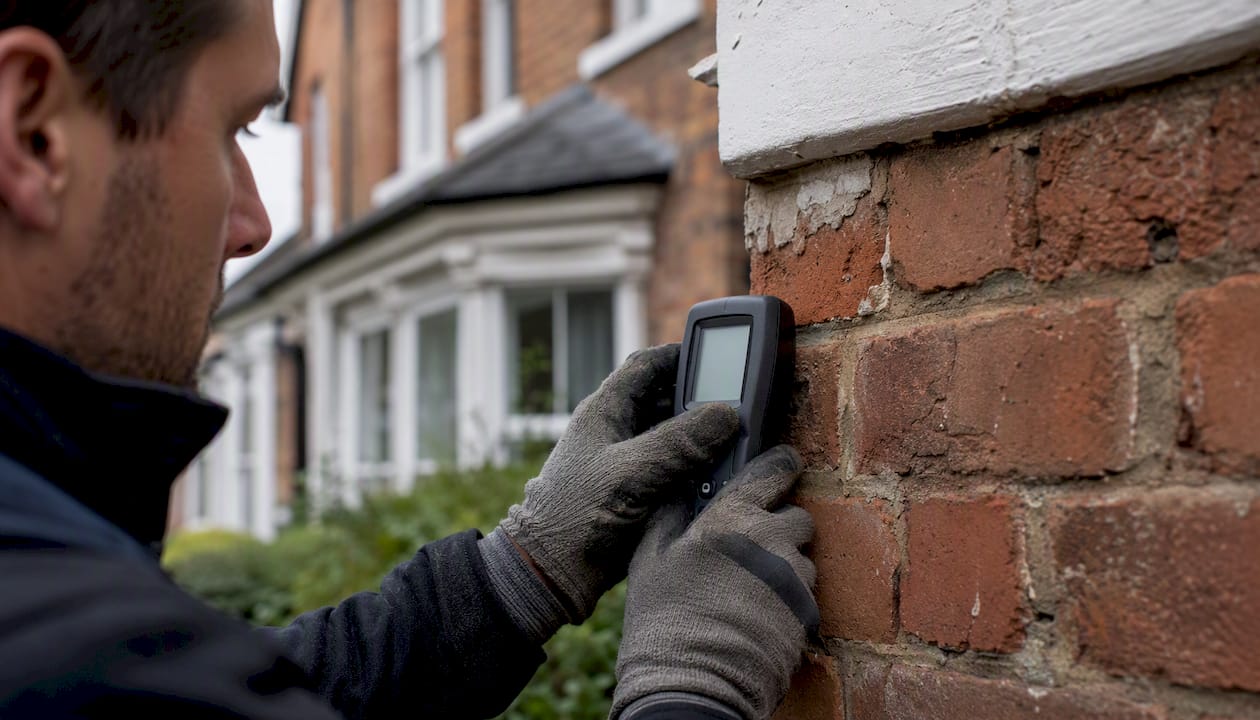
Booking your survey as soon as the memorandum of sale is issued gives you the information you need before you commit.
Memorandum of sale vs exchange of contracts vs TR1: what is the difference?
Three documents are regularly confused, and knowing which is which tells you exactly how committed you are.
Document
Who prepares it
When
Legally binding?
Memorandum of sale
Estate agent (or seller’s solicitor in a private sale)
Days after offer acceptance
No, subject to contract
Contract for sale (exchanged)
Seller’s solicitor drafts; both sides sign
After survey, searches, mortgage offer and enquiries
Yes, from the moment of exchange
TR1 transfer deed
Buyer’s solicitor drafts; seller signs
Signed before completion, dated on completion
Yes, transfers legal ownership on registration
Reservation agreement (optional)
Negotiated between the parties
Around offer acceptance
Only to the extent of the agreed reservation terms
What should buyers do when they receive a memorandum of sale?
Check every detail. Price, address, included items, tenure and your own name and solicitor. Errors here cause delays later.
Book your survey immediately. Do not wait for searches or the mortgage offer. Surveyor availability is the one part of the process you control, and the results shape everything else. If you are unsure whether a survey is worth it, read do I need a survey when buying a house? and our current guide to building survey costs.
Use a surveyor whose credentials you can verify. Any surveyor you instruct should be a member of a recognised professional body such as RICS, CIOB or RPSA and carry professional indemnity insurance. Our guide to verifying surveyor credentials explains how to check.
Do not feel pressured into the agent’s recommended firms. Paragraph 9d of the Property Ombudsman code prohibits agents from making the passing on of offers conditional on you using their services, and paragraph 18a lists pressuring a buyer to use an in-house broker or solicitor as an example of aggressive behaviour.
Submit your mortgage application the same week. The lender’s valuation and your independent survey can run in parallel.
Ask the agent to confirm the property has been withdrawn from the market if that was agreed, and consider proposing a reservation agreement on a high-value purchase.
What should sellers do when the memorandum of sale goes out?
Return the TA6, TA10 and (if leasehold) TA7 forms to your solicitor within days, not weeks. Government research cited in the June 2026 roadmap found that slow upfront information is one of the main causes of delay and fall-through.
Gather your EPC, FENSA and electrical certificates, building regulations completion certificates, guarantees and planning documents now; the buyer’s solicitor will ask for all of them.
If you are buying onward, make sure your own purchase has reached memorandum of sale stage too, so the chain is visible to everyone.
Consider a pre-sale inspection. Knowing about a defective flat roof or historic movement before the buyer’s surveyor finds it lets you price it in or fix it rather than face a last-minute renegotiation. Our pre-sale inspection guide explains how this works.
Common problems with memorandums of sale
Wrong price or missing extras. If you negotiated the garden shed or the integrated appliances into the deal, make sure they appear; otherwise the TA10 may contradict what you agreed.
Incorrect tenure or lease information. A flat described as “share of freehold” that turns out to be a long lease with a management company changes the legal work required. Our leasehold vs freehold guide explains the differences.
Buyer listed as “cash” when they need a mortgage. Agents must record the true funding position; if yours has changed, tell them so the seller is not misled.
No memorandum at all. If a week has passed since acceptance and your solicitor has heard nothing, chase the agent. Without the memorandum, neither solicitor will open a file.
Why choose Survey Merchant for your survey after the memorandum of sale?
The memorandum of sale is the green light to instruct your survey, and the quality of that survey determines whether you negotiate from strength, proceed with confidence or walk away in time. Survey Merchant exists to make that step fast and straightforward:
An accredited panel matched to the job. We work with suitably qualified, accredited surveyors regulated by recognised UK bodies including RICS, CIOB and RPSA, and we match the right professional to your property type, age and location, whether that is a Level 2 Home Survey on a modern semi or a Level 3 Building Survey on a Victorian conversion.
Nationwide coverage with local knowledge. Surveyors who know the construction types, ground conditions and common defects in your area, from London and the Home Counties to Manchester, Birmingham, Leeds and Bristol.
Fast turnaround. Because the clock starts the day the memorandum is issued, we prioritise quick booking and prompt reporting so your solicitor and lender are not kept waiting.
Transparent, competitive fixed fees. You know the cost before you book, with no hidden extras.
Impartial advice. We are independent of estate agents, lenders and developers, so our only interest is giving you an honest picture of the property.
End-to-end support. From choosing the right survey level to understanding your report and using it to renegotiate, we help at every stage, and we also arrange independent valuations, party wall services and lease extension advice if your purchase needs them.
A memorandum of sale is a written confirmation, normally issued by the estate agent, that a seller has accepted a buyer's offer subject to contract. It records the price, the parties, their solicitors, the buyer's funding position and the tenure, and it is sent to both conveyancers so the legal process can begin.
Is a memorandum of sale legally binding?
No. Under section 2 of the Law of Property (Miscellaneous Provisions) Act 1989 a contract to sell land must be in signed writing containing all the agreed terms. A memorandum of sale is only a confirmation of a subject-to-contract offer, so either side can withdraw without penalty until contracts are exchanged.
When is a memorandum of sale issued?
Usually within one to five working days of the offer being accepted. It can take longer if either party has not yet instructed a conveyancer, if the agent is still completing identity and anti-money-laundering checks, or if proof of funds or a mortgage decision in principle has not been supplied.
How long after the memorandum of sale to completion?
There is no fixed period. The government's June 2026 reform roadmap puts the average at around 120 days from offer acceptance to completion in England, and Rightmove's July 2026 analysis found an average of 154 days across Britain (174 in London). Chain length, leasehold complexity and survey findings are the main variables.
Do you need a memorandum of sale if there is no estate agent?
There is no legal requirement, but solicitors and lenders still need the information. In a private sale the seller or their solicitor normally prepares a one-page memorandum of sale with the address, price, both parties' details, both conveyancers, the funding position and the tenure, and circulates it to everyone involved.
What should I do after receiving a memorandum of sale?
Check every detail is correct, instruct your conveyancer, submit your mortgage application and, above all, book a Level 2 or Level 3 survey with a suitably qualified, accredited surveyor straight away. Survey findings are the most common reason to renegotiate or withdraw, so the sooner you have them the better.