Last updated: September 27, 2026
Quick Answer
The UK home buying and selling reform roadmap, published by MHCLG in June 2026, sets out a multi-year plan to digitise property data, require upfront information before homes are marketed, and professionalise estate agents. In September 2026, the Law Society issued a policy update responding to the roadmap, flagging concerns about conveyancing timelines, digital identity checks, and the parallel upward-only rent review consultation. For most buyers and sellers in England and Wales, 2026 remains a voluntary, foundation-building phase, with binding legislation on sales packs and mandatory qualifications not expected until 2027 and beyond.
Key Takeaways
- The home buying and selling reform roadmap, published 19 June 2026, aims to cut delays, reduce fall-throughs, and improve transparency through digital data sharing.
- 2026 is a voluntary phase: government will publish non-statutory material information guidance and a Code of Practice for agents, not immediate law.
- Pre-listing sales packs containing searches and property condition reports are the long-term goal, but legislation is not expected until Parliament allows time, likely 2027 onward.
- Digital property logbooks are intended to store property facts over a home's lifetime, reducing repeated data-gathering on future sales.
- Around £1.4 million in funding has been committed to improving local authority property data, feeding into a Land Registry pilot on searches.
- Mandatory qualifications for estate and letting agents are being consulted on, expected between 2027 and 2028, not this year.
- The upward-only rent review consultation runs alongside the roadmap and has separate implications for commercial and some residential leasehold arrangements.
- RICS members conducting Level 2 and Level 3 building surveys will need to align survey reporting with future digital sales packs and logbooks as they roll out.
- Full digital mandation of property transactions is signalled for around 2029, according to smart property data commentary.
What Is the UK Home Buying and Selling Reform Roadmap
The roadmap is a government plan, published by MHCLG on 19 June 2026, to overhaul how homes are bought and sold in England and Wales. It responds to consultations run between October and December 2025 and sets a multi-year timetable running through the rest of this Parliament.
The document is not a single piece of legislation. Instead, it is a phased programme with three central pillars, according to the official government release:
- Digital property logbooks and pre-listing sales packs
- Digital identity checks and electronic signatures
- AI-assisted conveyancing to reduce duplication and fraud risk
Law firm analysis has described the plan as a once-in-a-generation overhaul of the property transaction system, with the ultimate aim of shifting information-gathering earlier in the process so that agreed sales are less likely to collapse. By late September 2026, the roadmap has moved from announcement to early implementation, with the Law Society weighing in on conveyancing practicalities.
How Will Digital Property Data Change UK Home Sales in 2026
In 2026, digital property data changes are largely voluntary and preparatory rather than legally binding. Government is working with industry to define what upfront information can be shared before a property is marketed, alongside pilots to digitise local authority datasets.
Key building blocks being tested this year include:
- A ten-month Land Registry pilot, launched in late 2025, testing whether building regulations and highways data can be made available alongside the national Local Land Charges digital service.
- Work on common data standards so that property information can move reliably between conveyancers, lenders, and agents without repeated re-verification.
- Early scoping of the digital property logbook concept, intended to hold key facts about a home across multiple sales.
None of this replaces current conveyancing searches yet. Buyers and sellers completing transactions in autumn 2026 will still follow the existing process, but should expect more digital and upfront information requests to appear in agent listings as pilots expand.
What Are the Main Conveyancing Changes in September 2026
The main conveyancing change in September 2026 is not new law but a policy response from the Law Society addressing how the roadmap's ambitions will interact with day-to-day practice. The Society's update focuses on timelines, digital identity verification, and how conveyancers should prepare for phased reform.
Practical points conveyancers and their clients are watching:
- No immediate change to statutory timelines. Current exchange and completion practices remain in place; the roadmap targets future legislation, not September 2026 rules.
- Digital identity and e-signatures are being trialled as part of the roadmap's second pillar, with wider adoption expected from 2027.
- AI-assisted conveyancing is referenced as a future efficiency tool, aimed at reducing duplicated document requests between firms.
- Conveyancing firms are being encouraged to engage early with voluntary sales-pack pilots so they are not caught out when legislation eventually arrives.
How Does the Digital Property Data System Work for Buyers and Sellers
The digital property data system is designed to let trusted property information move securely between sellers, agents, conveyancers, and buyers, ideally before a home is even listed for sale. For sellers, this means gathering searches, title details, and a property condition report earlier than current practice requires. For buyers, it means having access to more verified information at the point of viewing, rather than waiting weeks after an offer is accepted.
The intended flow works like this:
- Seller instructs preparation of a sales pack before marketing (voluntary in 2026, mandatory once legislation passes).
- Property logbook captures ongoing data about the home, including past surveys, alterations, and searches, for reuse in future sales.
- Digital identity checks and e-signatures speed up the legal steps once a buyer is found.
- Conveyancers and lenders draw on standardised data rather than re-requesting information from scratch.
Will the 2026 Reforms Make Buying a House Faster in the UK
Not immediately. In 2026, the reforms are mostly voluntary guidance and pilot schemes, so most transactions will not feel faster this year. The speed benefits are designed to appear once pre-listing sales packs and digital logbooks become mandatory, expected from 2027 onward, subject to parliamentary time.
Industry commentary is consistent on this trade-off:
- Longer lead-in time before marketing, because sellers will eventually need to assemble information packs before listing.
- Shorter, less risky post-offer period, because searches and legal checks will already be largely complete.
- Commentators frame this as shifting effort earlier in the process rather than removing it, with the goal of cutting fall-through rates.
Which Property Professionals Need to Adapt to the 2026 Changes
Estate agents, conveyancers, and RICS-regulated surveyors are the professional groups most directly affected by the roadmap, with each facing a different phase of change. Estate agents face the earliest visible shifts, through material information guidance and a forthcoming Code of Practice.
- Estate and letting agents: expected to follow non-statutory material information guidance in 2026, with mandatory qualifications to be consulted on from 2027-28.
- Conveyancers: guided by the Law Society's September 2026 policy update on timelines and digital identity practice, with AI-assisted tools expected to mature over the coming years.
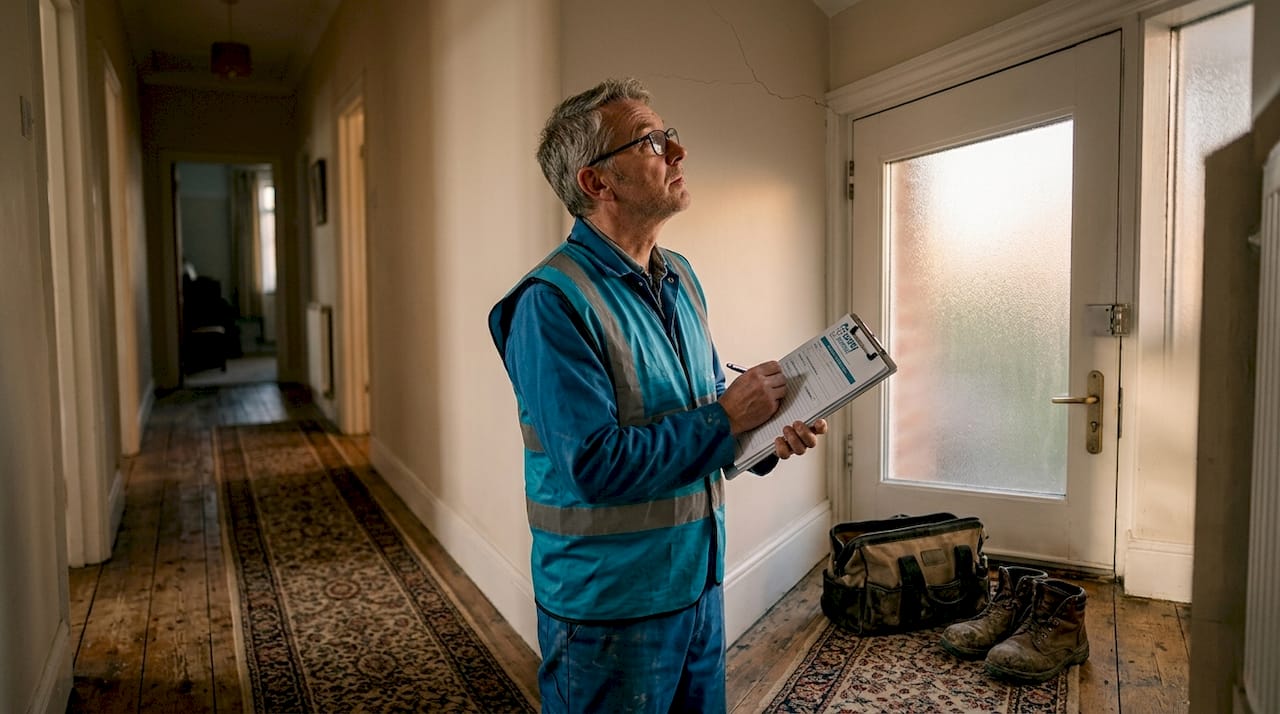
- RICS members and building surveyors: need to consider how Level 2 (HomeBuyer Report) and Level 3 (Building Survey) outputs will eventually feed into digital sales packs and property logbooks, since condition reporting is a named component of the future pack.
Building surveyors should treat this as a planning window. A survey commissioned now under RICS Home Survey Standard still stands independently, but firms that structure reports with clear, data-friendly condition ratings will be better positioned once digital packs become standard.
What Should Buyers and Sellers Do to Prepare
Buyers and sellers should treat late 2026 as a preparation window, not a compliance deadline; current legal requirements remain unchanged while government finalises voluntary guidance. Sensible preparation now can reduce friction once mandatory rules eventually apply.
- Sellers: ask agents whether they are following the emerging material information guidance, and consider commissioning searches and a condition survey earlier than usual.
- Buyers: request as much upfront information as an agent can provide, even though full sales packs are not yet mandatory.
- Both parties: commission a RICS-standard Level 2 or Level 3 survey early, since condition reporting is expected to remain central to any future digital sales pack.
- Conveyancers and agents: monitor Law Society updates and MHCLG guidance through 2027 as consultation on mandatory qualifications and legislation progresses.
Frequently Asked Questions
Is the home buying and selling reform roadmap already law in September 2026? No. As of September 2026, the roadmap sets out plans and voluntary guidance; mandatory sales packs and agent qualifications require future legislation, expected from 2027 onward.
Do sellers have to provide a digital sales pack right now? Not yet. Sales packs remain voluntary in 2026, with government publishing a non-statutory information list while working toward future legislation.
What is a digital property logbook? A digital property logbook is a planned record that stores key facts and documents about a home over its lifetime, intended to speed up future sales by reducing repeated information-gathering.
Will estate agents need qualifications under the roadmap? Mandatory qualifications are being consulted on, with expected timing between 2027 and 2028, not an immediate 2026 requirement.
Should a RICS Level 2 or Level 3 survey still be commissioned this year? Yes. Independent building surveys remain a standard and valuable part of due diligence in 2026, and are expected to remain central to any future digital sales pack.
Conclusion
The UK home buying and selling reform roadmap in September 2026 marks the start of a multi-year shift, not an overnight change. Buyers and sellers transacting in autumn 2026 still follow current conveyancing rules, but the direction is clear: more upfront information, digital logbooks, and eventually mandatory sales packs and qualified agents.
The most useful step available right now is not waiting for legislation. Commissioning a professional building survey early gives buyers and sellers verified condition data that will remain relevant however the digital sales pack framework eventually takes shape.
Book a RICS Level 2 HomeBuyer Report or Level 3 Building Survey with Survey Merchant to get clear, professional property condition information ahead of the reforms taking full effect.