Ninety-four thousand, eight hundred. That is the number of UK residential property transactions recorded in September 2026, and it tells a story of a market pulling back just as winter sets in. New figures published this week confirm what estate agents have sensed for months: the retreat in UK property transactions and mortgage approvals is now backed by hard data, and buyers who do push ahead need to protect themselves more carefully than ever.
Published on 4 November 2026, this article breaks down the latest HMRC and Bank of England data, explains why mortgage approvals have dropped to their weakest level since December 2023, and sets out practical survey advice for buyers and sellers navigating a cautious, affordability-squeezed market.
Key Takeaways
- UK property transactions fell to 94,800 in September 2026 (seasonally adjusted), down 1% month-on-month and 4% year-on-year.
- Mortgage approvals for house purchase dropped to 53,400, the lowest since December 2023, while remortgage approvals jumped to 42,600.
- Average mortgage rates have climbed to 5.89% according to Moneyfacts, the highest since November 2023, ahead of a Bank of England decision expected to lift the base rate to 4%.
- Nationwide reports flat house prices in October with annual growth of just 0.5%.
- In a thinner, more selective market, a RICS Level 2 HomeBuyer or Level 3 Building Survey is one of the few tools giving buyers real negotiating leverage and sellers protection against fall-throughs.
What the HMRC Data Shows for September 2026
HMRC figures reported on 2 November 2026 put seasonally adjusted transactions at 94,800 for September, down 1% on August and 4% on September 2025. On a non-seasonally adjusted basis, transactions were up 1% month-on-month but down 5% year-on-year, suggesting the underlying trend is softer than the headline monthly figure implies.
Agents are seeing this directly. Nick Leeming of Jackson-Stops reports sales 4% lower than the same period in 2025, noting that "demand is still present, but buyers are increasingly selective about what they are prepared to pay." Zoopla's Richard Donnell adds that sales agreed in the last four weeks were 7% lower than a year ago, with the consultancy now expecting around 100,000 fewer transactions across 2026 than in 2025.
Mortgage Approvals Lowest Since 2023: The Affordability Squeeze
The Bank of England's own figures show mortgage approvals for house purchase fell to 53,400 in September, the lowest reading since December 2023. Remortgage approvals, by contrast, rose sharply to 42,600 from 34,000 in August, as existing borrowers lock in rates ahead of further volatility. The average rate on newly drawn mortgages edged up to 4.63% in September from 4.60%.
Richard Donnell describes higher mortgage rates over the summer and autumn as delivering "a 15% hit to buying power" for mortgage-dependent buyers. Moneyfacts data published on 4 November shows the average mortgage rate now at 5.89%, the highest since November 2023, with average two-year fixes at 5.97% and five-year deals above 6%. Jason Tebb of OnTheMarket points to volatility in swap rates as the key driver squeezing affordability further.
Survey Advice for a Cautious Market: Why Due Diligence Matters More Now
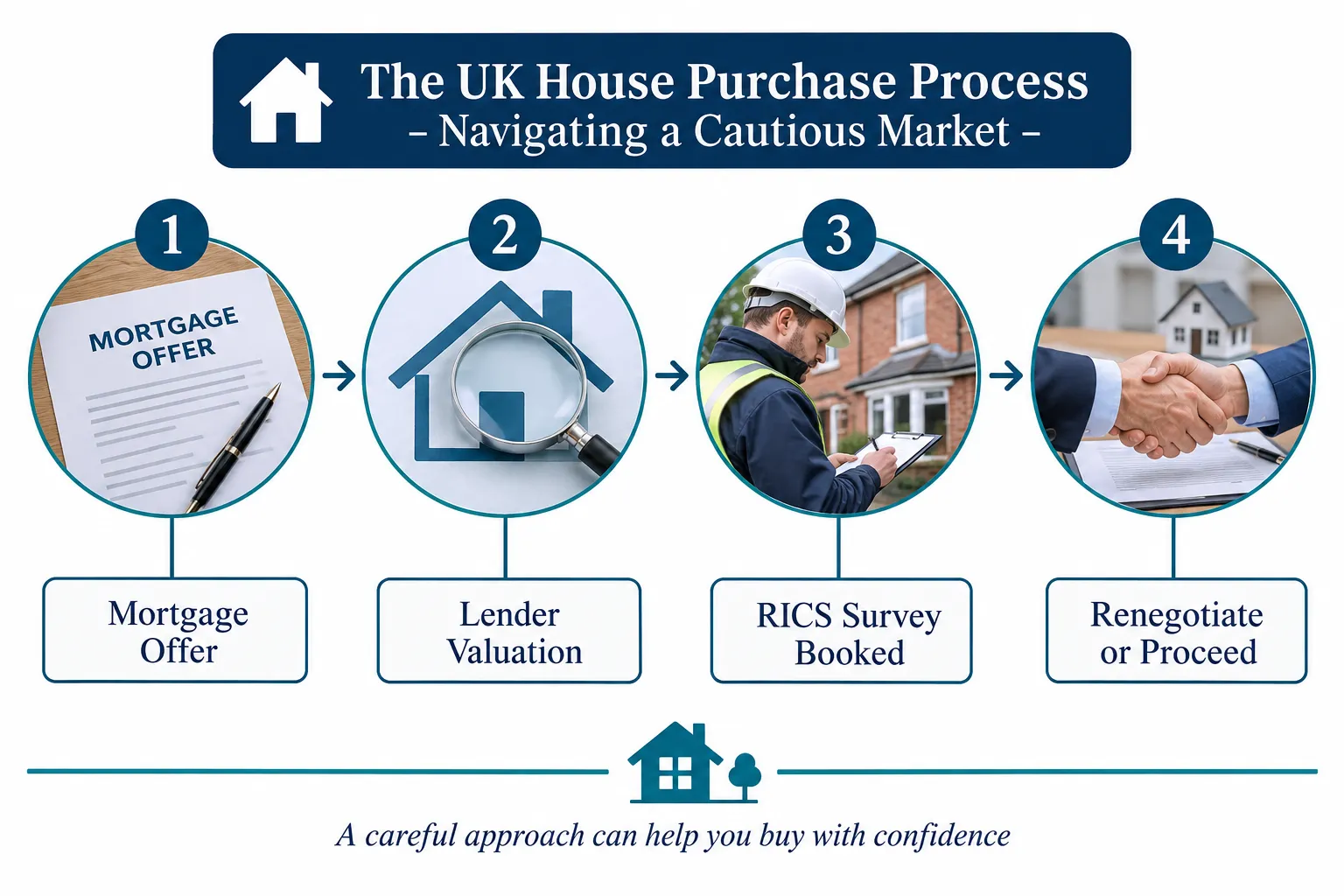
Ian Harris of NAEA Propertymark says the market is "navigating a period of buyer caution and affordability concerns." When buyers commit fewer offers and negotiate harder, a professional survey becomes essential rather than optional.
Why a Lender's Valuation Is Not a Survey
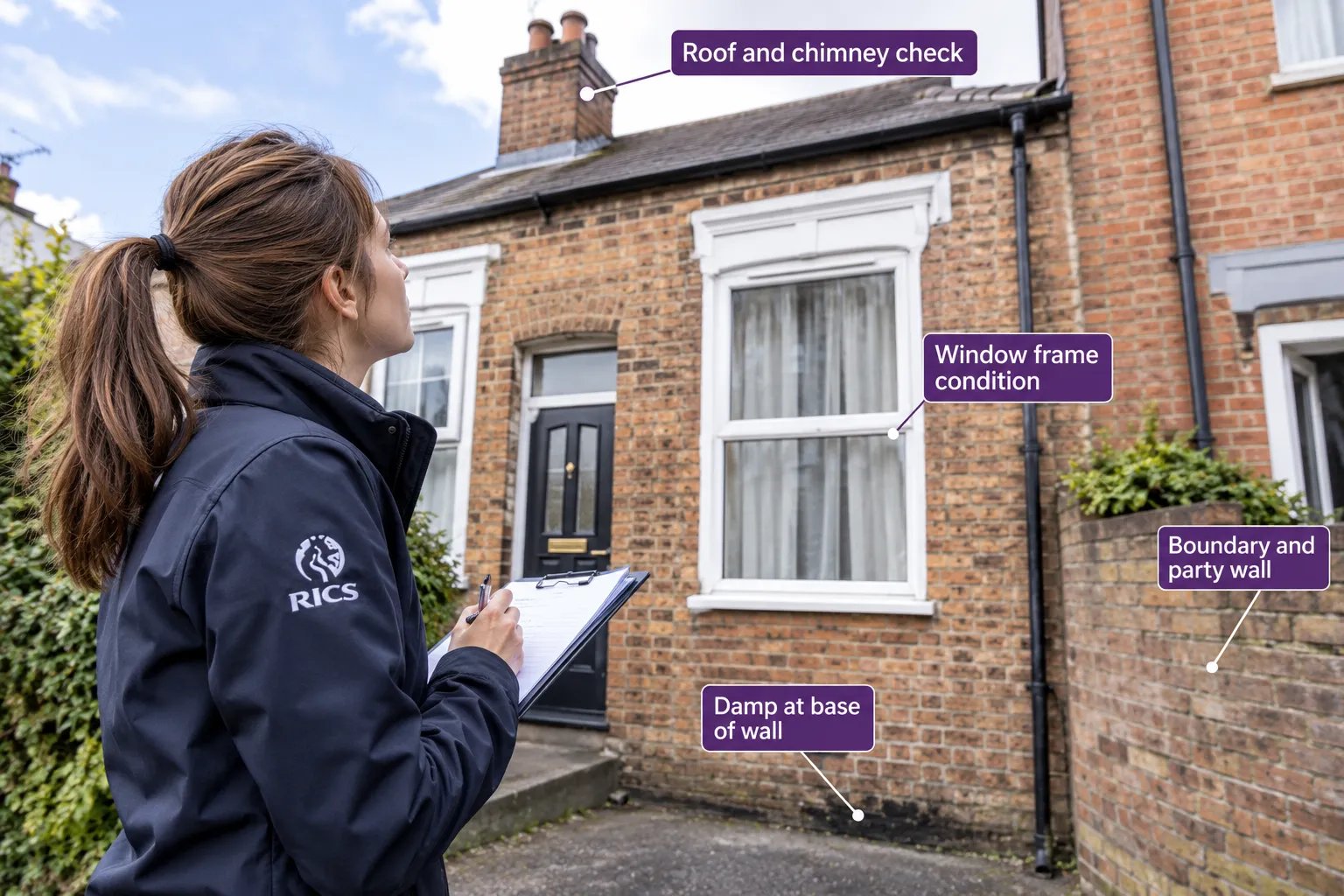
A mortgage valuation only confirms the property is worth enough to secure the loan. It is a brief desktop or drive-by assessment for the lender's benefit, not yours. It will not identify subsidence, damp, roof defects, or structural movement. Relying on it alone leaves buyers exposed to costly surprises after completion.
RICS Level 2 HomeBuyer Survey vs Level 3 Building Survey
- Level 2 HomeBuyer Survey: suited to conventional houses and flats built after 1900 in reasonable condition. Flags typical defects such as damp, roof wear, and drainage issues using a simple traffic-light system.
- Level 3 Building Survey: recommended for older, listed, extended, or unusually constructed properties, or any home showing visible defects. Provides detailed analysis and repair cost guidance.
Either survey can uncover issues that justify renegotiating the price or requesting repairs before exchange, directly offsetting some of the affordability pressure buyers face from higher rates.
Independent Valuations When Comparable Evidence Is Thin
With Nationwide reporting flat prices in October and annual growth of just 0.5%, the weakest since January 2024, with average prices at £273,566 and nearly 2% below the April peak, comparable sales evidence is becoming harder to find in some areas. An independent RICS valuation gives buyers and sellers a reliable, evidence-based figure when the local market is too thin for confident pricing.
How Sellers Can Avoid Fall-Throughs
In a market where buyers are pulling out over price or condition disputes, sellers commissioning a pre-sale survey can identify issues early, price realistically, and present buyers with fewer surprises, reducing the risk of late-stage renegotiation or collapsed chains.
Choosing the Right Survey by Property Type
| Property Type |
Recommended Survey |
| New-build or modern standard construction |
Level 2 HomeBuyer Survey |
| Victorian/Edwardian terrace, pre-1930 |
Level 3 Building Survey |
| Listed buildings or non-standard construction |
Level 3 Building Survey |
| Extended or renovated properties |
Level 3 Building Survey |
| Flats in purpose-built blocks |
Level 2 HomeBuyer Survey |
The Survey Merchant matches buyers and sellers with local RICS-registered surveyors, helping ensure the survey level matches the property's age, construction and condition.
Summary of Latest Market Figures
| Metric |
Figure |
Source |
| Residential transactions, Sept 2026 (seasonally adjusted) |
94,800 (-1% MoM, -4% YoY) |
HMRC, 2 Nov 2026 |
| Mortgage approvals (house purchase) |
53,400, lowest since Dec 2023 |
Bank of England |
| Remortgage approvals |
42,600 (up from 34,000 in Aug) |
Bank of England |
| Average rate, newly drawn mortgages |
4.63% (up from 4.60%) |
Bank of England |
| Nationwide average house price |
£273,566, +0.5% annual |
Nationwide, 30 Oct 2026 |
| Average mortgage rate |
5.89%, highest since Nov 2023 |
Moneyfacts, 4 Nov 2026 |
What Comes Next: The Bank of England Decision
The Bank of England announces its rate decision on Thursday 5 November 2026, with a rise from 3.75% to 4% widely expected, the first increase since August 2023, following CPI inflation rising to 3.5% in September. A rate rise could add further pressure to an already cautious buyer pool, reinforcing the need for rigorous due diligence before committing to a purchase.
FAQ
Is now a bad time to buy a UK property?
Transactions and approvals are down, but agents report demand is still present. Buyers who proceed should negotiate carefully and use survey findings to support fair pricing.
Why did mortgage approvals fall to their lowest since December 2023?
Rising mortgage rates, now averaging 5.89% according to Moneyfacts, combined with swap rate volatility, have reduced borrowing capacity and buyer confidence.
Do I still need a survey if the lender has valued the property?
Yes. A lender valuation only protects the lender's interest and does not inspect for structural or hidden defects.
What survey should I get for an older property?
A RICS Level 3 Building Survey is recommended for pre-1930s, listed, or extended properties.
Can a survey help me renegotiate my offer?
Yes. Identified defects frequently provide grounds for price reductions or seller-funded repairs before exchange.
Conclusion
The September 2026 transaction and mortgage-approval data reflects a market where fewer buyers are proceeding, and those who do are far more price-sensitive. With rates elevated and a Bank of England decision looming, due diligence is not optional, it is the clearest way to protect against overpaying or inheriting costly defects. Buyers and sellers alike should commission an appropriate RICS survey before committing. The Survey Merchant can connect you with a local RICS surveyor today to help you move forward with confidence.