We use cookies to improve your experience on our site, analyze site traffic, and assist in our marketing efforts. By clicking "Accept all," you agree to the storing of cookies on your device. You can choose to "Reject all" non-essential cookies. For more information, please read our Cookie Policy.
TA6 Form Explained: 2026 Guide for Buyers & Sellers
A complete 2026 guide to the TA6 Property Information Form: the 6th edition changes, a section-by-section table, how to fill it in, what happens if a seller lies, and why a survey is still essential.
The TA6 form – officially the Law Society’s Property Information Form – is the document almost every seller in England and Wales completes to tell the buyer what they know about their home. In 2026 it matters more than ever: a new 6th edition became mandatory for transactions instructed on or after 30 March 2026, the courts have shown they will unwind a sale over false answers, and the government’s home buying reforms are about to change what sellers must disclose up front. This guide explains what the TA6 form is, what each section asks, how the 2026 changes affect you, and – crucially – why the form is never a substitute for an independent survey.
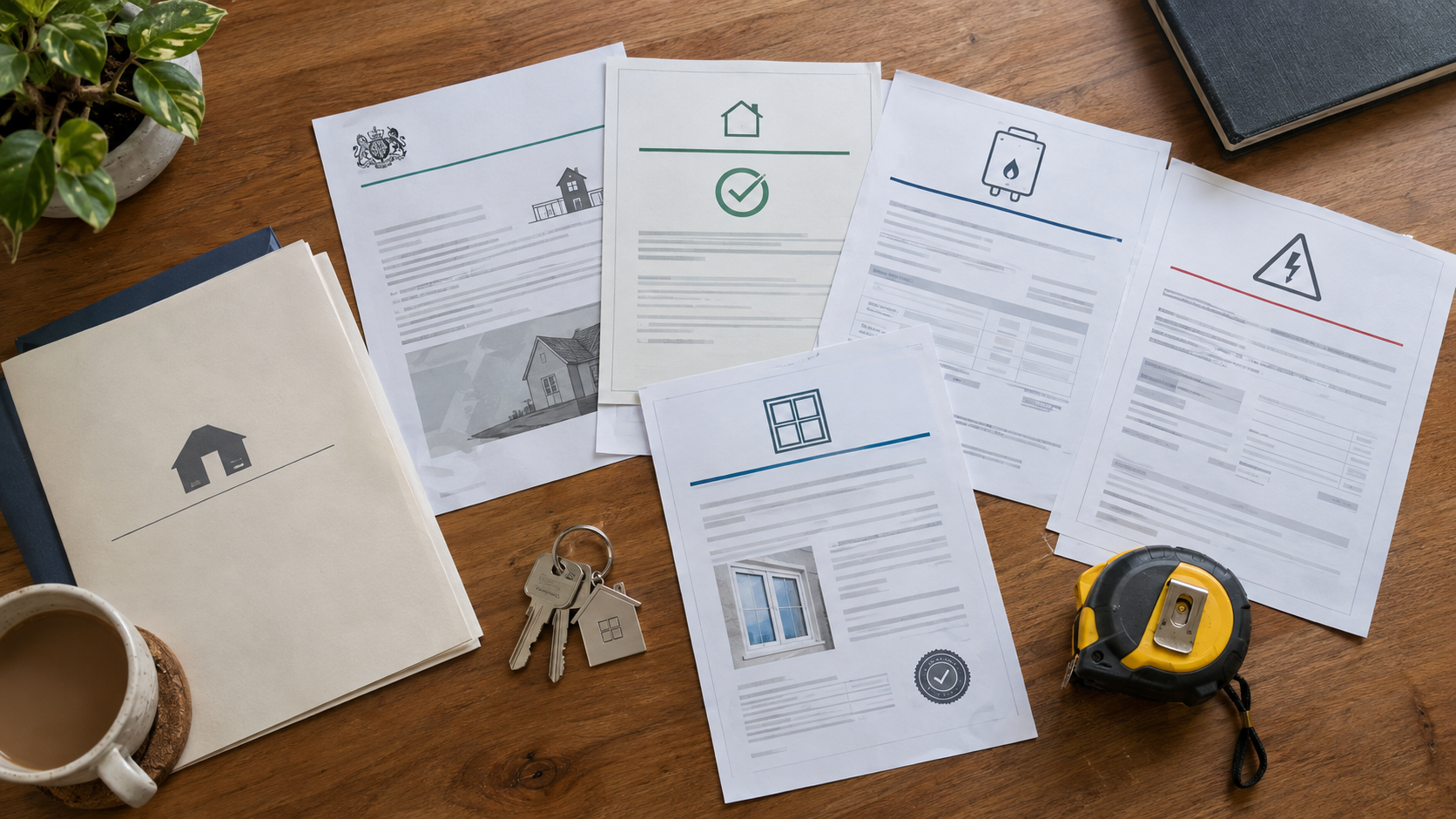
Sellers complete the TA6 form from their own knowledge; buyers should read it closely but still commission a survey.
Key takeaways
The TA6 form is the Law Society’s Property Information Form. Sellers complete it; buyers and their conveyancers rely on it.
A streamlined 6th edition (2025) replaced the 5th edition and is mandatory for new transactions from 30 March 2026, under a new two-form approach that separates “material information” for marketing from the post-offer TA6.
False or careless answers can amount to misrepresentation. In February 2025 the High Court ordered rescission of a £32.5 million London sale after a seller gave untrue replies about an infestation and hidden defects.
The TA6 covers boundaries, disputes, notices, alterations, guarantees, insurance, environmental matters, rights, parking, services, connections and the transaction itself.
The form reports what the seller knows, not the property’s condition. The Law Society’s own notes tell buyers to instruct a surveyor and not to rely on a lender’s valuation.
Government reforms published in June 2026 plan to require seller “sales packs” including searches and a property condition report before a home is listed.
What is a TA6 form?
The TA6 form is the standard Property Information Form published by the Law Society and completed by the seller of a residential property in England and Wales. It records what the seller knows about the home – from boundaries and disputes to alterations, guarantees and flooding – so the buyer’s conveyancer can raise enquiries before exchange of contracts. Buyers are entitled to rely on the answers given.
The form is not required by statute, but it is used in the overwhelming majority of sales because it sits within the Law Society’s Conveyancing Protocol, which firms accredited under the Conveyancing Quality Scheme (CQS) are expected to follow. It is usually sent to the seller by their solicitor or conveyancer at the very start of the sale, alongside the TA10 Fittings and Contents Form and, for flats, the TA7 Leasehold Information Form.
Two points are easy to miss. First, the TA6 is a statement of knowledge, not a warranty of condition – the Law Society’s explanatory notes state plainly that the seller gives no warranty about the physical state of the property and that neither solicitor is responsible for checking it. Second, the answers are legally significant: a seller who gives misleading information may have to pay compensation after completion, and in serious cases the sale can be set aside.
What changed in 2026: the TA6 6th edition and the two-form approach
The TA6 has had a turbulent few years. A 5th edition launched in 2024 folded National Trading Standards’ “material information” requirements into the form, which many conveyancers found confusing. After an independent consultation of more than 1,200 participants that concluded in December 2024, the Law Society decided to replace the 5th edition altogether.
The result is the TA6 (6th edition) (2025), which CQS-accredited firms must use for transactions instructed on or after 30 March 2026. According to the Law Society’s own summary and reporting by Legal Futures (12 January 2026), the 6th edition is built around a two-form approach:
A streamlined TA6 for the post-offer conveyancing stage, written in plainer language with fewer duplicated questions and more scope to answer “not known” honestly rather than guess.
A separate, optional material information form for the marketing stage, so that information agents need before listing is gathered without overloading the seller at the start of conveyancing.
The 6th edition also expands the environmental and flood-risk questions, updates compliance and building-safety content, and adds questions on broadband and mobile coverage. The 5th edition is no longer accepted for new matters after 30 March 2026, although older editions can still appear on transactions that began before that date.
What does the TA6 form ask? Section-by-section
The 6th edition is arranged into 14 numbered sections. Several of them touch directly on matters a surveyor deals with every day, which is why reading the completed form before your survey is so useful. The table below summarises each section and the documents a seller will typically need to find.
TA6 section
What the seller must disclose
Typical supporting documents
1. Property and seller details
Confirms the address, UPRN and who is answering (owner, attorney or company officer).
Title documents
2. Boundaries
Who maintains each boundary, irregularities, changes, overhanging features, and any works to a shared wall under the Party Wall etc. Act 1996.
Past or current disputes or complaints with neighbours, including concerns such as noise even if no action was taken.
Correspondence
4. Notices
Formal notices affecting the property or nearby developments (planning, road schemes, parking).
Letters from the council or neighbours
5. Alterations
Planning permission, building regulations approval and competent-person certificates for works; listed building, conservation area and tree preservation order status; solar panel agreements.
Gathering certificates, guarantees and planning paperwork early is the single best way to avoid TA6 delays.
How to fill in a TA6 form as a seller
The golden rule is to answer truthfully, completely and from your own knowledge. The Law Society’s guidance is explicit: if you do not know an answer, you must say so. “Not known” is a legitimate reply to questions such as boundary responsibility or Japanese knotweed, where a rhizome could be hidden in the soil; it is not legitimate as a way of avoiding something you do know.
Start early. Locating planning consents, building regulations sign-offs and guarantees can take weeks. If a loft conversion or extension was never signed off, speak to your solicitor about a regularisation certificate or indemnity insurance rather than leaving the box blank.
Disclose disputes, however minor. A noise complaint or a boundary disagreement that fizzled out still counts if you were aware of it.
Attach what you reference. Party wall notices, flood reports, radon results and knotweed management plans should accompany the form.
Update the form if anything changes. The duty to be accurate continues up to exchange; a new leak, a new dispute or a new notice must be passed on.
Do not rely on your agent’s particulars. The TA6 is your statement, signed by every seller.
What happens if a seller lies on the TA6 form?
A false answer to a direct enquiry is a misrepresentation. Under section 2 of the Misrepresentation Act 1967, a buyer who relied on an untrue statement can claim damages, and where the misrepresentation is fraudulent the court can rescind the contract entirely – unwinding the sale and ordering repayment of the price.
The clearest recent warning is Patarkatsishvili and another v Woodward-Fisher [2025] EWHC 265 (Ch), decided by Mr Justice Fancourt on 10 February 2025. The buyers of Horbury Villa in Notting Hill, purchased for £32.5 million in May 2019, discovered a severe clothes-moth infestation in the natural wool insulation. In replies to pre-contract enquiries – the same category of statement as TA6 answers – the seller had said he knew of no vermin infestation, no relevant reports and no hidden defects. The court found all three replies false and fraudulent, ordered rescission with repayment of the purchase money (less an allowance for the buyers’ use of the house), and awarded substantial damages including stamp duty and the costs of eradicating the infestation.
Most TA6 disputes are far smaller: an undisclosed neighbour dispute, an extension without building regulations approval, or a flooded cellar described as dry. The remedy is usually damages reflecting the cost of putting matters right or the diminution in value – sums that can still run to tens of thousands of pounds.
Why the TA6 form is not a substitute for a survey
This is the point surveyors most want buyers to understand. The TA6 captures what the seller knows or remembers. It will not tell you about the rotten roof timbers the seller has never seen, the cracked lintel behind the render, the inadequate steel beam under that “approved” knock-through, or the damp that has not yet shown on the wallpaper. The Law Society’s own notes advise buyers to instruct a surveyor to assess the physical and structural condition of the property, and warn them not to rely on a valuation report commissioned by a mortgage lender.
Used well, the two work together. Read the completed TA6 before your inspection and pass it to your surveyor. A suitably qualified, accredited surveyor – regulated by a body such as RICS, CIOB or RPSA – will use it to target the inspection: checking that the extension declared in section 5 matches the certificates supplied, looking at the shared wall mentioned in section 2 for signs of unauthorised works, inspecting the ground around a declared septic tank, or testing the moisture in a room where the seller mentions historic flooding. If you are unsure whether you need one, our guide Do I need a survey when buying a house? explains the options, and if the report raises issues, see what to do when a survey finds problems.
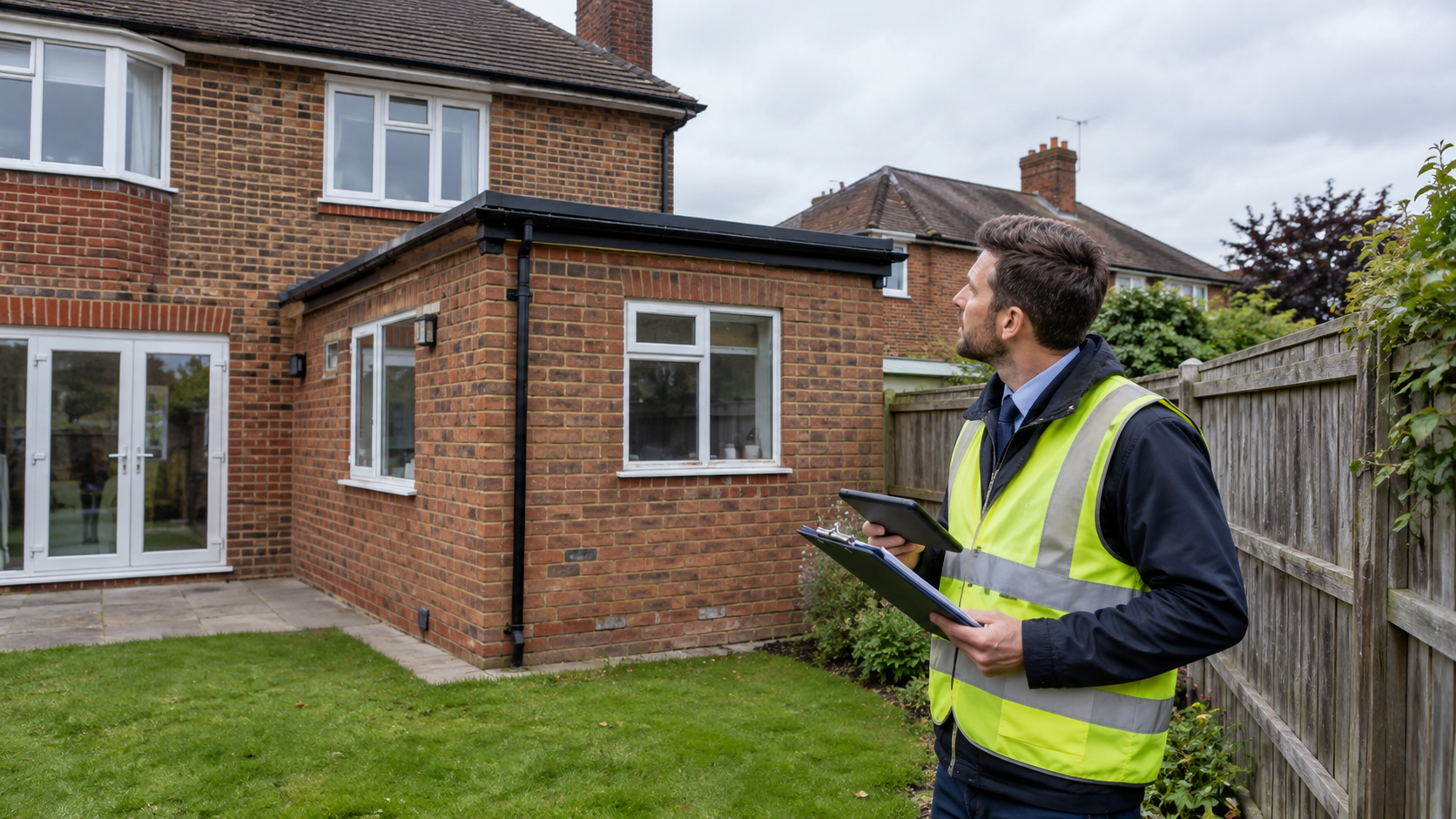
A surveyor can check that the alterations and boundaries described on the TA6 form match what exists on the ground.
TA6 and the 2026 home buying reforms: what is coming next
The TA6 is about to change again – or at least its place in the process is. On 19 June 2026 the government published its Home Buying and Selling Reform Roadmap, setting out plans to legislate, when parliamentary time allows, for seller “sales packs” to be prepared before a property is listed. Those packs are intended to include searches and a property condition report, with conveyancers verifying legal information and surveyors providing condition information, while sellers retain overall responsibility.
The roadmap’s rationale is stark: on average around 120 days pass between offer acceptance and completion, roughly one in three transactions falls through, and fall-throughs cost consumers around £400 million a year. In the consultation, 58% of respondents supported including searches and a condition report in an upfront pack. Voluntary adoption begins in 2026, with binding conditional contracts and digital property logbooks to follow in 2027–2028. RICS has broadly welcomed the direction while calling for at least a 24-month implementation period and a whole-home, risk-based approach to condition reporting. We cover the detail in our analysis of the home buying and selling reform roadmap and in our October 2026 piece on upfront property information and what it means for surveys.
For sellers, the practical message is to treat the TA6 as the first step towards a fuller upfront pack: gathering certificates, guarantees and reports now will pay off whichever edition of the form you complete. For buyers, the TA6 remains your best early window into the seller’s knowledge – and your prompt to book an independent inspection.
Common TA6 problems a survey can catch
Alterations without approval. A declared extension with no building regulations completion certificate is one of the most frequent TA6 flags. A building survey assesses whether the structure is sound regardless of paperwork.
Boundary and party wall issues. Section 2 asks about works to shared walls; a surveyor can identify unauthorised cuts into a party wall or encroaching structures.
Flooding and damp. Where section 8 reveals past flooding, a survey with moisture readings and a flood risk assessment puts the disclosure in context.
Japanese knotweed. A “not known” answer is common; a specialist survey gives certainty before you commit.
Services and drainage. Declared septic tanks, old wiring without an EICR and ageing boilers all merit specialist checks.
Why choose Survey Merchant for your pre-purchase survey?
If a completed TA6 form has raised questions – or simply left you wanting an independent view – Survey Merchant can help you act on it quickly.
An accredited panel matched to the job. We work with suitably qualified, accredited surveyors regulated by bodies including RICS, CIOB and RPSA, and match the surveyor to the property type and the issues the TA6 has flagged.
Nationwide UK coverage with local knowledge. From Victorian terraces to new-build flats, our surveyors know the regional construction types and the common problems behind TA6 disclosures.
Fast turnaround. Conveyancing timetables are tight; we aim to book inspections promptly and deliver clear, plain-English reports so you can renegotiate or proceed with confidence.
Transparent, competitive fixed fees. You will know the cost before you instruct, with no hidden extras.
Impartial advice and end-to-end support. Our surveyors act for you, not the seller or lender, and are available to talk through the report and your next steps.
The TA6 form is the Law Society's Property Information Form, completed by the seller of a home in England and Wales. It records what the seller knows about boundaries, disputes, notices, alterations, guarantees, insurance, environmental matters, rights, parking, services and the transaction, so the buyer's conveyancer can raise enquiries before exchange.
Is the TA6 form a legal requirement?
No statute requires it, but the TA6 forms part of the Law Society Conveyancing Protocol and is used in the vast majority of residential sales. Firms accredited under the Conveyancing Quality Scheme must use the current 6th edition for transactions instructed on or after 30 March 2026.
What is the new TA6 form and when did it start?
The TA6 (6th edition) (2025) replaced the 5th edition and became mandatory for new transactions from 30 March 2026. It is shorter and written in plainer language, with expanded flood and environmental questions and new broadband and mobile coverage questions, and it sits alongside a separate optional material information form for the marketing stage.
Can a seller refuse to answer questions on the TA6 form?
A seller can answer 'not known' where that is honestly the case, for example on boundary responsibility or Japanese knotweed. Leaving questions blank or refusing to answer is likely to delay the sale or cause the buyer to withdraw, and knowingly giving a false or misleading answer can amount to misrepresentation.
What happens if a seller lies on the TA6 form?
A buyer who relied on an untrue answer can claim damages under the Misrepresentation Act 1967, and in cases of fraudulent misrepresentation the court can rescind the sale. In Patarkatsishvili v Woodward-Fisher (February 2025) the High Court unwound a GBP 32.5 million purchase after false replies about an infestation and hidden defects.
Does the TA6 form replace a survey?
No. The TA6 records only what the seller knows and gives no warranty about the property's condition. The Law Society's notes advise buyers to instruct a surveyor and not to rely on a lender's valuation. A suitably qualified, accredited surveyor (RICS, CIOB or RPSA regulated) can check the TA6 disclosures against what exists on site.