Building Surveying
Sep 4, 2026
Homebuyer survey vs building survey: which do you need?
Discover the key difference between homebuyer and building survey options. Choose wisely to protect your investment and avoid costly repairs.

The difference between a homebuyer and building survey is this: a homebuyer survey (formally the RICS Level 2 HomeBuyer Report) is a mid-level visual inspection with traffic-light condition ratings, while a building survey (RICS Level 3) is a detailed structural analysis with narrative commentary and indicative repair costs. Choosing the wrong type does not just waste money. It leaves you exposed to defects that could cost tens of thousands of pounds to fix after you have already exchanged contracts. The RICS Level 2 and Level 3 surveys serve fundamentally different purposes, and the property you are buying should dictate which one you commission.

A homebuyer survey is designed for conventional residential properties built after 1900 that are in reasonable condition. The surveyor carries out a visual inspection of accessible areas, checking for visible defects, damp, roof condition, drainage, and structural movement. The resulting report uses a traffic-light rating system: condition rating 1 (no repair needed), 2 (repair or maintenance required), and 3 (urgent attention needed). This format makes the findings easy to read and act upon, even without a technical background.
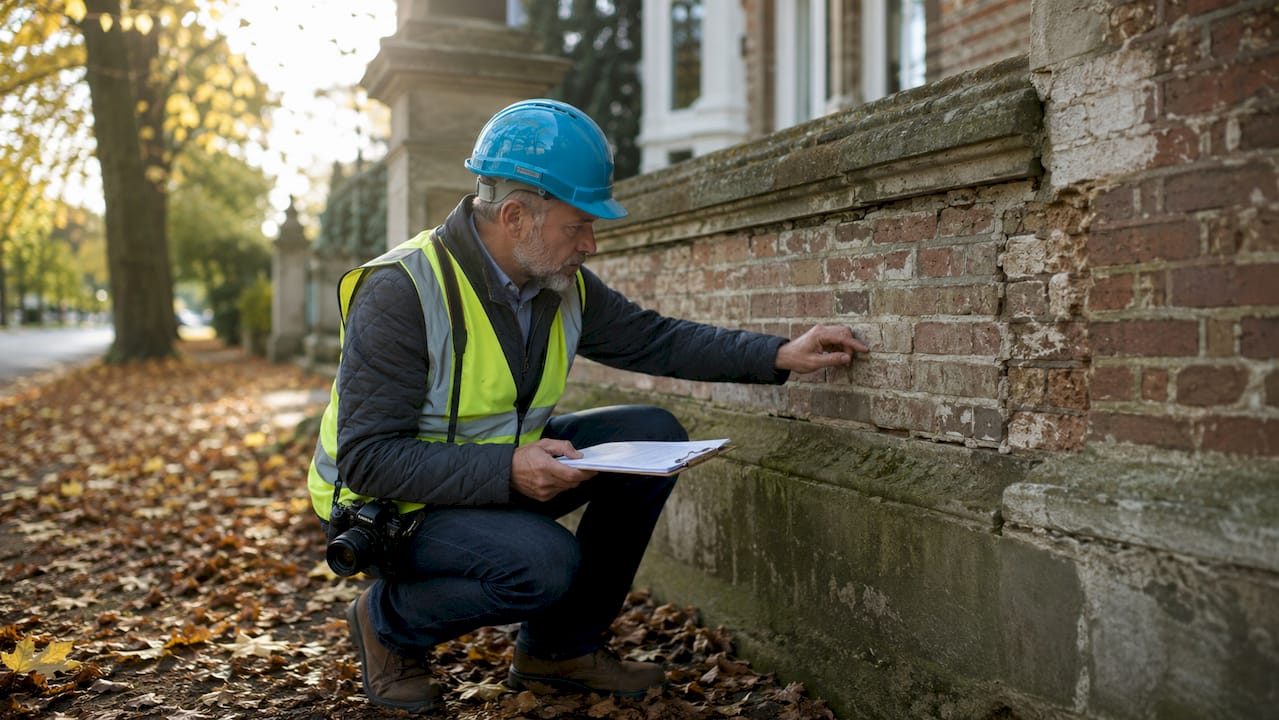
A building survey covers far more ground. It is suited to older properties, listed buildings, properties with extensions or alterations, and any home where structural concerns are already suspected. The surveyor spends 3–5 hours onsite examining the property in detail, producing a report that includes technical narrative, photographic schedules, and indicative repair costs. That depth of analysis is what separates it from the Level 2 option.
The core distinction is not just depth. It is purpose. A homebuyer survey tells you whether a standard property is broadly sound. A building survey tells you exactly what is wrong, how serious it is, and what it will likely cost to fix.
The RICS Level 2 HomeBuyer Report is the most popular survey type among UK buyers. About 60% of UK property buyers choose this level. That popularity reflects its balance of cost, clarity, and coverage for the majority of standard residential purchases.
The homebuyer report ratings are designed to be accessible. You do not need to be a surveyor to understand a condition rating 3 flag on a chimney stack or a damp reading in a ground-floor room.
Level 2 surveys cost £400–£800 depending on property size and location. That price point makes them accessible for most buyers purchasing a post-war semi or a modern flat.
The limitations are real, though. The inspection is visual only. The surveyor will not lift floorboards, open up wall cavities, or test services beyond a visual check. Repair cost estimates are not included. If you need to know what a damp-proof course replacement will cost, a Level 2 report will not tell you.
Pro Tip: If the property you are buying has had any extensions, loft conversions, or structural alterations, commission a Level 3 building survey regardless of the property’s age. Alterations introduce risk that a visual-only inspection may not fully capture.
A building survey is the most thorough inspection available for residential properties. The RICS Level 3 designation reflects its scope: it covers the full structure, all accessible elements, and produces a report that reads more like a technical document than a consumer summary.
The building survey importance for older stock cannot be overstated. Defects like subsidence, wall tie failure, or failed damp-proof membranes are common in Victorian and Edwardian properties. Detecting these after purchase can lead to catastrophic financial consequences.
The Level 3 report runs to 30–60+ pages and includes detailed narrative commentary on every inspected element, photographic evidence, and indicative repair costs. That cost estimate is significant. It gives you a basis for price negotiation before you exchange contracts.
Level 3 surveys cost £800–£1,500+, with prices rising for larger or more complex properties. That is a meaningful sum, but consider it against the cost of discovering undisclosed subsidence six months after completion.
One critical point: both Level 2 and Level 3 surveys are non-invasive visual inspections. The word “full” in the older terminology does not mean the surveyor opens up walls or lifts floors. If you need invasive investigation, that requires a separate specialist commission.
Pro Tip: Ask your surveyor to flag any areas where further specialist investigation is recommended. A good Level 3 report will identify where a structural engineer, damp specialist, or drainage contractor should be called in before you commit to purchase.
The practical difference between the two reports shows up clearly when you compare them side by side.
| Feature | Level 2 HomeBuyer Report | Level 3 Building Survey |
|---|---|---|
| Report length | 15–30 pages | 30–60+ pages |
| Condition rating system | Traffic-light (1, 2, 3) | Detailed narrative |
| Repair cost estimates | Not included | Indicative costs included |
| Typical cost | £400–£800 | £800–£1,500+ |
| Valuation included | Optional add-on | Not standard |
| Best suited for | Post-1900, standard condition | Pre-1900, complex, or altered |
The format difference matters for decision-making. A traffic-light system is fast to read and easy to share with a solicitor or mortgage broker. A detailed narrative report takes longer to digest but gives you far more to work with when negotiating.
Survey findings are negotiation tools. A Level 3 report identifying £15,000 of roof repairs gives you a concrete basis to request a price reduction or ask the vendor to carry out works before completion. A Level 2 report with a condition rating 3 flag achieves a similar outcome, but with less supporting detail.
The Level 2 vs Level 3 comparison ultimately comes down to how much certainty you need and how much risk the property carries.
The most damaging misconception in UK property buying is that a mortgage valuation is a survey. It is not.
Mortgage valuations protect lenders, not buyers. The valuer confirms the property is worth the loan amount. They do not inspect the roof, test for damp, or assess the structural integrity of the walls. Relying on a mortgage valuation leaves you entirely unprotected against defects that could cost thousands to remedy.
Pro Tip: Never skip a survey to save money on a property purchase. The average cost of a Level 3 survey is a fraction of what a single undisclosed structural defect can cost to repair.
Over 50% of buyers face unexpected repair costs after purchasing without a professional survey. That statistic reflects a pattern surveyors see repeatedly: buyers who trusted a visual viewing and a mortgage valuation, only to discover serious defects after completion.
“A survey is not a cost. It is the cheapest insurance policy available to a property buyer.”
Early defect detection changes the financial outcome of a purchase in three ways. First, it gives you accurate repair cost data before you commit. Second, it provides grounds for price negotiation or withdrawal. Third, it helps you plan post-purchase maintenance and budgeting with realistic figures rather than guesswork.
The benefits of a building survey extend beyond the transaction itself. A detailed report documents the property’s condition at the point of purchase. That record has value if disputes arise later with vendors, insurers, or planning authorities.
Surveyors bring expertise that no amount of personal viewing can replicate. They know where Victorian terraces hide rising damp. They recognise the signs of wall tie failure in 1970s cavity construction. They understand what a crack pattern indicates about foundation movement. That knowledge is what you are paying for.
The right survey type depends on the property’s age, condition, and complexity. A Level 2 report suits most standard post-1900 homes; a Level 3 is non-negotiable for older, altered, or structurally complex properties.
| Point | Details |
|---|---|
| Survey type by property age | Level 2 suits post-1900 standard homes; Level 3 is required for pre-1919 or complex properties. |
| Report depth and length | Level 2 produces 15–30 pages with traffic-light ratings; Level 3 runs 30–60+ pages with repair cost estimates. |
| Cost comparison | Level 2 costs £400–£800; Level 3 costs £800–£1,500+, reflecting the greater inspection depth. |
| Mortgage valuations are not surveys | Valuations protect lenders only and provide no condition assessment for buyers. |
| Surveys as negotiation tools | Detailed survey findings give buyers concrete grounds to negotiate price reductions or request repairs. |
Most buyers default to a Level 2 HomeBuyer Report because it is cheaper and because their mortgage broker mentions it first. I understand that instinct. When you are already stretched on a deposit and legal fees, saving £400–£600 on a survey feels rational.
The problem is that the buyers who regret skipping a Level 3 survey are never the ones who bought a 2005 new-build in good condition. They are the ones who bought a 1930s semi with a rear extension, or an Edwardian terrace that looked fine on a sunny viewing day. The defects that cost the most to fix are precisely the ones a visual-only inspection misses.
I have seen buyers use Level 3 reports to negotiate £20,000 off a purchase price after roof and structural issues were identified. That is not an unusual outcome. A thorough building survey gives you information, and information is leverage.
My advice is straightforward. If you are buying anything built before 1960, or anything with visible alterations, commission a Level 3. If you are buying a modern flat in good condition, a Level 2 is fine. And regardless of which survey you choose, never treat a mortgage valuation as a substitute. It was never designed to protect you.
Consult a RICS-qualified surveyor before you decide. They can assess the specific property and recommend the appropriate level. That conversation costs nothing and could save you a great deal.
— Surveymerchant
Choosing between a Level 2 and Level 3 survey is straightforward once you know what to look for. Acting on that choice is where Surveymerchant comes in.
Surveymerchant connects UK property buyers with RICS-qualified surveyors across the country, matching you to the right professional for your specific property type and location. Whether you need a HomeBuyer Report for a standard residential purchase or a full building surveying service for an older or complex property, Surveymerchant makes the booking process straightforward. The panel includes surveyors experienced in Victorian terraces, listed buildings, new-build inspections, and everything in between. Get expert advice and commission your survey with confidence through Surveymerchant.
A homebuyer survey (Level 2) is a visual inspection with traffic-light condition ratings, suited to standard post-1900 properties. A building survey (Level 3) is a detailed structural analysis with repair cost estimates, designed for older, altered, or complex properties.
A Level 2 HomeBuyer Report typically costs £400–£800, while a Level 3 Building Survey costs £800–£1,500 or more, depending on property size and location.
No. A mortgage valuation is carried out for the lender to confirm the property is worth the loan amount. It does not assess the property’s condition and provides no protection for the buyer.
Commission a Level 3 building survey for any property built before 1919, any property with structural alterations or extensions, or any home where visible defects are present at the time of viewing.
Yes. Detailed survey findings, particularly from a Level 3 report, give buyers concrete grounds to request a price reduction, ask the vendor to carry out repairs, or withdraw from the purchase entirely.
Survey Merchant provides vetted RICS surveyors across 100+ UK locations at fixed fees:
→ Level 2 Home Survey (HomeBuyer Report)
→ Level 3 Building Survey (full structural survey)
→ RICS Red Book property valuations
→ Party wall surveyors — notices, awards & schedules of condition
→ Expert witness surveyors — CPR Part 35 reports for property disputes