Building Surveying
Jul 16, 2026
What Does a Building Survey Cover? a Complete UK Guide
Wondering what does a building survey cover? Our guide explains RICS Level 2 & 3 reports, what's inspected, common exclusions, costs, and how to choose one.

You've found a house that feels right. The street works, the rooms are the right size, and your offer has just been accepted. Then the practical worry arrives. What's hiding behind the fresh paint, under the roof covering, or beneath that faint crack above the bay window?
That's where many buyers get confused. The lender may arrange a valuation, but that is for the lender's lending decision, not for your protection as the buyer. A building survey serves a different purpose. It is your property health check, your early warning system, and, in many cases, your best negotiating document.
When people ask, what does a building survey cover, they often expect a simple list. The truth is more useful than that. A proper survey doesn't just note defects. It helps you judge risk, plan repairs, decide whether the price still makes sense, and in some cases conclude that the purchase isn't worth the exposure.
The easiest way to think about a building survey is as the property version of a thorough car inspection before you commit your money. A shiny bodywork finish tells you very little about the engine. In the same way, tidy décor can hide movement, damp entry points, failing gutters, timber decay, or roof defects.

A first-time buyer often assumes the key question is, “Is the house good or bad?” Surveying doesn't really work like that. Most homes have defects. The operative questions are more practical. How serious are they? What caused them? What should be repaired first? What could they cost you later?
That shift in thinking matters. If a surveyor identifies slipped roof coverings, deteriorating pointing, decayed window frames and signs of long-term moisture penetration, the value isn't in the list alone. The value is in what that list lets you do next. You can budget properly. You can ask informed questions. You can renegotiate using evidence rather than guesswork.
Practical rule: A building survey isn't there to frighten you. It's there to replace uncertainty with usable information.
The strongest surveys do one more thing. They separate cosmetic issues from structural risk. A crack in plaster may be no more than surface shrinkage. A crack associated with distortion, sticking doors and external movement patterns needs a more cautious reading. That distinction can save you from either panicking unnecessarily or missing something expensive.
For a buyer, that's the purpose of the exercise. Not paperwork for its own sake. Not jargon. A survey gives you a calmer basis for a major decision.
In the UK, survey choice is now much clearer than it used to be because the RICS Home Survey framework distinguishes Level 1, Level 2 and Level 3 inspections. At the top end, Level 3 is the most detailed option and the closest modern equivalent of the old full structural survey, intended to give a detailed assessment of construction and overall condition, especially structural elements and significant defects, as explained in this overview of the Level 3 survey framework and what it covers.
A simple analogy helps. Think of the three levels as a basic car check, a standard service, and a thorough workshop inspection.
Level 1 is the lightest touch. It suits a more straightforward property where you want a broad snapshot of condition, not a deep defect analysis.
Level 2 is the middle ground and often the practical choice for a conventional property in reasonable condition. If you want a clearer sense of how a mid-level inspection works in practice, this guide on how a Level 2 survey uncovers property condition is useful.
Level 3 is for the buyer who needs the fullest picture. It is commonly chosen for older homes, heavily altered buildings, larger properties, or anything showing obvious signs of disrepair or movement. If the building has been extended several times, has a long maintenance history, or just gives you that uneasy feeling, this is usually the level that provides the depth needed.
| Feature | Level 1 Condition Report | Level 2 HomeBuyer Report | Level 3 Building Survey |
|---|---|---|---|
| Best suited to | Modern, conventional homes with no obvious concerns | Standard homes in reasonable condition | Older, altered, larger, or more complex properties |
| Inspection depth | Basic overview of visible condition | More detailed review of condition and defects | Most thorough assessment of construction, condition and significant defects |
| Typical time on site | About an hour | Up to 4 hours | Up to a day |
| Typical cost range | Qualitatively lower than Level 2 and 3 | £400 to £1,000 | £630 to £1,500 or more |
The time and cost benchmarks above come from the HomeOwners Alliance guide to RICS survey levels and pricing in its summary of what sort of survey you should have.
Some buyers over-order. They commission the most detailed survey on a very ordinary modern flat where a mid-level inspection would likely have answered the key questions.
Others under-order. They choose a lighter report on a Victorian house with signs of historic alteration, only to discover later that the missing detail would have helped them understand moisture ingress, timber risk, structural movement patterns, or likely repair sequencing.
The right survey level isn't about buying the biggest report. It's about matching the level of scrutiny to the building's age, complexity and visible warning signs.
If you remember one thing, make it this. The survey level determines how much useful decision-making material you'll have once the report lands in your inbox. That matters far more than the label on the cover.
A Level 3 building survey is where the question what does a building survey cover gets properly answered. Not in marketing shorthand, but in the practical sense of what the surveyor examines and why each area matters.
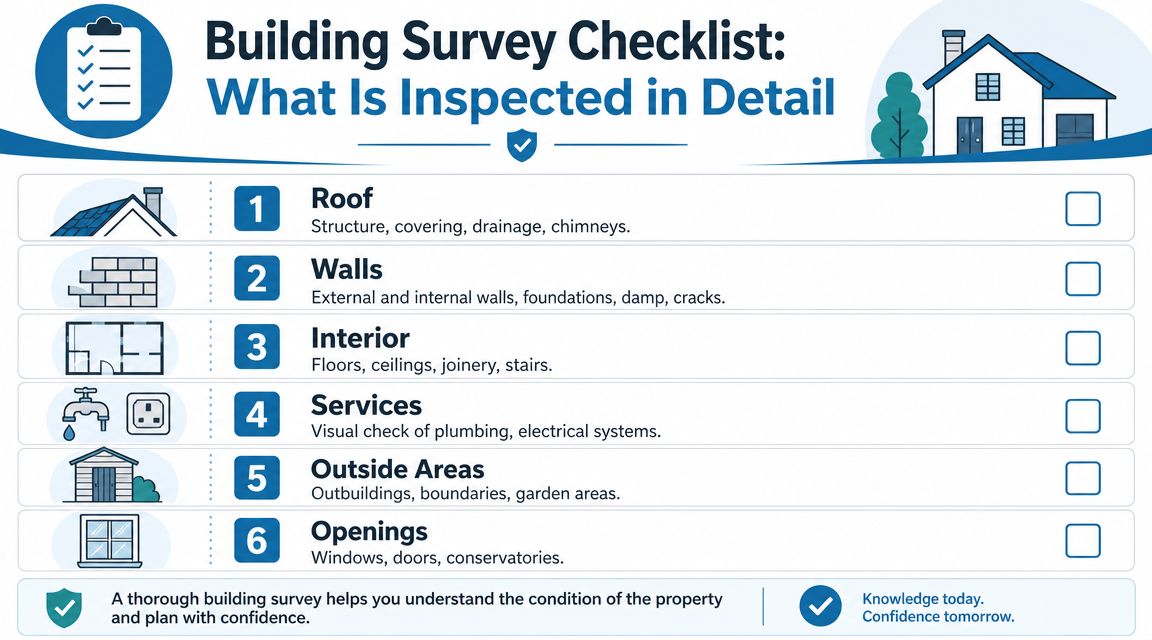
A good surveyor is not merely walking around ticking boxes. A building survey is a defect-analysis exercise, not a simple checklist. The surveyor links symptoms to likely causes. Damp staining may suggest failed roof coverings, defective gutters, or bridging at masonry. Cracking may point to shrinkage, thermal movement, or more serious structural issues. The purpose is to identify hidden defects and help quantify remedial costs, as outlined in the SCSI scope of building surveying services.
That's why two cracks of similar size can carry very different meaning. One is harmless decoration movement. The other forms part of a wider pattern.
For a quick reference point, many buyers find it helpful to compare the main inspection zones against Survey Merchant's survey checklist.
The structural frame is always central. The surveyor looks at walls, floors, ceilings and the way the building is behaving as a whole. Are floors sloping? Are openings distorted? Do cracks follow a pattern that suggests movement? Is there evidence of previous repairs, and do those repairs appear to have solved the underlying issue?
Roofs receive close attention because defects there often drive trouble elsewhere. The surveyor will usually inspect visible and reasonably accessible parts of the roof structure, coverings, flashings, chimney stacks and rainwater goods. A slipped tile is rarely just a slipped tile. It may be the start point for moisture ingress into insulation, timbers and internal finishes.
It may be helpful to consider:
This short video helps visualise how surveyors assess visible building condition on site.
Joinery also tells a story. The surveyor checks windows, doors, stairs, skirtings and other timber elements for distortion, decay and maintenance failure. Stiff sash windows, for example, may point to paint build-up, swelling from damp, or local movement. The item itself matters less than the pattern around it.
Services are usually inspected visually rather than tested in the way a specialist contractor would test them. The surveyor notes the apparent age and visible condition of plumbing, electrics, heating components, drainage arrangements and ventilation where accessible. If something looks dated, poorly installed, or unsafe, the report will usually recommend further specialist inspection.
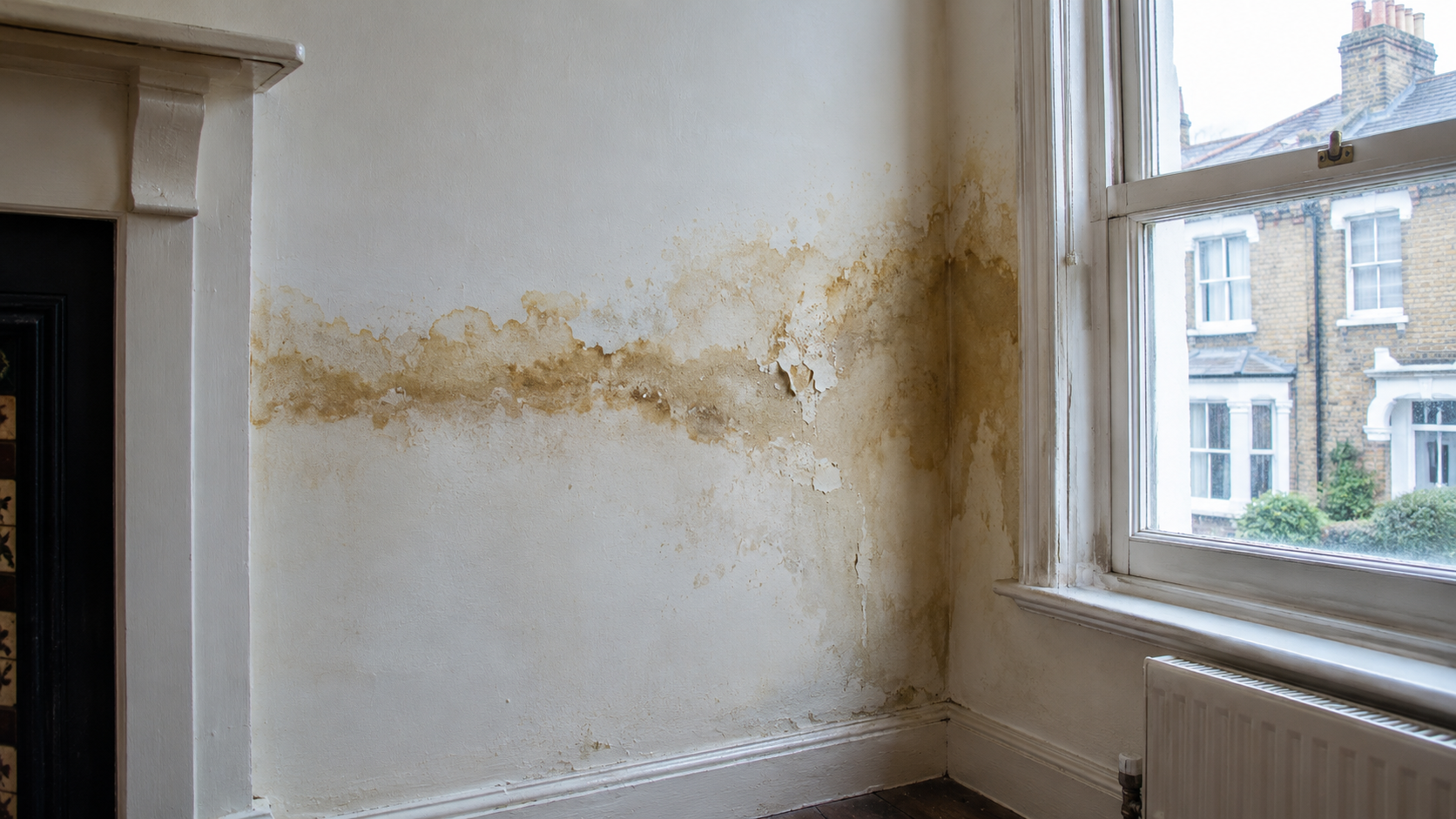
Damp and timber defects often confuse buyers most because the symptoms can look similar. Peeling wallpaper, staining and musty odours might arise from condensation, penetrating damp, leaks, poor drainage, or bridged damp proofing. Timber decay may result from persistent moisture rather than being the original defect itself.
A thorough survey also looks beyond the main walls of the house:
| Area | What the surveyor is looking for |
|---|---|
| Grounds | Drainage falls, vegetation influence, retaining walls, paths and signs that water is being directed towards the building |
| Boundaries | Walls, fences and any visible condition issues that may affect maintenance or responsibility |
| Outbuildings | Garages, sheds and ancillary structures, usually from a condition perspective |
| Conservatories and additions | How well later alterations integrate with the original structure |
A surveyor reads a property the way a doctor reads symptoms. The individual sign matters, but the pattern matters more.
Many disputes start with the same mistaken assumption. The buyer thinks the surveyor will uncover everything. A standard building survey doesn't work that way.

A RICS Home Survey is an in-depth visual inspection, but it is limited to what is visible at the time. That point matters especially in older housing stock. The RICS consumer guide notes that around 38% of homes in England were built before 1946, which increases the chance of older materials and concealed defects that a standard survey may not confirm, including hazards such as asbestos. You can read that in the RICS guide to house surveys, costs, types and benefits.
In plain terms, the surveyor usually won't be lifting floorboards, opening sealed voids, cutting into walls, drilling holes, or carrying out laboratory testing. If loft access is blocked, that limitation will be recorded. If a service installation is present but not fully tested, that limitation will also be noted.
That means a building survey usually does not provide:
Sometimes the survey itself points to the next investigation. If there's repeated staining to lower walls with no obvious internal plumbing leak, a drainage check may be sensible. If a pre-war property contains textured coatings, old service cupboards, cement flues or other suspect materials, asbestos advice may be sensible. If an older consumer unit or untidy wiring is noted, an electrical inspection may be sensible.
For underground drainage in particular, buyers often benefit from reading this guide to essential drain survey information for homeowners, because surface symptoms don't always reveal what is happening below ground.
A survey tells you when to bring in the right specialist. It doesn't replace every specialist.
That limitation isn't a weakness. It's the boundary of a non-invasive inspection.
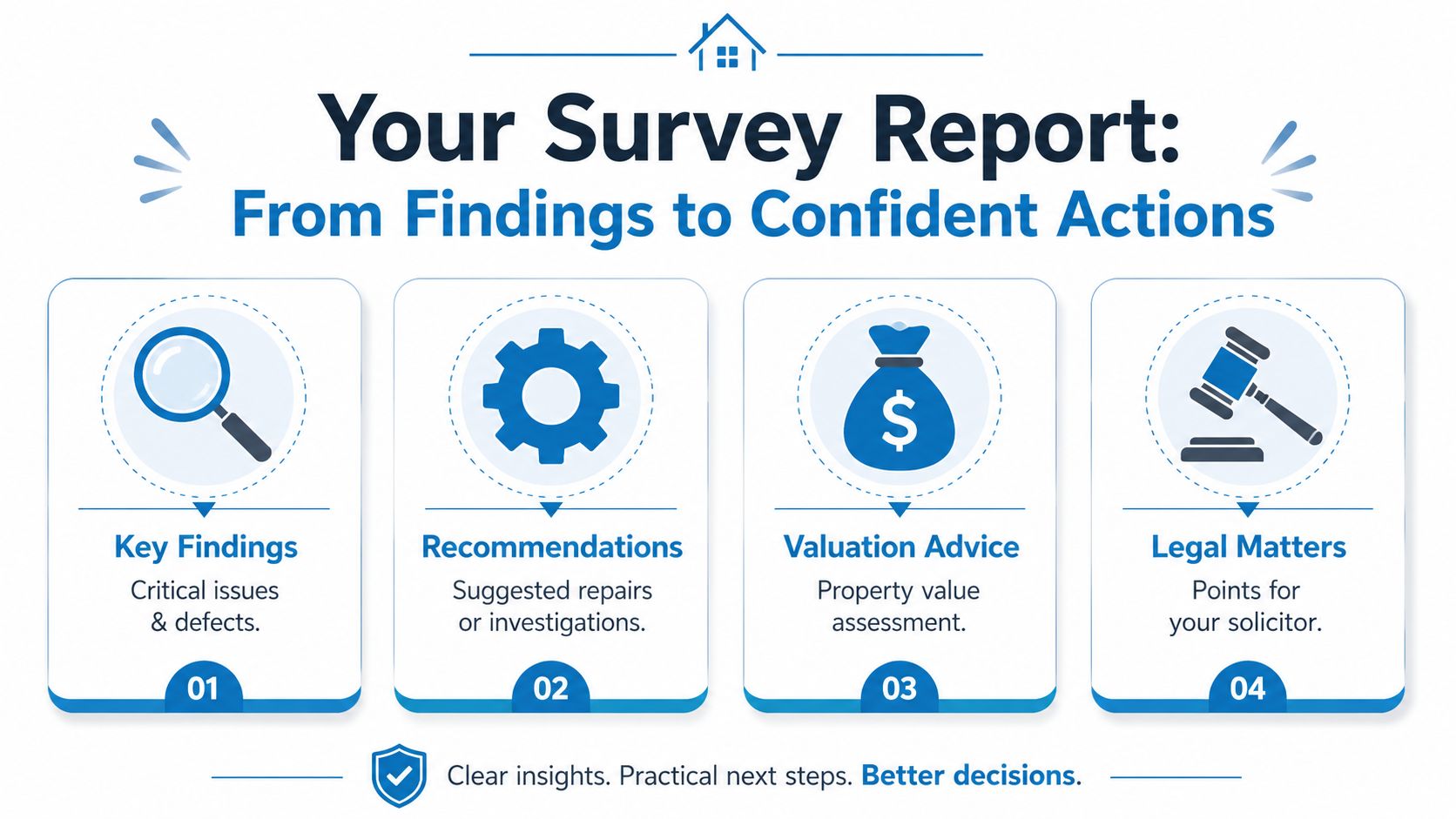
The survey report is where the value crystallises. Up to that point, the inspection is observation and analysis. The report turns those observations into decisions.
Most buyers open the report and go straight to the alarming parts. That's normal, but it's not the best method.
Start with the summary. Identify the items that affect safety, water entry, structural stability, or urgent maintenance. Then separate those from defects that are inconvenient but manageable, such as dated finishes or routine replacement of worn elements.
Many reports use a traffic-light style approach or another condition rating system. The exact format varies, but the logic is straightforward:
Suppose the report notes defective flashing to a chimney abutment. A useful report won't stop at naming the defect. It should also explain the likely implication, such as rain penetration to roof timbers or internal finishes, and the recommended action, such as repair by a competent roofing contractor.
That gives you three practical options.
A calm buyer uses the report as an advantage, not drama. You're not saying, “The survey was bad.” You're saying, “These specific items change the risk and cost profile of the purchase.”
The report is not a verdict on whether you should buy. It is evidence for deciding on what terms you should buy, if at all.
Your solicitor may also need parts of the report, especially where defects raise legal or title questions around alterations, guarantees, boundaries or responsibility for repairs.
Once you know the level of inspection you need, the practical task is finding a suitably qualified surveyor and getting the job booked without delay.
One route is to use a comparison and matching platform such as Level 3 building surveys, where you can enter the property details and request quotes for the appropriate survey type.
The process is usually straightforward:
What matters most is not speed alone. It's getting the right survey for the property in front of you, from a professional who can explain defects clearly and relate them to likely repair priorities.
If you're buying an older, altered or visibly tired building, clarity beats haste every time.
Turnaround varies by surveyor, workload and property complexity. A larger or more complicated property usually takes longer to inspect, analyse and write up properly than a straightforward home. If timing is critical, ask for the expected report timescale before you instruct.
Yes, it can still be sensible. A new build may not need the same type of survey as an older house, but buyers still benefit from an independent inspection of workmanship and defects. In many cases, a snagging inspection is the more relevant tool.
No. A survey is an assessment, not an exam. The surveyor is reporting condition, risks and recommended actions. The result may still lead you to withdraw, but that is your decision as buyer, not a formal pass-or-fail outcome.
Usually, share only the relevant extracts when negotiating. If the report identifies repairs, defects or follow-up investigations that affect price, send the pages that support your position. Keep the discussion factual and tied to specific findings rather than broad claims that the property is “unsound”.
If you need a surveyor for a purchase, sale or follow-up inspection, Survey Merchant connects property owners and buyers with qualified surveying professionals across the UK, including Level 2 and Level 3 surveys.
Survey Merchant provides vetted RICS surveyors across 100+ UK locations at fixed fees:
→ Level 2 Home Survey (HomeBuyer Report)
→ Level 3 Building Survey (full structural survey)
→ RICS Red Book property valuations
→ Party wall surveyors — notices, awards & schedules of condition
→ Expert witness surveyors — CPR Part 35 reports for property disputes