Building Surveying
Sep 4, 2026
Building surveyor platforms: shortlist, pilot and adopt
Explore the best building surveyor platforms to capture data and streamline workflows. Shortlist, pilot, and adopt the right digital tools for efficiency.

The right building surveyor platform captures data on site, drafts reports with AI assistance, and manages the full job lifecycle from instruction to sign-off. The immediate step: shortlist two or three offline-first, RICS-aware platforms and run a timed pilot on a pair of real jobs before committing to a contract. Surveymerchant is a practical starting point for finding vetted surveying professionals and trialling digital workflows across the UK.
The core capability set has moved well beyond digital forms. Today’s property surveying software typically combines:
Vertical-aware templates reduce data-entry friction by presenting only the fields relevant to the survey type, avoiding the generic-form scrolling that undermines accuracy in the field. Platforms such as SurveyorSoftware include a template library covering RICS Home Survey Standards Levels 1–3 alongside a drag-and-drop Creator Studio for custom SmartReports.
Offline-first architecture is non-negotiable for UK site realities. Basements, thick-walled Victorian terraces and rural locations all kill mobile signal. Best-practice platforms store encrypted local copies and sync automatically when a stable connection returns, so no observation is lost between site and office.
Faster report turnaround is the headline gain, but it is not the only one. Vendors report that AI-assisted workflows can reduce report time by up to 80%, though specific figures come from vendor claims rather than independent research and should be validated in your own pilot. Even a substantial reduction in write-up time translates directly into more billable surveys per week without adding headcount.
“Digital platforms let firms shift from one-off inspections to portfolio intelligence, enabling advisory services beyond defect lists.” GoReport
The commercial implications of that shift are significant. Cloud-based aggregation of survey data lets a mid-sized consultancy spot recurring defect patterns across a housing portfolio, price remediation programmes and pitch strategic advisory work that a paper-based practice simply cannot offer.
Who gains what:
Survey trends in 2026 point firmly toward digital-first delivery being a client expectation rather than a differentiator.
AI in survey platforms is an assistant, not a replacement for Chartered Surveyor judgement. It handles draft extraction, phrase libraries and data prioritisation. The professional responsibility for accuracy, completeness and sign-off remains entirely with the named surveyor. Industry commentary is consistent on this point: automated reporting tools must not be allowed to substitute for qualified professional review.

The emerging RICS 2026 AI standard sets out requirements directly relevant to survey workflows: AI use must be disclosed to clients, every AI-generated element must carry an audit trail, and a named Chartered Surveyor must sign off the final report before issue. Platforms that do not support these three controls should be removed from your shortlist immediately.
Practical risks to mitigate:
Pro Tip: Ask every vendor to show you a live audit trail from a completed report, not a screenshot. If they cannot demonstrate immutable timestamps and named sign-off in under five minutes, that is your answer.
A structured evaluation prevents expensive mistakes. Work through this list before shortlisting:
Vendor questions worth asking directly: Does your platform meet the RICS 2026 AI disclosure requirements? Where are our data stored, and under what legal framework? What happens to our data if we cancel? Can you provide a reference from a UK surveying practice of similar size?
Pro Tip: Run a timed on-site pilot on two jobs before signing anything. Measure time from site arrival to report issue, count client queries after delivery, and review the audit trail for completeness. Numbers from your own practice beat any vendor case study.

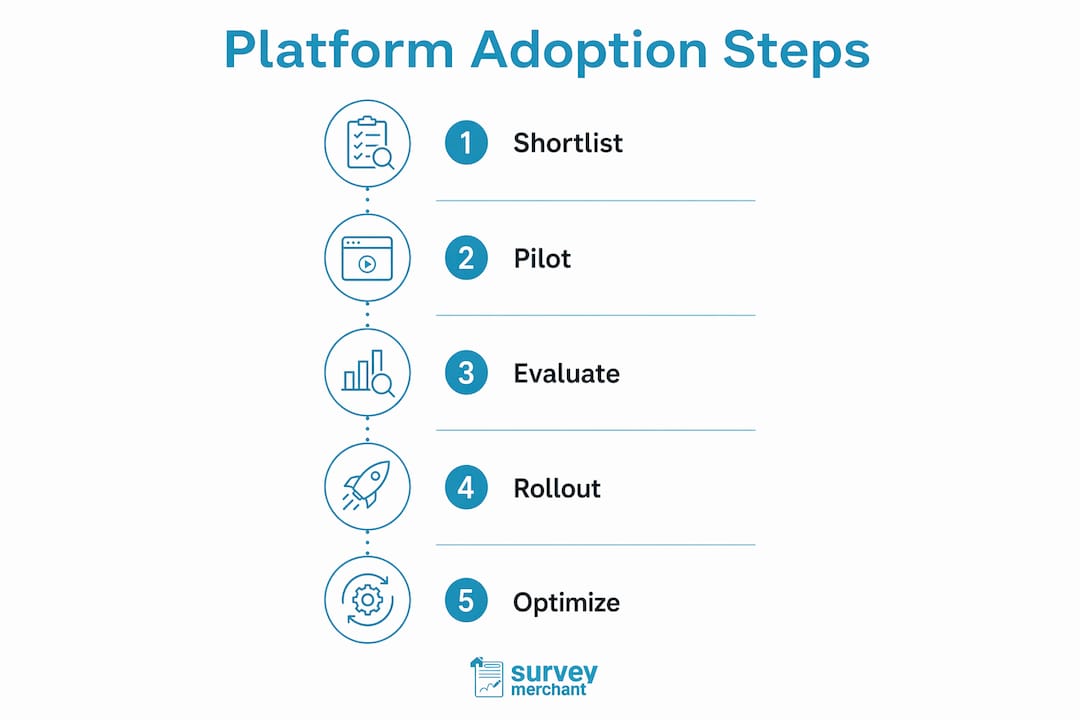
A phased rollout reduces risk and builds internal confidence.
Health and safety protocols for mobile capture on site should be reviewed before the pilot, particularly for high-risk environments.
| Scenario | Pricing model | Pilot to full rollout | Time-to-payback |
|---|---|---|---|
| Conservative | Per-user subscription | a few months | under a year |
| Typical | Tiered business plan | several weeks | a few months |
| Optimistic | Per-report or bundled | a couple of weeks | under three months |
Common pricing shapes include per-user monthly subscriptions, per-report fees, tiered business plans and one-off purchase plus cloud storage. Hidden costs to budget for: template set-up time, API integration work, initial data migration and ongoing training. SurveyorSoftware publishes transparent tiered pricing with unlimited reports on entry plans; enterprise tiers add SSO, API access and dedicated onboarding.
Deployment timelines vary by practice size. A sole trader can be operational in days; a medium-sized consultancy with custom templates and CRM integration should plan for a few weeks to pilot and additional months for full rollout.
Survey data collected on residential and commercial properties frequently contains personal information: owner names, occupant details, mortgage references and condition notes that could affect property value. Under UK GDPR, this data must be processed lawfully, stored securely and retained only as long as necessary.
Key obligations for surveying practices: obtain a lawful basis for processing (usually legitimate interest or contractual necessity), document your data flows, and confirm that any platform vendor acts as a data processor under a written agreement. UK data residency matters here: data stored on EU servers post-Brexit may require additional safeguards unless the vendor relies on the UK adequacy decision for transfers. Check the vendor’s Data Processing Agreement before signing, and include a data-deletion clause covering what happens to client data on contract termination.
Most UK surveying practices already use a mix of job management tools, CRM systems, property management software and accounting packages. A platform that cannot talk to these creates double-entry and erodes the time savings it promises.
Look for open API access, native exports to Word, Excel and PDF, and pre-built connectors to common property management systems. SurveyorSoftware offers Power BI integration for portfolio dashboards and CRM sync via open API. SwiftCase connects survey management, scheduling and reporting in one workflow, with skills-based job allocation and geographic scheduling built in. For practices managing renovation handovers, project management integration between survey outputs and contractor briefing tools reduces duplication significantly.
When evaluating integrations, ask for a live demonstration of the data flow from a completed survey to your existing job management or CRM system. A vendor who cannot demo this in 15 minutes probably does not have it working reliably.
Across the UK market, the pattern of successful adoption follows a consistent shape: a short pilot on familiar survey types, internal champions who customise templates before wider rollout, and a clear metric (usually write-up time) that demonstrates value to sceptical colleagues.
Housing associations and portfolio landlords have been early adopters, driven by compliance pressure. Platforms with built-in SLA tracking and Awaab-style visibility have helped social housing teams demonstrate responsiveness to regulators without manual reporting overhead. Commercial surveying consultancies report that portfolio dashboards, built on aggregated inspection data, have opened advisory conversations with asset managers that would not have been possible from paper files.
The range of construction survey types now supported by digital platforms, from snagging and dilapidations to party wall and specific defect reports, means most practices can find a template library that covers their core work without bespoke development.
The most effective building surveyor platforms combine offline-first mobile capture, AI-assisted drafting with mandatory professional sign-off, and RICS-aligned audit trails — validated through a timed two-job pilot before full commitment.
| Point | Details |
|---|---|
| Pilot before you commit | Run two real jobs on any shortlisted platform and measure write-up time and audit trail completeness. |
| Offline-first is mandatory | Confirm encrypted local storage and automatic sync before approving any platform for UK site use. |
| AI assists; surveyors sign off | Every AI-drafted clause needs a mandatory review gate and named Chartered Surveyor sign-off to meet RICS 2026 requirements. |
| Budget for hidden costs | Template set-up, API integration and training add to subscription costs; include them in your ROI calculation. |
| Surveymerchant for vetted access | Use Surveymerchant to find and connect with qualified UK surveyors already working with digital workflows. |
The gap between a vendor demo and a platform working reliably on your survey types is wider than most sales cycles suggest. Vendors show their best templates on their best hardware in ideal signal conditions. Your practice has Victorian basements, rural farmhouses and a team with varying levels of digital confidence.
That is precisely why the marketplace model has real value here. Surveymerchant connects clients and practices with qualified surveyors across the UK, with impartial matching and quality assurance built into the referral process. For a practice evaluating digital workflows, that network means you can find surveyors already using specific platforms and ask them directly what works in the field. For clients, it means the professionals they book have been vetted, not just listed.
The honest advice: do not let a polished demo substitute for a real pilot. The platform that survives two jobs on your hardest sites, with your least tech-confident surveyor, is the one worth buying.
Finding the right surveyor for a pilot is often the first practical obstacle. Surveymerchant removes it. The platform gives you access to a nationwide panel of qualified surveyors across building surveying, commercial property surveys, defect reporting, party wall matters and more, matched to your location and requirements without the overhead of a traditional agency search.

Whether you are a practice looking to trial a digital workflow on a specific survey type or a property owner needing a qualified professional quickly, Surveymerchant’s impartial matching and quality assurance process means you reach the right person faster. Book a discovery call or list your pilot brief directly on the platform to get started.
Survey Merchant provides vetted RICS surveyors across 100+ UK locations at fixed fees:
→ Level 2 Home Survey (HomeBuyer Report)
→ Level 3 Building Survey (full structural survey)
→ RICS Red Book property valuations
→ Party wall surveyors — notices, awards & schedules of condition
→ Expert witness surveyors — CPR Part 35 reports for property disputes