We use cookies to improve your experience on our site, analyze site traffic, and assist in our marketing efforts. By clicking "Accept all," you agree to the storing of cookies on your device. You can choose to "Reject all" non-essential cookies. For more information, please read our Cookie Policy.
Regularisation Certificate 2026: Costs, Process & Pitfalls
A 2026 guide to regularisation certificates under regulation 18: who can apply, why only councils issue them, how fees are calculated, timescales, indemnity insurance compared, and the 10-year enforcement window.
A regularisation certificate is the retrospective building regulations approval you apply for when work was carried out without the right consent – a loft conversion, an extension, a removed chimney breast, a knocked-through wall. In 2026 it matters more than ever: local authorities can now take enforcement action for up to ten years after unauthorised work, buyers’ surveyors flag missing certificates routinely, and lenders are increasingly reluctant to accept indemnity insurance alone. This guide explains what a regularisation certificate is, who can apply, what it costs in 2026, how long it takes and how a suitably qualified, accredited surveyor can get you through the process with the least disruption.
Key takeaways
A regularisation certificate is retrospective building regulations approval under regulation 18 of the Building Regulations 2010, available only from your local authority building control team, not a private registered building control approver.
It covers unauthorised work started on or after 11 November 1985; older work cannot be regularised.
Councils typically charge 150% of their building notice fee, and regularisation charges are exempt from VAT. Budget separately for opening up, structural calculations and any remedial work.
Since 1 October 2023 in England (and 1 July 2026 in Wales) councils can serve a section 36 notice up to 10 years after work finishes, up from 12 months.
Indemnity insurance is a quick sale fix, but it does not confirm the work is safe or compliant; a regularisation certificate does.
An accredited building surveyor can inspect first, tell you what will pass, and manage the application and any remedial works end to end.
What is a regularisation certificate?
A regularisation certificate is a document issued by a local authority building control body confirming that building work carried out without building regulations approval has been inspected and, as far as can be ascertained, complies with the regulations that applied when it was built.
It is retrospective approval under regulation 18 of the Building Regulations 2010. Two things make it different from ordinary approval. First, it is only available from a local authority. Private registered building control approvers (formerly approved inspectors) cannot issue one, as GOV.UK confirms. Second, the council assesses the work against the regulations in force at the time the work was done, not today’s standards, which is why knowing roughly when the work happened matters.
Regulation 18 also states that the certificate is evidence, but not conclusive evidence, that the relevant requirements have been met, and that it implies nothing about planning permission. If your extension also needed planning consent, that is a separate question for the planning department.
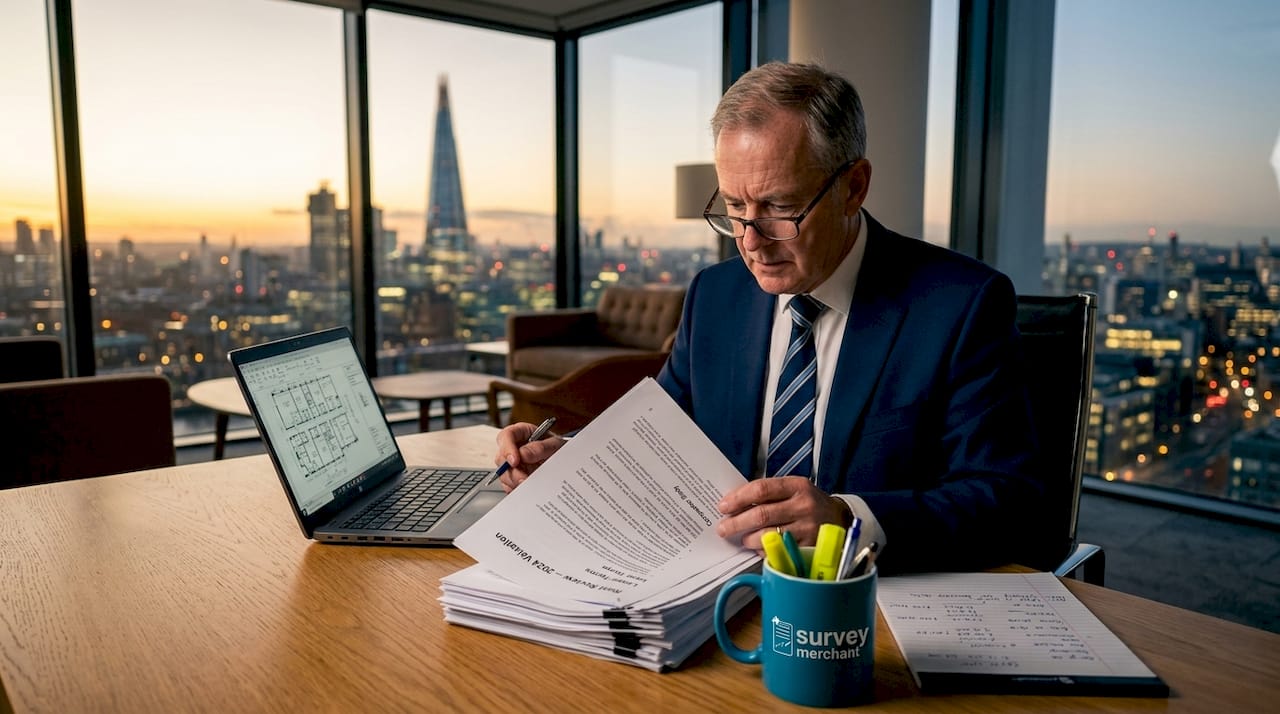
A pre-application inspection by an accredited surveyor identifies what the council will want to see opened up before you pay the regularisation fee.
When do you need a regularisation certificate?
Most people discover they need one at the worst possible moment: mid-sale. The typical triggers are:
Selling your home. The buyer’s conveyancer asks for building regulations certificates for every alteration, and the buyer’s Level 3 building survey flags work with no paperwork.
Remortgaging. The lender’s valuer notes an extension or conversion and the lender wants evidence of compliance.
Buying a property. You inherited the problem from a previous owner. As the Planning Portal notes, the requirement still applies even if the work was done before you owned the property.
Insurance or warranty claims. Insurers may question cover for an uncertified structural alteration.
Common work that ends up needing regularisation includes loft conversions, single and double-storey extensions, garage conversions, structural openings and steel beams, chimney breast removal, replacement windows (where not certified under a competent person scheme), new boilers and electrical rewiring, and drainage alterations. If a completed project has an inspection history and a completion certificate, you do not need regularisation; see our guide to the building regulations completion certificate for what that document should look like.
Who can apply, and what work qualifies?
Under regulation 18, the owner of the building applies. The work must have been started on or after 11 November 1985, must have fallen within the scope of the regulations at the time, and must have had no building regulations application submitted for it. Work that pre-dates November 1985 cannot be regularised; in that situation a surveyor’s report on the condition of the work is usually the practical alternative.
There is no legal obligation to apply. Hertfordshire Building Control’s guidance puts it plainly: an owner is under no obligation to seek a regularisation certificate, but to sell a property it is often necessary, and it may be the only way to demonstrate compliance. Note also that if the building is a higher-risk building (broadly, residential buildings of at least 18 metres or seven storeys), building control functions sit with the Building Safety Regulator rather than the council, and different procedures apply.
How much does a regularisation certificate cost in 2026?
Councils set their own charges under the Building (Local Authority Charges) Regulations 2010, but the structure is remarkably consistent across England and Wales. The regularisation charge is usually calculated as a percentage uplift of the equivalent building notice fee, most commonly 150%, and it is exempt from VAT. Because charges are reviewed annually, many councils published new schedules for 2026/27: Gateshead’s took effect on 1 April 2026, Preston increased fees by 10% from 1 April 2026, and BCP Council amended its scheme from 10 August 2026, citing inflation and the requirement to recover service costs.
Application route
When it is used
Fee basis
VAT
Worked example (Gateshead, 1 new dwelling, from 1 April 2026)
The council fee is rarely the whole cost. Expect to budget for some or all of the following:
Opening-up works. The council can ask you to expose foundations, steel beams, cavity trays or insulation so an inspector can see them. A builder’s time to open up and make good is typically a few hundred pounds per location.
Structural calculations. Where a wall was removed or a beam installed with no design, the council will usually want retrospective calculations from a structural engineer.
As-built drawings. A scaled plan of the unauthorised work and a plan of any remedial work are normally required unless the work is minor.
Remedial work. Anything that does not comply must be corrected before the certificate can be issued: additional fire protection to a loft conversion, escape windows, a proper cavity tray, or upgraded insulation are frequent examples.
Professional fees. A surveyor to inspect, prepare the application and liaise with building control.
As-built drawings and structural calculations are the documents councils most often ask for with a regularisation application.
How to apply for a regularisation certificate: step by step
Establish what was done and when. Gather any invoices, photographs, planning documents or seller’s replies to enquiries. The date matters because the work is judged against the regulations in force at the time.
Get a pre-application inspection. An accredited building surveyor can tell you what is likely to pass, what the council will want to see opened up, and whether structural calculations are needed. This is the step that saves the most money.
Speak to building control. Both GOV.UK and the Planning Portal advise contacting the council before submitting. Many teams will discuss the case informally and confirm the fee.
Submit the application. Regulation 18 requires a written application with a statement that it is made under regulation 18, a description of the work, a plan of the work and a plan showing any additional work needed to achieve compliance, plus the fee. Many councils accept submissions through the Planning Portal’s building control service.
Site inspection. The council arranges to inspect and may require opening up, testing or sampling of materials.
Carry out remedial work if required. The council will advise what is needed and re-inspect once done.
Certificate issued. Once the council is reasonably satisfied that the work complies, it issues the regularisation certificate. Keep it with the deeds; your conveyancer will need it.
How long does a regularisation certificate take?
There is no statutory decision period for regularisation, unlike full plans (five weeks, or two months by agreement). In practice the timeline is driven by three things: how quickly the council can inspect, how much opening up and remedial work is needed, and how promptly you respond to requests. Straightforward cases with good records can be certified within a few weeks; cases involving structural design, remedial fire protection or several site visits commonly take two to four months. If you are selling, start the process the moment the problem is identified and tell the buyer’s solicitor what you are doing.
Regularisation certificate vs indemnity insurance
Conveyancers frequently offer a lack-of-building-regulations indemnity policy as a quicker alternative. It has its place, but it is important to understand what it does and does not do.
Feature
Regularisation certificate
Indemnity insurance
What it confirms
Work inspected and found to comply with the regulations in force at the time
Nothing about the work; it only covers financial loss from enforcement action
Speed
Weeks to months
Usually same day
Cost
Council fee (often 150% of building notice fee) plus professional and remedial costs
Typically a one-off premium of tens to a few hundred pounds
Key condition
Council must be satisfied work complies
Policy is normally void if you contact the council about the work
Safety
Defects identified and corrected
Defects remain unknown
Lender and buyer acceptance
Widely accepted; removes the issue permanently
Variable; some lenders and buyers decline it for structural work
The two are mutually exclusive in practice: approaching the council to regularise typically invalidates an indemnity policy, and a policy only exists because the council has not been approached. For cosmetic or minor items, insurance can be proportionate. For structural work, loft conversions or anything affecting fire safety, a regularisation certificate protects the people living in the property as well as the transaction. Our guide to when to use indemnity insurance looks at the wider picture.
What happens if you do nothing?
The enforcement landscape changed significantly under the Building Safety Act 2022. Section 39 of the Act rewrote section 35 of the Building Act 1984 so that contravening the building regulations is an offence punishable by an unlimited fine and, on indictment, up to two years’ imprisonment. Crucially, it also amended section 36(4) so that the time limit for a council to serve a notice requiring non-compliant work to be removed or altered rose from 12 months to 10 years. These provisions came into force in England on 1 October 2023 and, according to the commencement information on legislation.gov.uk, were brought fully into force in Wales on 1 July 2026.
The practical consequence is that unauthorised work completed at any point in the last decade remains exposed to enforcement, and where work is dangerous, councils have separate powers with no time limit at all. The old assumption that a breach becomes irrelevant after a year no longer holds.
What’s new in 2026?
Fee increases. Many councils raised building control charges for 2026/27; Preston’s 10% rise from 1 April 2026 and BCP Council’s revised scheme from 10 August 2026 are typical, and regularisation charges rise in step because they are calculated from the building notice fee.
Wales catches up on enforcement. The 10-year section 36 limit now applies in Wales from 1 July 2026.
Registered building control approvers. Since the approved inspector regime ended, private approvers must be registered with the Building Safety Regulator. They still cannot issue regularisation certificates; if the original job was under a private approver and they never issued a final certificate, the work reverts to the council and a separate reversion charge may apply.
Greater scrutiny in surveys. The RICS Home Survey Standard requires surveyors to report on evidence of alterations and the absence of statutory approvals, so unauthorised work is now consistently flagged in Level 2 and Level 3 reports.
Keep the regularisation certificate with your title deeds; conveyancers and lenders will ask for it at every future sale or remortgage.
How a suitably qualified, accredited surveyor helps
Regularisation is one of the few building control processes where professional advice before you apply changes the outcome. A building surveyor accredited by a recognised body such as RICS, CIOB or RPSA can:
Inspect the work and give a frank view on whether it is likely to comply with the regulations in force when it was built.
Identify what the council will want opened up, so exposure is targeted and making good is minimised.
Commission or prepare structural calculations and as-built drawings.
Specify remedial works, obtain quotes and inspect them on completion.
Handle correspondence with building control and attend inspections on your behalf.
Advise, where regularisation is not viable, on a specific defect report that documents the condition of the work for a buyer or lender.
If you are the buyer rather than the seller, the same surveyor can advise on negotiating a price reduction or retention to cover the cost of regularisation, as explored in our guide to negotiating after a survey.
Why choose Survey Merchant for your regularisation certificate?
Survey Merchant is a nationwide panel of independent surveyors, and we match each regularisation case to a suitably qualified, accredited professional with the right specialism, whether that is a building surveyor for a loft conversion, a structural engineer for a removed wall or a valuer where a lender is involved. Here is why homeowners and buyers use us:
An accredited panel across RICS, CIOB and RPSA, matched to the job rather than a one-size-fits-all appointment.
Nationwide UK coverage with local surveyors who know how their council’s building control team operates.
Fast turnaround, which matters when a sale is waiting on a certificate.
Transparent, competitive fixed fees quoted up front, so you know the professional cost before you commit to the council fee.
Impartial advice. If indemnity insurance or a defect report is the more proportionate route, we will tell you.
End-to-end support, from the first inspection to remedial works sign-off and the certificate in your hand.
A regularisation certificate is retrospective building regulations approval issued by a local authority under regulation 18 of the Building Regulations 2010. It confirms that work carried out without approval has been inspected and, as far as can be ascertained, complies with the regulations in force when it was built.
How much does a regularisation certificate cost in 2026?
Councils set their own charges, but most calculate the regularisation fee as 150% of the equivalent building notice charge, and regularisation charges are exempt from VAT. For example, Gateshead Council charges £1,790.55 for one new dwelling from 1 April 2026. You should also budget for opening-up works, structural calculations, as-built drawings and any remedial work.
Can I get a regularisation certificate for work done before 1985?
No. Regularisation only applies to unauthorised work started on or after 11 November 1985. For older work, a report from an accredited surveyor on the condition of the work is usually the practical way to reassure a buyer or lender.
How long does a regularisation certificate take?
There is no statutory decision period. Simple cases with good records can be certified within a few weeks; cases needing structural design, remedial fire protection or several inspections commonly take two to four months. Contact building control early and respond to requests promptly to keep things moving.
Is indemnity insurance the same as a regularisation certificate?
No. Indemnity insurance only covers financial loss if the council takes enforcement action; it says nothing about whether the work is safe or compliant, and it is usually void if you contact the council. A regularisation certificate confirms compliance and removes the issue permanently, which is why lenders and buyers prefer it for structural work.
Can a private building control approver issue a regularisation certificate?
No. Only a local authority building control body can issue a regularisation certificate. Registered building control approvers can handle new applications but cannot regularise work carried out without approval, as GOV.UK confirms.