Building Surveying
Sep 28, 2026
Flood Risk Assessment When Buying a House: 2026 UK Guide
Everything UK homebuyers need to know about flood risk assessments in 2026: how to check risk, what surveyors look for, and the mortgage and insurance impact.

If you are buying a home in England or Wales, a flood risk assessment when buying a house is one of the most overlooked checks in the entire purchase process — yet it can affect whether you get a mortgage, what you pay for insurance, and how much the property is really worth. With the Environment Agency’s updated National Flood Risk Assessment (NaFRA2) now live and lenders tightening their criteria in 2026, understanding flood risk before you exchange contracts has never mattered more.
A flood risk assessment is a desk-based and, where needed, site-based review of how likely a specific property is to flood from rivers, the sea, surface water, groundwater or sewers, using Environment Agency mapping, historical flood records and local drainage data. It is used alongside — not instead of — a physical building survey to help buyers, lenders and insurers understand both the probability and likely severity of flooding.
Flooding is one of the fastest-growing risks in the UK property market. Government data suggests roughly one in six properties in England is currently at some degree of flood risk, a figure the Environment Agency has warned could rise significantly by 2050 as rainfall patterns intensify. Flood damage already costs UK households and businesses an estimated £2.2 billion a year in repairs, disruption and insurance claims.
In 2025 the Environment Agency rolled out its updated National Flood Risk Assessment (NaFRA2), which for the first time combines river, sea and surface water risk with UK Climate Projections data into a single picture of current and future flood risk. The update, published in phases from January 2025 and feeding into the Flood Map for Planning from March 2025, has pushed some previously “low risk” postcodes into higher bands — which is why relying on an old flood search or a search carried out by a previous owner can be misleading.
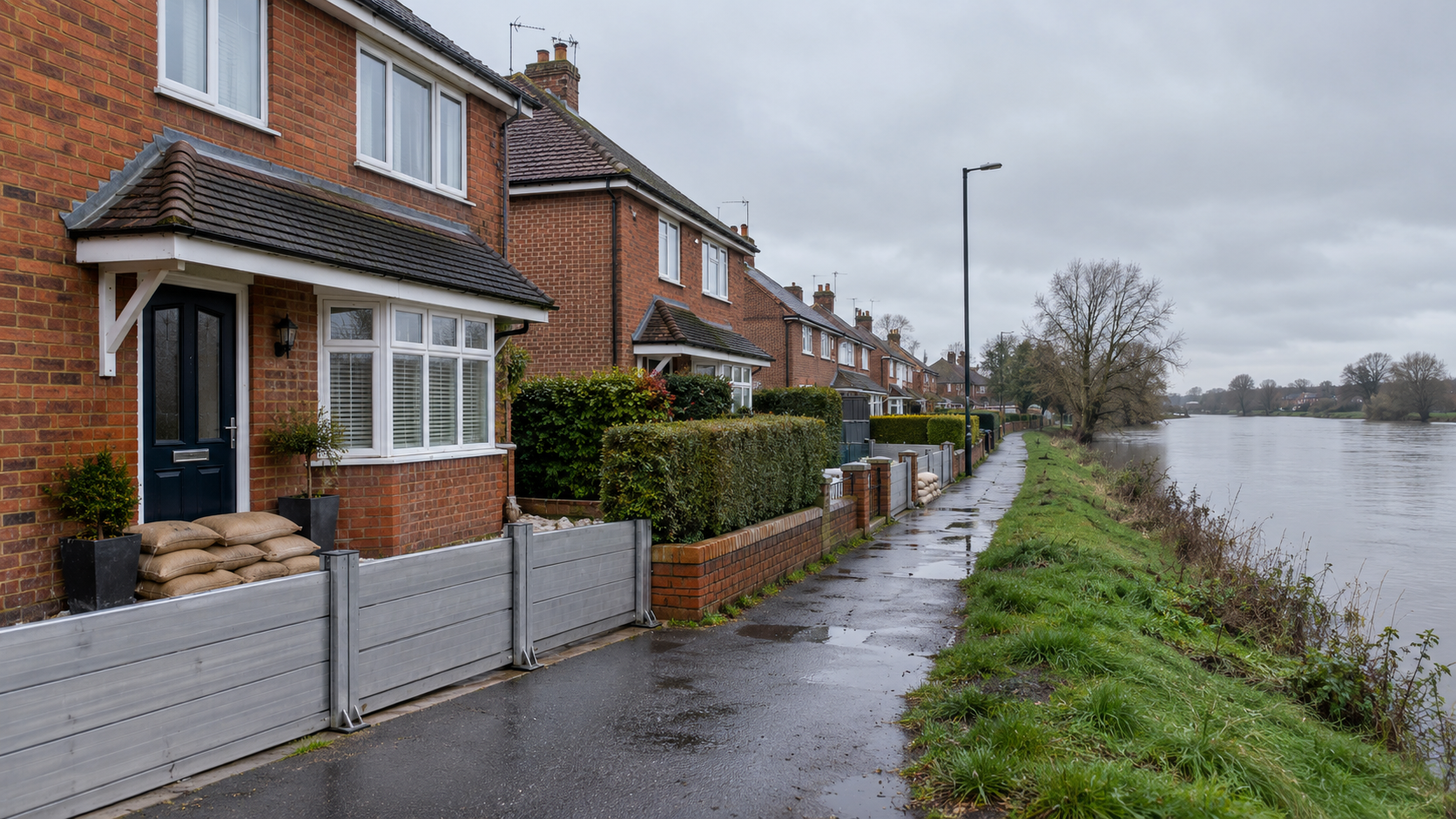
Before you commit to a property, take these steps in addition to your solicitor’s standard searches:
A solicitor’s desktop search is not a substitute for a chartered surveyor’s physical inspection. During a Level 2 HomeBuyer Report or Level 3 Building Survey, a RICS-qualified surveyor will look for physical evidence that a property has previously been affected by water, as well as features that reduce future risk.
| Flood source | How it typically occurs | What a surveyor looks for on site |
|---|---|---|
| River (fluvial) | A nearby river or stream bursts its banks after heavy or prolonged rainfall | Proximity to watercourses, ground levels, tide marks or staining on external walls |
| Coastal | Storm surges or high tides overtop sea defences | Distance from the coast, condition of sea defences, salt staining |
| Surface water | Heavy rainfall overwhelms drains faster than it can soak away | Site topography, guttering and drainage condition, evidence of pooling near the property |
| Groundwater | The water table rises after prolonged rain, especially on chalk or low-lying land | Damp in lower floors, cellar and sub-floor void condition, sump pumps |
| Sewer | Combined sewers back up during storms | Airbrick and drain positioning, evidence of sewage backflow, non-return valves |
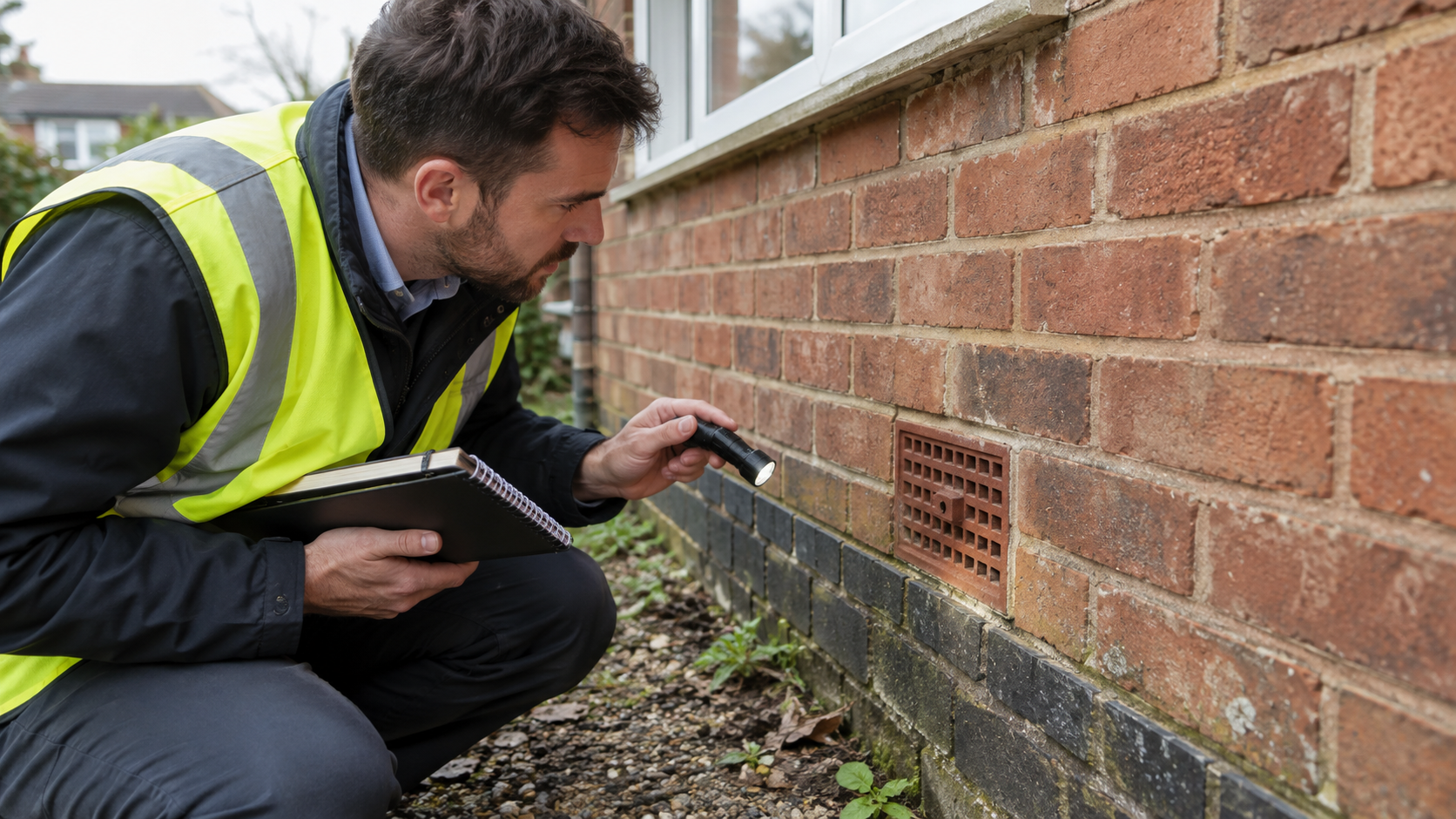
Where a property shows signs of past flooding, sits in a medium or high flood zone, or the seller discloses a previous claim, your surveyor can recommend commissioning a standalone flood risk assessment or referring you to a flood resilience specialist for a more detailed report before you proceed.
Flood risk is no longer a niche concern for lenders. Recent disclosures show Lloyds Banking Group estimates around one in six of the properties on its mortgage book carries some flood risk, while NatWest and Barclays have put the proportion of their book at high risk at 3.4% and 2.6% respectively. Analysis by UKSIF and Public First has suggested that as many as 430,000 English households could become effectively “climate mortgage prisoners” by 2050 – unable to remortgage affordably because insurers or lenders view their flood risk as too high.
In practice, most lenders now screen applications through automated flood-zone mapping before a human underwriter looks at the case. Zone 1 properties usually pass with minimal extra scrutiny; Zone 2 properties are typically asked to confirm affordable insurance is available; and Zone 3 properties receive the closest examination, sometimes requiring a specific flood risk assessment before an offer is confirmed. Because that initial screening is done at postcode level, a property-specific report from a qualified surveyor can sometimes overturn an unfavourable automated flag by showing the individual property sits on higher ground or already benefits from resilience measures.
Insurance is usually the deciding factor: most mortgage offers require buildings insurance to be in place at completion, so a property that cannot be insured affordably can, in effect, become unmortgageable. This is where Flood Re comes in – the government-backed reinsurance scheme that has kept flood cover affordable for higher-risk homes since 2016. Flood Re is currently scheduled to close in 2039, and in mid-2026 the government set out reform plans that include cutting premiums for lower-value, lower-income households, capping the claim values passed through the scheme, and introducing Flood Performance Certificates from 2027 that reward homes with proven resilience measures (such as flood doors, air brick covers or raised electrics) with cheaper cover.
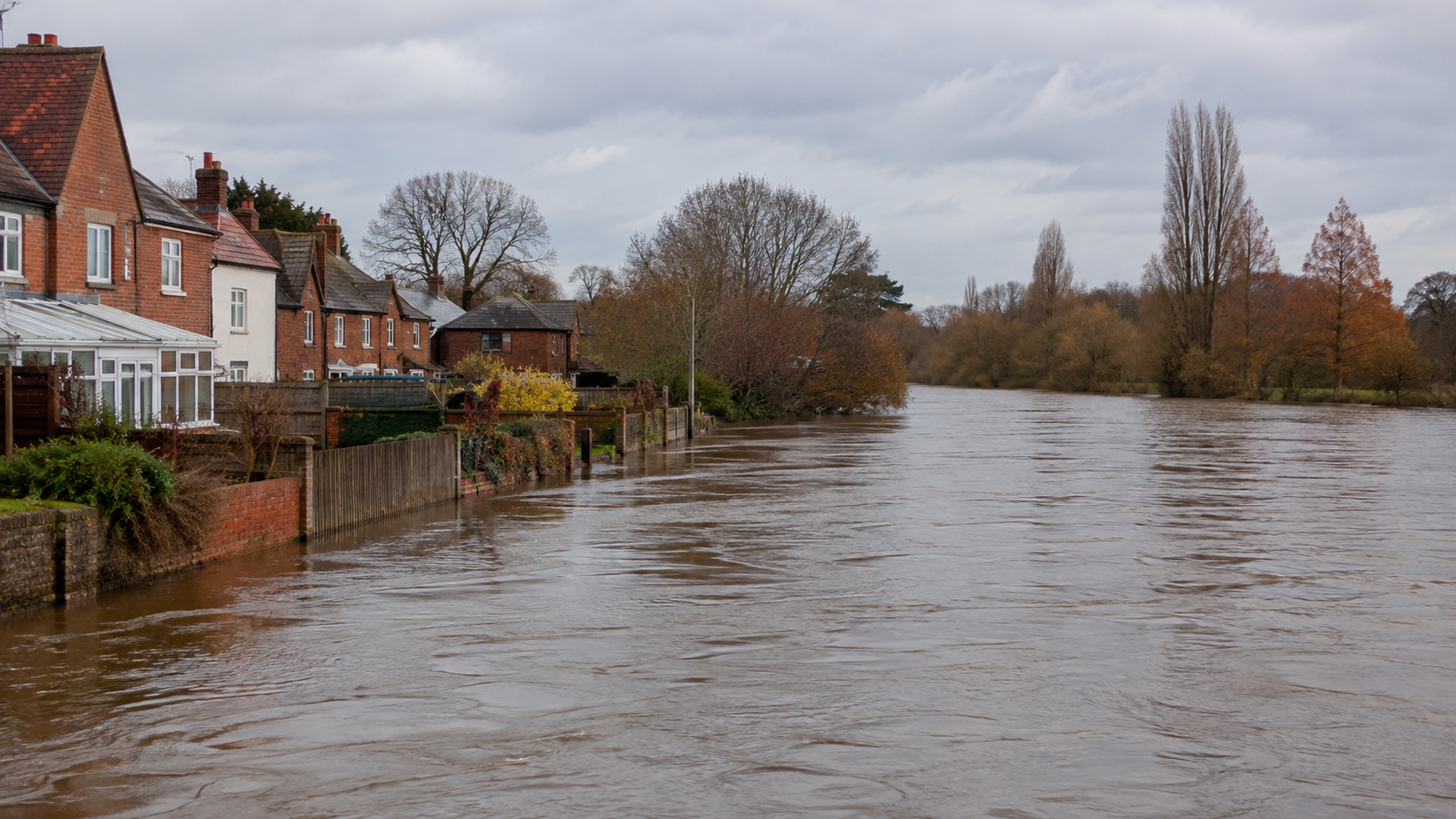
Finding flood risk does not automatically mean you should walk away. Depending on what a survey and flood risk assessment reveal, your options typically include negotiating the purchase price to reflect the risk and any required resilience works, requesting confirmation of buildings insurance terms and cost before you commit, asking the seller to install or upgrade resilience measures, or, where the risk is severe and uninsurable, reconsidering the purchase altogether. Independent research cited by flood specialists suggests homes in postcodes that have actually flooded can sell for around 25% less than comparable unaffected homes, while properties simply mapped as at risk (even without a flood ever occurring) can see values discounted by roughly 8% – all the more reason to establish the facts with a proper valuation and survey rather than guesswork.
It is also worth checking how flood risk interacts with other issues your surveyor may flag, such as subsidence from prolonged ground saturation, or the level of cover you may need confirmed through an insurance reinstatement valuation if a full rebuild would ever be required.
Flooding is a technical, fast-moving area of property risk, so the surveyor you choose matters. Survey Merchant matches every enquiry to a suitably qualified, accredited surveyor from our panel – drawn from professionals regulated by bodies including RICS, CIOB and RPSA – so you get expertise matched to the job, not a generalist. We offer nationwide UK coverage, fast turnaround, and transparent, competitive fixed fees agreed before you commit, with impartial advice that works for you rather than the seller or estate agent. Our surveyors routinely deal with flood-affected and flood-adjacent properties and can advise on resilience measures, insurance implications and what a lender is likely to ask for, giving you end-to-end support from initial enquiry through to completion.
If you are buying a property near water, on low-lying land, or simply want peace of mind, speak to our team about a building survey or a RICS valuation that takes flood risk into account, or contact us to discuss your specific address.
Survey Merchant provides vetted RICS surveyors across 100+ UK locations at fixed fees:
→ Level 2 Home Survey (HomeBuyer Report)
→ Level 3 Building Survey (full structural survey)
→ RICS Red Book property valuations
→ Party wall surveyors — notices, awards & schedules of condition
→ Expert witness surveyors — CPR Part 35 reports for property disputes