A building survey in Bristol typically costs between £600 and £1,200 for a RICS Level 3 report, or £400 to £600 for a Level 2 HomeBuyer-style report, with the written report usually arriving two to four weeks after booking as a general market picture. Which level you need depends on the house. Bristol's stock runs from Georgian terraces in Clifton and Kingsdown and Victorian terraces in Bedminster, Southville, Easton and Totterdown, through interwar semis in Horfield and post-war estates such as Hartcliffe, to new apartment blocks around the Harbourside. This guide explains what a Bristol building survey covers, what it costs, how long it takes and which level suits which kind of home.
Which building survey level do you need in Bristol?
The RICS Home Survey Standard sets out three levels. Level 1 is a basic condition report and rarely suits an older Bristol property, so most buyers choose between Level 2 and Level 3.
- Level 2 (HomeBuyer Report) suits conventional homes in reasonable condition: a 1980s estate house in Bradley Stoke or a 1960s semi in Henleaze. Your surveyor inspects the visible and accessible parts of the building, applies the RICS traffic-light condition ratings and flags anything that needs further investigation. The Level 2 HomeBuyer Report page sets out the full scope.
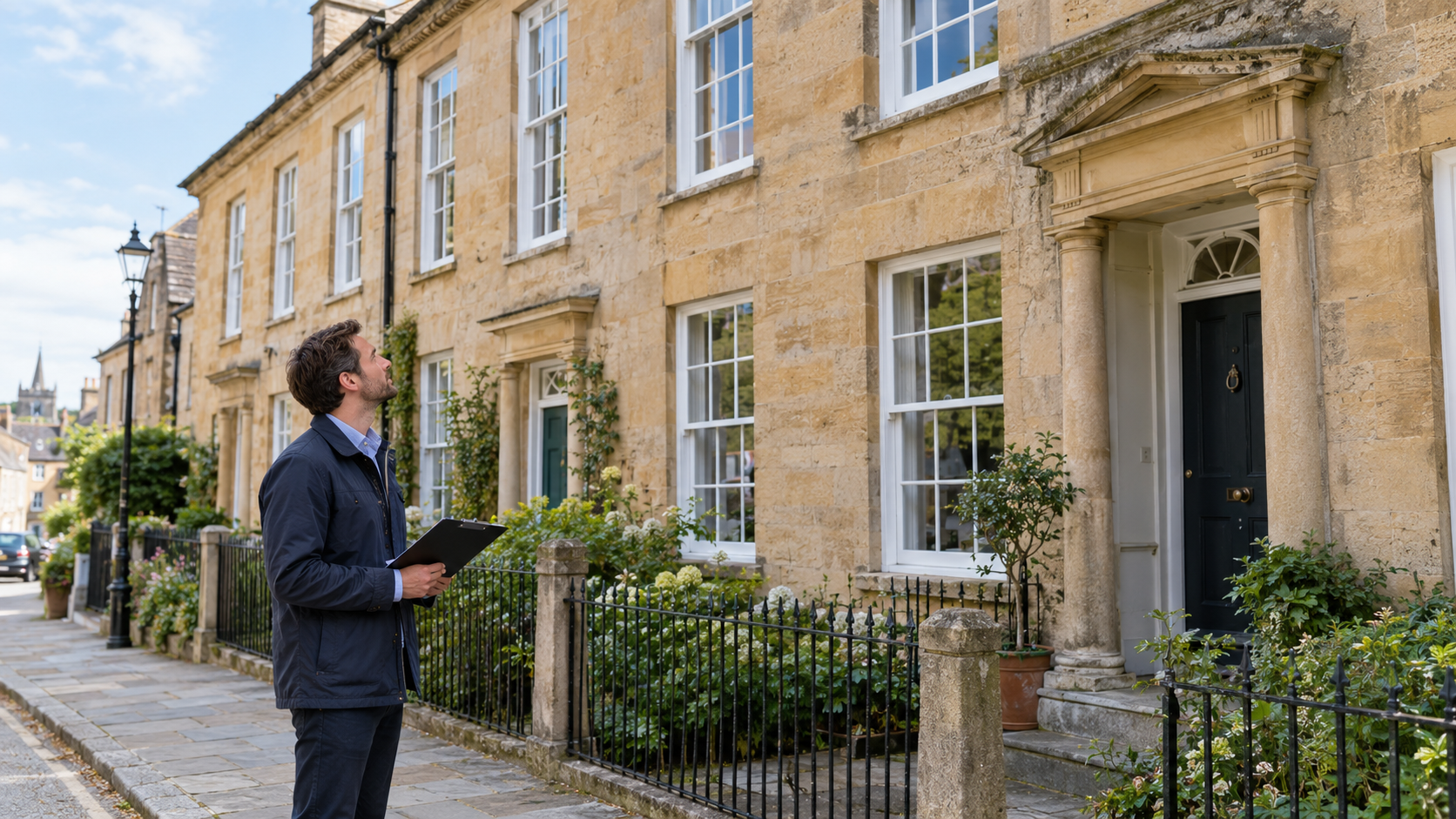
- Level 3 (Building Survey) is the detailed option, formerly called a full structural survey. It is the right choice for the Georgian and Victorian terraces that make up much of inner Bristol, for converted flats in Clifton and Cotham, for hillside houses in Totterdown, and for any property that has been extended, altered or left empty. The Level 3 Building Survey describes the construction, explains defects and their probable causes, and sets out repair options in priority order.
A simple rule of thumb: if the house has solid walls, was built before about 1930, or you plan works after completion, choose Level 3. Our guide to what a Level 3 survey covers explains the report format, and the Victorian house survey guide covers most of Bristol's terraces.
How much does a building survey cost in Bristol?
Survey fees are driven by the property's size, age, construction and value rather than its postcode, so Bristol quotes sit close to the national ranges published across this site. Level 2 reports are quoted at around £400 to £600. Level 3 building surveys run from about £600 for a small Bedminster terrace to £1,200 or more for a large Redland villa or a four-storey Georgian house in Clifton. Listed buildings, which are common in Clifton and Kingsdown, and very large properties attract quotes above that band because the inspection takes longer.
Survey Merchant quotes fixed fees, so the price agreed before booking is the price on the invoice. Two follow-on reports are worth budgeting for if the survey recommends them: a structural engineer's report where movement or a retaining wall needs assessing, and a specific defect report where a single issue such as damp or a flat roof needs a closer look. The site-wide house survey cost guide compares all three levels side by side.
Defects a Bristol building survey looks for
Bristol's hills, its coal-mining past and its mix of stone and brick construction shape what the panel's surveyors pay closest attention to.
- Stone walls, lime mortar and cement repairs. Many older Bristol houses are built of local Pennant sandstone or faced in Bath stone, often rendered in Clifton and Kingsdown. These solid walls were built to breathe through lime mortar, so hard cement repointing and render trap moisture and cause internal damp, spalling stone and blown render. The report looks closely at pointing, render and earlier repairs.
- Hillside sites and retaining walls. Totterdown, Kingsdown, Clifton and Cotham sit on steep slopes, so houses often have stepped foundations, basements cut into the hill and retaining walls that are the owner's responsibility. Cracking, leaning walls and wet basements are examined carefully, and a structural engineer is recommended where movement is suspected.
- Coal-mining legacy. The Bristol coalfield was worked for centuries, and parts of east and south Bristol, including Bedminster, Easton, Fishponds, Kingswood and Hanham, fall within the Coal Authority's reporting area. Cracking patterns are assessed for signs of ground movement and a Coal Authority mining report is recommended where the property sits in a reporting area.
- Georgian and Victorian roofs and chimneys. Original slate roofs across inner Bristol are well over a century old, so nail fatigue, slipped slates and failed flashings are common findings. Tall Georgian chimney stacks are checked for leaning and eroded pointing, and concrete-tile re-roofing is checked against the strength of the original timbers.
- Interwar semis and wall-tie corrosion. The cavity-wall semis of Horfield, Knowle, Brislington and Filton used early galvanised wall ties that can corrode, producing horizontal cracking in the outer leaf; original bay windows are also inspected.
- Non-traditional post-war construction. Some of Bristol's post-war council-built estates used concrete or steel-framed systems rather than brick. Certain precast concrete types are designated defective under the Housing Defects Act 1984 and can be hard to mortgage without a structural report, so your surveyor will identify the construction type and flag the lender implications.
- Flood risk and Japanese knotweed. Low-lying streets near the Avon, the Frome and the Malago can sit within flood zones, and the river and railway corridors are known knotweed habitats. Both are noted where seen, because lenders may ask for a treatment plan or specialist insurance.
- Converted flats and harbourside apartments. Many Clifton, Cotham and Redland flats are conversions of period houses with shared roofs and drains, so the inspection covers the demised flat plus a visual review of the common parts. In newer Harbourside blocks, buyers should ask early about the external wall (EWS1) position and the reserve fund.
How long does a building survey take in Bristol?
As a general market picture, an inspection can usually be booked within one to two weeks of instruction, depending on how quickly the agent can arrange access. A Level 2 inspection typically takes two to three hours on site; a Level 3 inspection of a four-storey Clifton house can take most of a day. Written reports normally follow within five to ten working days, with Level 3 reports at the longer end. If you are working to an exchange deadline, say so at booking, because the report date is what your solicitor and lender will be waiting for.
What happens after the report arrives?
Most Bristol surveys come back with a spread of condition rating 2 items (defects needing attention in due course) and a few rating 3 items needing urgent action or further investigation. Read the summary first, then the roof, walls, damp and services sections, and ask your surveyor to talk through anything unclear. From there you have three routes: proceed as agreed, renegotiate the price to reflect urgent repairs, or commission further investigation before committing. If you plan a loft conversion or extension on a terrace or semi after completion, the same enquiry can cover notices under the Party Wall etc. Act 1996 through the party wall service.
For how the process runs elsewhere, see the companion guides to a building survey in London, a building survey in Manchester and a building survey in Birmingham. The round-up of chartered surveyor marketplaces in Bristol compares ways of finding a local surveyor.
Book a building survey in Bristol with Survey Merchant
Survey Merchant provides RICS-regulated building surveyors across Bristol, Bath, South Gloucestershire, North Somerset and Weston-super-Mare, drawn from a national panel of 2,400+ chartered surveyors. Survey Merchant matches the surveyor to the property type, so a Georgian terrace in Clifton and a new-build Harbourside apartment are inspected by surveyors who know that kind of building, and every quote is a fixed fee agreed before booking. Level 2 and Level 3 reports, specific defect reports and structural engineer's reports can all be arranged through one enquiry.
To get a fixed-fee quote, visit the building surveying service page, call 0204 579 8270 or use the contact form with the property address and the level of survey you have in mind.