We use cookies to improve your experience on our site, analyze site traffic, and assist in our marketing efforts. By clicking "Accept all," you agree to the storing of cookies on your device. You can choose to "Reject all" non-essential cookies. For more information, please read our Cookie Policy.
Everything UK buyers and sellers need to know about sold subject to contract (SSTC) in 2026: what it means, whether it is binding, how long to completion, why sales fall through, the 2026 reforms and the steps to take once an offer is accepted.
You have found the perfect house online, only to see three words stamped across the listing: sold subject to contract. Or perhaps your own offer has just been accepted and the agent has changed the board outside to “Sold STC”. Either way, the label causes more confusion than almost any other term in the UK property market. Does it mean the house is sold? Can anyone still make an offer? How long until the keys change hands, and what should you be doing in the meantime? This 2026 guide explains exactly what sold subject to contract (SSTC) means, how it differs from “under offer”, what the latest data says about timescales and fall-throughs, and the practical steps buyers and sellers should take to get from SSTC to completion.
Key takeaways
Sold subject to contract (SSTC or Sold STC) means the seller has accepted an offer, but contracts have not been exchanged, so the sale is not yet legally binding in England and Wales.
Either side can still withdraw or renegotiate without penalty until exchange of contracts, which is why gazumping, gazundering and fall-throughs all happen during the SSTC stage.
Rightmove analysis published on 31 July 2026 put the average time from sale agreed to completion at 154 days across Great Britain; the government’s June 2026 reform roadmap cites around 120 days.
TwentyEA data reported in April 2026 showed 23.7% of agreed sales fell through in the first quarter of 2026, with 38% of those collapses happening within four weeks of the sale being agreed.
You can usually still register interest in, and sometimes offer on, an SSTC property, because estate agents must pass offers to the seller unless the seller has told them in writing not to.
The most valuable thing a buyer can do once a property is SSTC is to instruct a suitably qualified, accredited surveyor immediately, so any defects surface early rather than days before exchange.
What does sold subject to contract (SSTC) mean?
Sold subject to contract (SSTC) means a seller has accepted a buyer’s offer on a property, but the sale is not legally binding because contracts have not yet been exchanged. The property is normally taken off the market while surveys, searches and mortgage checks are completed, and either party can still withdraw without penalty until exchange.
The phrase “subject to contract” is doing the important work. In England and Wales, a contract for the sale of land must be in writing, signed and contain all the agreed terms under section 2 of the Law of Property (Miscellaneous Provisions) Act 1989. A handshake, an email accepting your offer or a new board outside the house does none of that. GOV.UK’s own guide to buying a home puts it plainly: an offer is not legally binding until contracts are exchanged.
You will see the same status written several ways — SSTC, Sold STC, “sale agreed” or simply “sold” with small print underneath. They all mean the same thing. Shortly after a property goes SSTC, the estate agent normally issues a memorandum of sale to both sides’ conveyancers, and the legal work begins.
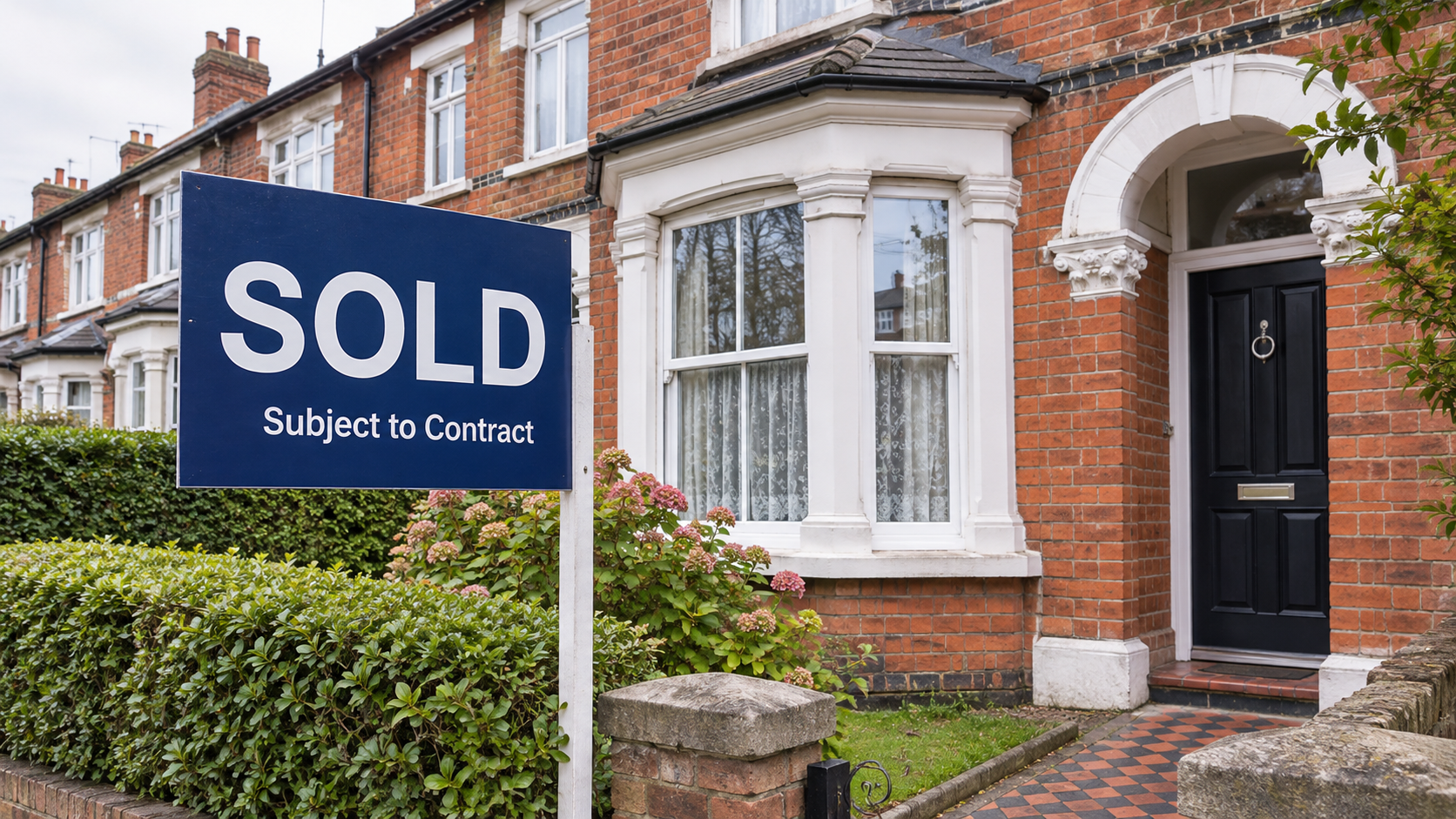
A “Sold Subject to Contract” board means an offer has been accepted — not that the sale is legally complete.
Under offer vs sold STC vs exchanged: what is the difference?
Estate agents do not all use these labels in exactly the same way, but the table below shows how each status is generally understood and, crucially, whether anyone is legally committed.
Listing status
What it means
Legally binding?
Can buyer or seller walk away?
For sale
The property is on the open market and viewings are available.
No
Yes
Under offer
An offer has been made and is being considered, or has been accepted in principle while the agent checks the buyer’s position. Some agents use it interchangeably with SSTC.
No
Yes
Sold subject to contract (SSTC / Sold STC)
The seller has formally accepted an offer and conveyancing is under way, but contracts have not been exchanged.
No
Yes, without penalty (but each side bears its own costs)
Exchanged
Both parties have signed and exchanged contracts and the buyer has paid a deposit, typically 10% of the price.
Yes
Only with serious financial consequences, such as losing the deposit
Completed / Sold
The balance has been paid, ownership has transferred and the buyer has the keys.
Yes
No — the sale is finished
A note on Scotland: the Scottish system is different. Offers are made through solicitors and the bargain becomes binding once the “missives” are concluded, which usually happens much earlier in the process than exchange does in England and Wales. Scottish listings more often show “under offer” than SSTC.
What happens after a property is sold subject to contract?
SSTC is the starting gun for the legal and due-diligence stage. If you want the full picture from first viewing to moving day, our UK home buying timeline walks through every step, but the SSTC period itself normally runs like this:
Memorandum of sale issued. The agent confirms the price, the parties and both conveyancers in writing.
Conveyancers instructed. The seller’s solicitor sends a draft contract pack, including the title documents and property information forms such as the TA6 form.
Mortgage application and valuation. The lender arranges a mortgage valuation to confirm the property is adequate security for the loan. This is for the lender’s benefit and is not a survey.
Independent survey. The buyer commissions a Level 2 or Level 3 survey to establish the true condition of the building.
Searches and enquiries. The buyer’s conveyancer orders local authority, drainage and environmental searches and raises questions on the title and the seller’s replies.
Renegotiation, if needed. Survey findings, a down-valuation or search results may lead to a revised price or agreed repairs.
Exchange of contracts. Contracts are signed and exchanged, the deposit is paid and the completion date is fixed. The sale is now binding.
Completion. Usually one to four weeks after exchange, the balance is transferred and the keys are released.
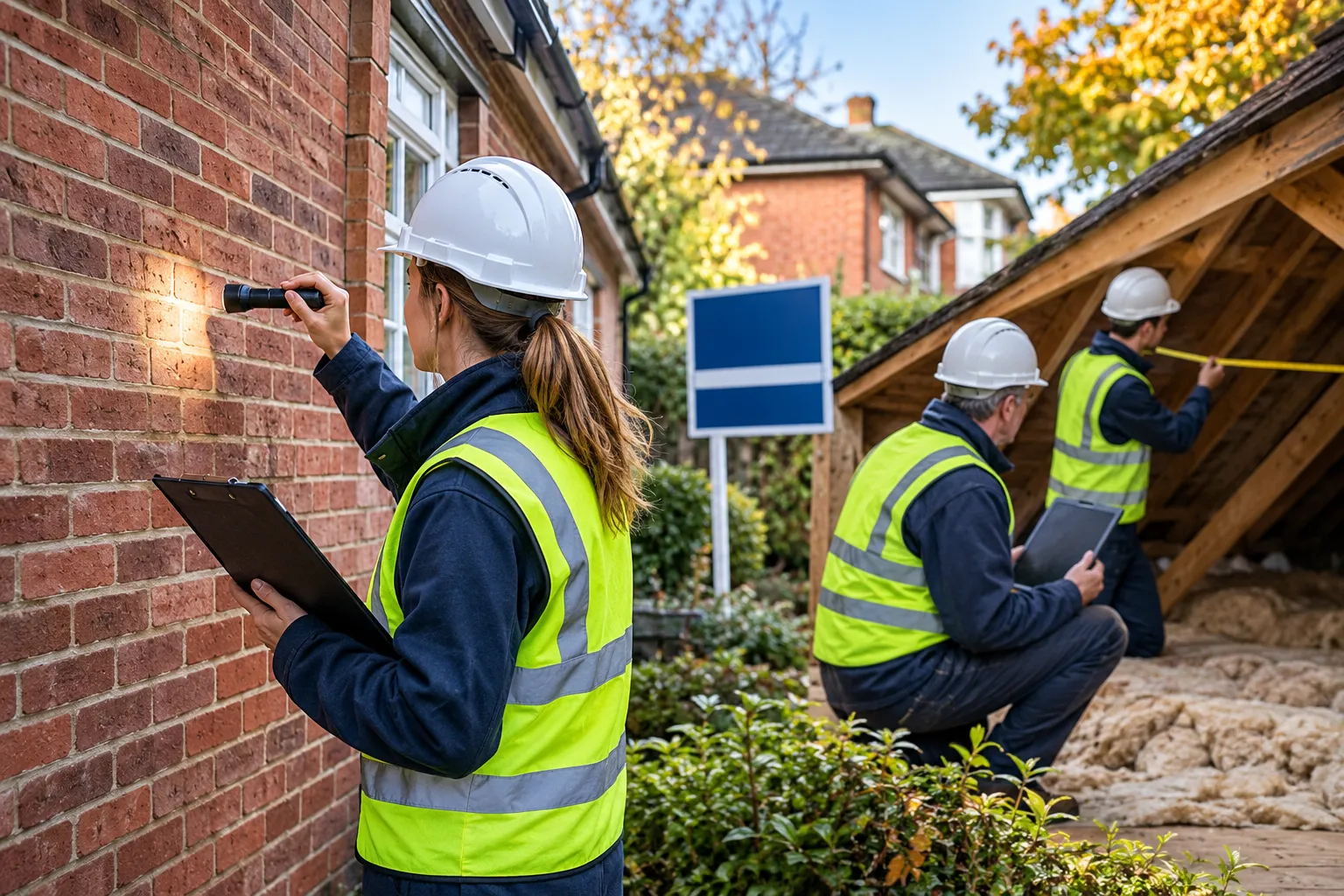
Booking your survey as soon as the property is marked SSTC gives you time to act on the findings before exchange.
How long does it take from sold STC to completion in 2026?
There is no fixed period, but the current averages are long by historic standards:
154 days. Rightmove analysis published on 31 July 2026 found it took an average of 154 days to get from sale agreed to completion across Great Britain, on top of an average 62 days to find a buyer in the first place — 216 days from listing to moving.
Around 120 days. The government’s Home Buying and Selling Reform Roadmap, published in June 2026, puts the average from accepted offer to completion at around 120 days and notes that the process now takes roughly 60% longer than it did in 2007.
About five months. GOV.UK’s consumer guidance says buying a home takes about five months on average overall.
The figures differ because they measure different things over different areas, but the message is consistent: expect four to five months between the SSTC board going up and completion day. Chain-free purchases of freehold houses tend to be quicker; long chains, leasehold flats and properties with title or structural problems tend to be slower.
Can a sale fall through after it is sold subject to contract?
Yes — and it happens more often than most people expect. Because nothing is binding before exchange, the SSTC stage is where almost every failed transaction collapses.
TwentyEA data reported by PropertyWire on 16 April 2026 showed 23.7% of agreed sales fell through in the first quarter of 2026, down slightly from 24%. Inner London moved the other way, rising from 24.6% to 27%.
The same data found that 38% of fall-throughs happen within the first four weeks of a sale being agreed; after week 12 the weekly share drops below 3%.
The government’s June 2026 roadmap states that roughly one in three transactions fall through, costing consumers around £400 million a year.
The common causes are well known:
Survey findings. Defects such as damp, roof problems or structural movement that the buyer did not expect. See our guide on what to do when a survey finds problems.
Mortgage issues. A declined application or a lender valuing the property below the agreed price.
Chain collapse. A sale elsewhere in the chain fails and takes yours with it.
Gazumping. The seller accepts a higher offer from another buyer — legal before exchange, and covered in detail in our gazumping guide.
Gazundering. The buyer lowers their offer shortly before exchange.
A change of heart or circumstances. Job changes, relationship breakdowns or simple cold feet.
Slow progress. Delays erode trust, and mortgage offers are time-limited, so drawn-out transactions are more fragile.
Can you still view or make an offer on a house that is sold STC?
Often, yes. A seller is free to consider other offers until contracts are exchanged. Under the Estate Agents (Undesirable Practices) (No. 2) Order 1991, an estate agent who fails to forward accurate details of an offer to their client promptly and in writing is engaging in an undesirable practice, unless the seller has said in writing that they do not want to receive such offers. In practice:
Viewings usually stop once a property is SSTC, because most sellers agree to take it off the market as a sign of good faith. It is the seller’s decision, so it is always worth asking.
Offers can still be submitted. Whether the seller entertains one depends on how far the existing sale has progressed and how they feel about their buyer.
Registering interest costs nothing. Ask the agent to note you as a back-up buyer and to call you if the sale falls through. With close to one in four agreed sales failing, that call comes more often than you might think.
If you do offer on an SSTC property, be honest with yourself about the ethics and the risk: you could be gazumped in turn. Our guide to making an offer on a house explains how to present yourself as a strong, proceedable buyer.
What should buyers do once their purchase is SSTC?
The weeks after SSTC are when you have the most influence over whether the purchase succeeds. A practical checklist:
Ask for the property to be taken off the market and for the online listing to be marked SSTC, and get that confirmed in writing.
Instruct your conveyancer on day one and return their paperwork, ID and funds on account straight away.
Submit your full mortgage application so the lender’s valuation can be booked.
Book an independent survey immediately. RICS consumer guidance recommends commissioning a home survey once your offer has been accepted. Do not rely on the mortgage valuation. If you are unsure which level you need, read which house survey do I need?
Act on the report quickly. If the survey reveals defects, obtain repair quotes and use them to renegotiate the price well before exchange, not the week of it.
Keep communication flowing. A weekly check-in with your conveyancer and the agent keeps momentum and flags problems early.
Consider protection. Home buyers’ protection insurance can cover some wasted costs if the sale collapses, and a lock-out or reservation agreement can give you a period of exclusivity.
Level 1 — a basic condition report for conventional, newer homes in good order.
Level 2 — a more detailed report, with advice on repairs and maintenance, for conventional properties in reasonable condition.
Level 3 — the most comprehensive inspection, suited to older, larger, altered or run-down properties, or where you plan major works.
Equivalent surveys are also offered by suitably qualified surveyors accredited by other recognised bodies, including the Chartered Institute of Building (CIOB) and the Residential Property Surveyors Association (RPSA). What matters is that your surveyor is properly qualified, accredited, insured and independent of the estate agent and lender.
What should sellers do once their home is SSTC?
Complete your property information forms promptly and accurately. Slow or incomplete replies are a leading cause of delay.
Gather your paperwork early — building regulations certificates, guarantees, planning consents, and lease and service charge information if the property is leasehold.
Give the buyer’s surveyor easy access, including the loft, meter cupboards and outbuildings. A smooth inspection speeds everything up.
Be realistic if the survey raises issues. The next buyer’s surveyor is likely to find the same defects. An independent valuation can help both sides settle on a fair figure.
Think carefully before accepting a later, higher offer. It is legal, but restarting the process costs time, and the new buyer may prove less reliable than the one you have.
A sale only becomes legally binding when signed contracts are exchanged and the deposit is paid.
Will the rules on sold subject to contract change? The 2026 reforms
Possibly — but not yet. The government’s Home Buying and Selling Reform Roadmap, published in June 2026, sets out a staged plan aimed squarely at the uncertainty of the SSTC period:
Now (2026): voluntary upfront information, non-statutory guidance on listing quality, and work to raise awareness of voluntary reservation agreements.
Next (2027–2028): work with the industry on a suitable penalty fee structure for binding contracts, and wider take-up of digital property logbooks and packs.
Future (when parliamentary time allows): legislation requiring “sales packs” before a home is listed, including searches and a property condition report, followed by binding conditional contracts once those packs are embedded.
In the consultation behind the roadmap, 72% of respondents supported earlier binding commitments and 79% backed mandatory upfront information. Until legislation is passed, however, the position is unchanged: an SSTC sale in England and Wales is not binding, and a buyer’s best protection remains speed, good advice and their own independent survey.
Why choose Survey Merchant for your survey after sold subject to contract?
Once your purchase is sold subject to contract, the clock is running. Survey Merchant is built to help buyers move from accepted offer to informed decision as quickly and confidently as possible:
An accredited panel matched to the job. Our panel includes suitably qualified, accredited surveyors regulated or accredited by recognised bodies such as RICS, CIOB and RPSA, among others, so the right professional is matched to your property type and survey level.
Nationwide UK coverage with local expertise. Surveyors who know local construction types, ground conditions and common defects in your area.
Fast turnaround. With 38% of fall-throughs happening in the first four weeks, we prioritise quick booking and prompt reporting so problems surface early.
Transparent, competitive fixed fees. You know the cost before you book, with no hidden extras.
Impartial advice. The panel’s surveyors are independent of estate agents, lenders and developers, so their only interest is giving you an honest picture of the property.
End-to-end support. From choosing the right survey level to understanding your report and renegotiating, we help at every stage, and can also arrange independent valuations if the price is in question.
Rightmove analysis of time from sale agreed to completion (published 31 July 2026) and TwentyEA Q1 2026 fall-through data (reported by PropertyWire, 16 April 2026)
Survey Merchant blog: further guides on surveys, valuations, party wall matters and leasehold
Related guides
No items found.
Book a RICS surveyor
Survey Merchant provides vetted RICS surveyors across 100+ UK locations at fixed fees:
Does sold subject to contract mean the house is sold?
Not legally. Sold subject to contract (SSTC) means the seller has accepted an offer, but in England and Wales the sale only becomes binding when signed contracts are exchanged and the deposit is paid. Until then either the buyer or the seller can withdraw without penalty, although each side bears its own costs.
Can you still make an offer on a house that is sold STC?
Yes. A seller can consider other offers until contracts are exchanged, and estate agents must forward offers promptly and in writing unless the seller has said in writing that they do not want them. Whether a later offer is entertained depends on how far the existing sale has progressed. You can also ask the agent to register you as a back-up buyer.
How long does it take from sold STC to completion?
There is no fixed period. Rightmove analysis published on 31 July 2026 found an average of 154 days from sale agreed to completion across Great Britain, while the government's June 2026 reform roadmap cites around 120 days. Chain length, leasehold complexity, mortgage delays and survey findings are the main variables.
Can a seller pull out after a sale is agreed subject to contract?
Yes. Until exchange of contracts a seller can withdraw, change their mind or accept a higher offer from someone else (gazumping) without paying compensation. Buyers have the same freedom. TwentyEA data reported in April 2026 showed 23.7% of agreed sales fell through in the first quarter of 2026.
What is the difference between under offer and sold STC?
Under offer generally means an offer has been made and is being considered, or has been accepted in principle while the agent checks the buyer's position. Sold STC means the seller has formally accepted the offer and conveyancing is under way. Neither is legally binding, and some agents use the two terms interchangeably.
When should I book a survey after my offer is accepted?
Straight away. RICS consumer guidance recommends commissioning a home survey once your offer is accepted, and 38% of fall-throughs happen within four weeks of a sale being agreed. Booking a Level 2 or Level 3 survey with a suitably qualified, accredited surveyor early gives you time to renegotiate or withdraw before exchange.