A tree root subsidence claim is a claim in nuisance, and sometimes negligence, against the owner of a tree whose roots have dried out the clay beneath a neighbouring building and caused it to subside. To succeed, the claimant has to prove that the roots were an effective cause of the damage, that the damage was reasonably foreseeable to the tree owner, and that the owner failed to act reasonably once the risk was known. Each of those points is decided on expert evidence. This guide explains what must be proved against a neighbour or a council, what the expert investigates, the remedies and the cost, under the law of England and Wales.
When is a neighbour or council liable for tree root damage?
On shrinkable clay, which underlies much of London, the South East and parts of the Midlands, the ground shrinks in dry summers as tree roots take up water, and shallow foundations move with it. Where the roots come from next door or from a street tree, the law treats the encroachment as a private nuisance. In Delaware Mansions v Westminster City Council (2001) the House of Lords confirmed that a tree owner who has notice of the damage and a reasonable opportunity to deal with the tree, and does not, is liable for the reasonable cost of the remedial work, which in that case was underpinning.
Liability is not automatic. In Berent v Family Mosaic Housing (2012) the Court of Appeal held that a tree owner is liable only for damage that was reasonably foreseeable, meaning a real risk from the particular tree rather than the general knowledge that trees on clay can harm buildings. In practice two dates matter most: when the tree owner was first told about the damage, and when they acted.
Street trees are usually the responsibility of the highway authority. The legal test is the same as for a private neighbour, but a council with tree officers, inspection records and earlier claims in the same street will find it harder to argue that the risk could not be foreseen. Many claims are brought by the homeowner's buildings insurer, which pays for the repair and then pursues the tree owner in the homeowner's name. Where the insurer itself disputes the cause or the repair, see the guide to subsidence insurance disputes.
What must a tree root subsidence claim prove?
The claimant carries the burden on five points:
- Damage: the cracking results from foundation movement, not thermal movement, lintel failure, roof spread or poor construction.
- Causation: roots from the defendant's tree, rather than leaking drains or the claimant's own planting, were an effective cause of the movement, though not necessarily the only one.
- Foreseeability: a reasonable owner in the defendant's position would have recognised a real risk to that building.
- Breach: the owner did not take reasonable steps, typically removal, pollarding or crown reduction, within a reasonable time of being put on notice.
- Loss: the repairs claimed were reasonably necessary and reasonably priced.
What does the subsidence expert witness investigate?
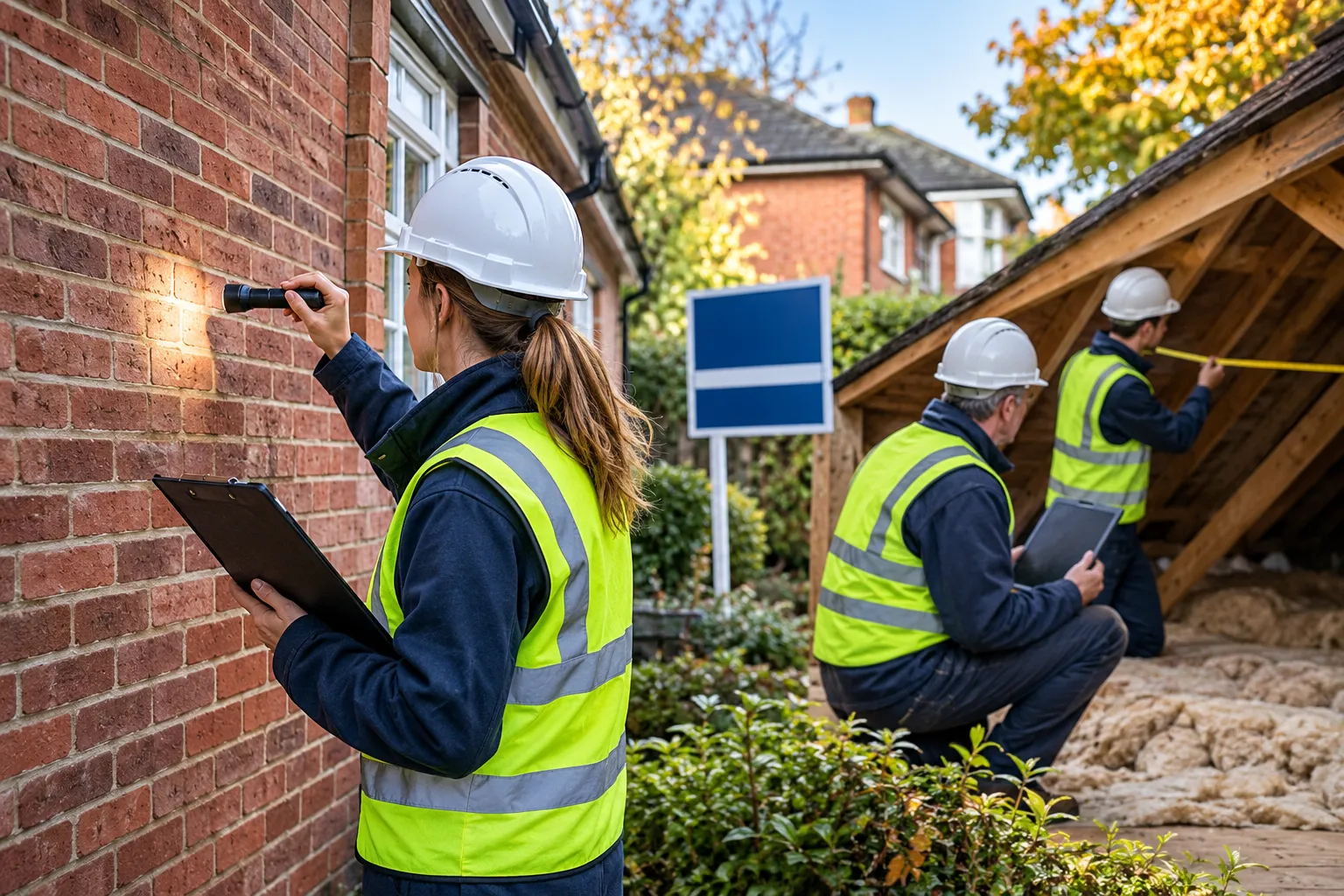
Tree root claims usually need two disciplines. A chartered building surveyor or structural engineer deals with the damage, the mechanism and the repair; an arboricultural expert deals with the tree. The engineering investigation follows the method surveyors use to check for subsidence, to an evidential standard:
- Damage survey: cracks are recorded and classified, commonly against the damage categories in BRE Digest 251, and compared with the position of the tree.
- Trial pits and boreholes: these establish foundation depth and soil profile, and roots recovered from beneath the footing are identified by species in a laboratory.
- Soil testing: plasticity tests show whether the clay is shrinkable, and moisture content or suction profiles show whether it is desiccated at foundation level compared with ground away from the tree.
- Monitoring: level and crack-width readings, ideally across a full year. Movement that is downward in late summer and recovers in winter is the signature of tree-related clay shrinkage.
- Drains and tree data: a CCTV survey rules out a leaking drain, and the tree's species, height and distance are read against guidance such as NHBC Standards Chapter 4.2 on building near trees.
The expert must also address heave. If the tree is older than the building, removing it can allow the clay to rehydrate and swell, lifting the foundations, so the report has to assess that risk before recommending felling. At an early stage, a structural crack assessment is often the proportionate first step.
Tree removal, repairs and damages: what can be claimed?
The first aim is usually abatement: having the tree removed or managed so the ground recovers. Where that happens promptly the building often stabilises, and the claim is limited to crack repairs and redecoration. Where the owner refuses or delays, or the tree cannot be removed, a root barrier or underpinning may be justified, and underpinning a house commonly costs £10,000 to £40,000 or more. Which scheme was reasonably necessary is normally the main dispute on quantum. Investigation costs, alternative accommodation and an uninsured policy excess can also be claimed.
Protected trees add a step. If the tree is covered by a tree preservation order or stands in a conservation area, neither owner can lawfully cut it without going through the council, as the tree preservation order guide explains. If consent is refused, compensation for the resulting loss can be claimed from the authority under regulation 24 of the Tree Preservation Regulations 2012, provided the claim is at least £500 and is made within 12 months of the decision.
Notice, time limits and the court process
Because liability generally runs from knowledge, the most valuable early step is a letter to the tree owner, in line with the Practice Direction on Pre-Action Conduct, enclosing the evidence and asking for the tree to be dealt with by a stated date. A claim in nuisance must generally be issued within six years of the damage under the Limitation Act 1980; root encroachment is usually a continuing nuisance, so fresh damage can found a fresh claim, but a solicitor should confirm the dates.
Complex or high-value claims go to the Technology and Construction Court. Expert evidence needs the court's permission under CPR 35.4, and every expert owes an overriding duty to the court under CPR 35.3. Lower-value claims are often directed to a single joint expert; in larger cases the experts meet and produce a joint statement under CPR 35.12.
How much does expert evidence in a tree root claim cost?
RICS chartered surveyors and structural engineers acting as expert witnesses generally charge £150 to £300 an hour. A CPR Part 35 report in a straightforward claim typically costs £5,000 to £15,000, complex or multi-property cases £20,000 to £50,000 or more, and court attendance £1,000 to £2,000 a day. Site investigation is charged separately: trial pits and soil testing typically cost £1,000 to £3,000 and a year of monitoring £500 to £1,500. The arboricultural expert's fee is additional. An advisory subsidence investigation costs considerably less and is often enough to support the notice letter.
Instruct a subsidence expert witness through Survey Merchant
Survey Merchant provides RICS chartered building surveyors and structural engineers as expert witnesses for tree root subsidence claims across England and Wales, drawn from a national panel of 2,400+ professionals. The panel's experts investigate cause, interpret soil and monitoring data, cost repairs and prepare CPR Part 35-compliant reports for homeowners, insurers, tree owners and solicitors. Single joint expert and party appointments are accepted, and fixed fees are quoted wherever the scope is clear. Start with a subsidence investigation, see all expert witness services, call 0204 579 8270 or use the contact form to have the right expert matched to the claim.