We use cookies to improve your experience on our site, analyze site traffic, and assist in our marketing efforts. By clicking "Accept all," you agree to the storing of cookies on your device. You can choose to "Reject all" non-essential cookies. For more information, please read our Cookie Policy.
FENSA Certificate: 2026 UK Guide for Buyers & Sellers
A FENSA certificate shows replacement windows or doors met Building Regulations. This 2026 guide covers when you need one, how to check or replace it, FENSA vs CERTASS vs building control, and what to do if there is no certificate.
A FENSA certificate is one of the documents most often requested by a buyer’s solicitor – and one of the most often missing. If you have replaced windows or doors, are buying a home where someone else did, or have just been asked for one by a conveyancer, this 2026 guide explains exactly what a FENSA certificate is, when you legally need one, how to check for and replace one, and what your options are if the paperwork simply does not exist. It draws on GOV.UK guidance, the Building Regulations themselves and the newly published 2026 edition of Approved Document L, with input from the suitably qualified, accredited surveyors on the Survey Merchant panel.
Key takeaways
A FENSA certificate confirms that replacement windows, doors or roof windows in England and Wales were installed to Building Regulations by a registered installer and notified to your local council.
FENSA itself is not compulsory – Building Regulations compliance is. FENSA is simply the best-known government-authorised Competent Person Scheme; CERTASS, Assure and others do the same job, as does a building control certificate.
If you do not receive a certificate within 30 days of completion, GOV.UK says to contact the scheme operator your installer is registered with.
A replacement FENSA certificate can be ordered online for £30 including VAT; the original is free when you use a registered installer.
No certificate? Your routes are a regularisation certificate from building control or an indemnity insurance policy – and a pre-purchase survey will tell you whether the windows themselves are actually any good.
The 2026 edition of Approved Document L (published 24 March 2026, in force 24 March 2027) keeps the replacement-window standard at 1.4 W/m²K or Window Energy Rating Band B.
What is a FENSA certificate?
A FENSA certificate is a compliance document issued after replacement windows, doors or roof windows are fitted in an existing home in England or Wales. It confirms the installer was FENSA-registered, the work met Building Regulations (including thermal performance, ventilation and safety glazing), and the installation was registered with your local authority.
FENSA stands for the Fenestration Self-Assessment Scheme. According to FENSA’s own history, it was created in April 2002, when Building Regulations were extended to cover replacement glazing, and it describes itself as the first Competent Person Scheme for the window and door industry. By 2018 it reported more than 13 million certificates issued. Because it has been around the longest, “FENSA certificate” has become shorthand for any window compliance certificate – but, as we explain below, it is not the only valid one.
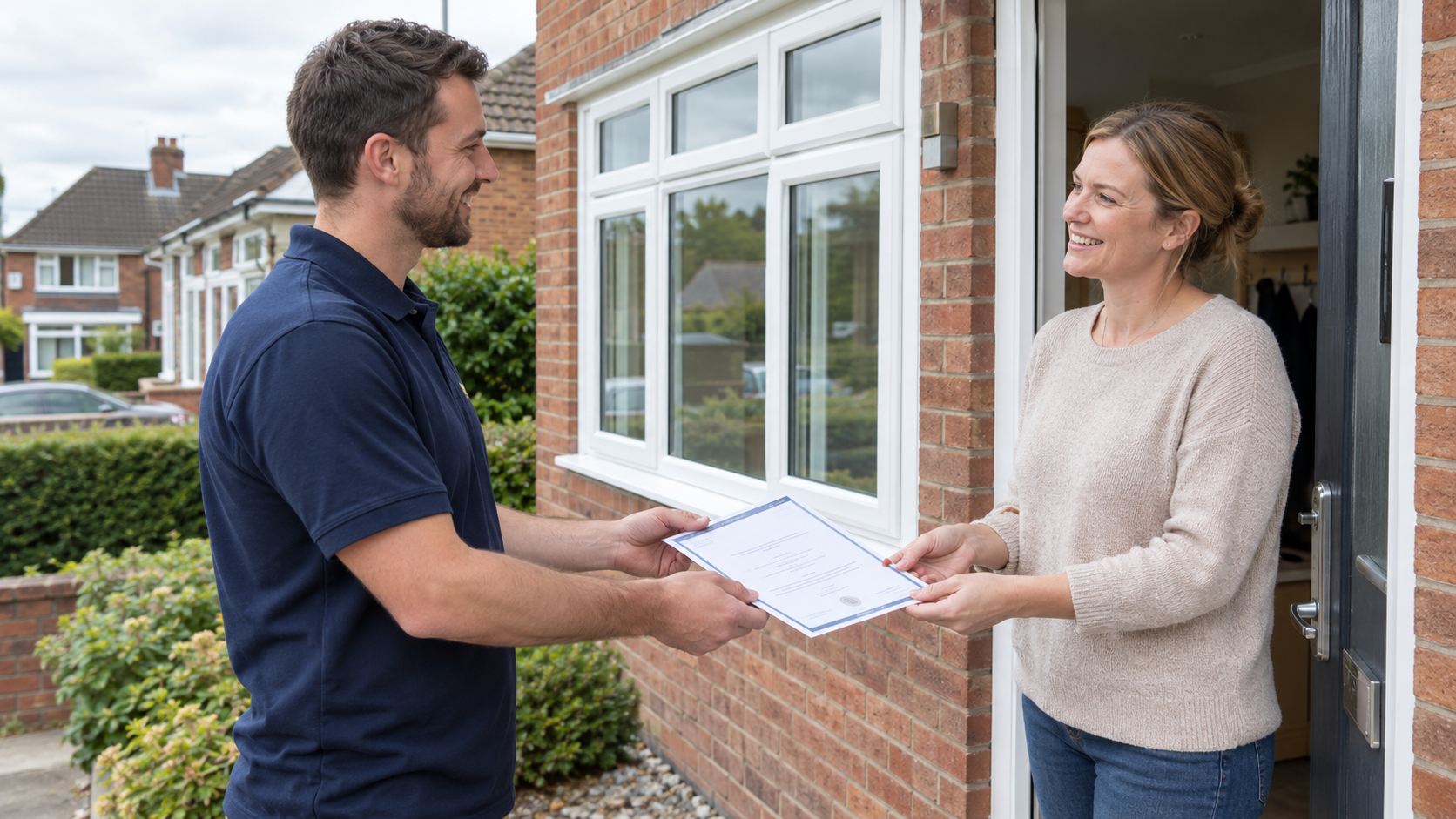
A registered installer should notify your council and issue the FENSA certificate – GOV.UK says to chase the scheme if nothing arrives within 30 days.
Is a FENSA certificate a legal requirement?
Strictly speaking, no – but compliance with the Building Regulations is. Since April 2002, replacing windows, doors, roof windows or roof lights in a dwelling has been “notifiable” work in England and Wales. GOV.UK’s guidance on replacements and repairs to your home is clear: the work must be notified to a Building Control Body unless it is carried out by an installer registered with a Competent Person Scheme.
There are therefore two lawful routes:
Use a Competent Person Scheme installer. The installer self-certifies the work, notifies the local authority and issues you a certificate, either directly or through the scheme. GOV.UK lists the schemes authorised for this work as ASSURE, Blue Flame, BM TRADA, BSI, CERTASS, Certsure, FENSA, NAPIT and STROMA.
Use building control. If your installer is not registered, you (or the installer on your behalf) must submit a building notice or full plans application, pay a fee, and have the local authority or an approved inspector check the work and issue a completion certificate. Our guide to the building regulations completion certificate explains what that document looks like.
So a FENSA certificate is one of several acceptable proofs. What a solicitor, lender or surveyor actually wants is evidence that notifiable work was signed off by someone entitled to sign it off.
Which work needs a FENSA certificate – and which doesn’t?
FENSA only covers the replacement of windows and doors in existing homes. It does not cover new-build glazing, which is inspected as part of the whole-house building control process, nor work that is already dealt with under a wider building regulations application. The table below sets out the most common scenarios.
Scenario
FENSA (or equivalent scheme) certificate?
Notes
Replacing windows in an existing house or flat
Yes
Notifiable since April 2002; scheme certificate or building control sign-off needed.
Replacing an external door or doorset
Yes
Includes front, back, patio and bi-fold doors.
Replacing roof windows or roof lights
Yes
Covered by the same GOV.UK notifiable list.
Windows in a new-build home
No
Covered by the overall building control completion certificate.
Windows in a new extension
No (separately)
Checked under the extension’s building regulations application.
Conservatory or porch under 30 m² that is exempt
Usually no
Exempt structures are outside FENSA; check the exemption conditions carefully.
Repairing a window (new glass unit, hinges, handles)
No
Repairs are not notifiable; full frame replacement is.
Property in Scotland or Northern Ireland
No
FENSA operates in England and Wales only; separate building standards apply.
What does a FENSA certificate actually prove?
It is worth understanding what the certificate does and does not say, because it is frequently over-read. A FENSA certificate confirms that, on the installation date, a registered installer self-certified the work as compliant with the relevant parts of the Building Regulations. For replacement glazing in an existing dwelling the key requirements are:
Energy efficiency (Part L). The 2026 edition of Approved Document L, Volume 1 keeps the limiting standard for replacement windows and roof windows at a U-value of 1.4 W/m²K or Window Energy Rating Band B minimum, with doors at 1.4 W/m²K or a Doorset Energy Rating of Band B (Band C where the door is more than 60% glazed). New dwellings face a tighter limiting value of 1.6 W/m²K for windows and doors under the Future Homes Standard.
Ventilation (Part F). Replacement windows must not make background ventilation worse – in practice this is why installers fit trickle vents.
Safety glazing (Part K). Toughened or laminated glass in critical locations such as low-level glazing and glass next to doors.
Means of escape (Part B). Where a window served as an emergency escape, the replacement must still provide a suitable opening.
Structural integrity. Lintels and the opening must remain adequately supported.
Crucially, the certificate is a declaration by the installer, not an independent inspection. It is not a guarantee of workmanship, nor a statement that the units are still performing years later. Blown (misted) sealed units, failed trickle vents and poor sealing are all things a house survey will pick up regardless of what paperwork exists.
How do I check whether I have a FENSA certificate?
You can search for and order a copy of any FENSA certificate through FENSA’s certificate service, either by property address and postcode or by the details on an existing certificate. If a search returns nothing, it usually means one of three things:
the installer was registered with a different scheme (try CERTASS or Assure, which have their own look-up tools);
the work went through local authority building control instead – the council’s building control records or a conveyancing local authority search should show a completion certificate; or
the work was never notified at all.
FENSA also states that it verifies every registered installer’s guarantee is insured, so the FENSA record can be useful if the original installer has since ceased trading.
How much does a FENSA certificate cost, and how long does it take?
If you use a FENSA-registered installer, the certificate is included in the price of the job – there is no separate fee to the homeowner. GOV.UK’s guidance states that if you have not received a certificate within 30 days of completion you should contact the Competent Person Scheme operator your installer is registered with. A replacement copy currently costs £30 including VAT when ordered online from FENSA.
Item
Typical cost (2026)
Typical timescale
Original FENSA certificate via registered installer
Included in installation price
Should arrive within 30 days of completion (GOV.UK)
Replacement FENSA certificate
£30 inc. VAT (FENSA online service)
Days to a few weeks, depending on postal delivery
Building notice / full plans route (non-registered installer)
Local authority fee – varies by council and job size
Inspection during the work; certificate after sign-off
Regularisation certificate for unnotified work
Council fee, typically higher than a standard application; plus any opening-up or remedial work
Weeks to months
Indemnity insurance policy
One-off premium; Homebuilding & Renovating quotes a typical £80–£500 range
Usually arranged within days by the seller’s solicitor
Costs other than FENSA’s published fee vary by council and insurer, so treat them as indicative and obtain quotes.
FENSA vs CERTASS vs building control: what is the difference?
Buyers often panic when a seller produces a CERTASS certificate rather than a FENSA one. There is no need. Both are government-authorised Competent Person Schemes listed by GOV.UK for exactly this work, and a certificate from either carries the same legal weight. A building control completion certificate is equally valid – and, because it follows an inspection by the local authority or an approved inspector rather than installer self-certification, some surveyors regard it as the more robust document of the three.
Route
Who certifies?
Council notified?
Independent inspection?
Insurance-backed guarantee?
FENSA
Registered installer (self-certification)
Yes, via scheme
Scheme audits a sample of jobs
Yes – FENSA checks installers’ guarantees are insured
CERTASS / Assure / other schemes
Registered installer (self-certification)
Yes, via scheme
Scheme audits a sample of jobs
Typically yes; check the scheme
Local authority building control
Building Control Body after inspection
Yes – direct application
Yes
No – separate warranty needed
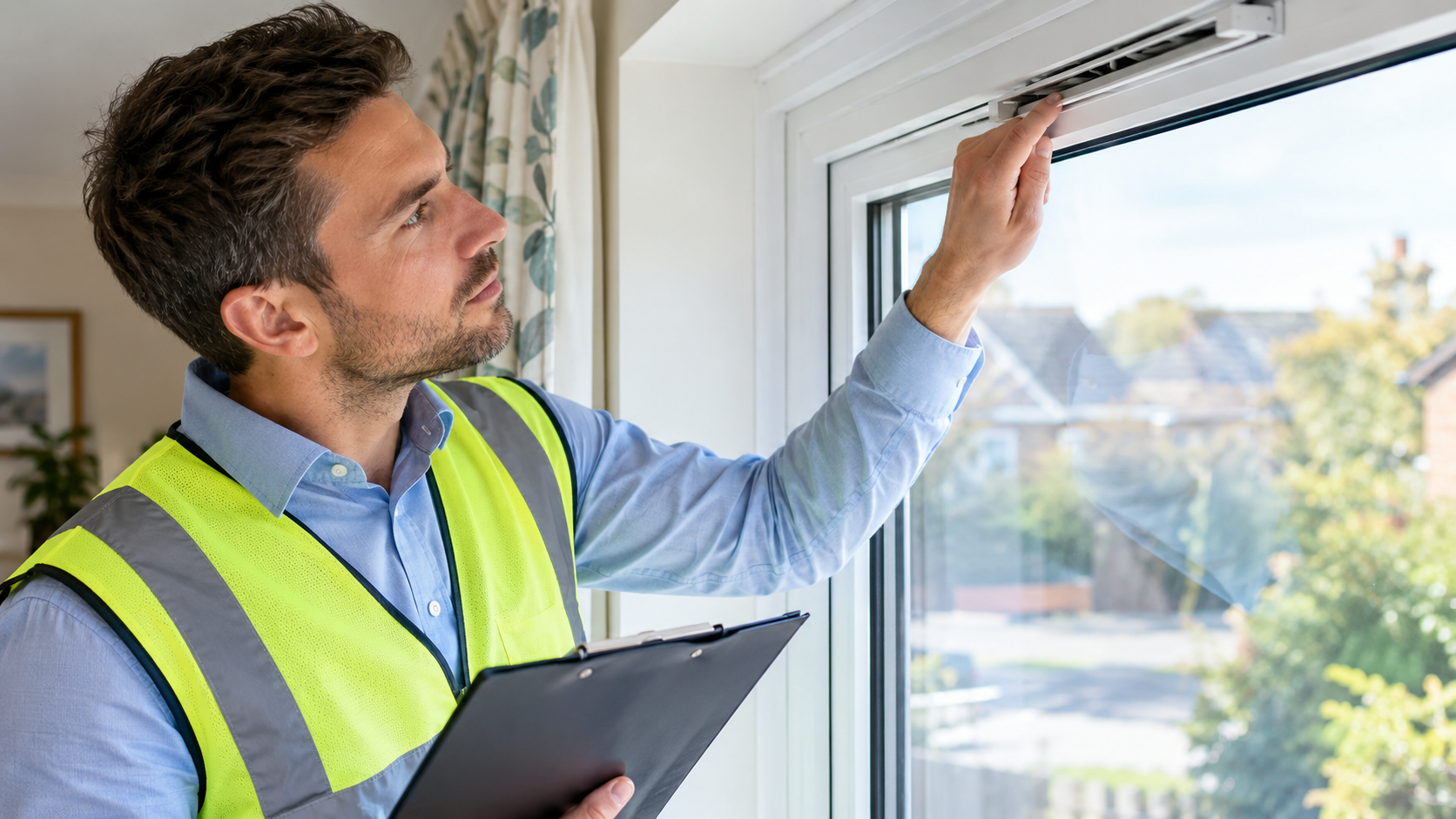
A Level 2 or Level 3 survey checks the windows themselves – seals, vents, safety glass and escape openings – not just whether a FENSA certificate exists.
What happens if there is no FENSA certificate?
This is the question that generates most of the stress around FENSA, so let us be precise. Missing paperwork does not make a sale impossible, and it does not automatically mean the windows are unsafe or non-compliant. It does mean the buyer has no evidence of compliance, and the local authority retains enforcement powers. Here are the realistic options.
1. Ask the installer or the schemes first
Many “missing” certificates were never missing: they were issued under CERTASS, are sitting on the FENSA database under a previous owner’s name, or were never posted. A quick search of the scheme databases and a call to the installer resolves a surprising number of cases.
2. Apply for a regularisation certificate
Under regulation 18 of the Building Regulations 2010, the owner of a building can apply to the local authority for a regularisation certificate for unauthorised work carried out on or after 11 November 1985. The council may require you to lay the work open for inspection, carry out tests or take samples, and will issue the certificate once satisfied that the relevant requirements are met or that no further work is needed. The regulation describes the certificate as evidence – though “not conclusive evidence” – of compliance. Our detailed guide to the regularisation certificate process covers fees and pitfalls. For replacement windows, the inspector will typically want to see the units’ energy rating labels or manufacturer data, trickle vents, safety glazing marks and the condition of lintels.
3. Take out indemnity insurance
The most common fix in a sale is a building regulations indemnity policy, paid for by the seller. It protects the buyer (and lender) against the financial cost of enforcement action by the local authority. It does not pay to fix defective windows, and policies are usually invalidated if anyone contacts the council about the work – so do not apply for regularisation and buy indemnity cover for the same work. Lenders generally accept a policy for older installations. See our explainer on when indemnity insurance is appropriate.
4. Understand the enforcement position
Historically a local authority had only 12 months after completion to serve a notice under section 36 of the Building Act 1984 requiring non-compliant work to be removed or altered. Section 39 of the Building Safety Act 2022 amended that period to 10 years and strengthened the penalties for contravening building regulations. In practical terms, buyers in 2026 should treat recent unnotified window replacements with more caution than they might have a few years ago, and sellers should expect solicitors to press harder for proper evidence.
5. Replace the windows
Where the units are at the end of their life anyway – misted double glazing, rotten timber subframes, no trickle vents – it can be more sensible to negotiate a price reduction and replace them using a registered installer, which produces a fresh certificate and a new guarantee. A survey gives you the evidence to negotiate the house price after your survey.
Can I sell my house without a FENSA certificate?
Yes. There is no legal bar on selling, and the TA6 Property Information Form simply asks the seller to disclose whether windows have been replaced since April 2002 and to supply any certificates. If you cannot, say so honestly; your solicitor will usually offer an indemnity policy, and the buyer may accept it, request a regularisation certificate, or ask for a price adjustment. Mis-stating the position on the TA6 is far riskier than admitting the certificate is missing. Our guide to what a conveyancer does explains where this fits in the sale process.
Sellers who gather FENSA, electrical and gas certificates before listing avoid the last-minute scramble that delays exchange.
What does a surveyor check about windows and doors?
A FENSA certificate tells you about the day of installation; a survey tells you about today. Whether you commission a Level 2 or Level 3 survey, a suitably qualified, accredited surveyor will typically:
note the age, material and type of each window and door, and whether replacements post-date April 2002 (triggering the certificate question for your solicitor);
look for failed sealed units, condensation between panes, draughts, swollen or rotten frames and failed seals;
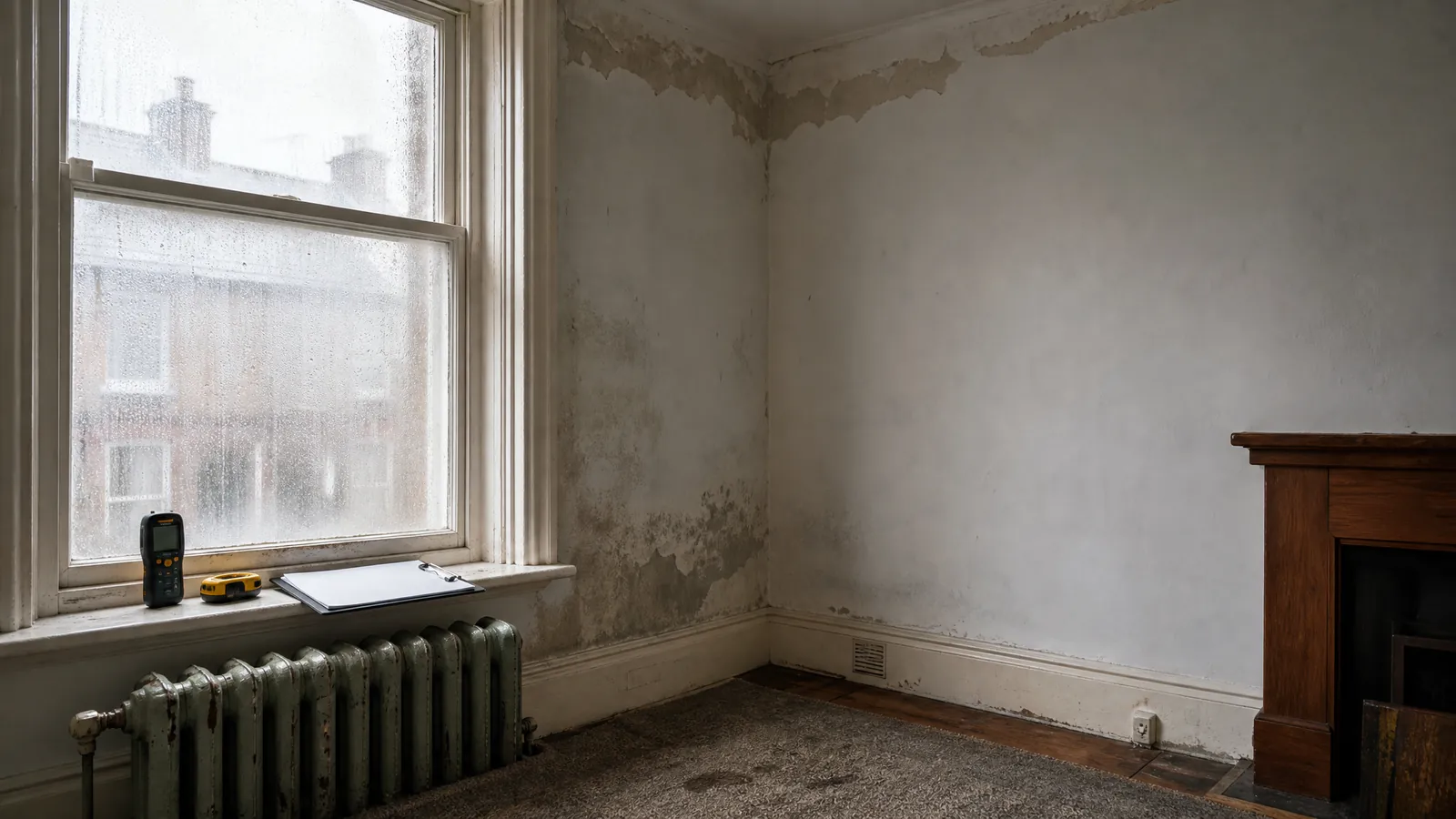
check for trickle vents and signs of condensation and mould linked to poor ventilation;
identify safety-glazing kite marks in critical locations and confirm escape windows in bedrooms;
look for cracked lintels, sagging openings or bowed frames that suggest structural support was disturbed; and
flag energy performance, which feeds into the home’s EPC rating and running costs.
Survey Merchant’s panel includes surveyors regulated or accredited by bodies such as RICS, CIOB and RPSA, matched to the type of survey you need. Whichever route you take, use a suitably qualified, accredited surveyor rather than relying on paperwork alone.
FENSA and Building Regulations: what has changed in 2026?
Three developments matter for anyone dealing with window compliance this year:
Approved Document L 2026 edition. The Ministry of Housing, Communities and Local Government published the Future Homes and Buildings Standards and the 2026 edition of Approved Document L on 24 March 2026, with the new requirements coming into force on 24 March 2027 for most building work (and 24 September 2027 for higher-risk buildings). For replacement windows in existing homes the limiting standard is unchanged at 1.4 W/m²K or WER Band B, so a compliant 2025 installation remains compliant.
Longer enforcement reach. The 10-year period for section 36 notices introduced by the Building Safety Act 2022 is now the reality solicitors work to, which is why requests for FENSA or building control evidence have become firmer.
Digital property information. The government’s home buying and selling reforms push for compliance documents such as FENSA certificates to be gathered up front by sellers. Having them ready at listing stage is increasingly expected rather than optional.
Why choose Survey Merchant for your pre-purchase survey?
A FENSA certificate answers one narrow question. A good survey answers the ones that actually affect your money: are the windows sound, is there damp or ventilation trouble behind them, and what will it cost to put right? Survey Merchant helps you get that answer quickly and at a fair price.
Accredited panel, matched to the job. We work with suitably qualified surveyors regulated or accredited by bodies such as RICS, CIOB and RPSA, and match your property to the right level of survey.
Nationwide UK coverage with local knowledge. Surveyors who know the housing stock in your area, from 1930s semis with original timber frames to post-2002 uPVC replacements.
Fast turnaround. Prompt booking and reporting so a missing certificate does not stall your exchange.
Transparent, competitive fixed fees. You know the cost before you instruct – see our house survey cost guide for typical prices.
Impartial advice and end-to-end support. We help you understand the report, decide between regularisation and indemnity, and negotiate with confidence.
Not as such. What the law requires is that replacement windows, doors and roof windows in England and Wales comply with Building Regulations and are notified to building control. A FENSA certificate is one accepted way of proving this; a CERTASS or other Competent Person Scheme certificate, or a local authority completion certificate, is equally valid.
How do I check if my windows have a FENSA certificate?
Search FENSA's online certificate service by property address and postcode. If nothing appears, check the CERTASS and Assure databases, ask the installer, or look for a building control completion certificate in the council's records or your conveyancing search results.
How much does a replacement FENSA certificate cost?
FENSA currently charges £30 including VAT for a replacement certificate ordered online. The original certificate is free when you use a FENSA-registered installer, and GOV.UK advises contacting the scheme if it has not arrived within 30 days of completion.
Can I sell my house without a FENSA certificate?
Yes. You must answer the TA6 Property Information Form honestly, but a missing certificate does not prevent a sale. Sellers usually offer a building regulations indemnity policy, or the buyer may ask for a regularisation certificate from the council or negotiate on price.
Do I need a FENSA certificate for a new build, extension or conservatory?
No. FENSA covers only the replacement of windows and doors in existing homes. Glazing in a new build or an extension is checked under that project's building control application, and genuinely exempt conservatories and porches fall outside the regulations altogether.
Does a FENSA certificate mean the windows are in good condition?
No. It confirms the installer self-certified compliance on the day of installation. It says nothing about current condition, so a Level 2 or Level 3 survey by a suitably qualified, accredited surveyor is still the way to check for misted units, failed seals, missing trickle vents or structural problems.