Building Surveying
Oct 8, 2026
EPC Certificate Requirements UK: Your 2026 Guide
Confused by UK EPC certificate requirements? Our 2026 guide explains legal obligations for sellers and landlords, costs, exemptions, and how to get a valid EPC.

You're usually forced into EPC compliance at an awkward moment. The estate agent is ready to list. The tenancy is about to renew. A buyer's solicitor asks for documents. Then someone says, “Where's the EPC?” and a simple transaction suddenly depends on one certificate.
That's why EPC certificate requirements matter so much in practice. This isn't background paperwork. In the UK, an Energy Performance Certificate is a regulated compliance document used when a property is constructed, sold, or rented, and it's produced by an accredited assessor using standardised property data such as building fabric, heating, hot water, lighting, and ventilation inputs, as explained in UK EPC guidance on how the certificate works. If you get the timing wrong, the deal slows down. If you rely on assumptions, the rating can disappoint. If you ignore it entirely, enforcement risk appears where many owners least expect it.
The practical question isn't just “what is an EPC?” It's “what do I need to do next, and when?” For landlords in particular, that now includes planning ahead for the proposed tightening of minimum energy standards in the years ahead. A certificate that feels acceptable today may not support your next letting strategy.
You agree a sale, line up a tenant, or ask an agent to start marketing, then someone asks for the EPC. At that point, this stops being admin and starts affecting the transaction. If there is no valid certificate, the process can slow down fast.
For most owners, the answer is yes. An EPC is usually required when a property is built, sold, or let. It records the building's energy performance using a standard method, not an owner's estimate or an agent's description, as explained in the government's guide to energy performance certificates for homes.
Owners often file the EPC away and only revisit it when a buyer, tenant, or solicitor asks for it. That approach causes avoidable problems. An EPC works like an MOT for the building's energy efficiency. You may not look at it often, but the moment you need to prove the property is fit for the next step, it matters.
The certificate does more than satisfy a rule. It gives buyers and tenants a quick read on likely running costs, and it gives owners an early warning if the property is drifting toward a rating that may cause trouble later.
That matters even more for landlords. A rating is not just a marketing detail. It can affect whether a property can be let lawfully under minimum energy efficiency rules, and those rules are expected to tighten in 2026 and 2028. Anyone reviewing broader UK landlord duties and responsibilities should treat EPC planning as part of the same compliance job, not a separate box-ticking exercise.
The report gives you two practical tools:
That second part is where many owners miss the opportunity. A low EPC rating is not only a compliance risk. It is also a work schedule in plain English. Loft insulation, lighting upgrades, heating controls, or glazing improvements can change the scorecard and put you in a stronger position before rules tighten.
Practical rule: If you may sell, let, refinance, or carry out major upgrades in the next year, check the EPC now. It is cheaper to deal with timing early than to explain delays once a transaction is live.
Most EPC problems are not caused by refusal. They come from assumptions. Owners assume an old certificate still works, assume alterations do not affect the rating, or assume an exemption applies automatically.
The critical factor is often timing. Start by checking whether a valid EPC already exists and whether it still reflects the property in its current form. Then decide whether a fresh assessment would put you in a better position, especially if you are a landlord looking ahead to tighter MEES standards rather than just trying to clear today's requirement.
A common problem looks like this. The sale is agreed, or the letting agent is ready to launch, and someone then discovers the EPC is missing, expired, or based on a property that has since been altered. At that point, a simple compliance check turns into a delay, and delays cost money.
An EPC becomes a legal issue when the property is being sold, let, or completed as a new build. Those are the trigger points that matter in practice. If one of those events is coming up, check the certificate early and check whether it still matches the property as it now stands.
Recent government reporting shows how routine this is across the market. The Ministry of Housing, Communities and Local Government publishes quarterly data on lodgements to the register in its Energy Performance of Buildings Certificates statistical release. The useful takeaway for owners is straightforward. EPC compliance is part of normal transaction preparation, not an edge-case requirement you can leave until the last minute.
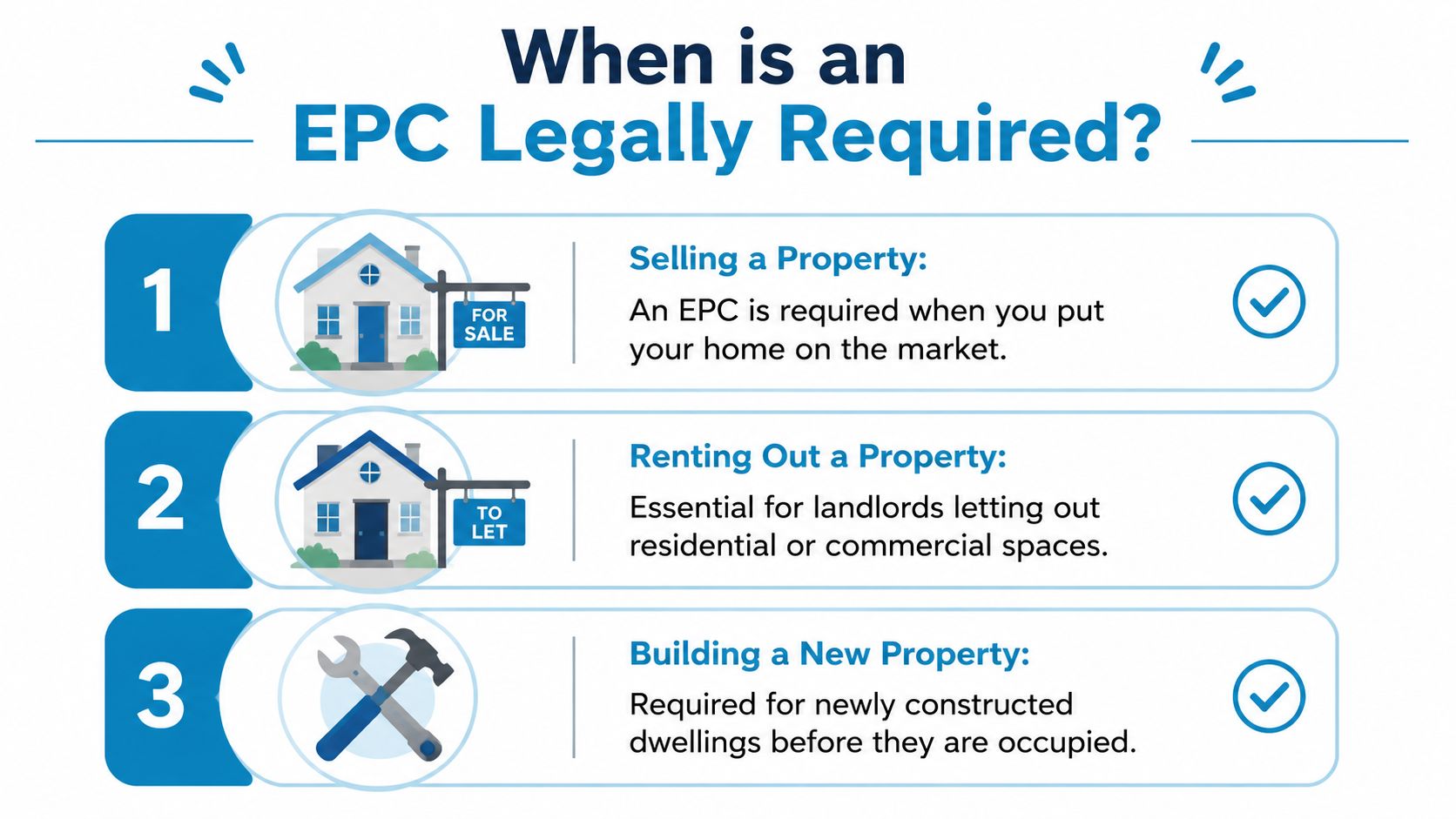
If you are marketing a property for sale, the EPC should be available from the start or commissioned immediately. Buyers, agents, and conveyancers treat it as part of the basic information pack.
The legal point is simple, but the commercial point matters just as much. A poor rating can affect buyer confidence, especially where the next owner is already thinking about upgrade costs, mortgage conditions, or future letting potential. For some sellers, it is worth doing targeted works before listing, particularly where a small change in score could improve marketability. If that applies, this guide on EPC rating how to improve is the right next step.
For landlords, the EPC is tied to both marketing and ongoing lettings compliance. It sits alongside gas safety, electrical checks, and the wider set of UK landlord duties and responsibilities that need to be in order before a tenancy starts.
The practical issue is not only whether a certificate exists. It is whether the rating supports lawful letting now and is likely to hold up as MEES standards tighten in 2026 and 2028. A property at the lower end of the scale can become a bigger problem at re-let, refinance, or portfolio review stage, so landlords should treat the EPC as a forward planning document, not a one-off admin task.
| Situation | What to check |
|---|---|
| New letting | A valid EPC is in place before marketing starts and the rating does not create a MEES problem |
| Existing rental asset | The certificate is still valid, still reflects the property, and the rating will not leave you exposed at the next tenancy event |
A new build also needs an EPC before the property is first occupied. The assessment is based on the completed build specification, so any late design changes, substitutions, or installation differences can affect the final rating.
That matters more than many developers expect. If the finished score lands lower than planned, you may still satisfy the immediate requirement to produce a certificate, but you can also inherit a weaker asset from day one. For developers and investors, that is the wider trade-off. The EPC is not just a document needed for handover. It is the first public scorecard for the building's energy performance.
The working rule is simple. If the property is about to be sold, let, or occupied for the first time, review the EPC position immediately. Early checks keep the transaction moving and give you time to improve the rating before tighter standards make those decisions more expensive.
A landlord gets the certificate back, sees a D, and files it away. Six months later, they are planning a re-let, pricing improvement works, and asking the wrong question. The useful question is not just "what rating did I get?" It is "what is holding this property back, what can realistically change, and what evidence will I need next time?"
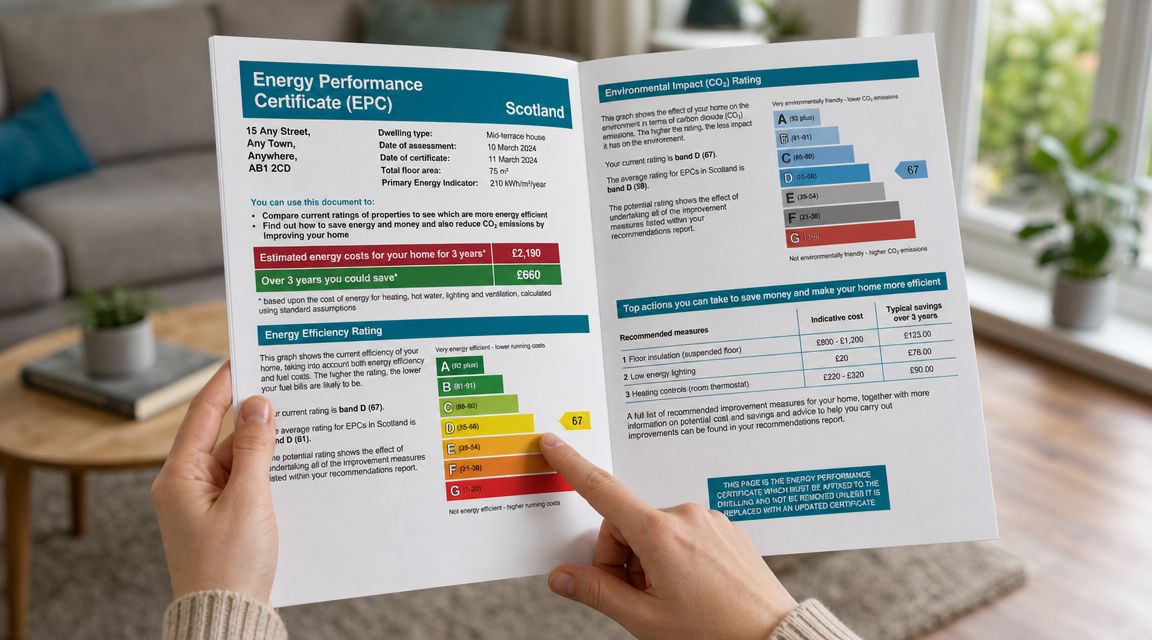
An EPC report gives you more than a coloured bar. It records how the property has been modelled using the building fabric, heating setup, hot water, lighting, and other fixed features. If you own rental stock, that report should be read like a compliance and investment document. It shows the current position, the likely ceiling without major works, and where a future reassessment may gain points.
The A to G scale works like a property efficiency scoreboard. Higher bands usually mean lower running costs and fewer compliance headaches. Lower bands usually mean more expensive heat loss, weaker saleability, and more pressure if minimum standards tighten.
Two figures matter:
That gap is where the practical value sits.
A small gap often means the easy wins have already been taken and further improvement may be expensive. A larger gap can point to clear upgrade options, but only if the recommendations suit the building and the budget. I tell clients to read the potential score with caution. It is not a promise. It is a modelled route, and some routes make commercial sense while others do not.
If you want a practical walk-through of common upgrade routes, this guide on EPC rating how to improve is a useful companion to the report itself.
Older homes tend to lose points in familiar places. Poor loft insulation, uninsulated walls, older boilers, basic heating controls, single glazing, and inefficient fixed lighting all affect the score. The report will not always say which single item is the culprit in plain English, so read it as a pattern rather than a verdict on one component.
For example, a home with decent windows but an older boiler and weak loft insulation may still sit in the same band as a home with newer heating but poor walls. The same letter can hide very different problems. That matters because the fix, cost, and disruption are different in each case.
If you want broader context before deciding on works, it helps to understand your energy consumption at home. That gives owners a better sense of which recommendations are likely to reduce bills in practice and which are mainly about improving the EPC model.
This is the part owners should use, not skim. The recommendations usually rank measures by likely impact and relative cost. Treat that list as a starting point for decisions, not instructions to follow blindly.
Read it in this order:
Trade-offs matter. Internal wall insulation may improve the rating but reduce room sizes and add cost. Replacing a serviceable boiler early may improve the score, but the payback can be poor if another measure would move the property into the next band more cheaply. Listed buildings, flats, and older solid-wall homes often need more care here than the EPC wording suggests.
This short explainer helps show how the certificate is structured in practice.
A certificate does not just show the grade. It shows where the property is dropping marks and whether the next improvement step is simple, expensive, or unrealistic.
The best EPC reading is forward-looking. Sellers can use it to spot avoidable buyer objections. Landlords should use it to judge whether the property is only compliant today or likely to stay workable as the 2026 and 2028 MEES changes get closer. That is the difference between holding a certificate and managing the asset properly.
Owners often expect a dramatic inspection. In reality, a standard domestic EPC visit is methodical and fairly matter-of-fact. The assessor isn't there to criticise décor, clutter, or housekeeping. They're there to collect the data the software needs.
A typical visit starts with the shell of the building. The assessor records dimensions, layout, age band, wall type, roof construction, floor type where identifiable, window type, and basic details of extensions or altered areas.
Then attention shifts to the fixed services. The assessor will usually inspect:
For existing homes, the model often relies on conventions where proof is missing. That's where owners lose ground. If you've upgraded windows, insulated the loft, or replaced the boiler but can't show documentary evidence, the assessment may fall back on default assumptions.
That's one reason it helps to understand your property's wider efficiency profile beforehand. A practical homeowner-focused guide on how to understand your energy consumption at home can help you recognise the same weak spots the EPC is likely to reflect.
The best-prepared owners don't try to influence the assessor. They make the evidence easy to verify. That's what improves accuracy.
Useful documents often include:
| Document | Why it matters |
|---|---|
| Boiler installation paperwork | Helps confirm system type and age |
| FENSA or glazing certificates | Supports window specification |
| Insulation records | Reduces reliance on assumptions |
| Building control paperwork | Helps with extensions or major alterations |
| Plans or specifications for works | Useful where hidden elements can't be seen |
If you've carried out energy-related works, gather the evidence before the appointment. Don't leave it in a drawer and mention it after the certificate is issued.
On site note: A well-prepared file can matter as much as the physical inspection. The assessor can only record what is visible or what can be evidenced.
If you're dealing with wider condition issues at the same time, resources on Survey Merchant energy surveys can help identify where poor efficiency overlaps with defects, damp risk, and refurbishment planning.
A straightforward visit usually feels uneventful. That's a good sign. The smoother the access and the clearer the evidence, the more reliable the outcome tends to be.
A landlord renews a tenancy, assumes the old EPC is fine, then finds the rating no longer supports the letting strategy they had in mind. That problem usually starts long before the renewal date. An EPC can still be in date and still be commercially unhelpful.
The key question is not just whether the certificate remains valid. The question is whether it still reflects the property you now own and the rules you may soon have to meet. If you have installed better glazing, upgraded insulation, or replaced an inefficient heating system, an outdated EPC can leave value on the table and distort compliance planning.
A current EPC is only as useful as the assumptions behind it. Older certificates often reflect a property before improvement works were done, or before landlords started planning around tighter Minimum Energy Efficiency Standards. That matters because a rating affects more than paperwork. It can influence marketability, upgrade budgets, refinance discussions, and the order in which you tackle stock across a portfolio.
The practical decision is straightforward.
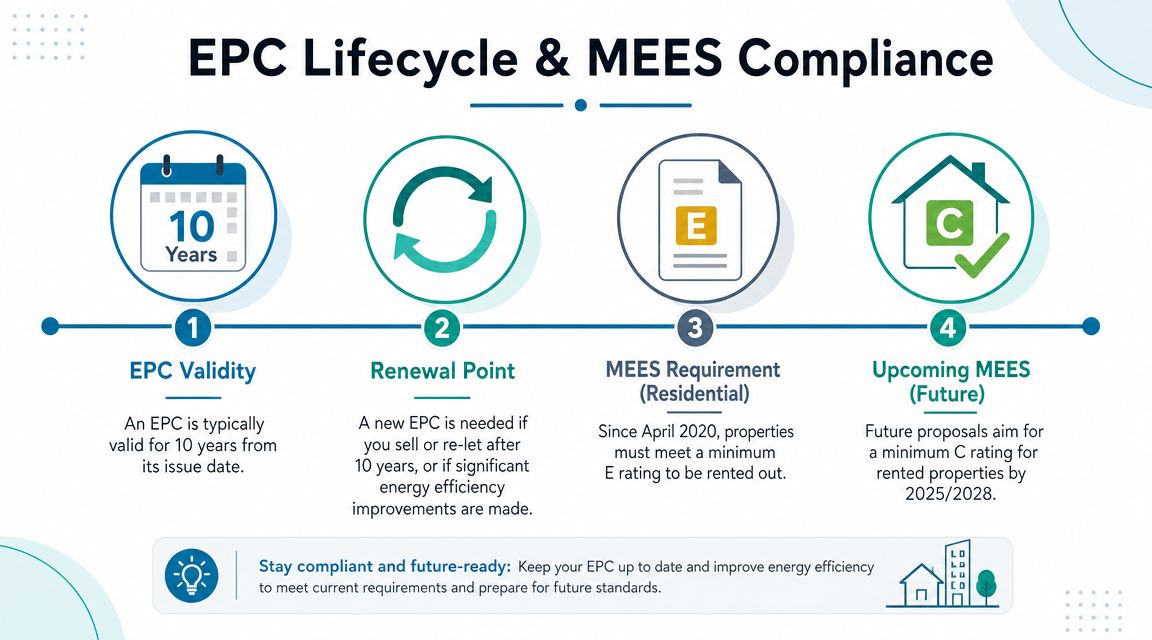
For landlords, the bigger issue is not renewal for its own sake. It is whether today's rating leaves enough headroom if MEES standards rise.
Current government policy discussions have focused on raising the minimum standard for private rented homes in England to EPC Band C, with implementation dates that have previously been discussed for new tenancies first and later for all tenancies. Those dates, including references to 2028, should be treated as proposed or pending rather than settled law unless and until legislation is confirmed. A useful summary of that direction of travel appears in this analysis of tougher EPC requirements.
That uncertainty is exactly why waiting can be expensive. A property sitting at D today may still be lettable under the current rules, but it can become tomorrow's capital works problem. Band C is often the point where cheap fixes run out. Loft insulation and lighting upgrades may help. Older walls, dated windows, electric resistance heating, or awkward flat layouts can make the final jump slower and more expensive.
A sensible plan looks like this:
The best way to treat an EPC is as a property scorecard. It shows where the asset stands today, but it also shows how exposed you may be if the compliance bar rises. Owners who review that position early usually have choices. Owners who leave it until a letting deadline usually have invoices.
A landlord agrees a new tenancy, the agent starts marketing, and only then does someone ask for the EPC. That is when bad assumptions get expensive. The property may need a certificate, may qualify for a narrow exemption, or may need improvement works before it can be let lawfully under the current minimum standards.
Certain exemptions do exist, but they are narrower than many owners expect. Guidance from accreditation bodies commonly points to cases such as some protected historic buildings, temporary buildings used for two years or less, residential buildings used for less than four months a year, and stand-alone buildings under 50 m². The details matter, so check the rule against the actual building rather than the sales description. This guide to situations where an EPC is not required is a useful starting point.
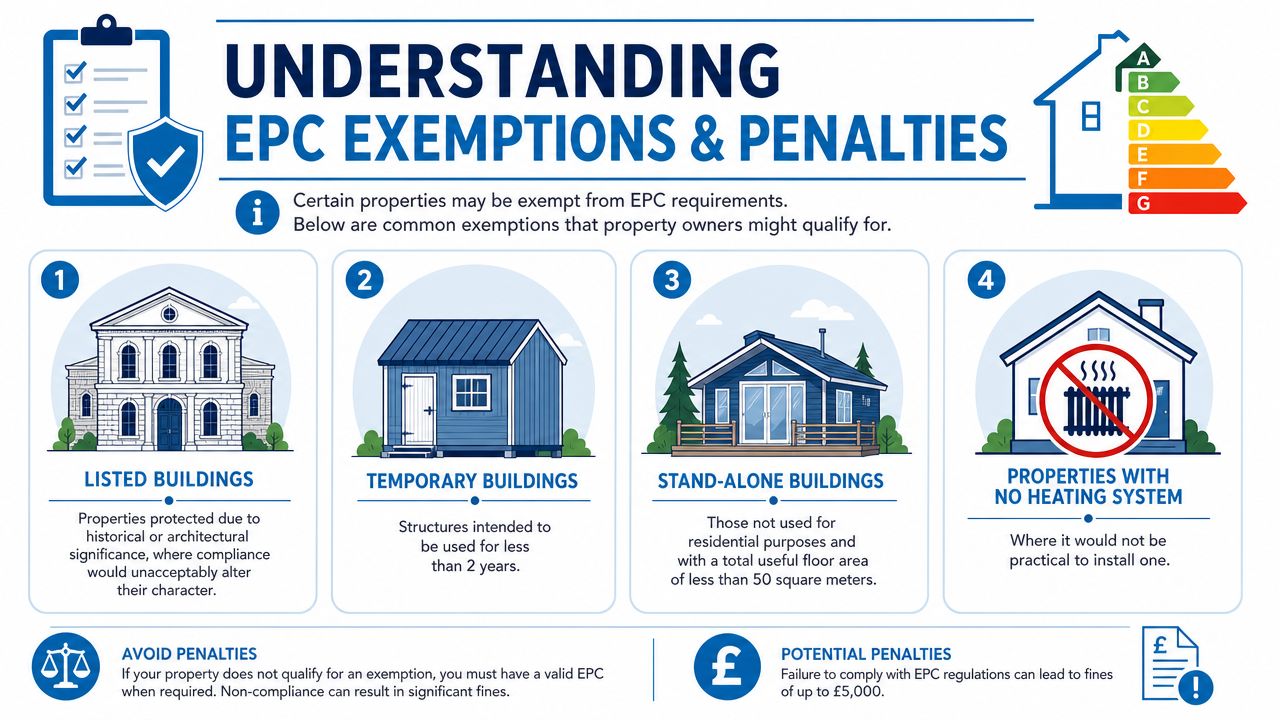
Listed and historic buildings cause the most confusion. Being old does not create an automatic exemption. The core question is whether meeting the requirement would unacceptably alter the building's character. In practice, that means owners need a defensible position, not a casual assumption.
Holiday accommodation is another frequent problem. Some short-term or seasonal properties may sit outside the requirement in specific circumstances, but “it's a holiday let” is not a blanket pass. I regularly see owners rely on the use they intended, rather than the use they can evidence.
Before relying on any exemption, check four points:
The immediate risk is enforcement. If an EPC is required and you do not have one, local authorities can issue financial penalties. Separate from that, landlords also need to keep one eye on the Minimum Energy Efficiency Standards regime. A valid certificate on its own does not solve the problem if the rating is too low for a lawful letting. That is the practical point many owners miss.
The commercial risk is often worse than the fine. A missing EPC can hold up a sale, delay a letting, weaken a negotiation, or force rushed works at the worst possible time. If 2026 and 2028 bring tighter MEES requirements, a weak rating stops being just a paperwork issue and becomes a budgeting issue. An EPC works like a property scorecard. The lower the score, the fewer options you usually have under time pressure.
One more pitfall. Owners sometimes spend money on the wrong improvement because they are chasing a recommendation list mechanically. Exemption analysis and upgrade planning should sit together. If the property is likely to stay in the rental market, the better question is not just “can I avoid the rule today?” but “what will this asset need next?”
For owners who want a second pair of eyes on the property before commissioning wider work, it can help to compare UK surveyors and sense-check condition, upgrade scope, and likely cost exposure.
Claim an exemption only when the property clearly fits the rule and you can prove it. If there is doubt, verify first and document the decision. That approach costs less than fixing a mistake under transaction pressure.
A common mistake is leaving the EPC until the buyer, tenant, or agent asks for it. That is when a routine instruction turns into a rushed compliance job, and rushed jobs leave you with fewer options if the rating is weaker than expected.
The visit itself is rarely the slow part. Delays usually come from access problems, missing evidence, unclear instructions, or finding out too late that the existing certificate does not fit the transaction or the works recently carried out.
A standard flat with easy access is usually straightforward. A heavily altered house, a property with poor records, or a tenanted building with limited appointment windows will often take longer to arrange and complete properly.
Good preparation cuts avoidable delay. In practice, the smoothest instructions usually include:
That paperwork matters more than many owners expect. If the assessor cannot verify an improvement, it may not be reflected in the rating. I see this regularly with replacement glazing, insulation works, and heating upgrades. Owners spend the money, but the score does not fully improve because the evidence trail is thin.
If the property may stay in the rental market, timing also affects strategy. An early EPC gives you time to price improvement works sensibly, rather than paying a premium to fix a poor rating under letting pressure ahead of the tighter MEES dates expected in 2026 and 2028.
Choose an accredited assessor with experience of your property type. That is not box-ticking. It is basic risk control.
A competent assessor should explain what evidence helps, what the inspection will cover, and where the weak points in the rating are likely to be. For unusual stock, converted buildings, or properties with a long upgrade history, that experience can make the process more accurate and more useful. You can check whether an assessor belongs to an approved accreditation scheme through the official EPC register.
Use this shortlist when comparing options:
| Check | Why it matters |
|---|---|
| Accredited | The EPC must be produced through an approved scheme to be valid |
| Responsive | Slow communication often becomes a missed deadline |
| Relevant experience | Converted, extended, or mixed-use properties need better judgement |
| Clear on evidence | Good assessors tell you what documents can support a better rating |
| Practical on next steps | A useful assessor helps you understand what to improve next, not just the headline grade |
If you are comparing wider property advice at the same time, it can help to compare UK surveyors so you match the instruction to the right professional instead of asking one person to cover valuation, condition, and EPC work beyond their lane.
Cost usually reflects property type, complexity, travel, and urgency. The cheapest quote is not always the lowest-cost option if it leads to a delayed transaction, a disputed result, or a missed opportunity to record energy upgrades properly. A good assessor does more than issue a certificate. They help you see what needs attention next, which is where the primary value sits for landlords and sellers planning ahead.
Survey Merchant provides vetted RICS surveyors across 100+ UK locations at fixed fees:
→ Level 2 Home Survey (HomeBuyer Report)
→ Level 3 Building Survey (full structural survey)
→ RICS Red Book property valuations
→ Party wall surveyors — notices, awards & schedules of condition
→ Expert witness surveyors — CPR Part 35 reports for property disputes