Leasehold
Sep 30, 2026
Explaining leasehold surveys: a buyer's complete guide
Discover the importance of explaining leasehold surveys. Get detailed insights on risks, costs, and obligations before buying your leasehold property.

A leasehold survey is a specialised property inspection report that assesses both the physical condition of a leasehold property and its associated lease obligations, giving buyers a clear picture of potential risks and costs before exchange. Unlike a standard freehold survey, a leasehold property assessment examines shared structures, communal areas, and lease clauses that can carry significant financial consequences. RICS chartered surveyors conduct these reports under current industry standards, and the Leasehold Reform (Ground Rent) Act 2022 has made their scope more demanding than ever. If you are buying a leasehold flat, maisonette, or conversion, understanding leasehold surveys is not optional. It is the clearest way to avoid expensive surprises after completion.
A leasehold survey combines two things most buyers treat as separate: a physical inspection of the building and an analysis of the lease terms that govern your ownership. The surveyor looks at the property’s condition and then cross-references what they find with your legal obligations under the lease. That dual focus is what makes leasehold property assessments fundamentally different from surveys on freehold houses.
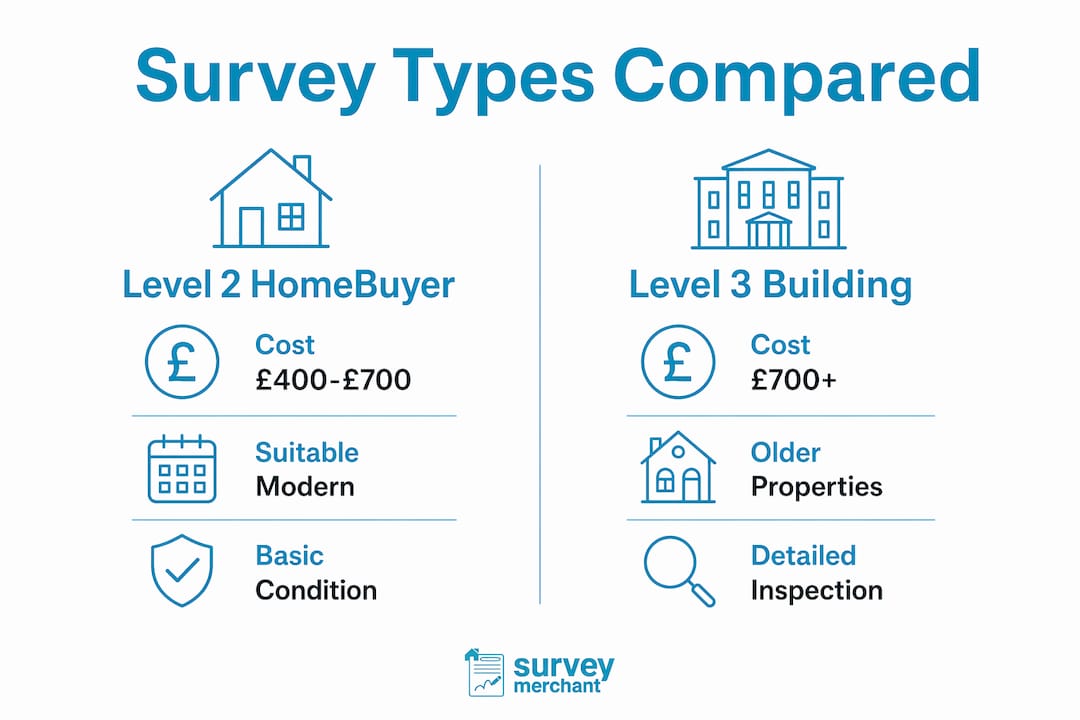
The industry uses two main survey types for leasehold properties. A RICS Level 2 HomeBuyer Report costs £400–£700 and suits modern, well-maintained leasehold flats in reasonable condition. A Level 3 Building Survey costs £700 to £1,500+ and is the right choice for older properties, conversions, and maisonettes where structural complexity raises the stakes. The cost difference reflects the depth of inspection, not just the time on site.

Buyers sometimes confuse a lease plan with a building survey. A lease plan is a legal document defining property boundaries for Land Registry purposes. It tells you nothing about damp, structural movement, or failing roof coverings. Treating one as a substitute for the other is a costly mistake.
| Feature | Level 2 HomeBuyer Report | Level 3 Building Survey |
|---|---|---|
| Typical cost | £400–£700 | £700–£1,500+ |
| Best suited to | Modern leasehold flats, good condition | Older conversions, maisonettes, poor condition |
| Inspection depth | Visual, non-invasive | Thorough, includes roof spaces and subfloor where accessible |
| Lease risk commentary | Limited | Detailed, cross-referenced with physical findings |
| Recommended for complex leaseholds | No | Yes |
Pro Tip: If the leasehold flat is in a Victorian or Edwardian conversion, always commission a Level 3 survey. Older construction methods create shared repair liabilities that a Level 2 report will not fully capture.
For a detailed breakdown of which survey fits your purchase, the Level 2 vs Level 3 comparison on Surveymerchant covers costs, scope, and decision criteria in full.
A leasehold survey goes well beyond checking for damp and cracked plaster. Nearly 70% of flat buyers miss understanding their leasehold obligations before purchase, and a thorough survey is the most reliable way to close that gap. The surveyor inspects elements that are unique to leasehold ownership and that carry direct financial consequences.
The key leasehold-specific areas a survey covers include:
Structural defects such as failing chimneys or parapet walls are common in older leasehold buildings and create shared repair liabilities that buyers rarely anticipate. The surveyor’s job is to name them clearly and quantify the likely cost.
Pro Tip: Ask your surveyor specifically about the service charge accounts for the past three years. Unexplained spikes often signal major works that the freeholder has already planned but not yet invoiced.
One important limitation: surveyors cannot conduct invasive inspections, so hidden damp behind wall linings or concealed electrical faults may require specialist follow-up. A good survey report will tell you exactly when that follow-up is necessary.
The Leasehold Reform (Ground Rent) Act 2022 and the Leasehold and Freehold Reform Act 2024 have changed what surveyors must report and how they interpret lease terms. These reforms capped ground rents and abolished marriage value, which directly alters lease extension calculations and the financial advice a surveyor provides. Buyers purchasing in 2026 need to understand how these changes show up in their survey report.
The practical implications for your survey include:
Surveyors now carry a dual role as building condition assessors and financial risk advisers. That shift is not optional. It reflects what lenders, solicitors, and buyers now expect from a professional report.
Getting the right surveyor and using the report effectively are as important as the inspection itself. Follow these steps to get full value from the process.
Select a RICS-qualified surveyor with leasehold experience. Not every chartered surveyor works regularly with leasehold properties. Ask directly whether they have experience with the specific property type, whether a purpose-built flat, a maisonette, or a converted Victorian terrace.
Arrange access to communal areas. Surveyors face real access challenges in shared spaces. Clear protocols for landlord permission are needed before the inspection date. Contact the managing agent in advance and confirm that roof spaces, plant rooms, and external areas will be accessible.
Provide the lease to your surveyor before the inspection. The surveyor needs to read the lease before they visit the property, not after. Key clauses on repair obligations, alterations, and ground rent escalation inform what they look for on site.
Read the report in full, not just the summary. Survey reports use a traffic light condition rating system. Condition 3 items require urgent attention. Condition 2 items need monitoring. Do not skip the appendices, where surveyors often note lease-related concerns in plain language.
Use the findings to negotiate. A survey that identifies £15,000 of roof repairs gives you a direct basis to renegotiate the purchase price or request that the freeholder completes works before completion. Your solicitor can use the report to challenge lease terms or request indemnity insurance where defects exist.
For a full walkthrough of survey types and what each covers, the HomeBuyer report vs building survey guide on Surveymerchant explains the differences clearly. You can also read the dedicated leasehold property purchase guide for broader context on what to expect at each stage.
A leasehold survey is the single most effective tool a buyer has to identify physical defects, lease liabilities, and financial risks before committing to a purchase.
| Point | Details |
|---|---|
| Survey type must match property type | Use a Level 3 Building Survey for older conversions and maisonettes; Level 2 suits modern, well-maintained flats. |
| Lease terms are part of the survey | A proper leasehold survey cross-references physical defects with ground rent, repair obligations, and lease length. |
| Legal reforms change what surveyors report | The 2022 and 2024 Leasehold Reform Acts require surveyors to document ground rent terms and lease length for mortgage and resale purposes. |
| Communal areas carry shared financial risk | Failing roofs, chimneys, and external walls in leasehold buildings create liabilities that the survey must identify and quantify. |
| Survey findings support price negotiation | Documented repair costs give buyers a factual basis to renegotiate the purchase price or request remediation before exchange. |
Most buyers treat the survey as a box-ticking exercise. They commission the cheapest option, skim the summary, and proceed to exchange without reading the lease-related commentary buried in the appendices. That approach costs people real money.
The properties where I have seen the worst outcomes are always the same type: a Victorian conversion, a ground-floor flat with a shared roof, or a maisonette where the lease splits repair responsibilities in an unusual way. These are precisely the properties where a Level 3 survey earns its fee several times over. A £900 survey that reveals £20,000 of shared roof liability is not an expense. It is the best return on investment in the entire transaction.
The other mistake I see regularly is buyers assuming that because a property looks well-maintained, the lease is straightforward. Lease complexity has nothing to do with how fresh the paint is. A flat with new carpets and a modern kitchen can sit on a lease with a doubling ground rent clause and 74 years remaining. Neither of those facts shows up in the décor.
Leasehold property assessments done properly combine physical inspection with legal and financial analysis. That combination is what separates a report that protects you from one that simply describes what the surveyor saw. Commission the right level of survey, read it in full, and use it.
— Surveymerchant
Surveymerchant connects leasehold property buyers with RICS-qualified building surveyors who specialise in the full range of leasehold property types, from purpose-built flats to complex Victorian conversions.

Every surveyor on the Surveymerchant panel understands the 2026 survey protocols required by lenders and the implications of recent leasehold reform legislation. Whether you need a Level 2 HomeBuyer Report or a comprehensive Level 3 Building Survey, Surveymerchant matches you with the right expert for your property. Explore the full range of building surveying services to find the right survey for your leasehold purchase, or request a RICS valuation if lease extension costs are part of your decision.
A leasehold survey is a RICS-standard property inspection that assesses both the physical condition of a leasehold property and the financial risks tied to its lease terms, including ground rent, repair obligations, and lease length.
A leasehold survey covers the structural condition of the property, communal areas, shared repair liabilities, EWS1 cladding status where applicable, ground rent clauses, service charge exposure, and lease length implications for mortgage eligibility.
A Level 2 HomeBuyer Report suits modern, well-maintained leasehold flats, while a Level 3 Building Survey is recommended for older conversions, maisonettes, or any property where structural complexity or lease terms create higher financial risk.
The reforms capped ground rents and abolished marriage value, meaning surveyors must now document ground rent terms and lease length in detail to support mortgage applications and accurate lease extension valuations.
A survey that identifies significant repair costs or problematic lease terms gives you a factual basis to renegotiate the purchase price, request remediation works, or ask your solicitor to seek indemnity insurance before exchange.
Survey Merchant provides vetted RICS surveyors across 100+ UK locations at fixed fees:
→ Level 2 Home Survey (HomeBuyer Report)
→ Level 3 Building Survey (full structural survey)
→ RICS Red Book property valuations
→ Party wall surveyors — notices, awards & schedules of condition
→ Expert witness surveyors — CPR Part 35 reports for property disputes