Valuation
Sep 4, 2026
Rebuild cost vs market value: what UK homeowners need to know
Understand the difference between rebuild cost and market value to ensure proper building insurance coverage for your UK home.

Your buildings insurance sum insured should be based on the rebuild cost (also called the reinstatement value), not the market value of your property. Market value is what a buyer would pay on the open market, including the land. Rebuild cost is what it would cost to demolish and completely reconstruct the building itself, and that is the figure your insurer needs.
RICS and BCIS are the two industry authorities that define how this figure should be calculated. For a standard modern house, the ABI/BCIS rebuild calculator gives a reasonable starting estimate. For anything listed, pre-1800, unusually constructed, or high-value, you need a professional Reinstatement Cost Assessment (RCA) from a RICS-qualified surveyor.
Before your next renewal, run through these three checks:
Rebuild cost, not market value, is the figure that determines whether your buildings insurance pays out in full. Using the wrong number does not just mean a slightly inaccurate policy: it can mean a proportionately reduced claim settlement under the average clause.
| Point | Details |
|---|---|
| Use rebuild cost for insurance | Market value includes land and demand; rebuild cost covers only the structure, which is what insurers reinstate. |
| BCIS calculator for standard homes | The ABI/BCIS rebuild calculator is reliable for typical modern houses but not for listed, pre-1800, or complex properties. |
| Professional RCA for complex properties | A RICS Reinstatement Cost Assessment gives a defensible declared value for listed, period, high-value, or unusually constructed buildings. |
| Review after renovations | Index linking adjusts annually but compounds an existing error; reassess after any extension, conversion, or significant works. |
| Surveymerchant for surveyor matching | Surveymerchant connects UK property owners with RICS-qualified surveyors for professional RCAs, with a clear scope and tailored quotes. |
Market value is the price a willing buyer would pay a willing seller on the open market on a given day. It reflects everything that makes a property desirable: location, transport links, school catchment areas, planning potential, and comparable sales in the street. Crucially, it includes the value of the land beneath the building.
Aviva’s guidance puts it plainly: market value is driven by amenities and local demand, not by the cost of bricks and mortar. A flat in central London may sell for £800,000, but the physical structure accounts for a fraction of that figure. The rest is land, location, and the premium buyers pay to live there.
Estate agent valuations and mortgage valuations answer the market-value question. They are the right tool for buying, selling, or remortgaging. They are the wrong tool for setting a buildings insurance sum insured, because they measure a completely different thing.
Rebuild cost, or reinstatement value, is the estimated cost to demolish the existing structure and rebuild it to its previous specification from the ground up. It has nothing to do with land value or what the property would fetch at auction.
According to RICS guidance, the declared value for insurance purposes is a day-one reinstatement figure with no direct relationship to market value. A surveyor calculating it must account for:
The day-one basis means the declared value is a fixed lump-sum tender price as at the start of the insurance period. Surveyors ignore anticipated inflation in the declared value itself; the insurer adds a separate inflation provision on top.
The two figures measure fundamentally different things, so they rarely align and can diverge dramatically in either direction.
Land drives the gap in high-demand areas. In central London, prime commuter towns, or sought-after coastal villages, land can represent the majority of a property’s sale price. A Victorian terraced house in Islington might sell for a high price, yet the rebuild cost of the structure could be a fraction of that. The land is irrelevant to the insurer: if the building burns down, the land is still there.
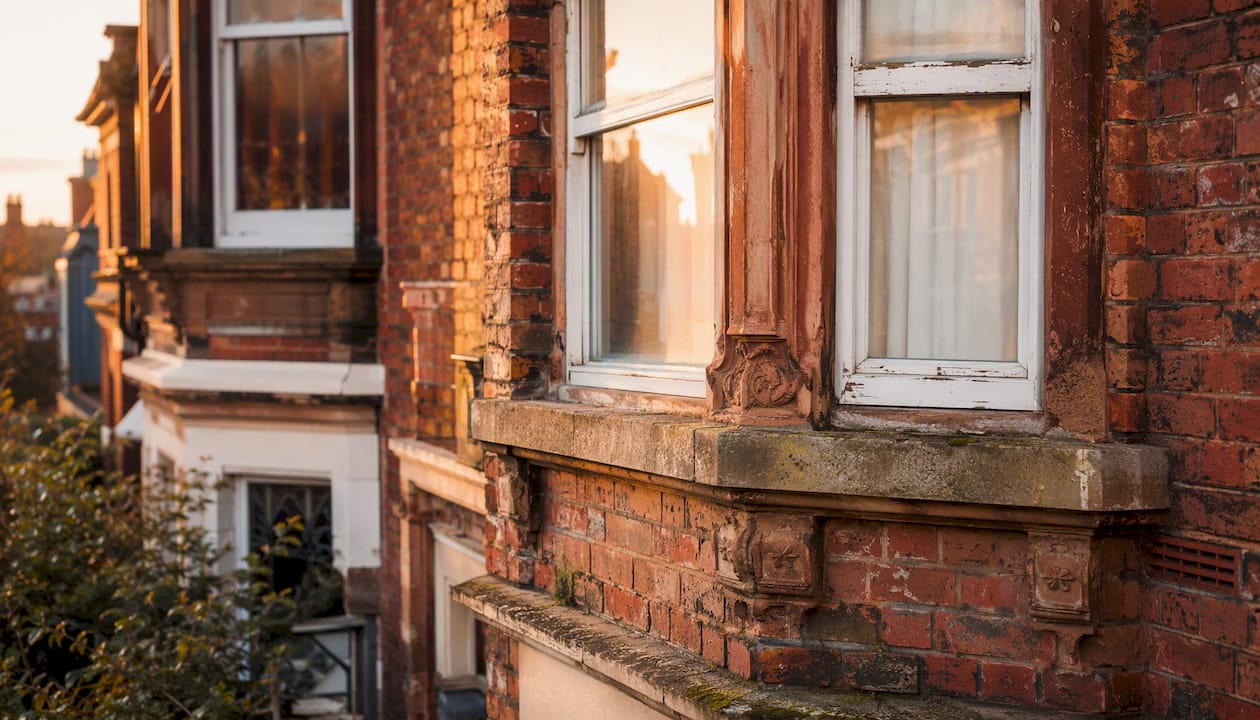
Specification and period features push rebuild cost up. A Georgian farmhouse with lime-render walls, hand-cut stone quoins, and original sash windows carries a rebuild cost that reflects specialist craft and materials. Those features may add character that buyers value, but the premium they command at sale is often less than the cost of genuine like-for-like reinstatement.
Historic homes can cost more to rebuild than to buy. A rural stone cottage in the Yorkshire Dales might sell for a moderate price, but a like-for-like rebuild using traditional materials and specialist labour could exceed that figure. In this scenario, rebuild cost is higher than market value, and insuring to market value would leave the owner severely underinsured.
The table below shows how the gap moves in opposite directions depending on property type.
| Property type | Market value driver | Rebuild cost driver | Typical gap direction |
|---|---|---|---|
| Central London flat | Land and location premium | Building fabric only | Market value far exceeds rebuild cost |
| Period country house | Rural demand and character | Specialist materials and craft | Rebuild cost may exceed market value |
| Standard new-build suburban house | Local demand and amenity | Standard construction rates | Figures often closer together |
| Listed manor house | Heritage and land | Like-for-like reinstatement | Rebuild cost typically exceeds market value |
Yes, and it happens more often than homeowners expect. The most common scenarios involve older, listed, or unusually constructed properties where genuine like-for-like reinstatement is expensive.
Consider a Grade II listed stone cottage in the Cotswolds. The sale price reflects the charm of the location and the character of the building, but the rebuild cost must account for:
All of that costs significantly more per square metre than a standard brick-and-block house. If the owner insures to market value, the sum insured will be too low, and any major claim will be settled proportionately rather than in full.
The policy implication is straightforward: for these properties, a professional RCA is not optional. An online calculator cannot account for the specification, and an indemnity basis of cover (which pays out based on the building’s depreciated value rather than full reinstatement) may be appropriate only where reinstatement is genuinely impractical, not as a cost-saving measure.
Two main routes exist: an online calculator for standard properties, and a professional RICS Reinstatement Cost Assessment for everything else.
The ABI/BCIS rebuild calculator uses BCIS cost data and is the industry-standard starting point for typical modern UK homes. It asks for the property’s floor area, construction type, and location, then applies BCIS average rates to produce an estimate. BCIS also publishes the House Rebuilding Cost Index (HRCI) and the General Building Cost Index (GBCI), which track construction cost inflation and inform how declared values should be updated year on year.
The calculator is reliable for straightforward properties. BCIS is explicit that it is not suitable for listed, pre-1800, or complex buildings, where average rates can be significantly wrong.
A professional RCA follows a structured methodology set out in RICS guidance:
A professional RCA is the gold standard because a surveyor measures IPMS 2/GIA, applies elemental rates, and accounts for regional and specification differences that generic calculators cannot capture. RICS guidance is clear that the declared value has no direct relationship to market value and must be calculated independently of it.
For historic or complex buildings, BCIS guidance notes that average rates must be adjusted for regional and specification differences, and that elemental analysis is necessary rather than optional. A surveyor who simply applies a national average rate to a flint-walled Norfolk farmhouse will produce a figure that is materially wrong.
An online calculator is adequate for a straightforward modern house with standard construction and no unusual features. For anything outside that description, a professional RCA from a RICS-qualified chartered surveyor is the appropriate route. The decision checklist is short:
On cost and timescale: a professional RCA for a standard residential property typically costs in the range of £200–£600, with more complex or larger properties sitting higher. Turnaround is usually two to four weeks from instruction to delivery of the report. Understanding how insurance values buildings can help you frame the brief before you instruct a surveyor.
Getting this right before renewal takes less time than most homeowners assume.
Keep records of planning permissions, architect’s drawings, structural engineer’s reports, and contractor invoices. These are the documents a loss adjuster will want to see if you make a significant claim, and they are the evidence base for any future RCA update. For ongoing cost tracking, a property maintenance cost calculator can help you record expenditure systematically.
Pro Tip: Index linking adjusts your sum insured automatically each year using a construction cost index, but it is a backstop, not a substitute for reassessment. If your declared value was wrong to begin with, index linking compounds the error. Review after any significant alteration rather than assuming the annual uplift has kept pace.
If your declared value is lower than the true rebuild cost, your insurer may apply the average clause. Under this clause, the Financial Ombudsman confirms that insurers can reduce claim payouts proportionately. If your property is insured for 70% of its true rebuild cost and you make a partial claim, the insurer may pay only 70% of that claim, not the full amount. The shortfall falls on you.
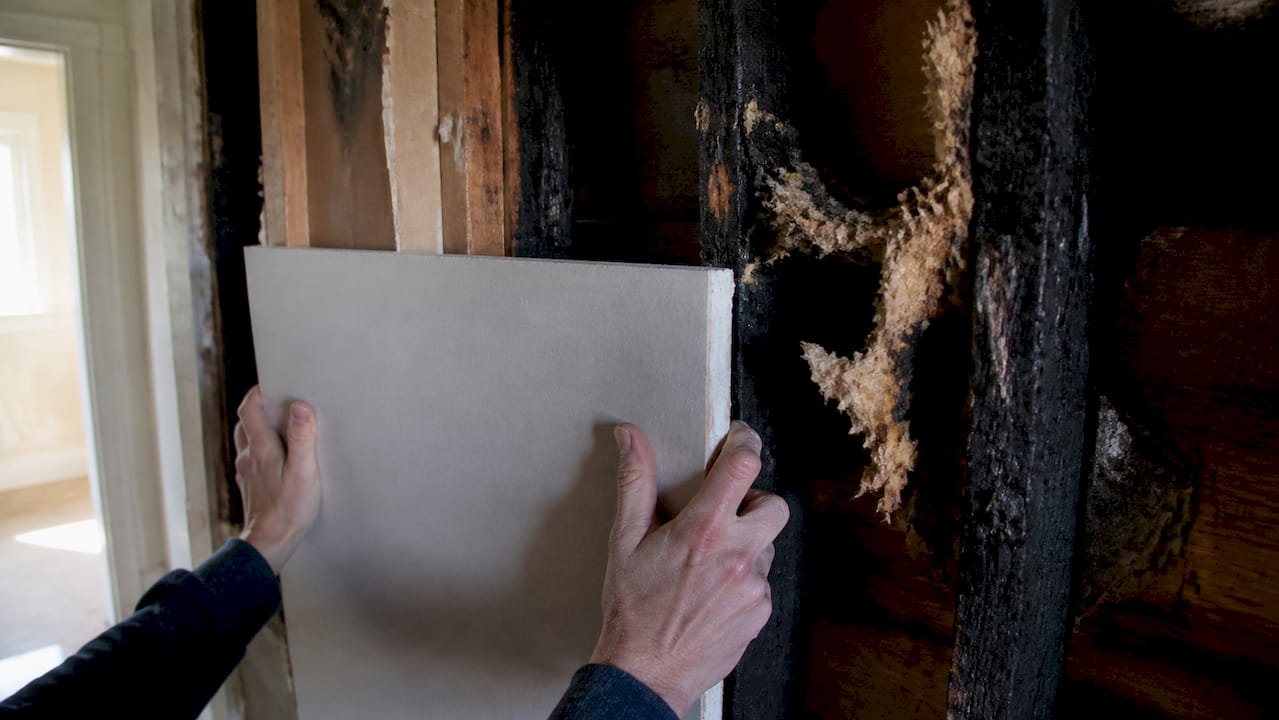
This is not a technicality that only affects total losses. It applies to partial claims too: a fire that damages one room, a flood that destroys the ground floor, a subsidence repair. Underinsurance by £100,000 on a £500,000 rebuild cost means a 20% reduction on every claim you make, however small.
Knowing which items insurers routinely underprice can help you identify gaps before a claim arises.
Overinsurance carries its own costs: higher premiums for cover you cannot use. Insurers will not pay more than the actual cost to reinstate, so a declared value well above the true rebuild cost simply inflates your premium without increasing your protection. The practical risk of overinsurance is financial waste rather than a claims problem, but it is still worth avoiding.
Take a hypothetical semi-detached Victorian house in a northern English city.
Now suppose the owner insures to market value (£320,000) instead of the rebuild cost (£310,000). A partial claim arises: storm damage to the roof costs £25,000 to repair.
Under the average clause:
Reverse the error: suppose the owner insures to the land-adjusted figure of £240,000 instead.
The gap between market value and rebuild cost is not academic. For the full picture on reinstatement cost components, the difference between what you declare and what it actually costs to rebuild can determine whether a claim covers the repair or leaves you out of pocket.
Three routes are available, and the right one depends on your property.
When selecting a surveyor, check for RICS membership, ask for examples of RCAs on similar property types, and confirm the scope covers demolition allowances, professional fees, and statutory compliance costs. The reinstatement cost assessment process article explains in detail what a well-scoped report should contain and what questions to ask before you instruct.
Underinsurance is not a rare edge case. The gap between what properties are insured for and what they would actually cost to rebuild is a persistent problem across the UK residential market, and it tends to surface at the worst possible moment: mid-claim, when a loss adjuster applies the average clause and the shortfall becomes real.
The investment in a professional RCA is modest relative to the sums at stake. For a property with a true rebuild cost of £400,000, a £300 RCA that correctly identifies the declared value is not a luxury. It is the document that determines whether a £60,000 flood claim is settled in full or reduced by a fifth.
The properties most at risk are not always the most obvious ones. A 1960s bungalow with a flat roof, non-standard insulation, and a timber-frame extension can be just as problematic as a listed farmhouse, because the BCIS average rates do not capture the specification. Review after any significant alteration, and treat an RCA as a periodic maintenance task rather than a one-off exercise.
Getting an accurate rebuild cost for your buildings insurance does not have to mean weeks of searching for the right surveyor. Surveymerchant matches you with RICS-qualified chartered surveyors who specialise in reinstatement cost assessments, across the whole of the UK.

The process is simple: describe your property, and Surveymerchant identifies surveyors from its panel with experience of your construction type and location. You receive a tailored quote, a clear scope of works, and a report that gives your insurer a defensible declared value. Before you get in touch, it helps to have your floor plans, details of any recent works, and a note of your current policy’s declared value to hand.
For standard residential properties, explore Surveymerchant’s building surveying services. For high-value or complex properties, a Level 3 full building survey may be the appropriate starting point. Get in touch with Surveymerchant to receive a quote from a qualified surveyor matched to your property.
Survey Merchant provides vetted RICS surveyors across 100+ UK locations at fixed fees:
→ Level 2 Home Survey (HomeBuyer Report)
→ Level 3 Building Survey (full structural survey)
→ RICS Red Book property valuations
→ Party wall surveyors — notices, awards & schedules of condition
→ Expert witness surveyors — CPR Part 35 reports for property disputes