Building Surveying
Jul 16, 2026
UK property surveys explained: A buyer's essential guide
Wondering what is a property survey? Our essential guide reveals types of surveys, essential insights, and how to protect your investment!

Many buyers assume a property survey is just a formality that mortgage lenders want ticked off before completion. The reality is quite different. Skipping or choosing the wrong survey can leave you legally committed to a property with serious structural defects, hidden damp, or drainage problems that cost tens of thousands of pounds to fix. This guide walks you through every type of survey available in the UK, what each one uncovers, the regulatory standards that govern them, and how to use survey findings to your direct financial advantage.
| Point | Details |
|---|---|
| RICS surveys explained | Property surveys are professional inspections by RICS-qualified surveyors to assess condition and risks. |
| Choose your survey wisely | Select Level 1, 2, or 3 based on property age, features, and your need for detail. |
| Surveys uncover hidden issues | Common problems found include damp, roof defects, and structural movement. |
| Legal standards matter | RICS standards and 2026 updates guide surveyor competence and compliance, vital for negotiation. |
| Avoid costly mistakes | A property survey can save you significant money by revealing issues before purchase. |
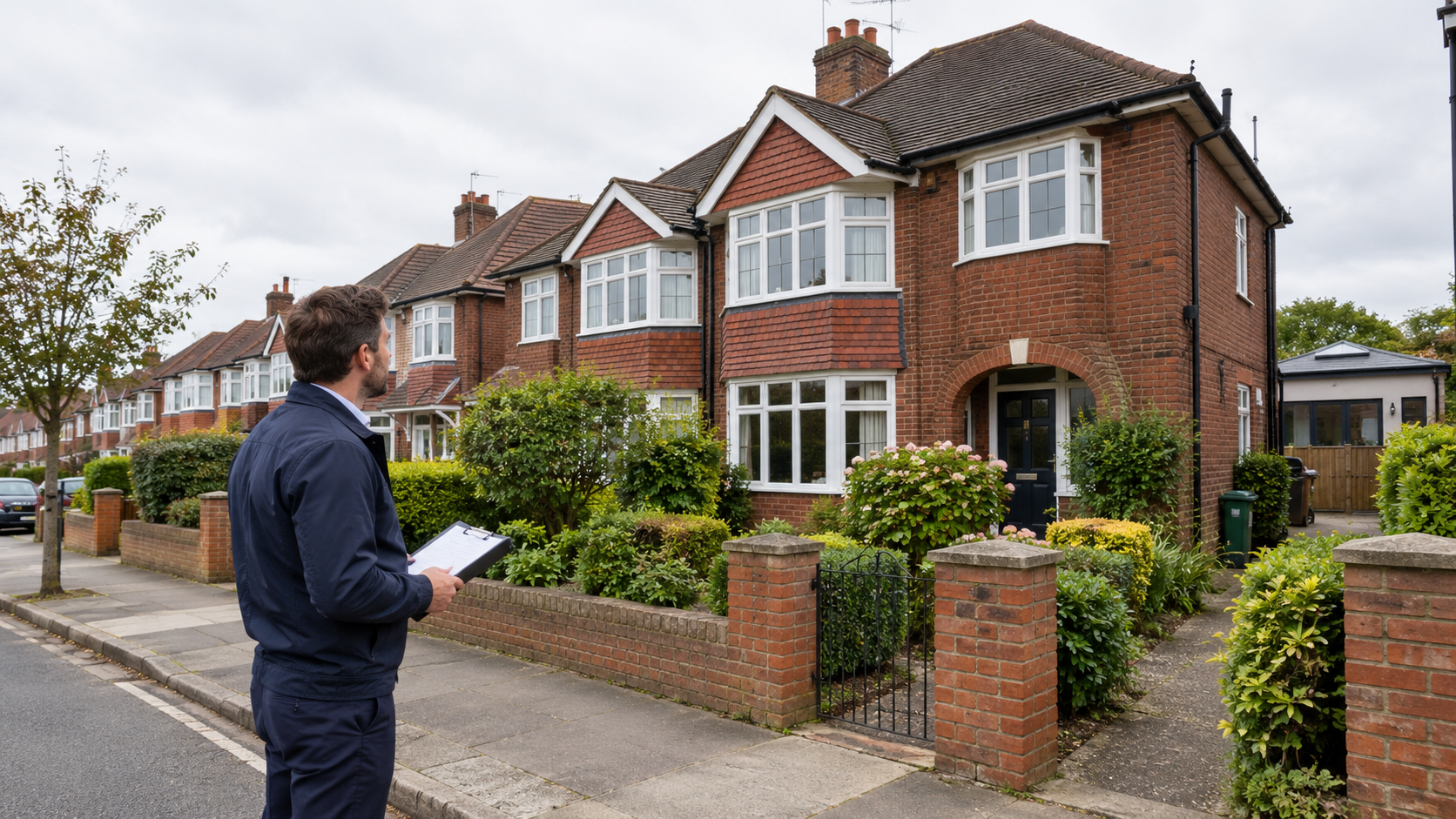
A property survey is a professional assessment of a building’s physical condition, carried out before a buyer commits to purchase. It is not the same as a mortgage valuation, which only tells a lender whether the property is worth the loan amount. A survey goes far deeper.
A property survey in the UK is a professional inspection of a residential property’s condition, conducted by a RICS-qualified surveyor to identify defects, structural issues, and maintenance needs for buyers. RICS stands for the Royal Institution of Chartered Surveyors, the professional body that sets the standards all qualified surveyors must follow.
Understanding the benefits of an RICS surveyor before you instruct one is genuinely useful. These are regulated professionals with strict codes of conduct, professional indemnity insurance, and ongoing training obligations. That matters when they are assessing an asset worth hundreds of thousands of pounds.
Here is what a property survey typically covers:
The RICS Home Survey Standard dictates how these inspections are structured and reported, ensuring consistency across the profession. Without it, there would be no reliable benchmark for what a survey should or should not include. Surveys are not legally required when buying property in the UK, but any experienced solicitor or conveyancer will strongly advise commissioning one before exchange of contracts.
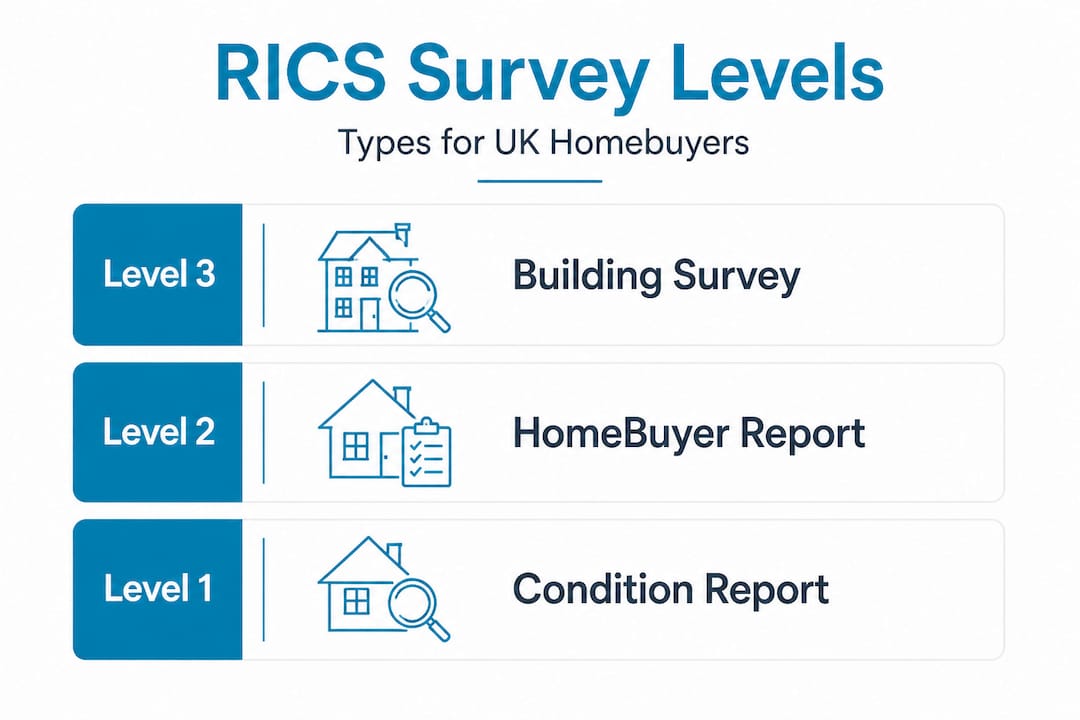
Not every survey is the same, and choosing the wrong level can leave you paying for a report that either tells you too little or costs more than necessary for a straightforward flat. There are three main RICS Home Survey levels: Level 1, Level 2, and Level 3, each designed for different property types and buyer needs.
| Survey level | Common name | Best suited for | Typical cost range |
|---|---|---|---|
| Level 1 | Condition Report | New builds, recently modernised homes | £300 to £500 |
| Level 2 | HomeBuyer Report | Standard homes in reasonable condition | £450 to £800 |
| Level 3 | Building Survey | Older, unusual, or poor-condition properties | £600 to £1,500+ |
Level 1 (Condition Report) provides a basic overview using traffic light ratings (green, amber, red) for different elements of the property. It is the lightest touch and suits newer or recently refurbished homes where major defects are unlikely. It offers no advice on repair costs or how urgently work needs doing.
Level 2 (HomeBuyer Report) is the most popular choice for buyers of standard residential properties. It covers all the areas of a Level 1 survey but adds the surveyor’s professional opinion on defects, estimates of repair urgency, and sometimes an optional market valuation. It is the right level for a well-maintained Victorian terrace or a 1980s semi-detached in reasonable condition.
Level 3 (Building Survey) is the most thorough inspection available. It analyses the property in detail, provides advice on defects found, describes the likely causes, and outlines the potential consequences if left unaddressed. This level is strongly recommended for older or unusual properties including pre-1900 buildings, listed buildings, properties with non-standard construction (such as timber frame or thatched roofs), any home in visibly poor condition, and those earmarked for major renovations.
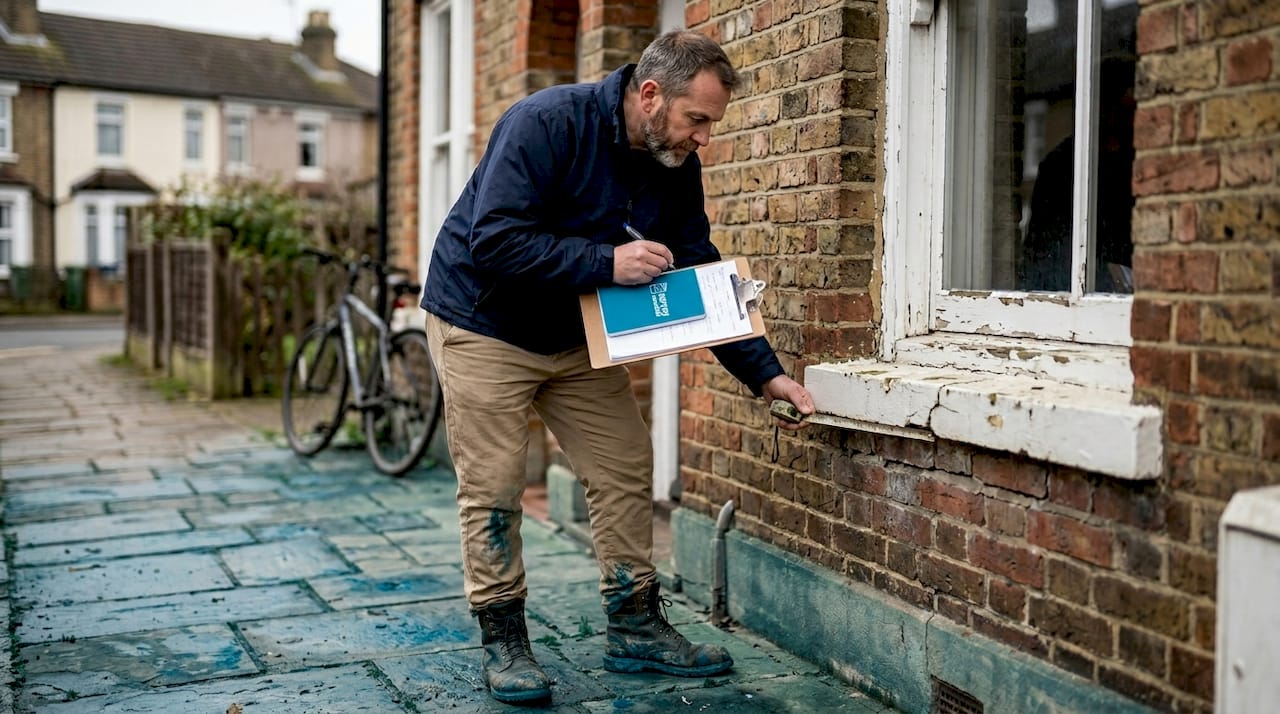
Pro Tip: If you are buying a period property and choosing between Level 2 and Level 3, go with Level 3 every time. The cost difference is modest compared to the risk of missing a deep-rooted structural problem. One undiscovered issue with a chimney stack or failing lintel can cost more to repair than the survey itself cost several times over.
An important limitation worth noting: surveys do not certify boundaries or detect concealed issues such as those hidden behind walls or beneath floor coverings. If boundary disputes or hidden services are a concern, you may need additional specialist reports alongside your survey. Understanding which survey best suits your property before instructing a surveyor will save you both time and money.
For those new to the process, reviewing a property survey workflow step by step will clarify exactly what happens from instruction to final report, including timescales and what to expect on inspection day.
Surveys are most valuable not when everything is fine, but when they uncover problems. And they do uncover problems regularly, even in properties that look perfectly presentable during a viewing.
Common findings include damp, roof defects, structural movement, and drainage issues. What is particularly striking is that 1 in 3 buyers use survey findings to renegotiate the purchase price or request that the seller carries out remedial work before exchange. That is a significant financial advantage that buyers without a survey simply cannot access.
The most frequently reported issues across UK residential surveys break down as follows:
“A survey report is not a reason to walk away from a property. It is the information you need to walk in with your eyes open.”
The financial case for commissioning a survey is compelling. Consider that the average cost of a Level 2 HomeBuyer Report is approximately £600. If the resulting report identifies damp that costs £3,000 to treat, or allows you to renegotiate the purchase price downwards by £5,000, the return on that £600 is extraordinary. The most common problems found in building surveys are precisely the ones that buyers without survey reports discover after completion, at full cost to themselves.
The risk of not commissioning a survey is not theoretical. Buyers who skip the process regularly report discovering serious defects within weeks of moving in, with no recourse against the seller because property in the UK is sold under the principle of caveat emptor (let the buyer beware).
Property surveys in the UK operate within a clear regulatory framework, one that was updated significantly for 2026. Understanding this context helps you assess the quality of the report you receive.
Surveys conducted by RICS-qualified surveyors are governed by the RICS Home Survey Standard. The second edition updates, effective in 2026, place greater emphasis on surveyor competence, the assessment of properties targeted for retrofit and energy improvement, and guidance on special property types including listed buildings and non-standard constructions.
Key points from the regulatory framework include:
Pro Tip: Always ask your surveyor before instruction whether they have direct experience with your specific property type. An RICS qualification confirms professional standards, but practical experience with, say, a 16th-century timber-framed hall house is a separate question worth asking directly.
Property surveys are not legally mandated at any stage of the UK buying process. However, they are strongly advised before exchange of contracts, at which point you become legally committed to the purchase. Commissioning a survey after exchange is too late to protect your interests. The findings also provide concrete leverage in negotiations, something that is equally valuable when construction safety regulations or building regulation compliance is a factor in your transaction.
Reading the RICS survey standard explained in plain terms will help you evaluate whether the report you receive meets the expected professional standard and what your options are if it does not.
Here is an honest observation from years of working in the UK property sector: many buyers treat surveys as something they commission because their solicitor mentioned it, then file the report away without acting on it. That is a missed opportunity.
A survey is not paperwork. It is intelligence. The moment a surveyor hands back findings showing damp penetration in the rear extension, you have concrete grounds to request a reduction in price, ask the seller to remedy the issue, or make an informed decision to walk away entirely. Buyers who understand the true importance of surveys do not just protect themselves legally. They buy properties with confidence, negotiate from a position of knowledge, and avoid the post-completion regret that comes with undiscovered problems.
There is a subtler point too. Some buyers worry that a detailed survey will reveal so many issues that it kills a deal they love. In practice, the opposite tends to be true. A thorough Building Survey report on an older property with minor defects actually reassures a buyer, because a professional has examined the building and confirmed that what appears to be a crack or a damp patch is historic and stable rather than active and worsening. That reassurance has real value.
The uncomfortable truth is that sellers know far more about a property than buyers do. A survey partially levels that information asymmetry. The buyer who skips a survey is essentially entering the most significant financial transaction of their life relying on what the seller chose to disclose. That is a significant and avoidable risk.
Knowing which survey to commission is one thing. Finding a qualified, experienced surveyor who is well matched to your specific property is another challenge entirely.

Survey Merchant connects buyers and property owners across the UK with vetted, RICS-qualified surveyors who specialise in exactly the kind of property you are dealing with. Whether you need commercial property surveys for a business purchase, detailed building surveying services for a complex residential acquisition, or independent RICS valuation services to inform your offer, the platform matches you with the right professional for the job. The process is straightforward, impartial, and focused entirely on your needs.
No, a property survey is not legally required, but it is strongly recommended before exchange of contracts to avoid unforeseen repair costs and to give you leverage in price negotiations.
You should opt for a Level 3 Building Survey for pre-1900 or listed properties, as it provides the detailed analysis needed to reveal defects common in older or non-standard constructions.
Damp, roof defects, structural movement, and drainage issues are the most frequently reported findings in UK residential property surveys.
Surveyors do not certify boundaries or concealed issues such as problems within walls or beneath floor coverings, so specialist surveys may be needed if these are a concern.
Survey Merchant provides vetted RICS surveyors across 100+ UK locations at fixed fees:
→ Level 2 Home Survey (HomeBuyer Report)
→ Level 3 Building Survey (full structural survey)
→ RICS Red Book property valuations
→ Party wall surveyors — notices, awards & schedules of condition
→ Expert witness surveyors — CPR Part 35 reports for property disputes