Project Management
Sep 4, 2026
Explaining refurbishment surveys: what property owners must know
Learn about explaining refurbishment surveys and why they are essential for property owners. Ensure compliance and protect your investment.

A refurbishment survey is a mandatory, intrusive inspection carried out before any building work that disturbs the fabric of a property built before 2000, identifying hazardous materials such as asbestos to protect workers and occupants. Known formally as a Refurbishment and Demolition (R&D) survey, it is a legal requirement under Regulation 5 of the Control of Asbestos Regulations 2012. Explaining refurbishment surveys clearly matters because confusing them with routine management surveys is the single most common compliance error property owners make. Whether you are planning a kitchen refit, a loft conversion, or a full strip-out, commissioning the correct survey before work begins is not optional. Surveymerchant connects property owners with qualified surveyors who carry out R&D surveys across the UK, ensuring legal compliance from the outset.
A refurbishment survey is legally required for any UK property built before 2000 where planned work will disturb the building fabric. Regulation 5 of the Control of Asbestos Regulations 2012 requires all reasonable steps to identify asbestos before work that may expose people to it. That obligation sits with the client or dutyholder, not the contractor.
The triggers are specific. Structural alterations, partition removals, floor and ceiling strip-outs, and demolitions all qualify. A cosmetic redecoration does not. The key test is whether the work physically penetrates or removes building materials.
Properties built after 2000 are generally exempt because asbestos was banned from use in UK construction in 1999. For older stock, the legal duty is clear and non-negotiable.
The client or dutyholder must commission the correct survey before work begins. Commissioning only a management survey for intrusive works breaches both CDM 2015 and the Control of Asbestos Regulations 2012, risking enforcement action and project stoppages.
Pro Tip: Commission your R&D survey at the design stage, not after contractors are on site. Early findings shape the scope and budget before commitments are made.
An R&D survey is fully intrusive by design, involving breaking into cavities, lifting floorboards, opening ceilings, and accessing risers. That level of access is necessary because asbestos-containing materials are often hidden inside the building structure, invisible to a surface inspection. Surveyors take physical samples from suspect materials and send them to an accredited laboratory for analysis.
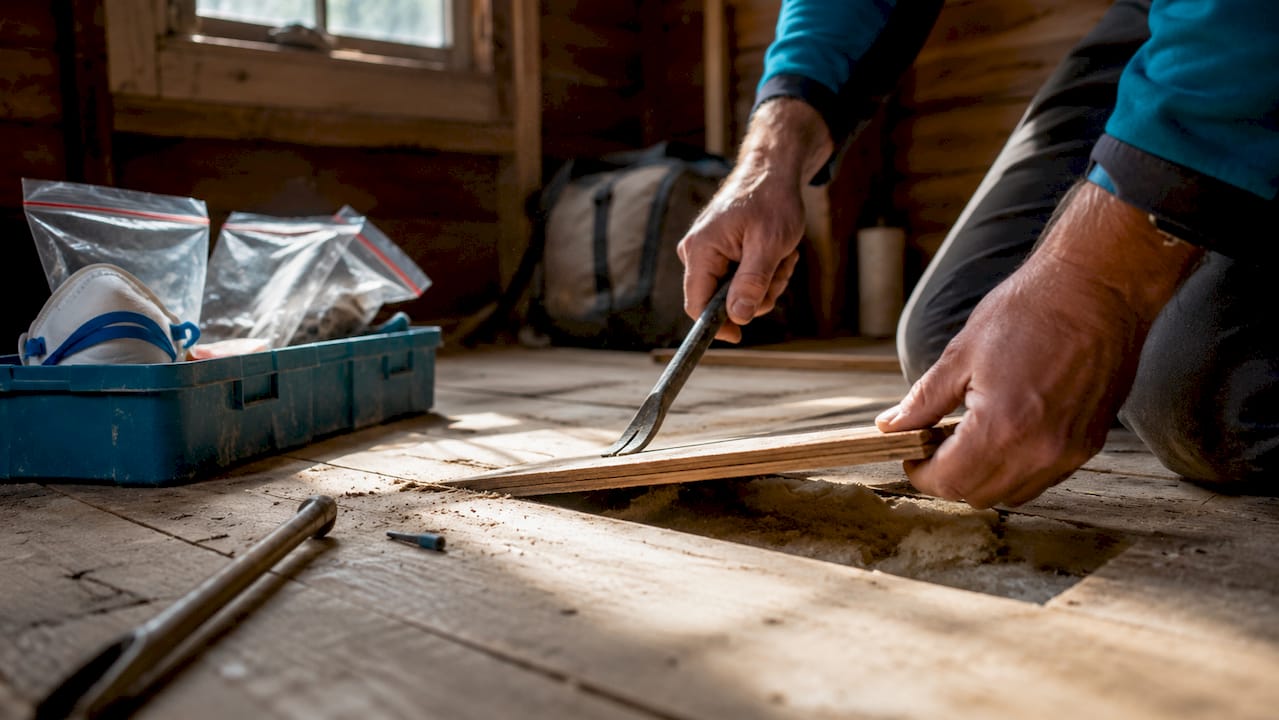
The area under survey must be handed over essentially empty. Occupants must vacate, and floors, ceilings, and wall linings must be accessible. Sites must plan for damage and a making-good visit after the survey is complete, because the inspection itself is construction-site-level intrusive.
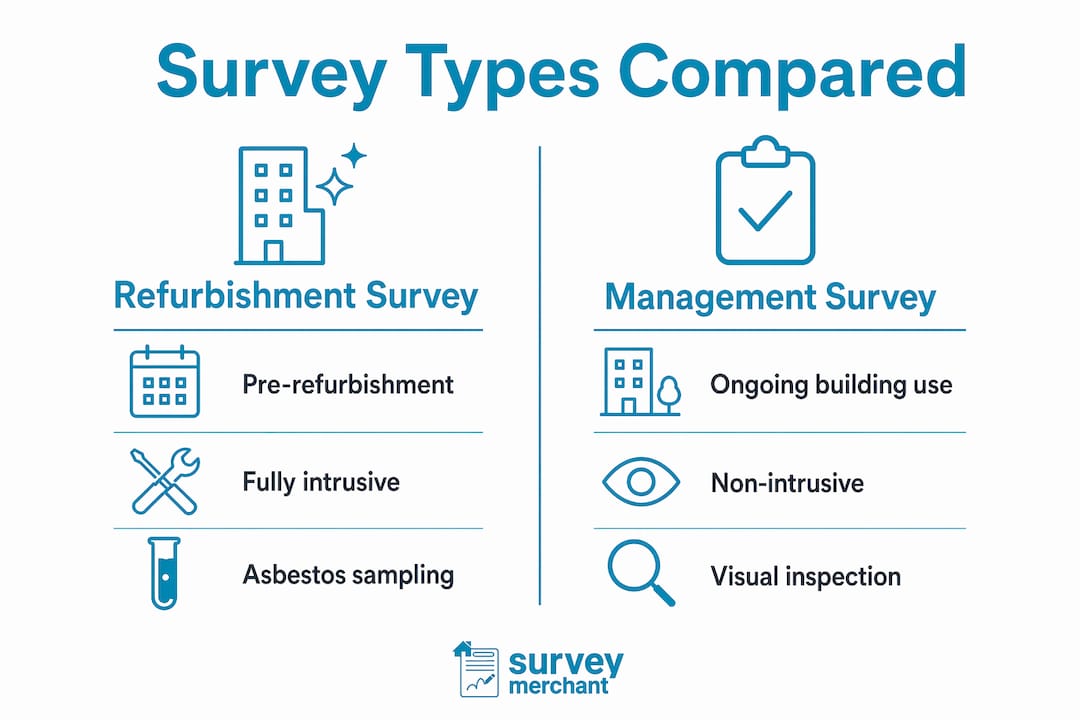
The table below summarises the key differences between an R&D survey and a management survey.
| Feature | R&D survey | Management survey |
|---|---|---|
| Purpose | Pre-refurbishment or demolition | Ongoing building management |
| Intrusiveness | Fully intrusive, destructive access | Non-intrusive, visual inspection |
| Sampling | All suspect materials sampled | Presumed or limited sampling |
| Occupancy during survey | Area must be vacated | Occupied buildings permitted |
| Legal trigger | Before intrusive building work | Ongoing duty to manage asbestos |
| Making good required | Yes, post-survey reinstatement needed | No |
Pro Tip: Ask your surveyor for a detailed access schedule before the survey date. Knowing exactly which areas will be opened up lets you plan tenant communication and temporary relocations in advance.
After the laboratory results return, the surveyor produces a written report. That report identifies the location, condition, and type of any asbestos-containing materials found. It also assigns a risk rating and recommends whether materials should be removed, encapsulated, or left in place and managed. For post-survey reinstatement and cleaning, property owners should engage a specialist contractor before any follow-on trades return to site.
Management surveys are sufficient only for ongoing building occupation. They do not sample hidden materials and cannot substitute for an R&D survey before intrusive works. This distinction is where most property owners go wrong.
A condition survey, sometimes called a building survey or full structural survey, assesses the overall state of a property. It covers structural integrity, damp, drainage, and general defects. It does not specifically target asbestos or other hazardous materials in the way an R&D survey does. The two serve different purposes and neither replaces the other.
Commissioning the wrong survey type before refurbishment is the most common error and leads to delays or health risks. Contractors are entitled to refuse starting work if the correct asbestos information is not available. That refusal can halt a project for weeks while the correct survey is arranged.
The practical consequence is straightforward. If you hold a management survey and instruct contractors to begin a strip-out, you are in breach of the Control of Asbestos Regulations 2012. The project stops, enforcement may follow, and the cost of delay falls on you. Commissioning the right survey type from the start costs far less than the alternative.
Understanding the different types of asbestos found in UK properties also helps property owners interpret survey findings correctly and make informed decisions about removal or encapsulation.
Early asbestos investigation integration reduces delays and allows informed planning for licensed asbestos removals where necessary. Survey findings directly shape design decisions, contractor briefings, and sequencing. A project that discovers asbestos in a partition wall mid-strip-out faces a very different outcome from one that identified and removed it before work began.
The practical implications of survey results fall into several areas.
Project managers who treat refurbishment surveys as investments in project certainty avoid costly delays and manage risk far more effectively. The survey is not an administrative hurdle. It is the foundation on which a safe and legally compliant refurbishment is built. Integrating renovation project management principles from the outset ensures survey findings translate into concrete programme adjustments rather than reactive firefighting.
Knowing your asbestos survey timing is equally critical. The survey must be complete, the report received, and any required removal finished before intrusive work begins. Rushing this sequence to meet a programme date is the fastest route to a project stoppage.
A refurbishment survey is a legal requirement under the Control of Asbestos Regulations 2012 for any intrusive work on UK properties built before 2000, and commissioning the wrong survey type remains the most common and costly compliance failure.
| Point | Details |
|---|---|
| Legal obligation | Regulation 5 of CAR 2012 mandates an R&D survey before any intrusive work on pre-2000 properties. |
| Correct survey type | Management surveys do not substitute for R&D surveys; using the wrong type breaches CDM 2015 and CAR 2012. |
| Intrusive access required | The survey involves lifting floors, opening ceilings, and vacating the area; making good is needed afterwards. |
| Scope changes trigger new surveys | Any expansion of work into unsurveyed areas requires additional sampling before continuation. |
| Early commissioning saves money | Integrating the survey at design stage prevents costly delays, redesigns, and enforcement action. |
The most persistent mistake I see is property owners treating an R&D survey as a box-ticking exercise rather than a project-defining piece of intelligence. A management survey sitting in a filing cabinet from a previous transaction is not a substitute. It never was. Yet time and again, refurbishment projects begin with that misunderstanding, and the consequences are predictable: work stops, costs rise, and the legal exposure falls squarely on the client.
The second mistake is timing. Commissioning the survey after contractors are mobilised puts everyone in an impossible position. The findings may require licensed removal work that takes weeks to procure and complete. Contractors stand idle. Preliminaries accumulate. The survey fee that felt like an inconvenience becomes the cheapest line item in a very expensive delay.
My honest advice to any property owner planning refurbishment work on a pre-2000 building is this: treat the R&D survey as the first item on your project programme, not an afterthought. The health and safety implications of getting this wrong extend beyond financial penalties. Workers exposed to asbestos face serious long-term health consequences. No programme pressure justifies that risk.
— Surveymerchant Editorial Team
Surveymerchant connects property owners and developers with qualified surveyors across the UK who specialise in refurbishment-related inspections and compliance work.

Whether you need an R&D asbestos survey before a residential conversion or a full commercial property survey ahead of a major strip-out, Surveymerchant matches you with the right expert for the scope and location of your project. The platform prioritises impartiality and quality assurance, so you receive a thorough report that stands up to regulatory scrutiny. Explore Surveymerchant’s building surveying services to find a qualified surveyor and get your refurbishment project started on the right legal footing.
A Refurbishment and Demolition (R&D) survey is a fully intrusive asbestos inspection required before any building work that disturbs the fabric of a UK property built before 2000. It identifies hazardous materials to protect workers and ensure legal compliance under the Control of Asbestos Regulations 2012.
No. Management surveys are designed for ongoing building occupation and do not sample hidden materials. Using a management survey in place of an R&D survey before intrusive works breaches CDM 2015 and the Control of Asbestos Regulations 2012.
Yes. The area under survey must be vacated by occupants, and floors, ceilings, and wall linings must be accessible. The survey is construction-site-level intrusive, and making good is required after the inspection is complete.
Any expansion of work into areas not covered by the original survey requires additional sampling before work continues. Uncovered partitions or newly affected areas cause an immediate work stoppage until further R&D survey sampling is completed.
Any property built before 2000 where planned work will disturb the building fabric requires an R&D survey. Properties built after 2000 are generally exempt because asbestos was banned from UK construction in 1999.
Survey Merchant provides vetted RICS surveyors across 100+ UK locations at fixed fees:
→ Level 2 Home Survey (HomeBuyer Report)
→ Level 3 Building Survey (full structural survey)
→ RICS Red Book property valuations
→ Party wall surveyors — notices, awards & schedules of condition
→ Expert witness surveyors — CPR Part 35 reports for property disputes