Building Surveying
Jul 16, 2026
Building surveys explained: A clear guide for UK buyers
Discover the importance of a building survey explained. Protect your investment with insights on hidden defects and RICS standards.

Hidden defects account for 40% of problems uncovered in UK property surveys, yet most buyers still treat the survey as a formality rather than a vital safeguard. The reality is that cracks behind freshly plastered walls, moisture lurking beneath floorboards, and failing roof structures are all invisible without the right tools and expertise. New 2026 RICS standards are transforming how surveys are conducted and reported, giving buyers far greater clarity and protection than ever before. This guide explains exactly what a building survey involves, which type you need, and how to act decisively on the results.
| Point | Details |
|---|---|
| Survey levels clarified | RICS 2026 updates make it easier to choose between Level 2 and Level 3, reducing confusion for buyers. |
| Technology reveals hidden defects | Modern tools like thermal imaging expose concealed issues, contributing to better-informed property decisions. |
| Practical negotiation power | Building survey findings give buyers leverage for price negotiation and planning repairs. |
| Expert advice matters | Choosing the right survey level can prevent costly mistakes—especially on older or complex properties. |
| Regulations protect buyers | 2026 standards emphasise surveyor competence and clearer reporting, safeguarding your interests. |
A building survey is a detailed, professional inspection of a property’s condition carried out by a qualified surveyor. Unlike a mortgage valuation, which simply tells a lender whether the property is worth the loan amount, a building survey tells you whether the property is actually worth buying and at what cost. It examines the structure, fabric, and condition of a building, flagging defects that could cost thousands to repair if left unaddressed.
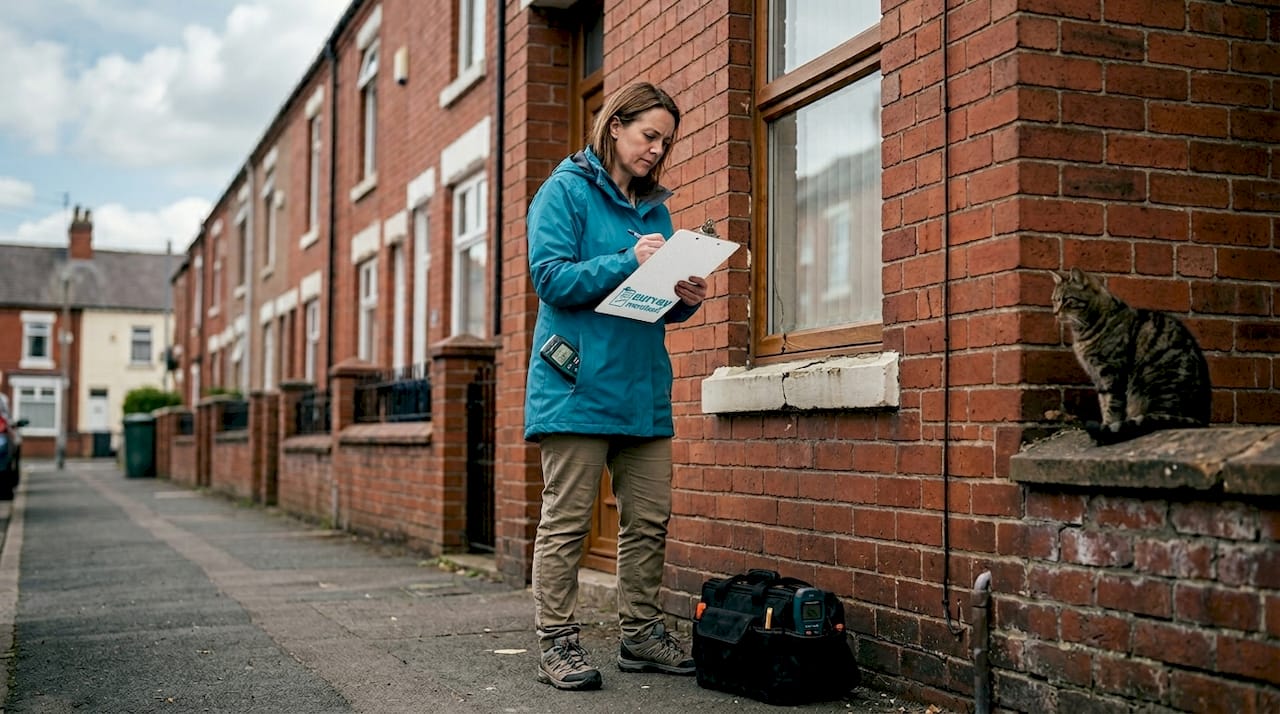
During a property purchase, a building survey acts as your independent check on the seller’s claims. Sellers are not always forthcoming about issues, and estate agents have no obligation to disclose structural concerns. A qualified surveyor has no commercial interest in the sale proceeding, which is precisely why their report carries so much weight.
Key reasons buyers commission building surveys include:
The new RICS survey standards introduced in 2026 bring significant changes to how surveys are structured and communicated. According to updated RICS guidance, 2026 updates focus on clear distinctions between survey levels and improved surveyor competence, particularly for specialist property types such as listed buildings and non-standard construction. This matters because buyers can now expect more consistent, transparent reporting regardless of which RICS-accredited surveyor they instruct.
“A building survey is not an expense — it is insurance against buying somebody else’s problem.”
Technology is also reshaping the surveying process. Surveyors now routinely use thermal imaging cameras, moisture meters, and drone inspections to reveal defects that would previously have gone undetected during a visual inspection. This shift means surveys are more thorough and more reliable than at any point in the industry’s history. For a full breakdown of how survey types compare, the full survey comparison guide is an excellent starting point.
Not all building surveys are the same. The RICS now classifies them into distinct levels, with Level 2 and Level 3 being the most relevant for residential buyers. Understanding the difference between survey levels is essential before you instruct anyone.
| Feature | Level 2 survey | Level 3 survey |
|---|---|---|
| Depth of inspection | Visual, surface-level | Detailed, structural |
| Typical cost | £400 to £700 | £700 to £1,500+ |
| Best suited for | Newer, conventional homes | Older, complex, or large properties |
| Repair cost estimates | Not always included | Usually included |
| Specialist recommendations | Limited | Comprehensive |
| Thermal/moisture tools | Sometimes | Routinely used |
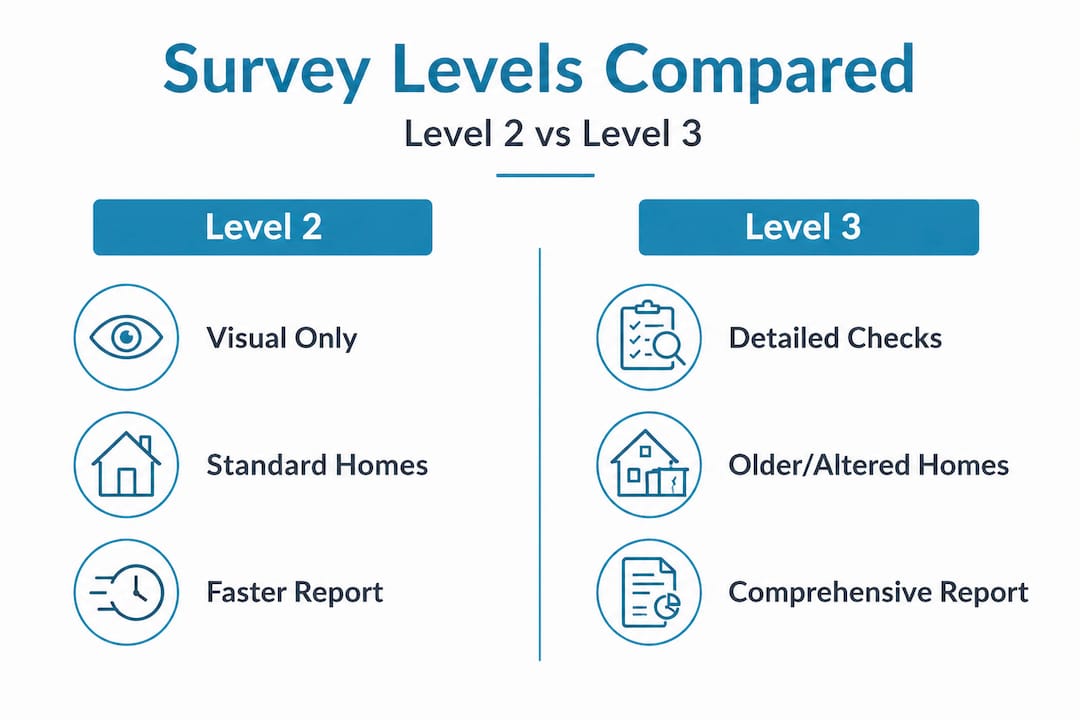
Level 2 surveys are appropriate for modern, conventionally built properties that appear to be in reasonable condition. They give you a clear traffic-light rating system for different elements of the building, flagging areas of concern without going into exhaustive technical detail. For a straightforward semi-detached house built in the last 30 years, a Level 2 is typically sufficient.
Level 3 surveys are a different proposition entirely. These are full structural inspections that investigate accessible areas thoroughly, including roof voids, beneath floorboards where safe to do so, and outbuildings. The report includes repair cost estimates and specific recommendations for follow-up specialist reports. RICS experts note that Level 3 is advised for older or complex properties to reveal deeper risks that a Level 2 inspection would simply not catch.
Properties that typically warrant a Level 3 survey include:
For a more personalised recommendation, choosing your survey level is worth reading before committing to an instruction. If you already know you want a Level 2, the Level 2 survey explained article goes into precise detail about what you can expect.
Pro Tip: If you are on the fence between a Level 2 and Level 3, choose Level 3. The cost difference is modest compared to the purchase price of most UK properties, and the additional detail can be the difference between a sound investment and a financial nightmare.
Understanding what actually happens on survey day removes a great deal of anxiety. A surveyor is not just walking around with a clipboard ticking boxes. Modern surveys follow a rigorous process designed to miss nothing that is reasonably accessible.
A typical building survey follows these steps:
Thermal imaging reveals hidden damp that makes up around 40% of defects found in UK surveys, a figure that underlines just how important these tools have become. Problems that once required invasive opening-up works to diagnose can now be identified non-destructively, saving time and money for both buyers and sellers.
The most common defects uncovered in building surveys are shown below:
| Defect type | Approximate frequency | Typical repair cost |
|---|---|---|
| Damp and moisture ingress | 40% of surveys | £500 to £5,000+ |
| Roof defects | 30% of surveys | £800 to £10,000+ |
| Structural cracking | 20% of surveys | £2,000 to £30,000+ |
| Timber decay or rot | 15% of surveys | £1,000 to £8,000+ |
| Defective drainage | 12% of surveys | £500 to £4,000+ |
Learning to spot water damage early is something every buyer should understand before their survey results arrive. Damp can manifest as tide marks, peeling paint, a musty smell, or mineral salt deposits called efflorescence on walls. It can also be entirely invisible without specialist equipment. Understanding the role of waterproofing inspections gives excellent context for why surveyors take moisture readings so seriously.
You can see real examples of what these findings look like in context by reviewing survey results examples, which helps translate technical language into practical decisions.
Pro Tip: If your survey flags damp, do not panic and do not ignore it. Ask your surveyor whether it is rising damp, penetrating damp, or condensation — because each requires a completely different and differently priced fix. Acting quickly on a small damp problem can save you thousands compared to letting it develop.
The Royal Institution of Chartered Surveyors (RICS) is the professional body that sets the standards all accredited surveyors must follow. The 2026 revisions represent the most significant overhaul in residential surveying for over a decade, and buyers stand to benefit substantially from the changes.
Key changes introduced under the 2026 RICS framework include:
The latest RICS standards also address a longstanding frustration among buyers: the blurring of lines between a homebuyer report and a full building survey. For a direct comparison of these two products and when each is appropriate, the homebuyer report vs survey article offers an excellent breakdown.
What this means in practice: if you are buying in 2026, you can expect your survey report to be easier to read, your surveyor to be demonstrably qualified for your specific property type, and the findings to be comprehensive enough to inform real financial decisions. These are not small improvements. They represent a fundamental shift towards buyer protection in the property transaction process.
Receiving your survey report is not the end of the process. It is the beginning of your negotiating position. Many buyers read through the report, feel overwhelmed, and then do nothing — which is a costly mistake.
Here is how to use your survey effectively:
RICS guidance confirms that surveyor competence for specialist properties is now a priority under 2026 standards, meaning buyers can rely on surveyors being genuinely equipped to advise on complex findings. This strengthens your position when using using survey findings as leverage in a negotiation.
Before instructing any remedial work, reviewing questions for contractors ensures you are getting accurate quotes and appropriate expertise for the repairs identified.
Pro Tip: When negotiating, focus on a realistic total repair cost rather than individual line items. Sellers are more likely to agree to a single price reduction than to fix a long list of defects. This makes your negotiation cleaner and faster.
Here is the uncomfortable truth. Most buyers choose their survey based on price, not suitability. They see a Level 2 survey advertised for £450 and a Level 3 for £900, and they instinctively choose the cheaper option, often without any idea of what they are giving up.
What they miss is not just the additional pages of the report. They miss the scrutiny of the roof void, the moisture readings at subfloor level, the structural assessment of that 1930s chimney breast that was partially removed at some point and is now being held up by nothing obvious. These are not rare edge cases. Surveyors see them regularly, particularly in older terraced housing stock across the Midlands, the North, and in London’s Victorian suburbs.
The 2026 RICS standards go some way towards addressing this by making the scope differences between survey levels far more transparent. But the change in buyer behaviour needs to come from a deeper understanding of what is actually at stake. A £400 saving on a survey is meaningless if you later discover £25,000 worth of structural repairs that a Level 3 survey would have flagged clearly.
There is also a psychological dimension that rarely gets discussed. Buyers who have fallen in love with a property are subconsciously hoping the survey comes back clean. This emotional investment can cause them to downplay what they read, dismiss surveyor concerns as overly cautious, and proceed anyway. The best surveyors we work with are those who insist on a direct conversation with the buyer after the report, explaining not just what they found, but what it means in real financial and practical terms.
Reviewing real survey outcomes from actual UK properties shows just how significant the difference between survey levels can be. The patterns are consistent: buyers who invested in appropriate surveys were better positioned, better protected, and in several cases avoided purchases that would have been financially ruinous.
The survey is not a box to tick. It is a professional opinion on one of the largest financial commitments of your life. Treat it accordingly.
Choosing the right surveyor matters just as much as choosing the right survey level.

Survey Merchant connects UK buyers and property owners with accredited surveyors who are fully aligned with the 2026 RICS standards. Whether you need a Level 2 or Level 3 residential survey, support with commercial property surveyors for business premises, or access to the full range of building surveying services including structural assessments and defect inspections, our panel of qualified professionals is ready to help. The panel also provides RICS valuation services for buyers who need an independent market view alongside their condition report. Every surveyor on our network is independently vetted, so you get reliable, impartial advice tailored to your specific property and circumstances.
Level 2 surveys provide a general visual overview and are suitable for newer, conventionally built properties, while Level 3 covers older or structurally complex buildings with a detailed inspection that uncovers deeper hidden risks that a Level 2 would not detect.
The 2026 RICS updates clarify survey levels, require upfront reporting in some transactions, and raise surveyor competence requirements, particularly for specialist property types, so buyers receive more consistent and actionable reports.
Thermal imaging detects hidden temperature differences behind walls and floors that indicate moisture problems, helping surveyors identify hidden damp causing nearly 40% of all defects found without any invasive opening-up works.
Yes, survey findings provide documented evidence of defects and estimated repair costs, which buyers can use to request price reductions or require sellers to complete specific repairs before exchange of contracts.
New properties typically require at least a Level 2 survey for peace of mind, but older or non-standard properties benefit significantly from a Level 3 survey, as Level 3 is advised whenever deeper structural risks are a possibility.
Survey Merchant provides vetted RICS surveyors across 100+ UK locations at fixed fees:
→ Level 2 Home Survey (HomeBuyer Report)
→ Level 3 Building Survey (full structural survey)
→ RICS Red Book property valuations
→ Party wall surveyors — notices, awards & schedules of condition
→ Expert witness surveyors — CPR Part 35 reports for property disputes