Valuation
Jul 16, 2026
Shared ownership valuation: your 2026 guide
Unlock the essentials of shared ownership valuation in 2026. Understand its impact on staircasing and selling your property confidently!

Shared ownership valuation is the independent assessment of your property’s current full open market value, forming the legal basis for calculating staircasing costs and resale prices under shared ownership schemes. Without an accurate, RICS-compliant valuation, you cannot legally buy additional shares in your home or sell your property through the scheme. This guide explains exactly how the process works, what factors influence the outcome, and how the 2026 Homes England guidelines protect you as a shared owner. Whether you are planning to staircase, sell, or simply understand your position, knowing how shared ownership property valuation works puts you in control.
Shared ownership valuation is defined as the process of establishing the full open market value of the entire property, not just the share you own. This full figure is then used to calculate the price of any additional shares you wish to purchase through staircasing, and to set the resale price if you decide to sell. The distinction matters enormously: you are not valuing your 40% or 50% share in isolation. You are valuing the whole home as if it were sold outright on the open market.
This process sits at the core of shared ownership financial planning. Every financial decision you make within the scheme, from buying more shares to exiting the property entirely, flows directly from this single figure. A valuation that is too high costs you more when staircasing. A valuation that is too low may undermine your equity position at resale. Getting it right is not optional; it is the foundation of every transaction.

Only RICS surveyor valuations are accepted for shared ownership transactions. Informal estimates, estate agent appraisals, and online automated tools carry no legal weight in this context. This requirement exists to protect both the shared owner and the housing association from disputes over inflated or deflated figures.
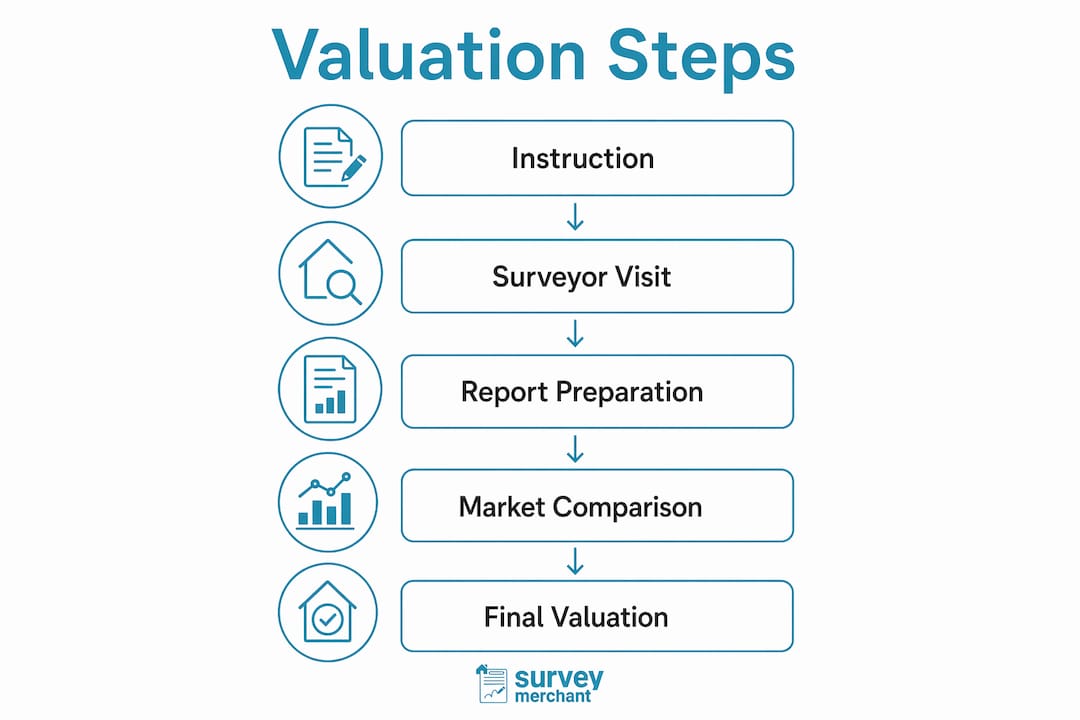
A shared ownership appraisal is carried out by a surveyor registered with the Royal Institution of Chartered Surveyors (RICS), who must act independently from your housing association. This independence is non-negotiable. A surveyor instructed by your housing association has a conflict of interest that could inflate the valuation in the association’s favour.
During the inspection, the surveyor considers several interconnected factors:
The surveyor’s report must reflect current market conditions using up-to-date comparable evidence. A valuation based on sales data from 12 months ago is unlikely to be accepted, particularly in a volatile market.
Pro Tip: Before your surveyor visits, prepare a list of all improvements you have made to the property, including dates and approximate costs. This gives the surveyor the context to assess each improvement fairly rather than overlooking it entirely.
Understanding the role of a chartered surveyor in this process helps you ask the right questions and challenge any outcome you believe is inaccurate.
The cost of staircasing is always calculated as a percentage of the current full market value, not the original purchase price of your share. This is the single most financially significant fact in shared ownership. If you bought a 40% share when the property was worth £200,000 and the property is now worth £280,000, your next tranche of shares is priced against £280,000, not £200,000.
The practical implications of this are substantial. Consider the following sequence when planning a staircasing transaction:
Market fluctuations add another layer of complexity. In a rising market, delaying a valuation by even a few months can increase your staircasing cost considerably. In a falling market, the opposite applies, and waiting may reduce what you pay for additional shares.
Lender down valuations are a genuine risk. This occurs when your mortgage lender’s surveyor values the property lower than the RICS valuation, which can cause the transaction to collapse. Recent Homes England guidance now gives landlords the flexibility to accept a buyer’s offer even when the lender’s figure is lower than the RICS figure, reducing the risk of failed transactions.
Pro Tip: If you receive a lender down valuation, do not abandon the transaction immediately. Contact your housing association directly and reference the 2026 Homes England guidance, which explicitly allows landlords to consider the buyer’s offer in these circumstances.
Homes England mandates an independent RICS valuation for all new sales, resales, and staircasing transactions above 5% for shared ownership properties built with government grant funding within the last ten years. This is not guidance that housing associations can choose to follow or ignore. It is a condition of their grant funding.
The 2026 updates also address a long-standing imbalance in the valuation process. Previously, housing associations sometimes used internal valuations that shared owners had no power to challenge. The updated rules clarify that residents’ correctly instructed valuations must be used in transactions, removing the risk of associations substituting a higher internal figure.
“When homeowners commission their own RICS valuation, that valuation price must be used, thereby empowering shared owners and reducing conflicts with housing associations.” — Homes England guidance, 2026
Lease terms remain a significant legal consideration. The lease governs your rights as a shared owner, including your ability to make improvements, sublet, and staircase to full ownership. Some leases contain clauses that restrict the types of improvements you can make without consent, which in turn affects what a surveyor can credit in the valuation.
Gaps remain in the framework, particularly around distressed sales where a shared owner needs to sell quickly due to financial hardship. In these cases, the requirement for a formal RICS valuation can add cost and delay at an already difficult time. Professional legal or financial advice is strongly recommended for any complex or time-sensitive transaction.
Several persistent myths cause shared owners to make costly mistakes. Understanding them before you commission a valuation saves both money and frustration.
Understanding why property surveys matter in the broader context of property ownership helps you treat the valuation as an investment in accurate information, not an administrative hurdle.
Preparation before commissioning a shared ownership appraisal reduces costs, avoids delays, and improves the accuracy of the outcome. Follow this sequence:
Pro Tip: Ask your solicitor to review your lease before commissioning a valuation. Lease clauses around improvements, subletting, and staircasing rights can all affect the valuation outcome and your legal position.
Knowing how to choose a surveyor for your specific circumstances is one of the most practical steps you can take before any shared ownership transaction.
Accurate shared ownership valuation requires an independent RICS surveyor, current comparable evidence, and financial modelling before the report is commissioned.
| Point | Details |
|---|---|
| Full market value is the baseline | The entire property is valued, not your share, and this figure drives all staircasing and resale costs. |
| RICS registration is mandatory | Only a RICS-registered surveyor’s report is legally accepted for shared ownership transactions. |
| Your valuation takes precedence | Under 2026 Homes England rules, a correctly instructed resident valuation must be used by the housing association. |
| Model costs before commissioning | Run a staircasing calculator first to confirm the transaction is financially viable before spending on a formal report. |
| Lease length and improvements both affect value | Short leases and non-typical improvements can reduce your valuation, regardless of what you paid for them. |
I have seen shared owners treat the valuation as a box-ticking exercise, something to commission at the last minute and accept without question. That approach consistently costs people money. The valuation is not just a number on a form. It is the single figure that determines how much you pay to own more of your home, and how much you receive when you sell it.
The 2026 Homes England updates are a genuine improvement. The rule that a correctly instructed resident valuation must be accepted removes a significant source of conflict that previously left shared owners at the mercy of housing association figures they had no power to challenge. That change matters, and shared owners should know about it before they enter any negotiation.
What I find most shared owners underestimate is the timing dimension. A valuation commissioned in a rising market three months before you are ready to proceed may be out of date by the time your solicitor is ready to exchange. You pay for a fresh report, and the window closes again. Planning the valuation to coincide precisely with your financial and legal readiness is not pedantic. It is the difference between a smooth transaction and an expensive restart.
The other area I would flag is lease length. Many shared owners focus entirely on the property value and overlook the lease. A lease with fewer than 80 years remaining will reduce your valuation, increase your mortgage costs, and narrow your pool of potential buyers at resale. If your lease is approaching that threshold, address it before commissioning a valuation, not after.
— Surveymerchant

Surveymerchant connects you with RICS-registered surveyors who specialise in shared ownership property valuation across the UK. Every surveyor in the Surveymerchant panel is independently vetted, ensuring your report meets Homes England requirements and is accepted by your housing association without dispute. Whether you are planning to staircase, preparing to sell, or simply want an accurate picture of your equity position, Surveymerchant matches you with the right expert for your location and property type. For complete property assurance, full building surveys are also available alongside valuations. Start with a RICS valuation today and make your next shared ownership decision on solid ground.
A shared ownership valuation establishes the full open market value of the entire property, not just the share you own. This figure is used to calculate the cost of staircasing and the resale price under the scheme.
Most RICS valuations for shared ownership transactions are valid for three months. If your transaction does not complete within that window, you will need to commission a new report.
Under 2026 Homes England guidance, a correctly instructed resident valuation must be accepted in the transaction. Housing associations cannot substitute their own internal figure if you have followed the proper instruction process.
Not necessarily. Valuers assess improvements against what is typical for the local market, and non-typical improvements may be discounted if they exceed buyer expectations in the area.
This is known as a down valuation and can put a transaction at risk. Current Homes England guidance now allows landlords to consider the buyer’s offer even when the lender’s figure is lower, giving both parties more flexibility to complete the transaction.
Survey Merchant provides vetted RICS surveyors across 100+ UK locations at fixed fees:
→ Level 2 Home Survey (HomeBuyer Report)
→ Level 3 Building Survey (full structural survey)
→ RICS Red Book property valuations
→ Party wall surveyors — notices, awards & schedules of condition
→ Expert witness surveyors — CPR Part 35 reports for property disputes