Building Surveying
Jul 16, 2026
Ownership Search on a Property: A UK Buyer's Guide 2026
Learn how to conduct an ownership search on a property in the UK. Our 2026 guide explains Land Registry searches, costs, and how to find who owns a property.

You've found a property you want. The estate agent says the title is straightforward, the seller sounds organised, and everyone is urging you to move quickly. Then the legal papers arrive and the first serious question surfaces. Who has the right to sell this property, and what legal baggage comes with it?
That's where an ownership search on a property stops being an admin task and becomes one of the most important checks in the whole transaction. Buyers often assume that if a house is marketed openly, ownership must be clear. In practice, that assumption causes trouble. A proper search does more than put a name against an address. It tells you what kind of ownership exists, what rights burden the property, and whether the legal record supports a clean transfer.
If you're still weighing the wider due diligence picture, this expert guide to buying a house is a useful companion read alongside the legal checks.
An ownership search on a property should happen early, not after you've paid for surveys, searches and mortgage work. If ownership is unclear, everything behind it slows down. Sellers can't answer basic requisitions properly, solicitors can't confirm authority to sell, and lenders become cautious very quickly.
The practical reason is simple. You are not buying bricks alone. You are buying the seller's legal title, subject to whatever rights, restrictions and charges affect it. If that title is defective, your problem starts on completion, not before.
A good ownership search answers three immediate questions:
Those checks sit alongside the broader legal enquiries raised during conveyancing. For a helpful overview of the wider due diligence process, this guide to understanding property search types and costs is worth reading in parallel.
Practical rule: If the legal right to sell hasn't been established, every other part of the transaction is provisional.
Buyers sometimes leave title matters to the very end because the property “looks fine”. That's not how legal risk works. Restrictive covenants don't show up in a viewing. A charge in favour of a lender isn't visible from the street. Nor does a leasehold title announce itself unless someone reads the paperwork carefully.
From a conveyancer's perspective, the ownership check is the opening gate. If it is clean, the transaction can move in an orderly way. If it is unclear, you want to know that before your costs and expectations build.
For most properties in England and Wales, the key document is the HM Land Registry Title Register. For registered properties, it is the definitive legal record of ownership, and a digital copy costs £7, while an official paper copy admissible in court costs £11 by post according to Land Registry access guidance explained here.
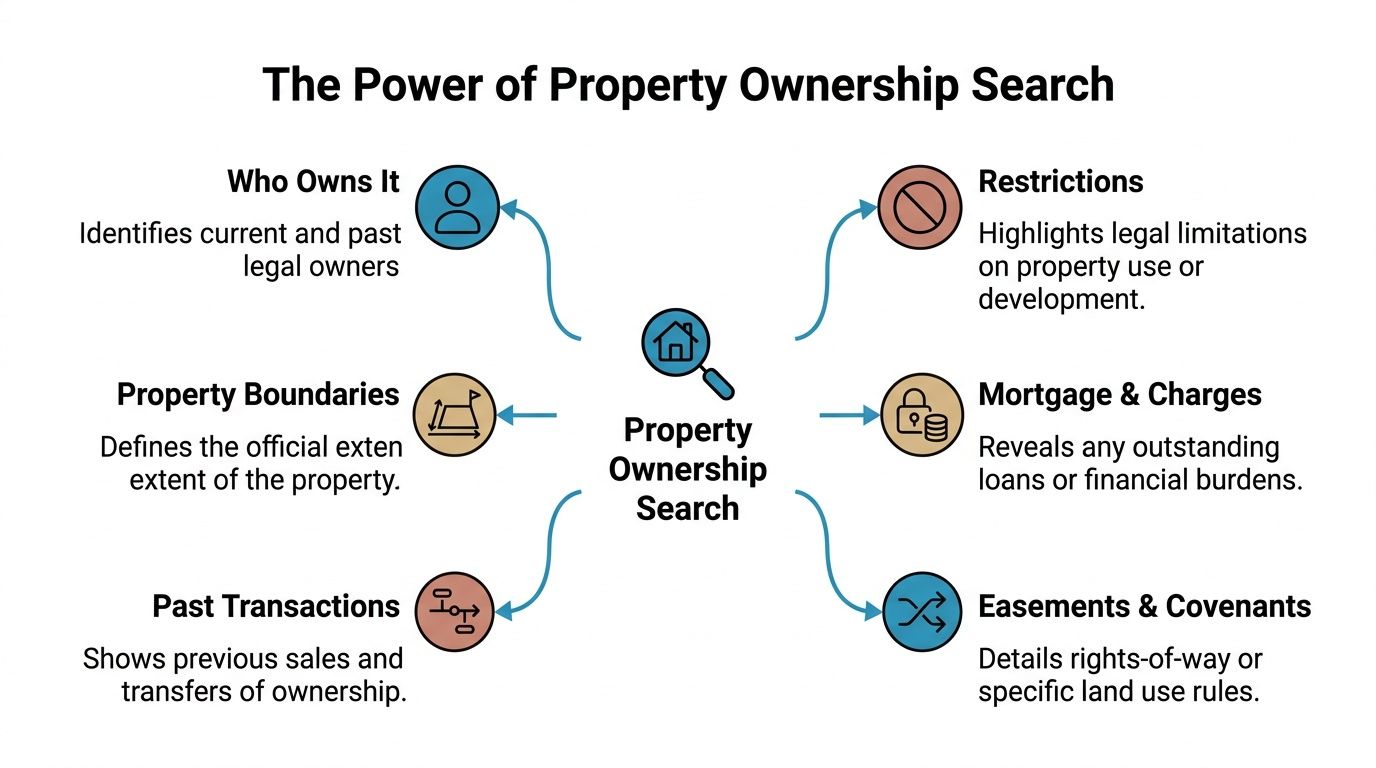
Think of the register as the property's legal profile. It tells your solicitor what they are dealing with, rather than what the estate particulars suggest.
A standard review will usually focus on:
Each of those points matters for a different reason. The proprietor section confirms who can sell. The charges section shows whether a lender or other secured party must be dealt with on completion. Covenants may affect extensions, conversions, business use, parking arrangements or even the appearance of the building.
The search should never be treated as a name-finding exercise alone. It is a legal risk review. Buyers who want a clearer sense of how these issues turn into real transaction problems should spend time understanding title defects.
A buyer's solicitor must be able to certify title properly. A lender also needs confidence that the borrower is acquiring a marketable interest that can serve as security. If the register shows a problem, legal work doesn't continue as normal until the issue has been explained, corrected or protected against.
A title register can look brief, but one short entry can change the entire decision to proceed.
The practical impact is often underestimated. A covenant against building might frustrate your loft conversion plans. A registered charge has to be redeemed or otherwise addressed. A mismatch between seller details and the registered proprietor's details will trigger immediate questions.
Here is how clients should read the search output at a high level:
| Item on record | Why it matters to you |
|---|---|
| Registered owner | Confirms who has legal authority to transfer title |
| Charges entry | Shows whether secured borrowing must be cleared |
| Restrictive covenant | May limit works, use, or future development |
| Tenure entry | Affects rights, obligations and future checks |
The most common mistake is assuming the register gives you comfort merely because it exists. It only helps if someone reads it critically.
Not all ownership evidence carries the same weight or requires the same investigation. In practice, the first distinction is between registered land and unregistered land. The second is between freehold and leasehold. Buyers often blur these issues together, but they raise different questions and different risks.
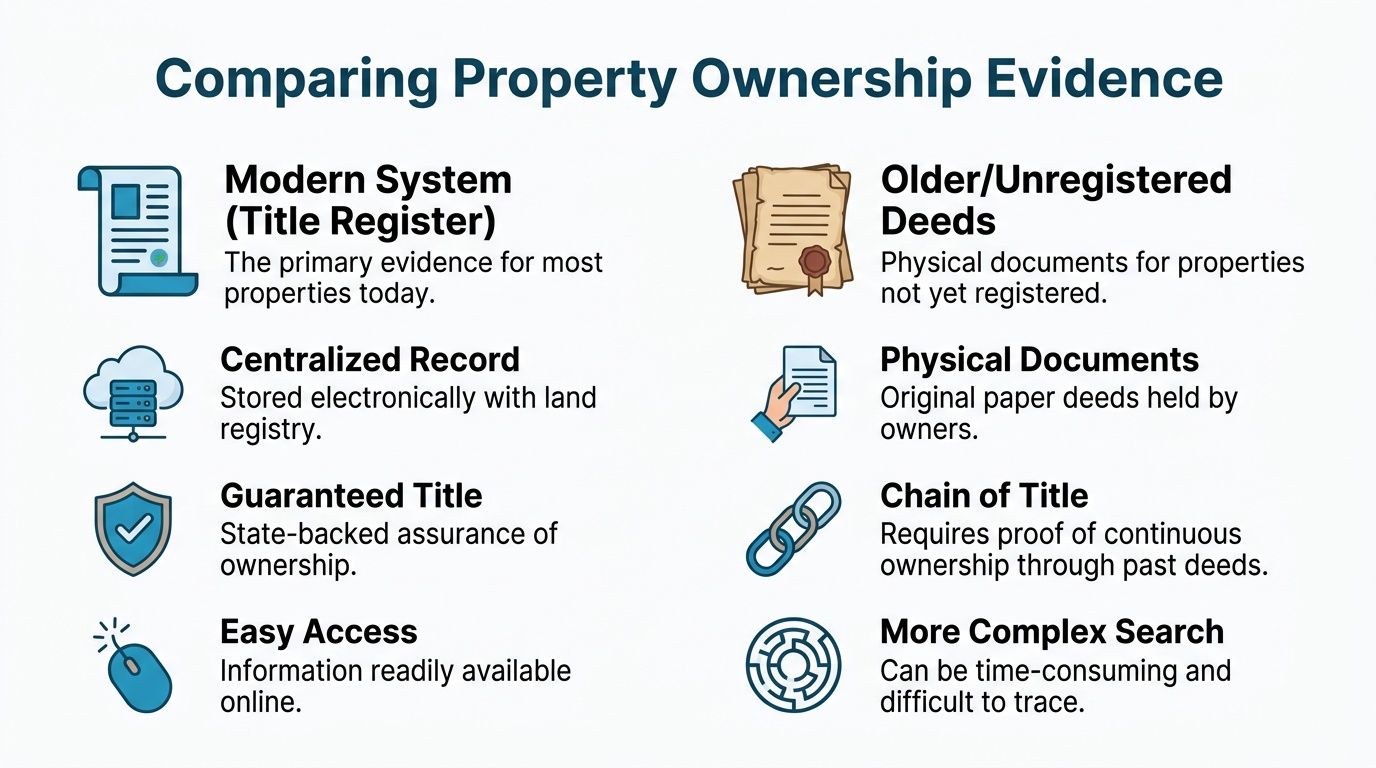
With registered land, ownership evidence is centred on the Land Registry title. That gives a modern, centralised record for conveyancing purposes. The solicitor still reviews supporting papers, but the register is the starting point and usually the primary evidence.
With unregistered land, there is no equivalent single online record to rely on. Ownership has to be proved through historical title deeds and a proper chain of ownership. That means more paper, more interpretation and more room for uncertainty. Old conveyances, mortgages, assents and transfers may all need to be examined together.
The practical comparison looks like this:
| Type of evidence | What it means in practice |
|---|---|
| Registered title | A current official record can be obtained and reviewed |
| Unregistered deeds | Title has to be reconstructed from historic documents |
| Title plan | Helps identify the extent of land, but should still be checked against reality on site |
| Lease papers | Needed where the register points to leasehold obligations or rights |
Where buyers get into difficulty is assuming a title plan or deed packet automatically answers boundary or ownership questions. It doesn't. Documents can be incomplete, unclear or inconsistent with what exists on the ground.
A second issue sits inside the ownership search itself. You need to know whether the property is freehold or leasehold, and what follows from that. This is not a minor detail. Government guidance notes that Land Registry documents reveal the distinction, and the same guidance highlights that this gap affects 20% of UK homebuyers, with the title register available for £7 and 1.5 million leasehold properties in England and Wales facing ownership ambiguities in the context cited by the government's property information service.
Freehold ownership is usually simpler to understand. Leasehold ownership requires an extra layer of enquiry because the title only tells part of the story. The lease itself, management arrangements, service charge structure, rights granted and restrictions reserved all matter.
A leasehold buyer should expect further checks on matters such as:
If the title says leasehold, don't stop at the register. Read the lease and management papers before you assume you know what you're buying.
That difference changes both legal risk and future cost exposure. A freehold house and a leasehold flat may look equally straightforward on a portal listing. On paper, they rarely are.
There are several ways to approach an ownership search on a property. The right method depends on why you need the information. A buyer doing an initial check can do some groundwork personally. A buyer who is exchanging contracts needs professional interpretation.
A sensible process starts with the property details, then moves quickly into document review. This visual summary is a useful way to think about the order of work.
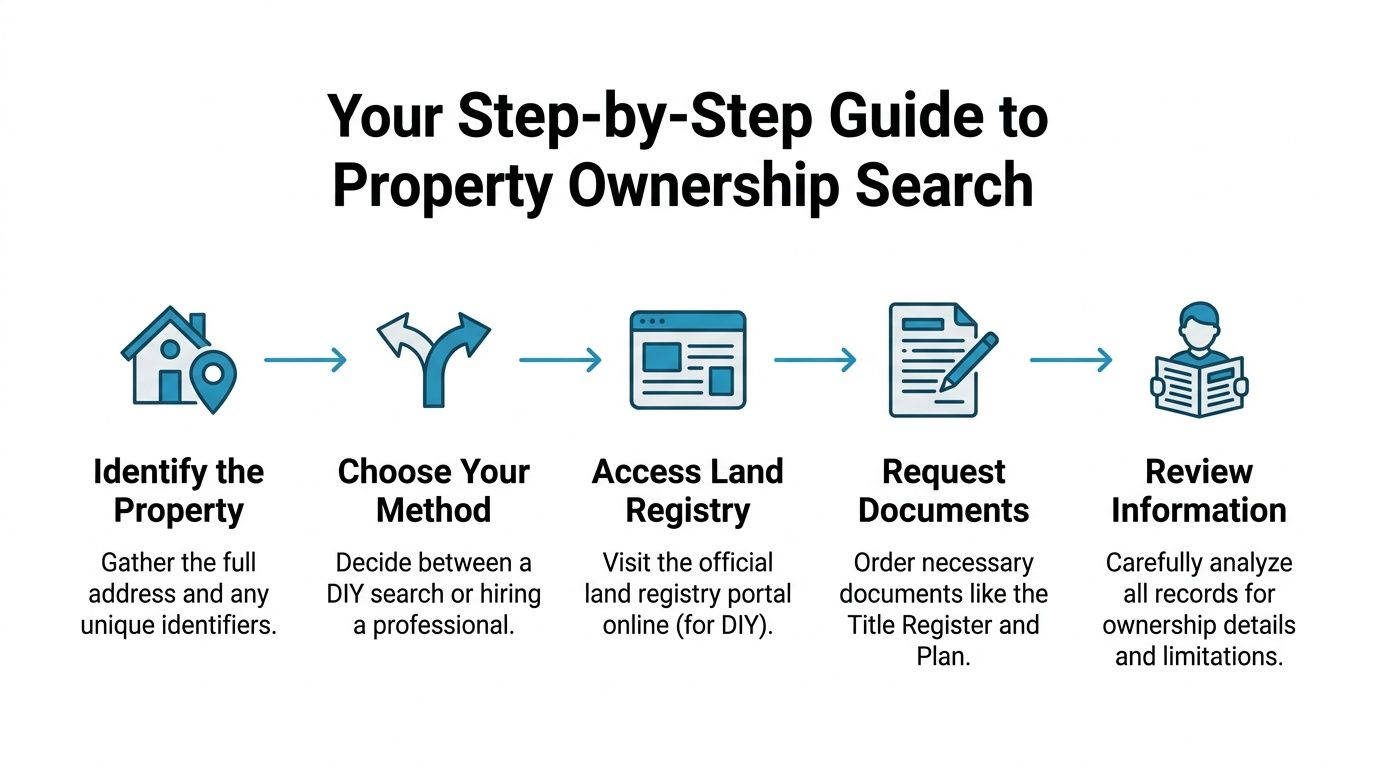
If you want an initial sense of what you're dealing with, use the official Land Registry route for a registered property. That won't replace legal advice, but it can tell you early whether the property record exists and whether the tenure shown matches what you thought you were buying.
Work through it in this order:
This video gives a straightforward overview of the process:
A DIY search is useful for screening. It is not enough for exchange of contracts. The language can be technical, and the significance of an entry often depends on associated deeds and replies to enquiries.
Your solicitor or conveyancer must review title formally during the purchase. That is standard practice because the issue is not just what the register says. The issue is whether the seller can transfer a marketable title on terms your lender will accept.
A professional will usually do far more than read the front page of the register. They will cross-check the title against the contract pack, lease papers if applicable, replies to enquiries, and any unusual entries that need supporting documents.
In more complex matters, a surveyor may also become relevant. That tends to happen where:
A buyer can obtain documents online in minutes. Understanding whether they are safe to rely on is the harder part.
That is why early checking works best. You can screen cheaply yourself, then hand over before legal conclusions are needed.
The biggest mistake I see is the belief that an ownership search always produces a neat current owner's name and a complete answer. It often does for registered land. It does not always do so across the board.
According to the background cited in this discussion of unregistered land limits and alternative checks, around 15% of UK properties remain unregistered, and in those cases buyers may need manual checks through planning portals or Companies House, particularly where a company may be involved.
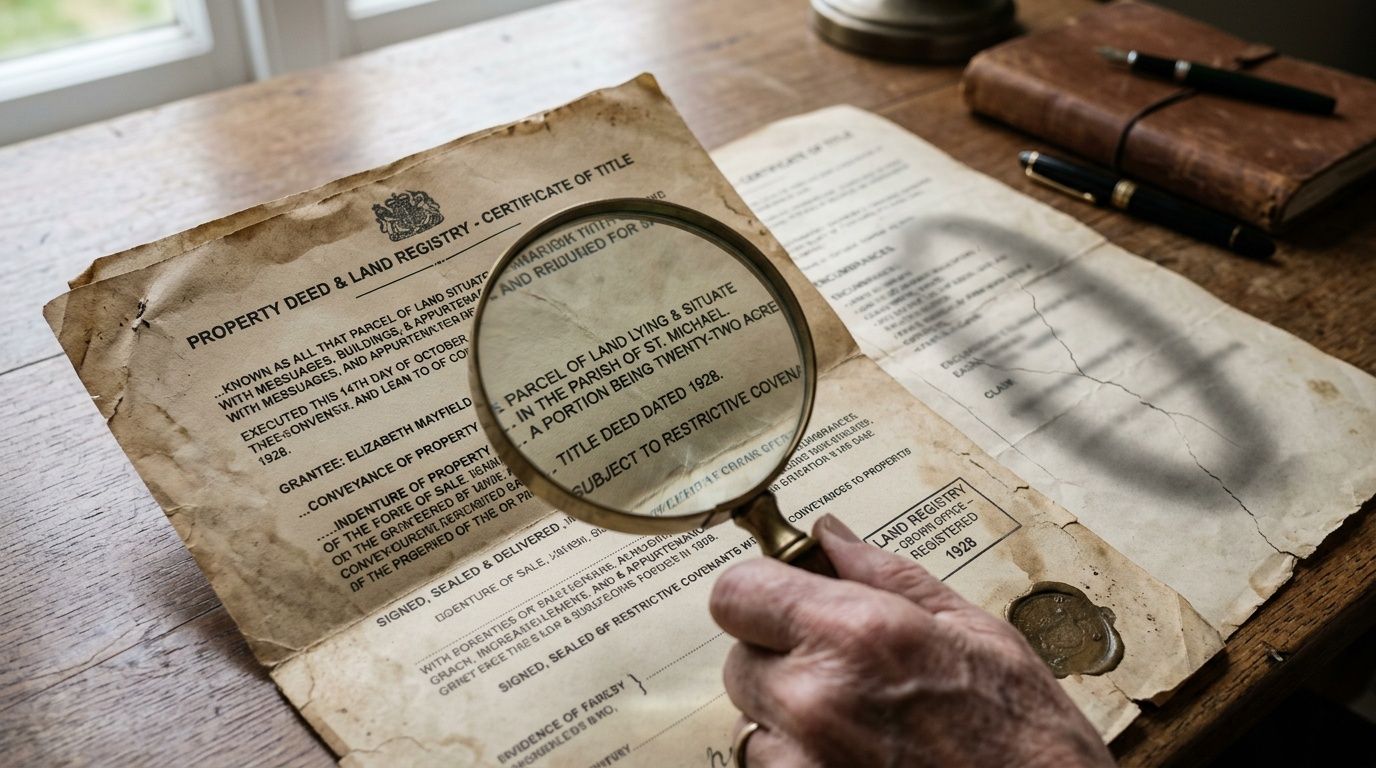
With unregistered land, there may be no digital title register to purchase at all. That changes the job completely. The question becomes whether the seller can prove ownership through deeds, mortgage releases, probate papers or corporate records.
That is where clients need to slow down and stop relying on online shortcuts. Manual investigation may involve:
For readers interested in how title problems are resolved through court action in more disputed ownership situations, the Olson & Sons quiet title guide is a useful comparative read, even though the legal framework is not the same as England and Wales.
Even where the title is registered, an ownership search has limits. It tells you what is on the legal record. It doesn't guarantee that every practical issue has been resolved.
Common examples include:
| Pitfall | Why it causes trouble |
|---|---|
| Restrictive entries | Buyers discover too late that intended works may be restricted |
| Corporate ownership | Extra authority documents may be needed before sale can proceed |
| Probate sales | Personal representatives may need to prove authority clearly |
| Boundary mismatch | The plan may not reflect fences, walls or long-standing occupation on site |
A title plan also has to be read sensibly. It is a legal plan, not a measured building survey. If the rear fence, side return or parking area looks different on site, that discrepancy needs proper investigation rather than assumption.
If something on the ground and something on the title do not match, treat the mismatch as a legal issue until someone proves otherwise.
The limitation to remember is this. An ownership search is powerful, but it is still one part of due diligence. It gives a legal framework. It does not remove the need for judgment.
Once the ownership search results are in, the next step is not merely “carry on”. The right move depends on what the papers have revealed. A clean and coherent title allows the legal work to continue in an orderly way. An unclear or burdened title means you need a decision before costs escalate.
Use the search findings to sort the property into one of three practical categories.
That classification helps buyers avoid the common mistake of treating every issue as either fatal or trivial. Many title concerns are solvable. The real question is whether they are solved in time, with evidence your solicitor and lender will accept.
If the answer involves insurance rather than correction of the title itself, it helps to understand when that is appropriate. This overview of Survey Merchant's title insurance guide is useful for seeing where indemnity cover may sit in the wider risk picture.
Legal documents and physical condition often overlap. A title may disclose a right of way through part of the garden. A lease may impose repairing obligations over roofs, balconies or structure. A covenant may refer to alterations that are already visible.
That is the point where a survey becomes more than a condition report. It becomes evidence to help you understand the practical implications of what the title says. If the register or lease raises questions about boundaries, shared parts, access, alterations, outbuildings or external areas, a surveyor can inspect the property against the legal story being told in the papers.
A sensible buyer response usually looks like this:
This is especially important with older buildings, leasehold flats, converted houses and properties where layout or occupation doesn't appear to match the legal paperwork. A title entry may look abstract until a surveyor shows you the practical consequence.
If your ownership search has raised questions you can't answer from the papers alone, Survey Merchant can connect you with a qualified local surveyor for impartial advice, whether you need a Level 2 or Level 3 survey, a valuation, leasehold guidance, or help making sense of how the legal title relates to the building in front of you.
Survey Merchant provides vetted RICS surveyors across 100+ UK locations at fixed fees:
→ Level 2 Home Survey (HomeBuyer Report)
→ Level 3 Building Survey (full structural survey)
→ RICS Red Book property valuations
→ Party wall surveyors — notices, awards & schedules of condition
→ Expert witness surveyors — CPR Part 35 reports for property disputes