We use cookies to improve your experience on our site, analyze site traffic, and assist in our marketing efforts. By clicking "Accept all," you agree to the storing of cookies on your device. You can choose to "Reject all" non-essential cookies. For more information, please read our Cookie Policy.
A complete 2026 UK guide to rising damp treatment: signs, causes, diagnosis, DPC injection and replastering options, typical costs, Awaab's Law duties for landlords, and why an independent accredited surveyor should diagnose the problem first.
Rising damp treatment is one of the most over-sold and misunderstood repairs in UK housing. Every year homeowners pay for chemical damp-proof injections that were never needed, while others live with a real defect for years because the tide marks were dismissed as “just condensation”. This guide explains what rising damp actually is, how to recognise the signs, what the treatment options cost in 2026, and how a suitably qualified, accredited surveyor can stop you spending money on the wrong fix. It is written for homeowners, buyers and landlords across the UK.
Key takeaways
Rising damp is real but rare. The English Housing Survey 2024-25 found rising damp in about 1% of English homes, compared with 3% for severe condensation and 2% for penetrating damp (MHCLG, January 2026).
Diagnosis comes before treatment. Historic England, RICS and the Property Care Association (PCA) jointly warn that many “rising damp” diagnoses are actually leaks, bridging, condensation or hygroscopic salts.
Typical rising damp treatment cost in 2026: roughly £60–£200 per linear metre for chemical DPC injection, or £1,000–£3,000 for a typical property, before replastering (Checkatrade, updated June 2026).
The cheapest fix is often removing a “bridge” such as raised paths, render or debris that lets moisture bypass an existing damp-proof course.
Landlords now face fixed timescales. Awaab’s Law has applied to social landlords in England since 27 October 2025, and the Renters’ Rights Act 2025 allows it to be extended to private lettings.
Use an independent, accredited surveyor (RICS, CIOB, RPSA or PCA-qualified) who does not sell the treatment they recommend.
What is rising damp?
Rising damp is ground moisture drawn upwards through porous masonry by capillary action, usually because a damp-proof course (DPC) is missing, has failed or has been bridged. It typically affects ground-floor walls to a height of around one metre, leaving tide marks, salt deposits and decaying plaster and skirting boards.
Bricks, stone and mortar are full of tiny pores. When the base of a wall sits in damp ground, water is pulled up those pores in the same way a paper towel soaks up a spill. Evaporation from the wall surface limits how high the moisture climbs, which is why genuine rising damp rarely rises above 1–1.5 metres. As the water evaporates, it leaves behind ground salts (nitrates and chlorides). These hygroscopic salts then attract moisture from the air, so a wall can stay damp long after the original water source has been dealt with.
Most houses built after about 1875 include a physical DPC of slate, engineering brick, bitumen or, in modern homes, plastic. Older solid-wall properties may have none at all, yet many still stay dry because lime mortar, suspended timber floors and good ground drainage let the fabric breathe. That is why Historic England’s guidance on damp in historic buildings stresses understanding how a building was designed to manage moisture before assuming a DPC is needed.
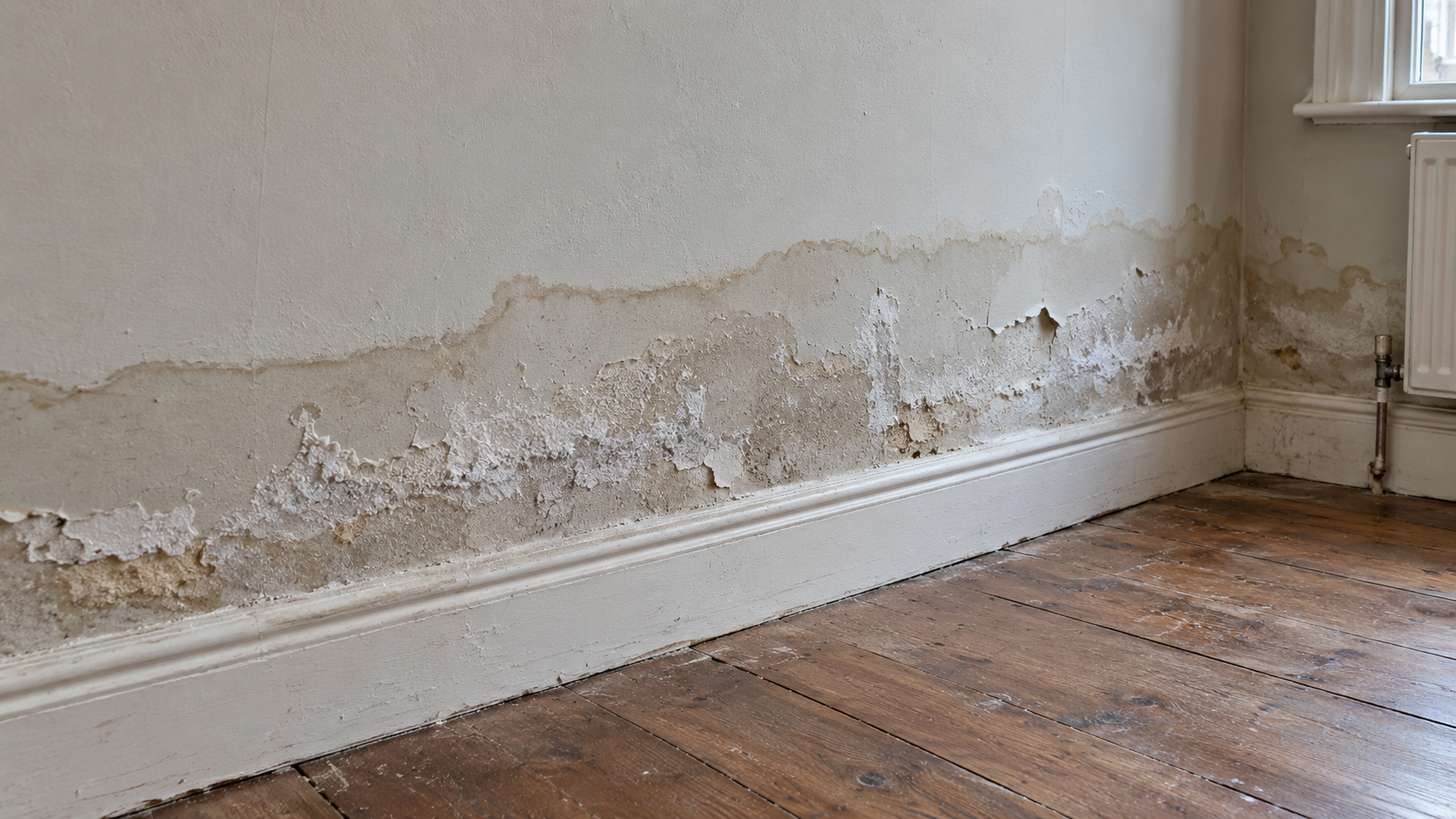
The classic rising damp pattern: a horizontal tide mark, blown plaster and salt deposits within the first metre of a ground-floor wall.
What does rising damp look like? Signs to check
Rising damp has a recognisable signature. If you see several of the following together, on a ground-floor wall, it is worth commissioning a proper investigation:
A horizontal tide mark or band of staining, usually between 300 mm and 1 metre above floor level.
White, fluffy or crystalline salt deposits (efflorescence) on the plaster surface, often concentrated at the top of the damp band.
Blown, soft or crumbling plaster and paint that bubbles or flakes near the skirting.
Rotting, stained or loose skirting boards and, in some cases, decay to floor joists and timber floors.
Wallpaper lifting at the bottom of the wall and a persistent musty smell downstairs.
Damp that is worse in winter and wet weather but never appears above the first metre or on upper floors.
What rising damp does not do is appear as isolated patches high on a wall, around window reveals, on ceilings, or as black mould in cold corners. Those patterns point to penetrating damp, leaks or condensation instead. Our guide to the three main types of damp in a house explains how to tell them apart.
What causes rising damp?
A surveyor investigating rising damp is really asking one question: why is ground moisture reaching the wall above the DPC line? The usual answers are:
No damp-proof course. Common in pre-1875 solid-wall houses and some rural or stone-built properties.
A failed DPC. Old bitumen or slate DPCs can crack, and a poorly installed chemical DPC can leave gaps.
Bridging. Raised external ground levels, paths or patios, cement render or internal plaster carried down over the DPC, or rubble and mortar droppings in a cavity all give water a route past the barrier. This is the single most common cause of “rising damp” in homes that do have a DPC.
Poor ground drainage. Leaking drains, blocked gullies and broken downpipes can saturate the soil next to a wall so that even a sound DPC struggles.
Hygroscopic salt contamination. A wall that was once genuinely damp can keep drawing moisture from the air because of salts left in the plaster, even after the source has been cured.
The Property Care Association’s guidance on rising damp treatment makes the point plainly: where a DPC has been bridged by higher ground levels, render or cavity debris, removing the bridge should be sufficient to control capillary rise. No chemical treatment is required in that scenario.
Rising damp vs penetrating damp vs condensation
Because the three types of damp need completely different remedies, misdiagnosis is expensive. The table below summarises the differences a surveyor looks for.
Feature
Rising damp
Penetrating damp
Condensation
Location
Ground-floor walls only, up to c. 1 m
Any level; near roofs, gutters, chimneys, windows, cracked render
Cold surfaces, corners, behind furniture, bathrooms and bedrooms
Pattern
Horizontal tide mark, even band
Localised patches, worse after rain
Surface moisture, black spot mould
Salts
Yes, often heavy efflorescence
Sometimes, usually light
No
Timing
Persistent; worse in wet seasons
Closely follows rainfall
Worse in cold weather and poorly ventilated homes
Typical remedy
Remove bridging, repair or install DPC, replaster with salt-resistant plaster
Repair the external defect (pointing, gutters, flashings, render)
Ventilation, heating, extraction, insulation
Prevalence (England, 2024)
c. 1% of homes
c. 2% of homes
c. 3% of homes (severe)
The prevalence figures come from the English Housing Survey 2024-25 headline report published by MHCLG on 29 January 2026, which found 1.4 million dwellings (5%) had a damp problem, an increase on 2022. Condensation and mould remain a bigger problem than rising damp for most households. For practical steps on that side of the problem, see our guide to tackling condensation and mould.
How is rising damp diagnosed?
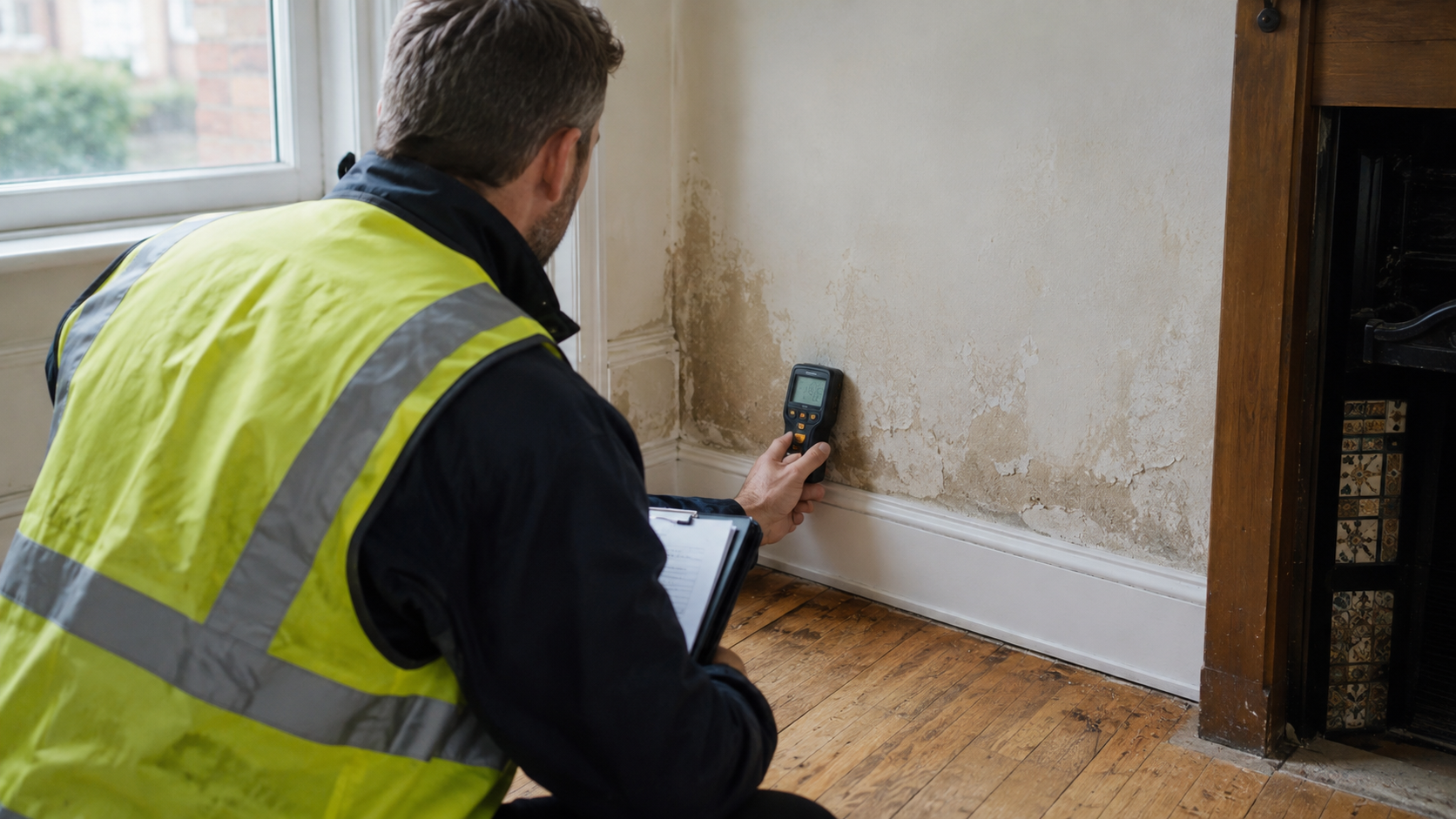
A handheld electrical moisture meter is a useful screening tool, but it cannot diagnose rising damp on its own. These meters respond to salts, conductive materials and surface moisture as well as water, so a wall contaminated with old salts can give a high reading while being essentially dry. A competent damp investigation therefore combines several lines of evidence:
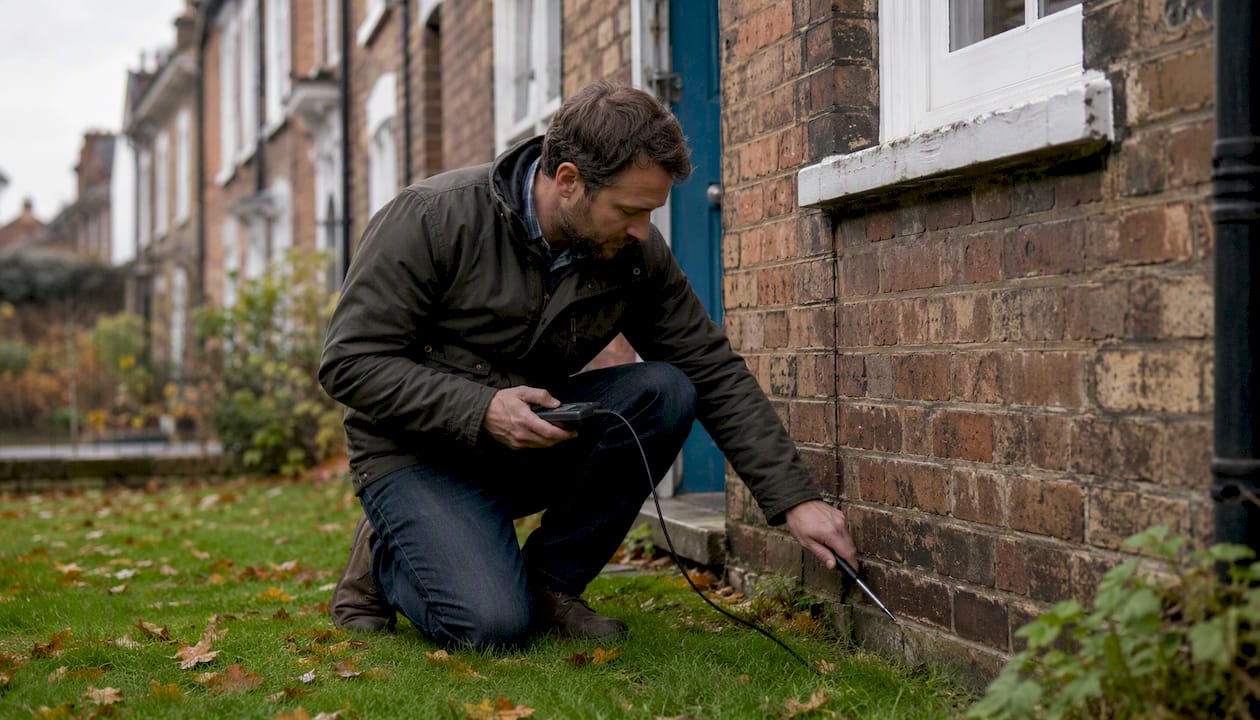
External inspection of ground levels, paths, render, pointing, gutters, downpipes, gullies and air bricks to find bridging or water sources.
Internal moisture mapping with a meter at set heights to see whether readings fall off with height in the classic rising damp profile.
Salt analysis to test for nitrates and chlorides, which indicate groundwater rather than rainwater or condensation.
Calcium carbide or gravimetric (oven-dry) testing of drilled samples to measure true moisture content at depth, which is the method endorsed in the joint Historic England, RICS and PCA position statement on investigating moisture in traditional buildings.
Timber checks for wet rot, dry rot or beetle attack in skirtings, joists and floorboards.
A moisture meter is a starting point, not a diagnosis. Salt analysis and depth samples confirm whether damp is actually rising from the ground.
How to treat rising damp: the options
Treatment should always follow diagnosis, and it should always start with the cheapest and least invasive measure that addresses the cause. In order of preference:
1. Remove the bridge and fix the drainage
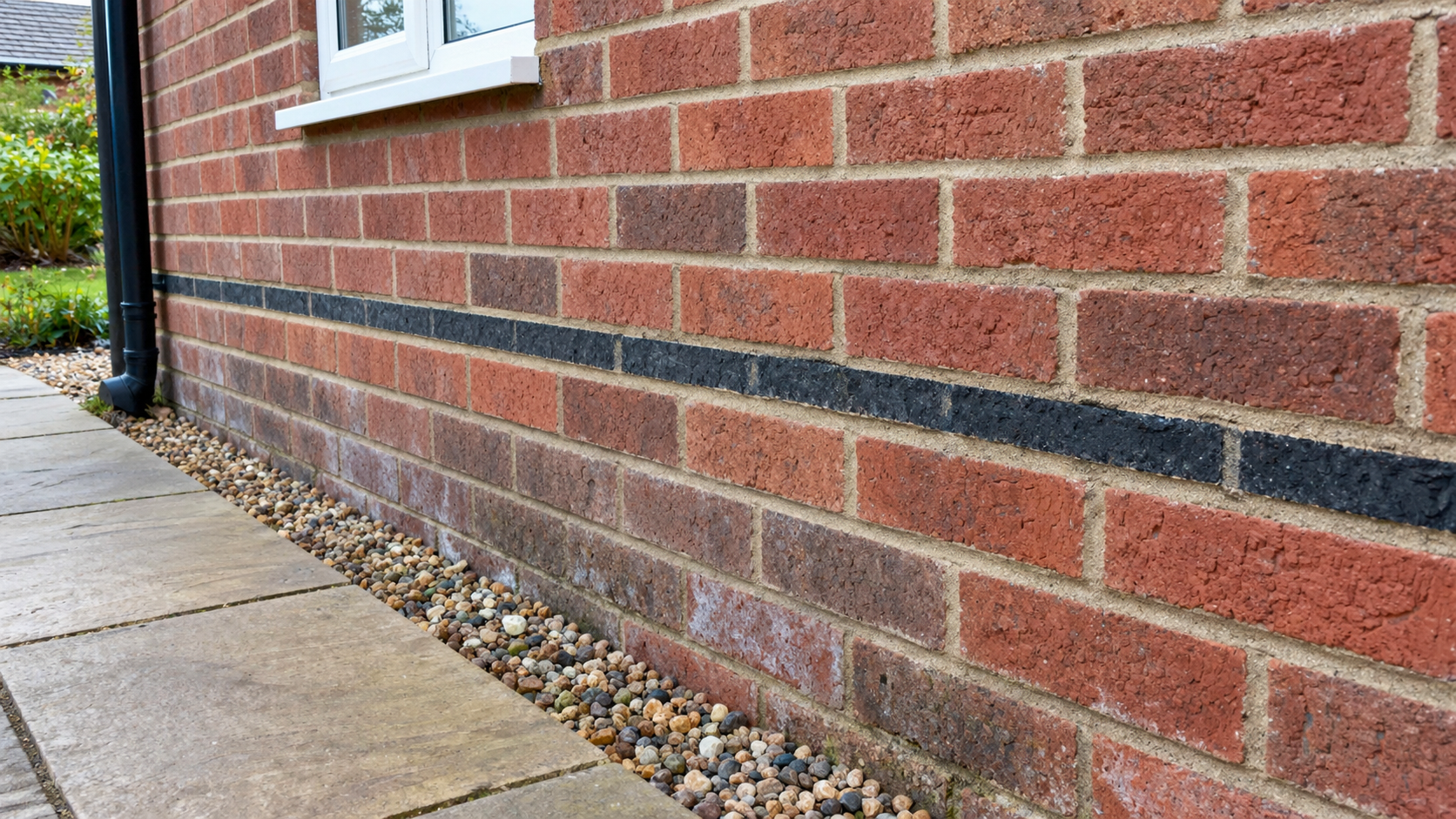
Lower external ground levels so they sit at least 150 mm below the DPC, cut back render or plaster that crosses the DPC line, clear cavity debris, repair leaking drains and downpipes, and unblock air bricks so suspended floors can ventilate. In a large share of cases this is the whole job.
2. Install a retrofit chemical damp-proof course
Where there is no DPC or it has genuinely failed, the standard remedy is to drill the mortar joint at regular intervals and inject a silicone-based cream or fluid that lines the pores and repels water. The PCA notes that injected DPCs are the only retrofit method with third-party accreditation recognised by the Building Research Establishment, and that in most cases they are the most economical option. Hand-inserted thixotropic creams are now the most widely used system.
3. Insert a physical DPC
Cutting the mortar joint and inserting a new physical membrane is the most robust solution but is disruptive, slow and unsuitable for flint, rubble-filled or very thick walls. It is normally reserved for major refurbishments.
4. Replaster with a salt-resistant system
Whatever stops the water, salt-contaminated plaster will usually need to be hacked off to around 300 mm above the highest visible damp line and replaced with a renovating or salt-inhibiting plaster, or a lime-based system in traditional buildings. Skipping this step is the most common reason a “treated” wall looks damp again within a year.
5. Allow proper drying time
A solid brick wall dries at roughly one month per 25 mm of thickness, so a 225 mm wall may take most of a year to dry fully. Redecorating with impermeable paints too early traps moisture and stains.
Electro-osmotic systems and dry-lining membranes exist, but the PCA does not recommend dry lining as a primary or long-term remedy for rising damp, and electro-osmosis lacks British third-party accreditation. Treat both as niche options to be justified by a surveyor rather than defaults.
External ground levels should sit at least 150 mm below the damp-proof course. Paths, patios and planters that creep above the DPC are a leading cause of “rising” damp.
How much does rising damp treatment cost in 2026?
Prices vary with the length of wall affected, the wall construction, access and whether replastering and redecoration are included. The figures below are typical 2026 ranges drawn from Checkatrade’s June 2026 cost guide, whose estimates are checked by RICS and CIOB members, and from Survey Merchant’s experience of quotes across the UK. Always obtain itemised written quotes.
Item
Typical 2026 cost (excl. VAT unless stated)
Notes
Independent damp survey
£150–£600
Average around £300; includes written report and moisture readings
Lowering ground levels / removing bridging
£200–£1,000
Often the only work needed; price depends on paving to be lifted
Chemical DPC injection
£60–£200 per linear metre
Typical property £1,000–£3,000; includes drilling and cream
Physical DPC retrofit
£2,500–£7,500
Highly disruptive; used mainly in full refurbishments
Hacking off and replastering
£40–£80 per m²
Usually the largest single cost on a rising damp job
Replacing rotten skirting and timber
£150–£800 per room
More if joists or floorboards are affected
Complete job incl. replastering, average terraced house
£2,000–£5,000
Larger or detached homes with several walls affected can exceed this
If a contractor’s quote jumps straight to injecting every ground-floor wall without discussing ground levels, drains or salt analysis, get a second opinion before signing. Our guide to surveyor tips for damp cost estimates explains how to test whether a quote is realistic.
Is rising damp a myth?
You will find articles claiming rising damp does not exist. The honest position, supported by Historic England, RICS and the PCA, sits between the extremes. Capillary rise in masonry is a well-documented physical process and genuine cases do occur, particularly in solid-wall houses with no DPC, high water tables or saturated ground. However, it is over-diagnosed. Contractors who inspect for free and sell the injection often treat a high meter reading as proof, when the real cause is bridging, a leaking gully, condensation or old salts. The practical lesson is not that rising damp is a myth, but that you should never accept the diagnosis from someone who profits from the treatment.
Rising damp when buying or selling a house
Damp is one of the most common issues flagged in mortgage valuations and home surveys. A Level 2 or Level 3 survey will record moisture readings and visible symptoms and may recommend a specialist damp and timber report before exchange. For buyers this is leverage: a written diagnosis with a costed schedule of works is far harder for a seller to dismiss than “possible damp noted”. Lenders may also make a retention or ask for the work to be completed. Survey Merchant’s panel can provide a specific defect report focused solely on the damp, or a full Level 3 building survey if you want the whole property assessed. Our guide to booking a damp survey explains what to expect on the day.
Sellers should keep guarantee certificates for any previous DPC work. Most reputable installers offer a 10–30 year guarantee, and PCA members can back it with an insurance-backed guarantee that survives the contractor going out of business.
Landlords, tenants and the law in 2026
The legal pressure on landlords to deal with damp has increased sharply over the past year:
Awaab’s Law (the Hazards in Social Housing (Prescribed Requirements) (England) Regulations 2025) came into force for social landlords on 27 October 2025. Under the GOV.UK guidance, significant damp and mould hazards must be investigated within 10 working days, a written summary given to the tenant within 3 working days of the investigation ending, and safety work started within 5 working days. Emergency hazards must be investigated and made safe within 24 hours. Where the cause is a structural defect such as a missing DPC or absent ventilation, the landlord must fix the root cause.
Private landlords are not yet covered by Awaab’s Law in England, but the Renters’ Rights Act 2025 gives ministers the power to extend it, and the government has said it will consult on the timetable. Scotland is legislating separately for both sectors. Private tenants already have remedies under the Homes (Fitness for Human Habitation) Act 2018, under which damp that makes a home unfit can found a claim for repairs and compensation.
For landlords, an independent damp report from an accredited surveyor is the quickest way to prove that a complaint was investigated properly and that the works specified address the actual cause.
How to prevent rising damp coming back
Keep external ground, paving and planters at least 150 mm below the DPC.
Clear gutters twice a year and fix leaking downpipes and gullies promptly.
Keep air bricks clear so suspended timber floors stay ventilated.
Use breathable finishes (lime plaster, mineral or clay paints) on solid-wall and pre-1919 homes rather than cement render and vinyl paints.
Check for hidden leaks from pipes, radiators and washing machines, which are frequently mistaken for rising damp.
Book a periodic condition inspection if the property is older, rented or has a history of damp.
Why choose Survey Merchant for your rising damp survey?
The single most valuable step in any rising damp treatment is an impartial diagnosis. Survey Merchant exists to make that easy:
An accredited panel matched to the job. Our surveyors are regulated or accredited by recognised UK bodies including RICS, CIOB and RPSA, with damp specialists who understand PCA methodology and traditional building fabric. We match the right discipline to your property rather than sending a generalist.
Independent advice. Our surveyors report on the cause and the remedy; they do not sell the injection. That removes the conflict of interest built into most free damp inspections.
Nationwide UK coverage. From London to Glasgow and Belfast, we have local surveyors who know the housing stock in your area.
Transparent fixed fees agreed before the inspection, with no hidden extras.
Fast turnaround so that a damp query does not derail a purchase, a tenancy complaint or a renovation programme.
End-to-end support. From a specific defect report to a full Level 3 building survey and, where needed, expert witness evidence for disputes, one point of contact handles the whole process.
If you have spotted tide marks, blown plaster or salty deposits on a ground-floor wall, or a survey has flagged damp on a property you are buying, talk to us before you accept a treatment quote. Explore our building surveying services or contact Survey Merchant today for a fixed-fee quote from an accredited damp surveyor.
Rising damp is ground moisture drawn up through porous brick, stone or mortar by capillary action, usually because a damp-proof course (DPC) is missing, has failed or has been bridged. It affects ground-floor walls only, normally to a height of around one metre, and leaves tide marks, salt deposits and decaying plaster.
What does rising damp look like?
Look for a horizontal tide mark up to about a metre above the floor, white salt deposits on the plaster, bubbling or flaking paint, blown plaster, rotting or stained skirting boards and lifting wallpaper at low level. Isolated patches high on a wall, damp around windows or black mould in corners point to penetrating damp or condensation instead.
How do you fix rising damp?
Start with the cause: lower external ground levels to at least 150 mm below the DPC, cut back render or plaster that bridges it, clear cavity debris and repair leaking drains and downpipes. If the DPC is genuinely missing or failed, a chemical DPC cream is injected into the mortar joint, then salt-contaminated plaster is removed and replaced with a salt-resistant system before the wall is allowed to dry.
How much does rising damp treatment cost in 2026?
Typical 2026 UK figures are around GBP 60 to 200 per linear metre for chemical DPC injection, or GBP 1,000 to 3,000 for an average property before replastering. A complete job including hacking off and replastering usually comes to GBP 2,000 to 5,000 for a terraced house, while an independent damp survey costs roughly GBP 150 to 600.
Is rising damp real or a myth?
Rising damp is a real physical process and genuine cases occur, especially in solid-wall houses with no DPC or saturated ground. However, Historic England, RICS and the Property Care Association all acknowledge it is frequently over-diagnosed, with leaks, bridging, condensation and old hygroscopic salts often mistaken for it. Get an independent diagnosis before paying for treatment.
Does home insurance cover rising damp?
Usually not. Most UK buildings insurance policies treat rising damp as a gradual, maintenance-related problem and exclude it, although damage from a sudden event such as a burst pipe or storm may be covered. Check your policy wording and keep any DPC guarantee certificates, which can be insurance-backed through PCA member contractors.