Building Surveying
Jul 16, 2026
Damp and Timber Reports: A Complete 2026 UK Guide
Need damp and timber reports in the UK? Our guide explains costs, what surveyors look for, how to read findings, and how to choose a qualified expert.

You’ve had an offer accepted. The lender’s valuation comes back with a short note about “possible damp” or “timber defects”. The estate agent shrugs, the seller says it’s “nothing serious”, and you’re left wondering whether you’re buying a manageable house or a very expensive problem.
That’s the point at which damp and timber reports become useful. Not because they confirm every stain is disastrous, but because they sort out what matters from what merely looks alarming. For a first-time buyer, that distinction can change how you negotiate, what the lender needs, and whether the property still makes sense.
You have an offer accepted. Then the valuation or home survey mentions damp, timber decay, or a need for a specialist report. For many first-time buyers, that reads like a warning of major cost. In practice, it means one thing. The defect needs proper diagnosis before anyone can judge the risk, the repair, or the price.
A damp and timber report is a specialist inspection of moisture-related defects and the condition of timber at risk from decay or beetle attack. It sits alongside a Level 2 or Level 3 survey, rather than replacing it. It also does a different job from a mortgage valuation, which is prepared for the lender and often only notes visible warning signs.
That distinction matters. A stained wall, a musty void under a suspended floor, or a high meter reading near a skirting board can all trigger the same recommendation for further investigation. They do not all mean the same defect, and they certainly do not all justify the same repair bill.
A sound report should identify the likely source of moisture, the areas affected, whether any timber has deteriorated, and what action is reasonable. That last point is where buyers often save money. I regularly see people assume that one high reading means widespread rising damp and full replastering. Sometimes the answer is much simpler, such as bridging from external ground levels, condensation at a cold spot, or a local plumbing leak.
For a purchaser, the report has three practical uses:
Older homes need this careful reading in particular. Traditional buildings often handle moisture differently from modern ones, and repairs can go wrong if the diagnosis is crude. The RICS consumer guide to damp makes the same point in plain terms. Symptoms need interpretation, not just detection.
The main reason to commission the report is simple. It turns a worrying comment in a survey into something you can act on. It also helps you judge whether you are looking at an expensive defect, a modest repair, or a problem that sounds worse on paper than it is in the building.
A damp and timber inspection is a process of elimination. Buyers often focus on the first high meter reading. A competent surveyor is trying to answer a different question. What is the moisture source, how far has it spread, and has it caused any meaningful damage to plaster, joinery, or structure?
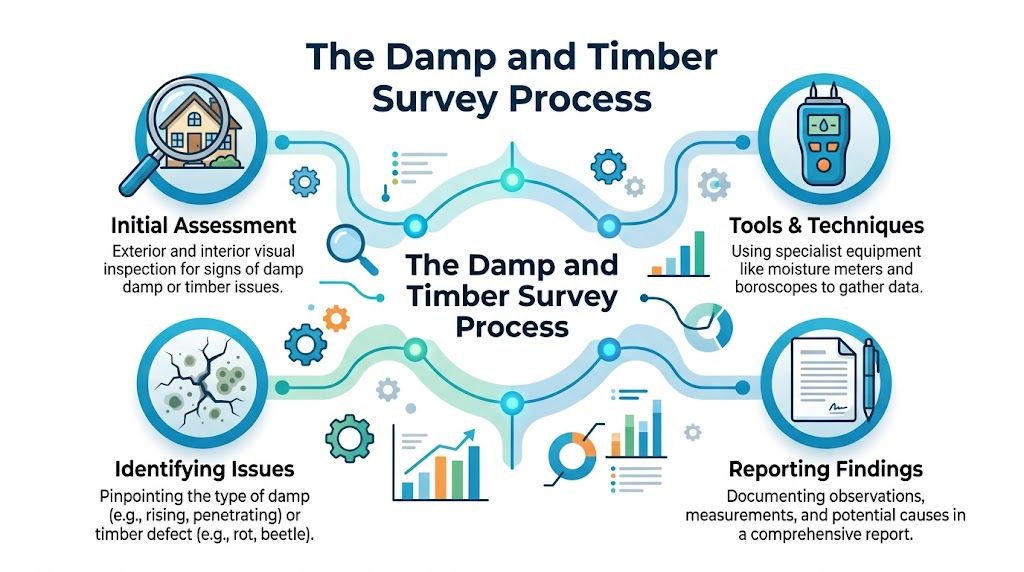
The first part is reading the building. Age, construction, ground levels, ventilation, and past alterations all matter because they change how moisture behaves. A Victorian house with suspended timber floors raises different concerns from a modern flat with plasterboard linings and concealed services. Basements and cellars are another category again. In those spaces, the key issue is often how the structure was meant to manage moisture in the first place, rather than whether a wall gives a high reading on one day.
That is why surveyors start outside as well as inside. They check ground levels against internal floors, look for blocked air bricks, defective rainwater goods, cracked render, poor pointing, bridged damp proof courses, and roof or chimney defects. If wall moisture is the concern, this guide to wall damp causes and checks explains the sort of external and internal patterns that need to be matched up before anyone recommends repairs.
The inspection then weighs the likely moisture mechanism:
| Damp Type | Common Evidence | Typical Location |
|---|---|---|
| Rising damp | Tide marks, salt contamination, deteriorated lower plaster | Ground floor walls |
| Penetrating damp | Localised damp patches, worsening after rainfall, staining | External walls, chimney breasts, around openings |
| Condensation | Surface water, black mould, repeated moisture on colder surfaces | Corners, windows, bathrooms, bedrooms |
| Hygroscopic damp | Persistent salt-related moisture even after cleaning or drying | Plastered walls with past contamination |
| Bridging | High lower-level readings caused by raised ground, debris, or plaster contact | Base of walls, subfloor areas |
Those categories can overlap. A wall may show old salt contamination, current condensation, and some external bridging at the same time. That is one reason isolated readings can mislead buyers.
The timber side deserves the same care. Surveyors inspect accessible floor voids, roof spaces, stairs, skirtings, joinery, and any exposed structural timber within the agreed scope. They are looking for decay, loss of strength, poor ventilation, and evidence of insect attack. Moisture matters here because persistently damp timber is what creates the conditions for wet rot, and in some cases more serious fungal decay. Insect damage also needs context. Old flight holes in dry timber are very different from active infestation, whether the concern is common beetle attack or wider questions about how to identify termite damage.
A good surveyor uses instruments to support an inspection, not to replace it.
Meter readings are the part buyers often latch onto, but they need careful handling. Electrical meters respond to moisture, salts, density, and sometimes surface conditions. A high reading may point to a defect that needs repair. It may also reflect contamination in old plaster, local bridging, or a surface condition with little bearing on structural timber. The pattern matters more than the single number. Sample reporting such as this UK damp and timber report shows how readings are usually set alongside photographs, location notes, and visible symptoms rather than presented as proof on their own.
Scope matters too.
Some damp and timber reports cover the whole property. Others are limited to one room, one wall, or a concern raised in a home survey. A sound report states what was inspected, what was inaccessible, and where opening up or specialist follow-up is still needed. For a buyer, that distinction is practical. It affects how much weight to place on the findings and whether the report is enough to renegotiate the price or whether further investigation is still required.
Many buyers open a damp report and get lost in the language. The document sounds technical, the photos are unflattering, and a few higher readings can make the whole property feel unsafe. Usually, the answer sits in the wording around the readings, not in the readings alone.

A few terms matter more than others.
If the report refers to photographic logs, moisture mapping, thermal patterns, or intrusive checks being recommended, that’s generally a sign the surveyor is trying to build a diagnosis rather than jump to treatment.
A sensible companion read if you’re trying to separate localised wall moisture from broader house-wide issues is this guide to wall damp, which helps frame the sort of follow-up questions worth asking.
This is the point most buyers need spelled out clearly. A high moisture reading does not automatically mean imminent timber failure or major structural repair.
Resistance-based moisture readings can be distorted by timber species, temperature, treatment history, and recent wetting. They may overstate actual moisture content, and they don’t by themselves tell you how deep the moisture goes or how long it has been there. That gap is explained well in this discussion of timber core sampling and misleading high readings.
In practical terms, a joist end with a high reading near a blocked air brick is not the same as a joist end that has remained saturated over time, softened, lost section, and shows fungal activity. The report should help you tell the difference by describing:
Ask one question before reacting to any high reading: “What evidence shows this is long-term saturation rather than a temporary or localised spike?”
That single question often changes the tone of a purchase negotiation.
If you’re researching timber risks more broadly, especially from overseas content that uses different terminology, this short piece on how to identify termite damage can still be useful for understanding how insect damage presents visually. Just don’t confuse that with the more common UK timber issues identified in damp and timber reports.
A buyer gets a damp and timber report on Friday, sees several high readings, and assumes the worst. The purpose of this section is to turn those findings into a sequence of works, likely costs, and sensible negotiation points.

A good report should not stop at naming defects. It should say what needs doing first, what can wait, and where further access is still needed before anyone commits to expensive repairs. That matters because a high meter reading on its own does not justify a large treatment quote. Buyers regularly overpay when they price the fear rather than the actual defect.
Remedies should match the mechanism of moisture entry or retention.
Hidden plumbing leaks need separate caution. Staining below a bathroom or kitchen is not always rising damp, and the repair bill may include tracing the leak, opening up finishes, plumbing work, drying time, and reinstatement. If the report points to a service leak, this guide to UK burst pipe repair costs gives useful background before you agree a reduction with the seller.
On site: The cheapest successful repair is usually the one that stops moisture at source. Internal finishes come after the building fabric starts to dry.
Budgeting is easier when the works are broken into stages rather than rolled into one vague allowance. This guide to damp cost estimates is a practical reference if you are trying to test whether a seller’s figure is realistic or whether a contractor’s quote includes work that is premature.
For a visual overview of how professionals discuss findings with clients, this short video is worth watching before you go back to the agent or seller.
Use the report to sort work into priorities.
That order affects both cost and negotiation. A blocked gutter and local joist-end repair is a different proposition from widespread decay with loss of bearing and extensive opening up. I would expect a report to make that distinction clear enough for a buyer to decide whether to proceed, renegotiate, or ask for further investigation.
If the sequence is missing, ask for it. Without that, buyers often spend on plaster, decoration, or blanket timber treatment before the cause has been dealt with, and then pay again when the symptoms return.
Damp and timber reports carry weight because they sit in the middle of valuation, lending, insurance, and liability. A casual opinion from a builder doesn’t usually satisfy those needs. A properly scoped specialist report often does.
UK mortgage lenders frequently ask for damp and timber reports on older buildings or where visible defects affect value or saleability. They also need to know what was inspected. If the report is vague about scope, disputes can follow over whether floors, roof timbers, or isolated areas were included. That’s why good reporting sets out inspected structural timbers, limitations on access, and whether recommended works such as chemical DPCs or timber replacement fall within the surveyor’s advice or need a further specialist opinion, as described in guidance on writing a damp and timber report.
For buyers, that wording matters because lenders don’t like uncertainty. If the report says “further opening up required” or “condition not fully confirmed due to restricted access”, the lender may want more before releasing funds.
A specialist report gives you an advantage only if it is precise. “Possible damp” is weak. “Moisture ingress associated with failed rainwater goods and resultant localised decay to accessible floor timbers” is something a seller has to engage with.
Use the report to ask practical questions:
The report can also matter after purchase. Insurers may resist claims or apply exclusions where damp or timber defects were known but not properly investigated. In rented property, unresolved damp may create compliance issues and complaints that a landlord can’t easily dismiss.
The strongest negotiating position usually comes from a report that is independent, technically careful, and linked to a clear schedule of works. That is very different from a vague one-page note or a free “survey” that jumps straight to treatment.
Here, many buyers either protect themselves properly or walk into a conflict of interest.
A free inspection from a contractor can be useful for obtaining a quote, but it is not the same as an independent diagnosis. If the person inspecting also sells the treatment, you need to be realistic about the incentive built into the process.

A competent surveyor should understand the limits of common resistance meters. Under British Standards including BS 6576, they are inappropriate for precise moisture measurement. Where exact diagnosis is required, the validated quantitative route is gravimetric testing with salt analysis, which can distinguish rising damp from other moisture sources, as explained in this technical note on damp and timber reporting standards.
That’s a useful dividing line. Anyone can wave a meter at a wall. A better surveyor explains what the meter can and cannot tell you.
Ask direct questions before booking:
If you also need help checking the people who may carry out the repair work afterwards, this guide on how to find a licensed contractor is a sensible companion read.
For buyers who want an independent route to an appropriately matched professional, Survey Merchant’s guide to choosing a surveyor is useful. Survey Merchant itself is a UK platform that connects clients with a panel of surveyors across different disciplines, including damp-related defect reporting, which can help when the issue sits alongside wider purchase concerns.
A few questions come up on almost every instruction.
| Question | Answer |
|---|---|
| Is a damp and timber report the same as a mortgage valuation? | No. A valuation is mainly for lending purposes. A damp and timber report is a specialist defect investigation. |
| Does a high moisture reading mean I should walk away? | Not automatically. The important issue is whether the report shows long-term saturation, actual decay, and a clear cause. |
| Can a surveyor inspect every timber in the house? | Usually not. Access limits apply, and the report should state the scope and any restrictions clearly. |
| Are older houses always more risky? | Not always. Older houses often need more careful interpretation because their materials and ventilation patterns differ from modern construction. |
| Should I accept a free survey from a treatment company? | It can help for pricing works, but it isn’t the same as an independent diagnosis. |
| What should I do first if the report finds several issues? | Prioritise stopping the moisture source, then address damaged timber, then reinstate finishes. |
| Do lenders care about this report? | Often yes, especially where age, visible defects, or unclear risk affect value or saleability. |
The best way to read damp and timber reports is calmly. Focus on cause, consequence, scope, and remedy. Buyers get into trouble when they react to a single alarming phrase and ignore the overall diagnosis.
A well-written report should leave you with a decision, not a mystery.
If you need an independent damp or timber assessment for a purchase, refinance, or ownership issue, Survey Merchant can help you find a suitable UK surveyor from its multi-disciplinary panel, so you can move from vague concern to a clear report and practical next steps.
Survey Merchant provides vetted RICS surveyors across 100+ UK locations at fixed fees:
→ Level 2 Home Survey (HomeBuyer Report)
→ Level 3 Building Survey (full structural survey)
→ RICS Red Book property valuations
→ Party wall surveyors — notices, awards & schedules of condition
→ Expert witness surveyors — CPR Part 35 reports for property disputes