Building Surveying
Jul 16, 2026
What Is a Property Search: Your UK Guide to Types & Costs
Confused by conveyancing? Discover what is a property search in the UK, the types you need, costs, & how to interpret results for a smooth home purchase.

You've had an offer accepted. Your conveyancer sends over a quote, and one line jumps out: property searches. If you're buying for the first time, that phrase can sound vague, expensive, and slightly bureaucratic.
It's one of the most useful parts of the whole process.
A property can look perfect on a viewing and still carry problems you can't see. Searches help uncover the hidden story in the paperwork and public records, so you know what you're really buying before you commit. Think of them less as admin and more as risk control for one of the biggest purchases you'll ever make.
A property search is a set of official enquiries made during conveyancing to check public and local authority records connected to the home you want to buy. In UK practice, that means reviewing records that may reveal legal, planning, environmental, drainage, title, and infrastructure issues before exchange of contracts. Standard parts of the search bundle include Local Authority, Land Registry or title, environmental, water and drainage, and chancel repair liability checks, each aimed at a different type of risk that could affect value, use, or mortgageability, as outlined in Prettys' explanation of property searches.
In plain English, searches answer the questions you can't solve by walking around the property with an estate agent.
Your solicitor usually orders them after your offer is accepted. If you're unsure who handles that side of the purchase, this guide on what is a conveyancer gives a useful overview of the role.
Some buyers think a property search is one report with a simple yes or no answer. It isn't. It's more like a bundle of checks, each pulling information from a different source.
Those checks can reveal things like:
Practical rule: Searches don't tell you whether to buy. They tell you what risks you're taking on if you do.
That's why searches matter. They help you move from “I like this house” to “I understand this property”.
The easiest way to think about searches is this: they're the property equivalent of checking a car's MOT history and service record before you hand over the money.
You wouldn't buy a used car based only on how clean the paintwork looked on the driveway. A home works the same way. Fresh décor can hide a lot, but searches deal with a different category of problem altogether. They look at the property's legal and administrative health, not its plasterwork.
In the UK, searches are a core part of conveyancing because buyers and lenders rely on local authority and other official checks to uncover issues affecting title, planning, roads, drainage, and legal use. That matters in a very large market. HM Land Registry recorded about 1.03 million residential property transactions in England and Wales in 2023, which is why searches are treated as standard due diligence rather than an optional extra in most purchases, as noted in this summary citing HM Land Registry transaction volume and the role of searches.
A viewing shows you the kitchen, the garden, and whether the neighbours' dog barks.
It doesn't show you whether an extension lacked building regulation approval, whether a public sewer runs under the conservatory, or whether the road outside is affected by a future scheme. Those are the kinds of facts that can affect resale, insurability, lender appetite, and your own plans for the property.
A survey and a search also do different jobs.
A clean-looking property can still come with expensive or awkward legal baggage.
If you frame searches as paperwork, they feel irritating. If you frame them as protection, they make much more sense.
The primary value is in what happens after the results come back. You may decide the issue is minor and proceed. You may ask the seller for documents. You may renegotiate. In some cases, you may decide the risk is too high.
That's the hidden story searches uncover. They tell you how the property has been used, what affects it now, and what might limit you later.
One of the biggest sources of confusion is the phrase “property search” itself. It sounds like a single check. It isn't. It's a bundle of enquiries drawn from different public records, and UK conveyancing relies on those systems to check the legal status and registered history of the property rather than only confirming who owns it, as explained in Chase's overview of title and public-record checking.
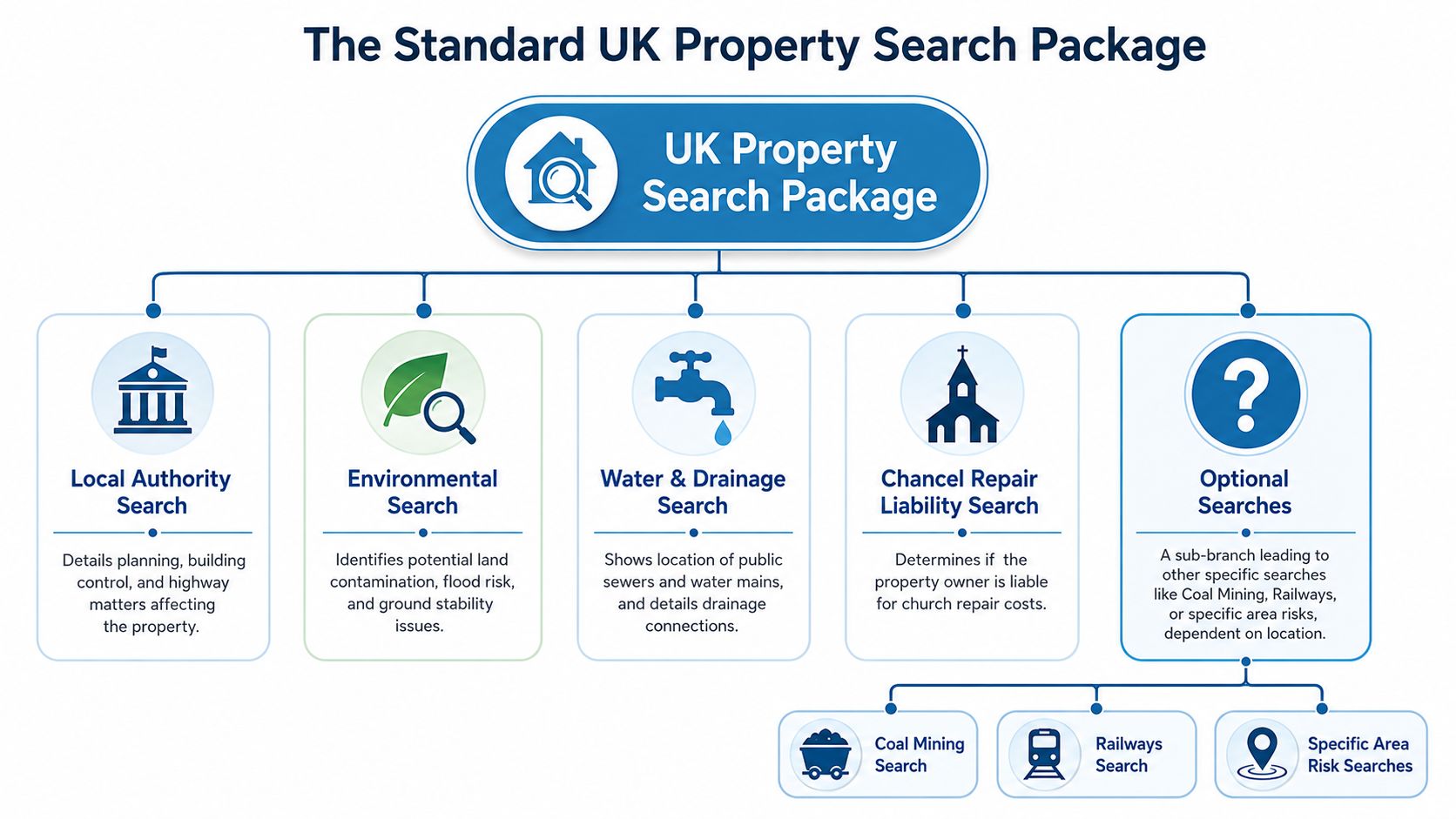
This is usually the search buyers hear about first, and for good reason. It often reveals the widest range of practical issues.
The Local Authority Search commonly includes the LLC1 and CON29 forms. In everyday terms, it checks matters recorded by the council that could affect the property or your use of it.
Typical areas it can flag include:
A very ordinary example is a rear extension. It may look perfectly fine to you. The search can raise the question of whether the work had the right approvals on paper.
This search checks the property's relationship with the public water and sewer network.
That sounds technical, but the practical questions are straightforward. Is the property connected to mains water? Is it connected to public drainage? Are public sewers or water mains located within the boundaries in a way that might affect future building work?
If you hope to extend the house later, this search can become surprisingly important. A sewer in the wrong place can complicate plans.
What matters most: Don't just ask whether the property has drainage. Ask how the recorded drainage layout could affect alterations.
The environmental search looks for wider environmental and land-use risks associated with the site.
This can include issues such as:
It doesn't mean the property is automatically defective. It means something has been flagged in the records or data sources used by the search provider, and your solicitor may need to raise further enquiries or suggest more specialist advice.
Some searches only arise because of the property's location or history.
These may include:
This is why two buyers on the same street can sometimes receive slightly different search recommendations. A flat, a period cottage, and a new-build house don't always carry the same paperwork risks.
Once your offer is accepted, searches usually become part of the early legal work. They don't happen at the very end. Your solicitor orders them so any issues come to light before you commit to exchange.
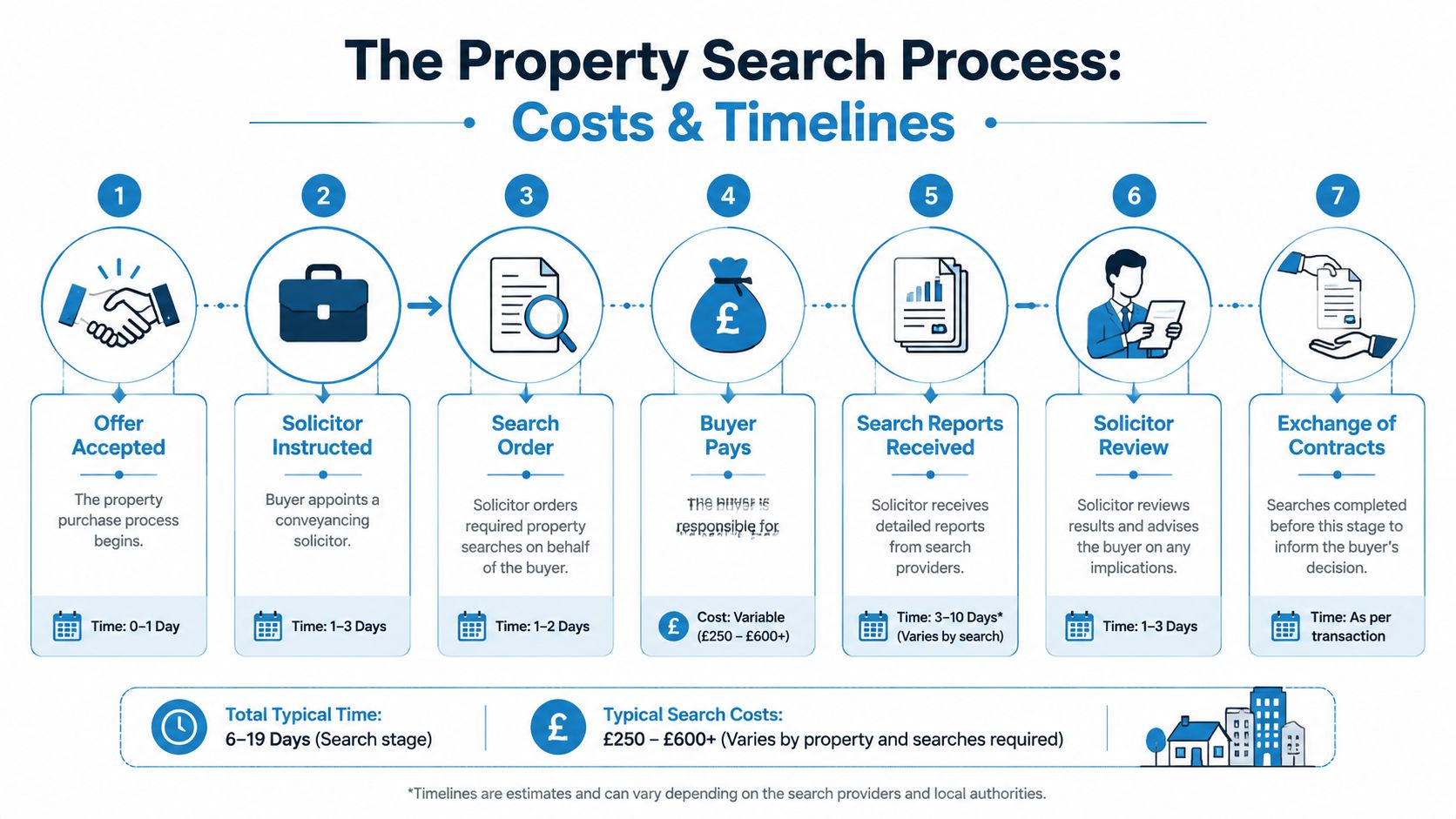
The buyer usually pays for searches, but the solicitor or conveyancer orders them on the buyer's behalf.
The timing often works like this:
If you want to place this step in the wider transaction, this guide to the 2026 UK home buying process is useful for seeing where searches fit in the broader timeline.
Costs and turnaround times vary by council, search provider, and location. Some areas move quickly. Others don't. For that reason, it's safer to treat any figures as indicative rather than fixed.
| Search Type | Average Cost (£) | Average Turnaround Time |
|---|---|---|
| Local Authority Search | Varies by local authority and provider | Varies by local authority and provider |
| Water and Drainage Search | Varies by provider and water company area | Varies by provider |
| Environmental Search | Varies by provider and package | Often faster than council-based searches |
| Chancel Repair Liability Search | Usually a smaller add-on cost than core searches | Often relatively quick |
| Location-specific searches | Depends on area and search type | Depends on source and complexity |
The key budgeting point is simple: ask for the full expected search bundle cost, not just a headline conveyancing fee.
You may hear your solicitor mention official and personal searches.
An official search is obtained directly from the council. A personal search is usually compiled by a specialist search company that inspects or extracts the relevant public record information. Which route is used can depend on lender requirements, local practice, speed, and cost.
Here's the practical difference:
Don't fixate on the label. Ask whether the result will satisfy your lender and whether the turnaround fits your timescale.
Search results rarely come back as a neat pass or fail. They usually arrive as reports full of entries, notes, references, and legal wording. That can be intimidating at first glance.
Start by remembering what the report is for. It's not there to reassure you that the property is “fine”. It's there to identify matters that need attention, explanation, or acceptance.
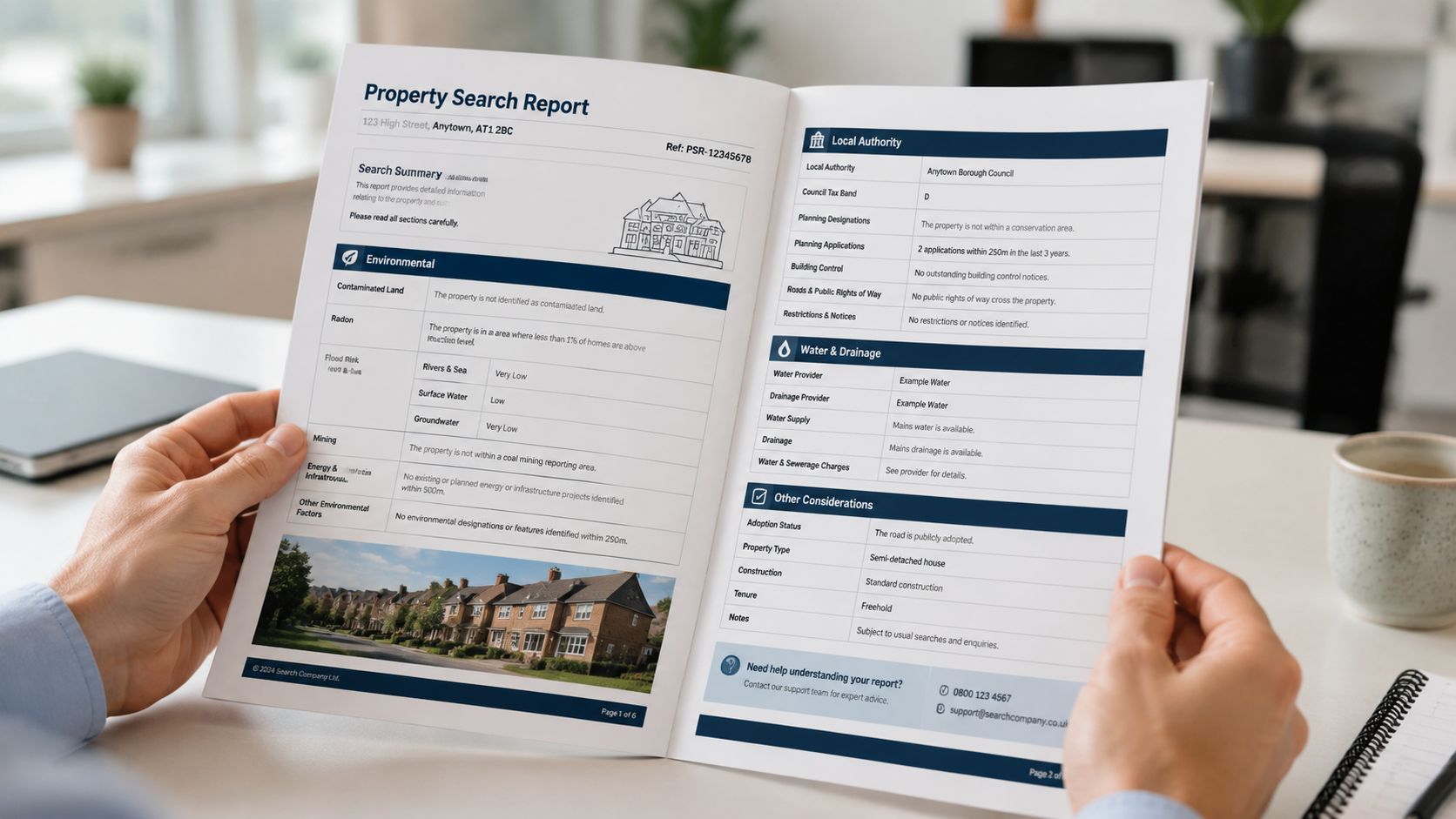
When you review the results with your solicitor, focus first on the entries that could affect how you live in the property, what it may cost you, or whether you can sell it smoothly later.
Common examples include:
Don't panic at every entry. A flag is often the start of a conversation, not the end of the purchase.
A good way to read search results is to ask structured questions rather than “Is this bad?”
Try these instead:
That last question often gets a clearer answer than a technical one.
If the report mentions previous alterations, compare that with what you saw at the property. A loft conversion, rewiring work, or a new consumer unit may all be perfectly legitimate, but if the paperwork seems thin, ask for evidence. For buyers thinking ahead to refurbishment, practical guidance such as this Electricians London 247 rewiring information can help you understand what follow-on work may involve once legal due diligence and inspections identify issues.
The best reading strategy is simple. Separate matters into three buckets: acceptable risk, risk needing clarification, and risk that changes the deal.
Buyers often get tripped up. Searches, surveys, and valuations all happen around the same purchase, but they answer completely different questions.
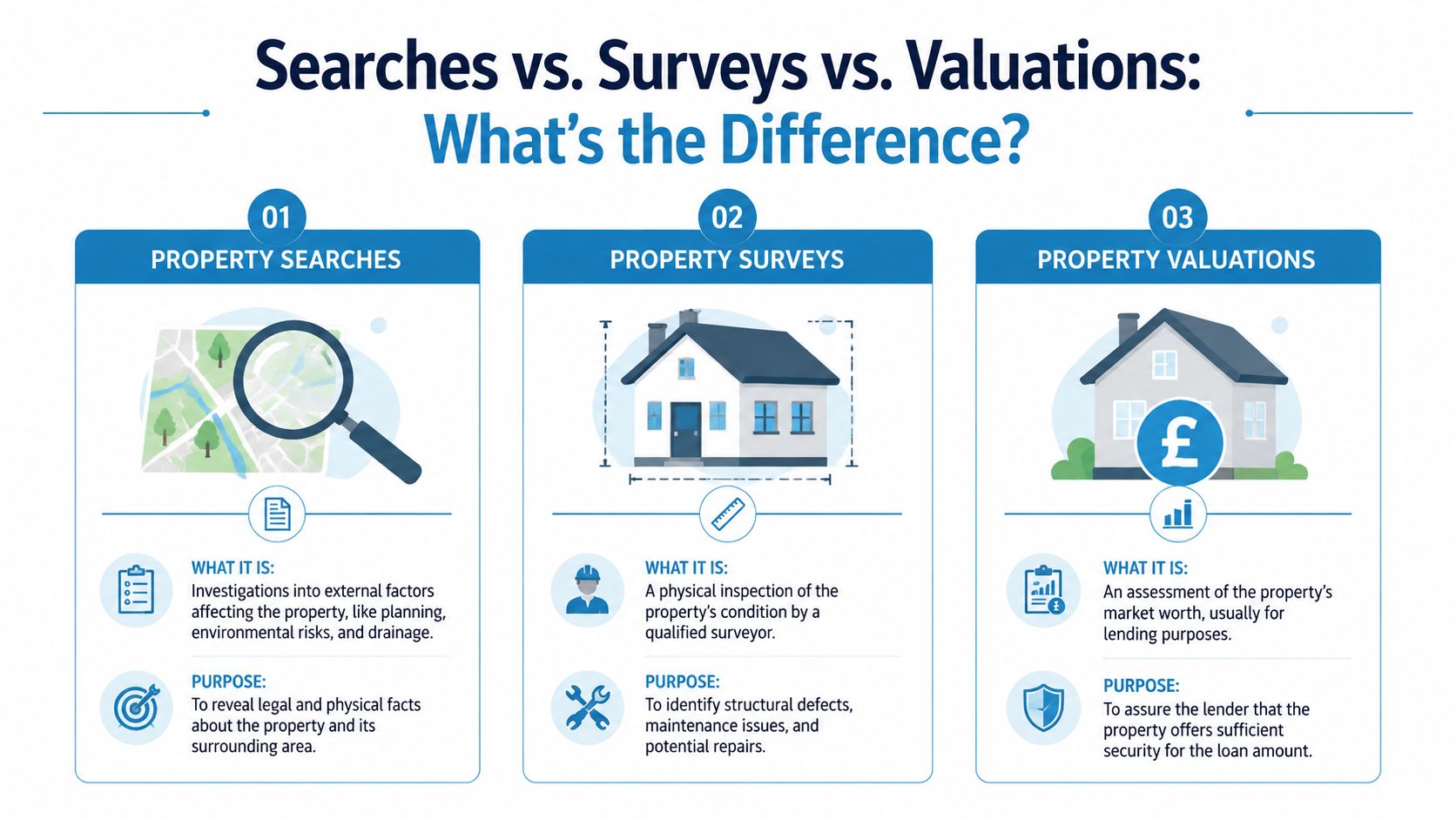
| Check | Main question it answers | Who is it mainly for | What it focuses on |
|---|---|---|---|
| Property searches | Is there anything in the records that affects legal use, risk, or mortgageability? | Buyer and lender | Planning, drainage, environmental, title-related and local authority matters |
| Property survey | What condition is the building in? | Buyer | Defects, movement, damp, repair issues, maintenance concerns |
| Mortgage valuation | Is the property suitable security for the loan? | Lender | Broad market worth for lending purposes |
A lot of buyers assume the lender's valuation protects them. It usually doesn't do the job a survey does.
For a short visual explanation, this video is helpful:
Think of it this way:
They are complementary, not interchangeable.
If you need a deeper explanation of the lender side, this guide on understanding mortgage valuations helps separate a valuation from a full condition inspection. And if you want to arrange a survey through a matching service, Survey Merchant connects buyers and owners with a nationwide panel of surveyors for residential surveys, valuations, and related property advice.
A clean search result doesn't mean the roof is sound. A good survey doesn't tell you whether the extension had the right approvals.
A calm buyer usually has a better transaction. Most search-related stress comes from not knowing what to ask, or from assuming no news means no risk.
Use this as you go:
A few missteps come up again and again.
Buyers often spend so much energy getting to completion that they overlook the move itself. If you're planning ahead, these strategies for a less stressful relocation are a sensible companion to the legal side of the purchase.
Legally, a cash buyer can choose to skip them. Practically, that's risky. Searches are there to reveal matters you probably can't spot yourself, and paying cash doesn't remove planning, drainage, environmental, or access problems.
You can inspect some public information yourself, but a proper conveyancing search package is more than casual online checking. Your solicitor knows which searches are needed, how to order them correctly, and how to interpret what comes back.
No. Title information is only one part of the picture. Buyers often use “property search” to mean one thing, but in practice it's a bundle of checks drawn from different official systems.
That depends on the issue. The next step might be further enquiries, seller documents, specialist reports, indemnity insurance, renegotiation, or a decision to walk away. The key is to understand the practical effect, not just the label on the report.
That varies by lender, solicitor, and transaction circumstances. If there's a long delay before exchange or completion, your solicitor may advise updated searches or search validation.
If you're buying and want the building checked alongside the legal paperwork, Survey Merchant can help you find an appropriate surveyor for the property type, location, and level of inspection you need.
Survey Merchant provides vetted RICS surveyors across 100+ UK locations at fixed fees:
→ Level 2 Home Survey (HomeBuyer Report)
→ Level 3 Building Survey (full structural survey)
→ RICS Red Book property valuations
→ Party wall surveyors — notices, awards & schedules of condition
→ Expert witness surveyors — CPR Part 35 reports for property disputes