Building Surveying
Jul 16, 2026
What does a RICS surveyor do: a buyer's guide
Discover what a RICS surveyor does to protect your property investment. Learn about inspections, valuations, and why you shouldn't skip this step.

A RICS surveyor is a chartered property professional regulated by the Royal Institution of Chartered Surveyors (RICS), responsible for inspecting, reporting on, and valuing properties to protect buyers and homeowners. Understanding what does a RICS surveyor do is one of the most practical steps you can take before committing to a property purchase. Yet 64% of buyers skip independent surveys due to cost or confusion, and 11% later regret missing defects that a qualified surveyor would have caught. That gap between perception and reality costs buyers thousands of pounds every year.
A RICS surveyor performs detailed physical inspections of a property, produces written reports, and provides valuations that serve the buyer’s interests rather than the lender’s. The term “chartered surveyor” is the recognised industry standard for this role, and it carries legal weight. Only professionals who have passed the Assessment of Professional Competence (APC) and hold RICS membership may use that title.

The role of RICS in surveying goes beyond a simple inspection checklist. A chartered surveyor assesses structural integrity, identifies damp and timber defects, evaluates drainage and services, and flags anything that could affect the property’s value or your safety. They then translate those findings into a report you can act on, whether that means renegotiating the purchase price, requesting repairs, or walking away entirely.
RICS surveyors also advise on maintenance priorities and long-term costs. That forward-looking perspective is something no estate agent or mortgage broker is qualified to provide.
RICS membership is not a rubber stamp. Every chartered surveyor must pass the Assessment of Professional Competence, a rigorous process that tests technical knowledge, professional judgement, and ethical conduct. The APC ensures an accountability layer that is entirely absent from unregulated property advisers.
RICS operates three membership grades:
Each grade carries the same ethical obligations. RICS publishes a strict code of conduct covering conflicts of interest, client confidentiality, and professional indemnity insurance. That code gives you a formal complaints route if a surveyor’s work falls below standard, which is a protection you simply do not get from an unregulated adviser.
RICS membership covers specialisms including building surveying, quantity surveying, valuation, and project management. That breadth means you can find a RICS professional suited to almost any property challenge, from a Victorian terrace to a commercial warehouse.
Pro Tip: Always verify a surveyor’s RICS membership on the official RICS Find a Surveyor register before booking. The register is free to search and confirms current standing.
A RICS surveyor’s responsibilities follow a structured process from site visit to final report. The depth of that process depends on the survey level you commission, but the core duties remain consistent across all types.
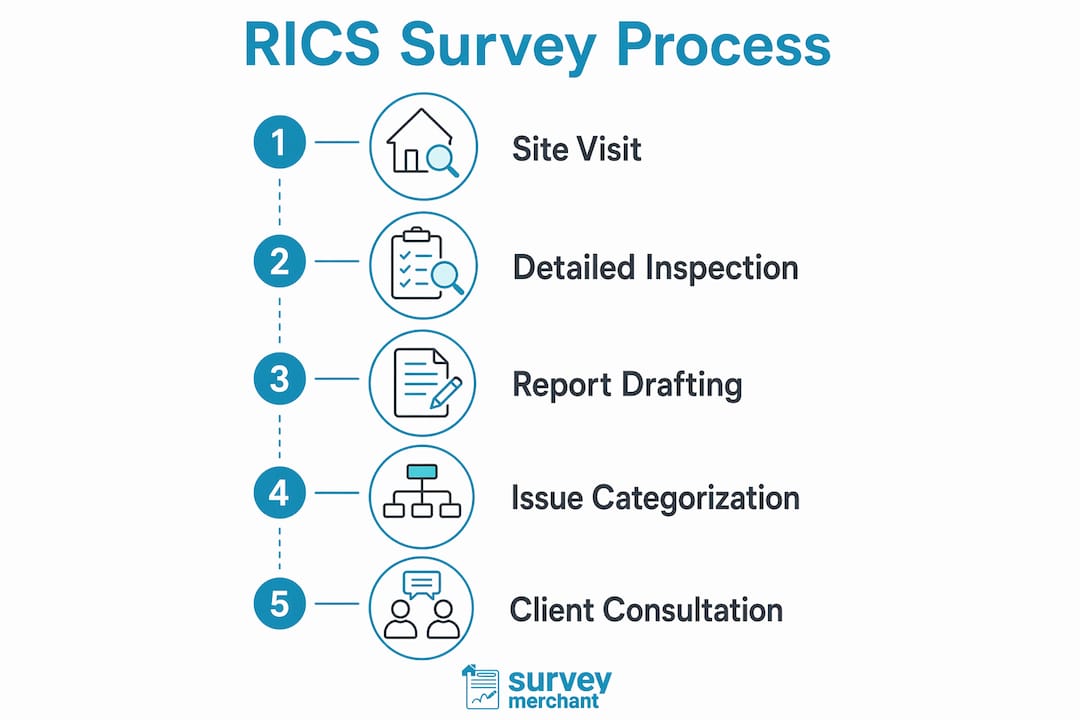
RICS surveyors inspect all visible elements of a property, flagging defects and advising on structural integrity, damp, timber condition, and services. “Visible” is the operative word. Standard surveys do not involve breaking into walls or lifting floors. Invasive inspections are reserved for higher-level surveys where the client grants specific permission.
A typical site visit covers the following in sequence:
That final step is where a RICS surveyor’s expertise becomes genuinely valuable. Surveyors categorise issues by urgency, distinguishing between urgent repairs and long-term maintenance needs. A cracked render and a failing roof are both defects, but they carry very different financial consequences. Knowing which is which before you exchange contracts is the difference between a sound investment and an expensive mistake.
Pro Tip: Ask your surveyor to walk you through the report by phone after delivery. Most RICS professionals include this as standard, and a ten-minute call can clarify findings that look alarming on paper but are actually minor.
This is the most common misconception in UK property buying. A mortgage valuation is not a survey. It is a brief assessment conducted for your lender to confirm the property is worth the loan amount. It protects the bank, not you.
| Feature | Mortgage valuation | RICS survey |
|---|---|---|
| Who it protects | The lender | The buyer |
| Inspection depth | Superficial or desktop | Thorough physical inspection |
| Time on site | Often under 30 minutes | Several hours for full surveys |
| Defect reporting | Minimal or none | Detailed, categorised by urgency |
| Negotiation value | None | Supports price renegotiation |
| Cost to buyer | Often included in mortgage fees | Paid separately by the buyer |
Mortgage valuations are superficial checks conducted for lenders, unlike RICS surveys tailored to buyer interests with thorough physical inspections. Some valuations are now carried out as desktop assessments using comparable sales data, meaning no one physically enters the property at all. You could receive a mortgage offer on a house with a failing roof and never know it.
Commissioning a RICS survey for buyers is the only way to get an independent, buyer-focused assessment of what you are actually purchasing. The cost of a survey is modest compared to the cost of discovering a structural defect after completion.
The advantages of RICS surveys extend well beyond a written report. They give you negotiating power, legal protection, and a clear picture of what you are buying before it is too late to change your mind.
The core benefits break down as follows:
RICS Home Surveys range from quick Condition Reports to detailed Building Surveys conducted over several hours, with varying costs and inspection depths. Choosing the right level depends on the property’s age, condition, and your own risk appetite.
| Survey level | Best suited to | Inspection depth | Typical use case |
|---|---|---|---|
| Level 1: Condition Report | New builds and modern properties | Basic, traffic-light ratings | Low-risk purchases with no visible concerns |
| Level 2: HomeBuyer Report | Standard residential properties | Moderate, includes valuation option | Most common choice for typical UK homes |
| Level 3: Building Survey | Older, larger, or unusual properties | Thorough, includes advice on repairs | Period properties, listed buildings, major works planned |
A Level 1 report suits a recently built flat in good condition. A Level 3 full building survey is the right choice for a Victorian terrace, a property with visible defects, or any building where you plan significant renovation work. The additional cost of a Level 3 survey is almost always justified by the depth of information it provides.
When commissioning any survey, confirm in writing what is and is not included. Ask specifically whether the surveyor will access the loft, inspect outbuildings, and comment on drainage. These details vary between firms and can affect the report’s usefulness significantly.
A RICS surveyor is the only regulated professional who inspects a property in your interest, categorises defects by urgency, and gives you the evidence to negotiate, plan, or withdraw before exchange.
| Point | Details |
|---|---|
| RICS regulation matters | Only APC-qualified surveyors may use the chartered title, giving you a formal complaints route. |
| Surveys protect buyers, not lenders | Mortgage valuations serve the bank; a RICS survey serves you and your investment. |
| Three survey levels exist | Choose Level 1–3 based on property age, condition, and your renovation plans. |
| Defects become negotiating tools | A survey report supports price reductions or repair requests before contracts exchange. |
| Skipping surveys carries real risk | 11% of buyers who skip surveys later regret missing defects that a surveyor would have flagged. |
Most buyers treat a survey as a box-ticking exercise. They commission the cheapest option, skim the report, and proceed regardless. That approach misses the point entirely.
The most valuable thing a RICS surveyor does is not the inspection itself. It is the categorisation. Knowing that a damp patch is condensation rather than rising damp, or that a crack is settlement rather than subsidence, changes everything about how you approach a purchase. That distinction requires years of professional training and site experience. No online guide or estate agent can replicate it.
I have seen buyers renegotiate £15,000 off a purchase price on the strength of a Level 2 report. I have also seen buyers ignore a surveyor’s Category 3 warning about a roof, complete the purchase, and face a £20,000 repair bill within eighteen months. The survey was right both times. The buyers chose how to act on it.
The other thing worth saying plainly: choosing an unregulated “property inspector” to save money is a false economy. Without RICS accreditation, there is no professional indemnity, no complaints process, and no accountability. You are paying for a document with no legal weight behind it.
Always check the RICS register. Always read the full report. And always ask your surveyor what they would do if it were their money on the line.
— N
Surveymerchant connects property buyers and homeowners across the UK with qualified RICS surveyors, matched to your property type and location.

Whether you need a Level 2 HomeBuyer Report for a standard residential purchase or a comprehensive Level 3 building survey for an older or unusual property, Surveymerchant’s panel covers the full range of RICS-regulated services. The platform also offers RICS valuation services for buyers who need an independent assessment of market value alongside their physical inspection. Every surveyor on the panel holds current RICS membership, carries professional indemnity insurance, and operates under the RICS code of conduct. Getting a quote takes minutes, and you receive a matched recommendation based on your specific property and requirements.
A RICS surveyor is a chartered property professional regulated by the Royal Institution of Chartered Surveyors, qualified through the Assessment of Professional Competence to inspect, report on, and value properties.
No. A mortgage valuation is a brief check conducted for your lender to confirm the property’s value for loan purposes. It does not assess physical condition or protect the buyer.
A Level 3 building survey is the most thorough RICS inspection, covering all accessible areas of the property and providing detailed advice on defects, repair options, and likely costs. It is recommended for older, larger, or structurally complex properties.
Search the official RICS Find a Surveyor register online using the surveyor’s name or firm. The register confirms current membership grade and any disciplinary history at no cost.
Yes. Many significant defects, including damp, timber decay, and roof failures, are not visible to an untrained eye. A qualified property inspection identifies hidden issues before you are legally committed to the purchase.
Survey Merchant provides vetted RICS surveyors across 100+ UK locations at fixed fees:
→ Level 2 Home Survey (HomeBuyer Report)
→ Level 3 Building Survey (full structural survey)
→ RICS Red Book property valuations
→ Party wall surveyors — notices, awards & schedules of condition
→ Expert witness surveyors — CPR Part 35 reports for property disputes