Building Surveying
Aug 9, 2026
How to choose a survey type for your property
Learn how to choose a survey type for your property to protect your investment. Explore key factors and make informed decisions today!

Choosing a survey type means selecting a property inspection approach that fits your objectives, budget, and the specific characteristics of the property you are buying or managing. In the UK, property surveys fall into three main RICS-defined levels: Level 1 (Condition Report), Level 2 (HomeBuyer Report), and Level 3 (Full Building Survey). Each carries a different depth of assessment, a different price point, and a different risk profile. Getting this decision right protects your investment. Getting it wrong can leave you exposed to costly surprises after completion. This guide explains how survey results impact property decisions and walks you through every factor you need to weigh.
The three RICS survey levels are the foundation of any property buyer’s decision. Each serves a distinct purpose, and selecting the wrong one is one of the most common mistakes buyers make.
Level 1: Condition Report is the most basic option. It provides a traffic-light rating of the property’s condition and flags urgent defects, but it does not include advice or valuations. It suits new builds or recently constructed homes in good condition where the risk of hidden defects is low.
Level 2: HomeBuyer Report is the most widely used survey type in England and Wales. It covers the condition of all accessible areas, highlights defects that could affect value, and typically includes a market valuation. It suits standard properties built after 1900 that are in reasonable condition and have not been significantly altered.
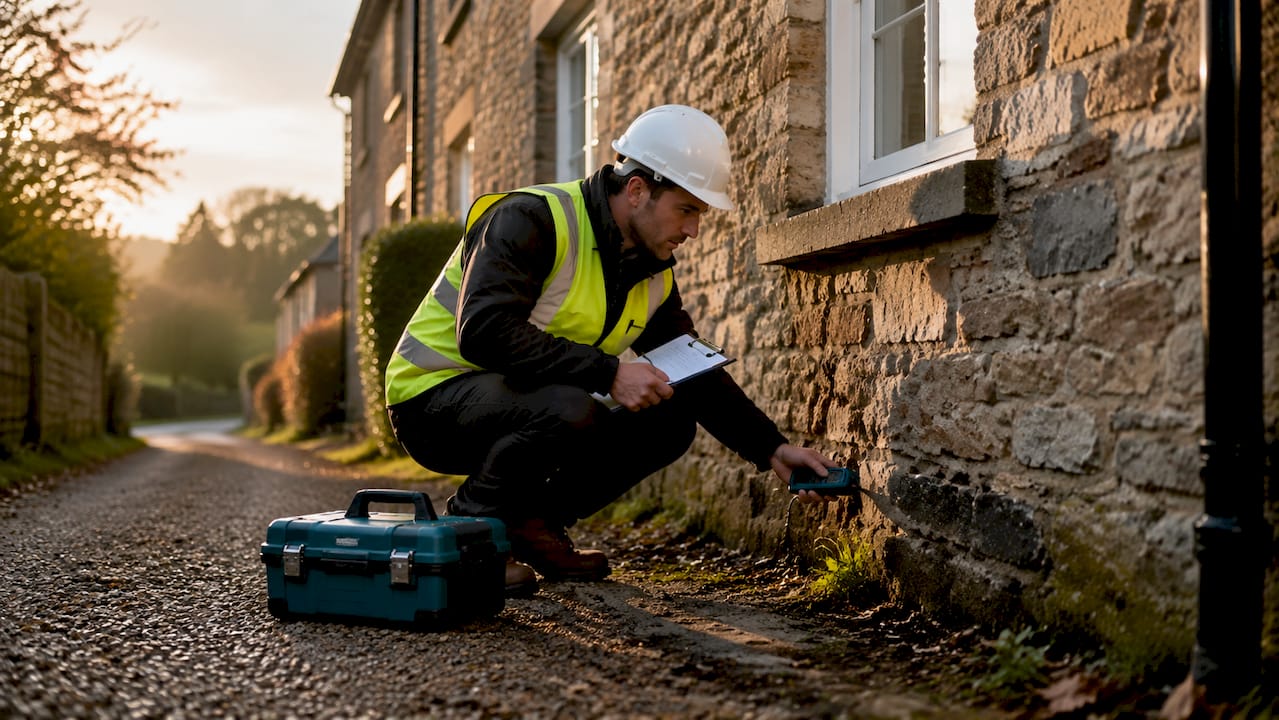
Level 3: Full Building Survey is the most thorough option available. It provides a detailed assessment of structure, materials, and defects, including advice on repairs and maintenance. It is the right choice for older properties, listed buildings, properties with extensions, or any home where you suspect structural issues. Surveyors at Surveymerchant consistently recommend Level 3 for any property built before 1920 or showing visible signs of movement.
| Survey type | Detail level | Typical cost (UK) | Best suited for |
|---|---|---|---|
| Level 1 Condition Report | Basic | £300–£500 | New builds, modern properties |
| Level 2 HomeBuyer Report | Moderate | £400–£800 | Standard post-1900 properties |
| Level 3 Full Building Survey | Thorough | £600–£1,500+ | Older, complex, or altered properties |
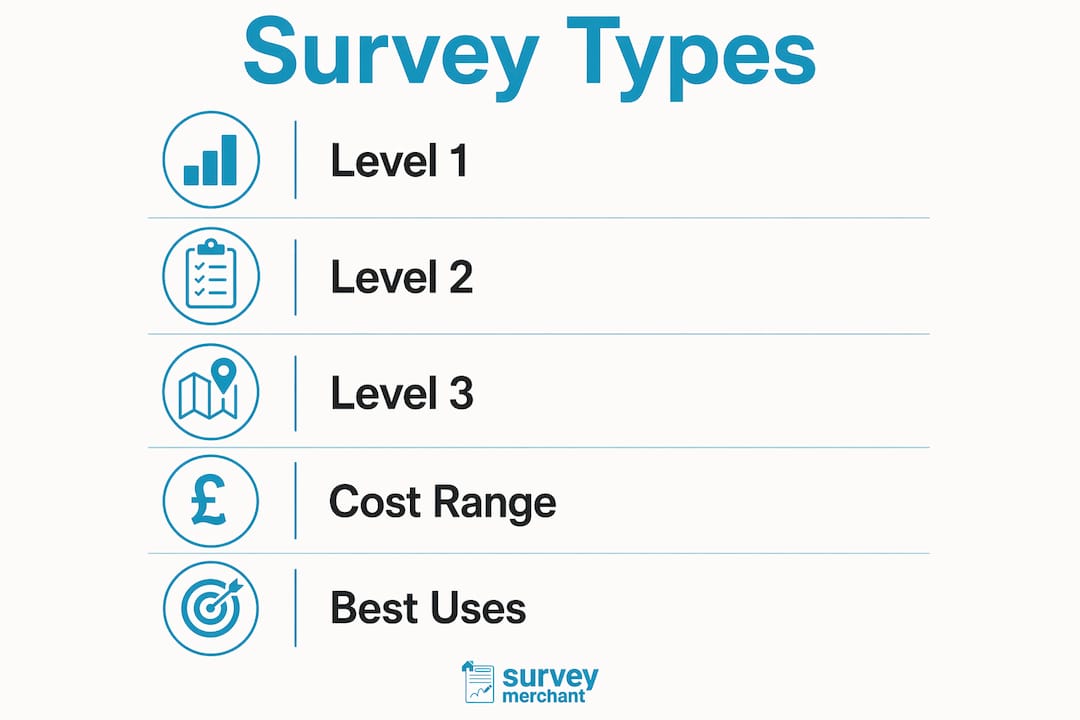
Costs vary by region and property size, but the pattern holds: more detail costs more upfront and saves more later.
Selecting a survey method that fits your budget without sacrificing necessary detail is a balancing act. The key is to start with the property, not the price.
Four factors drive the decision:
Budget trade-offs are real but often misunderstood. A Level 3 survey on a Victorian terrace might cost £900. The same property could have hidden chimney breast removal, inadequate underpinning, or failing drainage. Discovering any one of those issues after completion could cost ten times the survey fee to rectify.
Pro Tip: Ask your surveyor whether they offer a combined Level 3 survey and RICS valuation. Some firms bundle both, which can save you the cost of a separate mortgage valuation from your lender.
Choosing survey techniques that match the property’s actual risk profile is the single most cost-effective decision you can make before exchange.
Survey methodology is the framework governing how a survey is designed, conducted, and interpreted. In property terms, this means understanding not just which survey level you commission, but how the surveyor approaches the inspection and what standards they apply.
The RICS framework defines methodology through its Home Survey Standard, which sets out inspection scope, reporting format, and professional obligations. Outside this framework, methodology choices affect reliability. A surveyor who limits their inspection to visible surfaces on a property with a history of subsidence is using a methodology that does not match the risk profile of the building.
The principle applies beyond property surveys too. Choosing the correct survey method balances five factors: research objectives, target audience access, budget, desired detail, and turnaround time. In property terms, those factors translate directly: your objective is risk identification, your “audience” is the building itself, and your turnaround is your exchange deadline.
Survey methodology decisions must be made well in advance of the survey itself. Mistakes in methodology cannot be corrected after the fact. If you commission a Level 1 survey on a 1930s semi-detached and the surveyor misses a cracked lintel, you have no recourse because the methodology you selected did not require the surveyor to investigate it.
“Treat survey methodology as the primary design decision, not just the questionnaire content, to ensure data validity for decision-making.” — Sopact, Survey Methodology Guide
Accessibility and representativeness are critical to avoid bias. In property surveys, this means the surveyor must be able to physically access all relevant areas. A loft inspection that cannot proceed because the hatch is sealed, or a cellar assessment blocked by stored goods, produces incomplete data. Always clear access before the survey date.
Pro Tip: Request a pre-survey access checklist from your surveyor. Clearing loft hatches, unlocking outbuildings, and moving stored items takes minutes but can prevent significant gaps in the final report.
Following a clear process removes guesswork and protects you from the most common commissioning errors.
Common mistakes to avoid:
Finding the right surveyor is as important as choosing the right survey level. A thorough surveyor using a Level 2 methodology will often deliver more value than a perfunctory Level 3 inspection.
No single best survey method exists. The right choice is the one that matches the property’s risk profile and the buyer’s objectives, and that the surveyor can execute thoroughly given the access available.
The most reliable way to choose a property survey type is to match the survey level to the property’s age, condition, and your risk exposure before you consider cost.
| Point | Details |
|---|---|
| Match survey level to property age | Use Level 3 for pre-1919 properties; Level 2 suits standard post-1900 homes in good condition. |
| Budget for risk, not just cost | A £900 Level 3 survey can prevent a £10,000+ post-completion repair bill. |
| Methodology matters as much as level | Confirm what the surveyor will physically inspect before instructing, not after. |
| Always use RICS-qualified surveyors | RICS membership provides professional standards and a formal complaints route. |
| Prepare the property before the survey | Clear access to lofts, cellars, and outbuildings to prevent gaps in the final report. |
The most consistent mistake I see is buyers treating the survey as a formality rather than a decision tool. They choose the cheapest option their mortgage lender accepts, skim the report, and proceed to exchange. Then, six months after completion, they discover the chimney breast was removed without structural support, or the flat roof has three years of life left in it.
The survey is the only independent professional assessment you will receive before committing to the largest purchase of your life. Treating it as a box-ticking exercise is a false economy.
I also think the industry undersells the importance of RICS construction survey standards to buyers who are not familiar with what RICS membership actually guarantees. It is not just a badge. It means the surveyor is bound by professional indemnity insurance, continuing professional development requirements, and a regulatory complaints process. That matters when you are relying on their judgement to protect a six-figure investment.
My honest recommendation: if you are in any doubt about which level to commission, go one level higher. The cost difference between a Level 2 and a Level 3 survey is rarely more than £300–£500. The cost of missing a major defect is almost always far greater.
— Surveymerchant Editorial Team
Surveymerchant connects property buyers and owners across the UK with RICS-qualified surveyors who specialise in the exact survey type their property requires.
Whether you need a Level 3 full building survey for an older or complex property, or a specialist assessment for a commercial property survey, Surveymerchant matches you with the right professional for your specific situation. Every surveyor on the platform is vetted for RICS qualifications and relevant experience. You receive tailored quotes, clear scope definitions, and impartial guidance at every stage. Stop guessing which survey type you need. Let a qualified professional assess your property and give you the certainty you need before exchange.
A Level 3 Full Building Survey is the correct choice for any property built before 1919 or showing signs of structural movement, damp, or significant alteration. It provides the depth of assessment needed to identify defects that a Level 2 HomeBuyer Report would not investigate.
Start by assessing the property’s age and visible condition. If the property is post-1980 and in good condition, a Level 2 HomeBuyer Report offers solid coverage at a lower cost. For older or complex properties, a Level 3 survey is the safer investment regardless of budget constraints.
Survey type refers to the scope and depth of inspection, such as Level 1, 2, or 3. Survey methodology refers to the approach and standards the surveyor applies during the inspection. Both affect data quality and the reliability of the final report.
A Level 2 HomeBuyer Report typically includes a market valuation. A Level 3 Full Building Survey does not always include one by default. Ask your surveyor whether a combined survey and RICS valuation is available to avoid paying for two separate instructions.
A mortgage valuation protects the lender, not you. It confirms the property is worth the loan amount but does not assess condition or identify defects. Commissioning your own survey is the only way to get an independent assessment of the property’s actual condition.
Survey Merchant provides vetted RICS surveyors across 100+ UK locations at fixed fees:
→ Level 2 Home Survey (HomeBuyer Report)
→ Level 3 Building Survey (full structural survey)
→ RICS Red Book property valuations
→ Party wall surveyors — notices, awards & schedules of condition
→ Expert witness surveyors — CPR Part 35 reports for property disputes