Building Surveying
Jul 16, 2026
How to hire the right surveyor for your property project
Avoid costly mistakes by following this surveying business development guide. Learn how to hire the perfect surveyor for your project!

Hiring the wrong surveyor is one of the most expensive mistakes a property owner or developer can make. A missed structural defect, an inaccurate valuation, or a monitoring gap on a live development can translate directly into five or six-figure losses. Yet most hiring decisions still come down to a quick internet search and the lowest quote. This guide walks you through every stage of selecting, vetting, and working with qualified surveyors, whether you are buying a Victorian terrace, managing a commercial refurbishment, or drawing down development finance.
| Point | Details |
|---|---|
| Choose the right surveyor | Identifying the proper expert for your property type and aims prevents costly mistakes. |
| Match survey to project | Level 2 suits standard homes, Level 3 is vital for complex or older sites. |
| Vetting is essential | Check experience, credentials, and regulatory status to reduce risks. |
| Ongoing collaboration pays off | Strong communication and regular project monitoring ensure smooth completion and avoid disputes. |
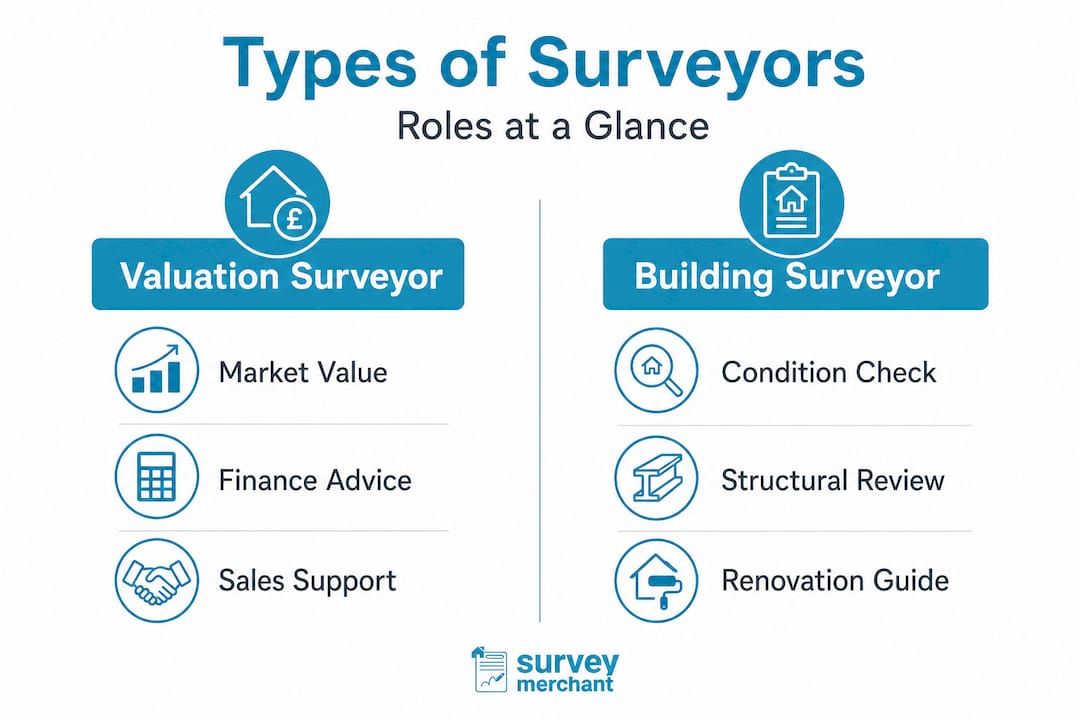
The surveying profession covers several distinct disciplines, and confusing them is surprisingly common. A property owner who books a valuation surveyor when they actually need a building surveyor, or vice versa, wastes both time and money. Understanding the differences before you pick up the phone saves you from that mistake entirely.
Valuation surveyors specialise in estimating market value for residential, commercial, and industrial properties. Their work feeds directly into mortgage approvals, asset portfolios, and sale negotiations. Building surveyors, by contrast, focus on physical condition, structural integrity, and defect identification. Their reports tell you what a property is actually like, not what it is worth on paper.
A third category, the Independent Monitoring Surveyor (IMS), operates within development finance. The lender’s IMS role covers technical due diligence, risk assessment, monitoring, and drawdown approvals throughout the build programme. Without one, lenders carrying development exposure have no independent check on progress or spend.
Understanding building surveyor roles in detail helps you match the right professional to your exact project stage.
Quick-reference guide: Surveyor types at a glance
| Surveyor type | Primary function | Typical scenario |
|---|---|---|
| Valuation surveyor | Market value assessment | Mortgage applications, portfolio reviews, sales |
| Building surveyor | Condition and defect reporting | Pre-purchase, renovation planning, insurance claims |
| Independent Monitoring Surveyor | Development oversight and lender reporting | New builds, major refurbishments with development finance |
| Party wall surveyor | Boundary and shared-structure disputes | Extensions, loft conversions, basement excavations |
| Quantity surveyor | Cost planning and financial management | Construction projects at any scale |
Key scenarios where getting this choice wrong is particularly costly include:
A facility audit in architecture provides a useful parallel here: just as a facility audit maps every asset and system within a building, a building survey maps every defect and risk. Both require the right specialist with the right brief.
Pro Tip: Ask every surveyor you approach whether they hold RICS registration before progressing. RICS membership is not merely a badge. It means the surveyor operates under a professional code of conduct, carries mandatory professional indemnity insurance, and can be held accountable through a formal complaints procedure.
Once you have identified the right type of surveyor, the next decision is the survey level itself. This is where many buyers and developers underinvest, choosing a lighter survey to save a few hundred pounds and then spending thousands rectifying problems the report never flagged.
The RICS HomeBuyer Report (Level 2 Survey) suits conventional properties in reasonable condition, while a Building Survey (Level 3) is recommended for older or unusual properties. The practical difference is substantial. A Level 3 survey includes inspection of roof spaces, floors, and subfloor voids. It flags potential future maintenance costs and gives far greater narrative detail on defects found.

Comparison: Level 2 vs Level 3 surveys
| Feature | Level 2 (HomeBuyer Report) | Level 3 (Building Survey) |
|---|---|---|
| Typical cost | £400 to £1,000 | £600 to £1,500+ |
| Condition ratings | Yes (1, 2, 3 scale) | Yes, with narrative |
| Hidden defect inspection | Limited | Extensive |
| Roof space inspection | Sometimes | Always |
| Reinstatement cost estimate | Optional add-on | Often included |
| Best for | Post-2000 conventional homes | Pre-1900 or non-standard properties |
Level 2 vs Level 3 surveys differ not just in depth but in legal weight during negotiations. A detailed Level 3 report can form the basis of a renegotiation, whereas a Level 2 report with multiple “further investigation required” flags gives you very little to work with.
How to decide which survey you need:
Building survey costs and benefits are worth reviewing in detail before you commit, particularly if you are weighing up the case for a specialist structural engineer’s report alongside your building survey.
It is also worth understanding condition surveys vs structural surveys before finalising your brief. A condition survey records what is visible. A structural survey involves an engineer assessing load-bearing elements. For complex properties, you may need both.
Pro Tip: Never let a vendor or estate agent steer you towards a lighter survey. Their interest lies in keeping the transaction moving. Your interest lies in knowing exactly what you are buying.
Good surveyors are in high demand. Salary benchmarks show that newly chartered building surveyors and project managers command strong pay, reflecting both professional scarcity and employer competition. That market reality means you need a structured vetting process, not just a price comparison.
Follow these five steps to shortlist and appoint the right professional:
Questions to ask before you engage a surveyor:
“The best surveyors will welcome scrutiny. If a surveyor is reluctant to provide references, a sample report, or evidence of insurance, that reluctance tells you everything you need to know.”
Understanding the benefits of RICS surveyors goes beyond regulatory compliance. RICS members carry obligations of objectivity that non-registered practitioners simply do not. For mortgage lenders, many will only accept valuations from RICS-registered professionals. For negotiations, a signed RICS report carries real legal and commercial weight.
If you are operating in a specific region, resources on finding building surveyors in major cities can point you towards professionals with genuine local market knowledge, which matters particularly for valuations and planning-related work.
Many property owners treat a survey as a one-off transaction. Commission it, receive the report, file it. That approach misses the real value of a sustained professional relationship with a qualified surveyor, particularly on development and refurbishment projects.
For development finance, the lender’s IMS provides crucial technical due diligence, risk assessment, and drawdown approval throughout the project lifecycle. Without regular IMS sign-offs, lenders will simply withhold staged payments. Understanding what an IMS expects at each drawdown milestone means you can prepare properly and avoid delays that cost money every day.
For listed buildings and high-risk sites, specialist involvement is not optional. It is the only way to navigate planning, consent, and compliance obligations without accumulating enforcement risk.
Practical communication strategies for working effectively with surveyors:
Understanding how renegotiation after surveys works in practice is essential. Survey findings regularly lead to price reductions, vendor-funded remediation, or delayed completions while issues are resolved. The report is only useful if you act on it promptly and confidently.
Pro Tip: Ask your surveyor to flag any defects likely to affect your insurance premiums or mortgage offer. These are often buried in the body of the report and can have immediate financial consequences if not addressed before exchange.
There is a persistent tendency in property transactions to view surveying as a cost rather than an investment. The logic goes: the survey costs £700, so the cheaper option at £450 saves money. That framing is fundamentally wrong, and experience in the surveying market makes this very clear.
Consider a buyer who opted for a Level 2 survey on a 1930s semi-detached. The report missed significant damp penetration behind a dry-lined wall and early-stage settlement in the rear extension. Post-completion remediation cost just over £14,000. The upgrade to a Level 3 survey would have cost £300 more.
The market itself reflects surveying’s real value. 82% of surveyors received pay rises in 2025, with an average increase of 5.7%, driven by strong demand for qualified professionals. Employers compete hard for chartered surveyors precisely because their work directly protects asset values and funding outcomes. That competition is not driven by routine administrative work. It is driven by the fact that the right surveyor, in the right role, repeatedly saves clients far more than their fee.
The most overlooked returns on surveying investment include reduced insurance exposure following an accurate reinstatement value assessment, stronger development funding outcomes when lenders see credible IMS oversight, compliance wins on listed buildings that avoid enforcement action, and negotiation leverage that leads to direct purchase price reductions.
Staying current with the latest RICS standards is also part of extracting full value. RICS periodically updates its reporting frameworks, and a surveyor working to current standards will produce a more legally robust and commercially useful document than one working to outdated templates.
The uncomfortable truth is this: the surveying market rewards quality because quality delivers results. Cutting the fee almost always cuts the output. For a transaction or development project worth hundreds of thousands of pounds, the economics of investing in the right professional are not even close.
The insights in this guide only deliver value when you act on them with the right professional partner.

Survey Merchant connects property owners, buyers, and developers directly with RICS-qualified surveyors for every stage of a project. Whether you need commercial property surveys, building surveying services for a residential purchase or renovation, or RICS valuation services for a mortgage, portfolio review, or sale, our panel covers the full range of residential and commercial needs. Every professional in our network is vetted for qualifications, insurance, and relevant experience. Start your next project with confidence, knowing you have the right expert matched to your precise requirements.
A valuation surveyor estimates a property’s market value for sales or finance, while a building surveyor evaluates physical condition, structure, and defects. They serve entirely different purposes and are rarely interchangeable.
A Level 3 Building Survey is best for older properties, unusual construction types, major renovation projects, or where serious defects are suspected. Costs typically range from £600 to £1,500 or more, depending on property size and complexity.
They provide technical due diligence, risk assessment, progress monitoring, and approval of lender drawdowns throughout a property development. Without their sign-off, staged development finance payments are typically withheld.
Expect to pay £400 to £1,000 for a Level 2 HomeBuyer Report or £600 to £1,500 or more for a Level 3 Building Survey. Costs vary significantly with property size, location, and the complexity of the inspection required.
Not all surveyors are legally required to hold RICS registration, but using a RICS-regulated professional significantly reduces risk in valuations and negotiations and provides stronger consumer protections if something goes wrong.
Survey Merchant provides vetted RICS surveyors across 100+ UK locations at fixed fees:
→ Level 2 Home Survey (HomeBuyer Report)
→ Level 3 Building Survey (full structural survey)
→ RICS Red Book property valuations
→ Party wall surveyors — notices, awards & schedules of condition
→ Expert witness surveyors — CPR Part 35 reports for property disputes