Building Surveying
Jul 16, 2026
What Is a Homebuyers Survey? A UK Buyer's Guide 2026
Wondering what is a homebuyers survey? Our guide explains RICS levels, costs, and what's included to help you make a smarter property purchase in the UK.

Your offer has been accepted. You've probably already pictured where the sofa will go, whether the kitchen table fits, and what needs painting first. Then someone mentions a homebuyers survey, and the mood changes from excitement to uncertainty.
That's normal. Most first-time buyers know they should “get a survey”, but many aren't clear on what it does, whether they need one, or how it helps beyond spotting obvious defects. The short answer is simple. A homebuyers survey is your independent check on the property's condition before you become legally committed to buying it.
What is a homebuyers survey in practical terms? It's less like paperwork and more like a risk report and negotiation tool. It helps you understand what you're buying, what might need attention soon, and where hidden costs may sit behind a decent-looking viewing.
Once the seller accepts your offer, the purchase moves into due diligence. Your solicitor starts legal enquiries. Your lender arranges its own checks. You begin making decisions that feel less visible than a viewing, but they matter far more.
Often, many buyers make their first wrong assumption. They think the lender's valuation will tell them if the house is sound. It usually won't. A homebuyers survey is for you, not the bank. You instruct it so an independent surveyor can inspect the property and flag defects, maintenance concerns, and signs of future cost before exchange of contracts.
The need for that independent view is easy to understand in a market this large and varied. The Royal Institution of Chartered Surveyors formalised the Home Survey Standard in 2021, effective from 1 November 2021, to improve consistency and clarity in residential surveying. In England alone, there were about 25.9 million dwellings in 2023-24, which helps explain why a standard framework matters in a housing market with so many property types and histories, as outlined in this overview of the Home Survey Standard and housing stock context.
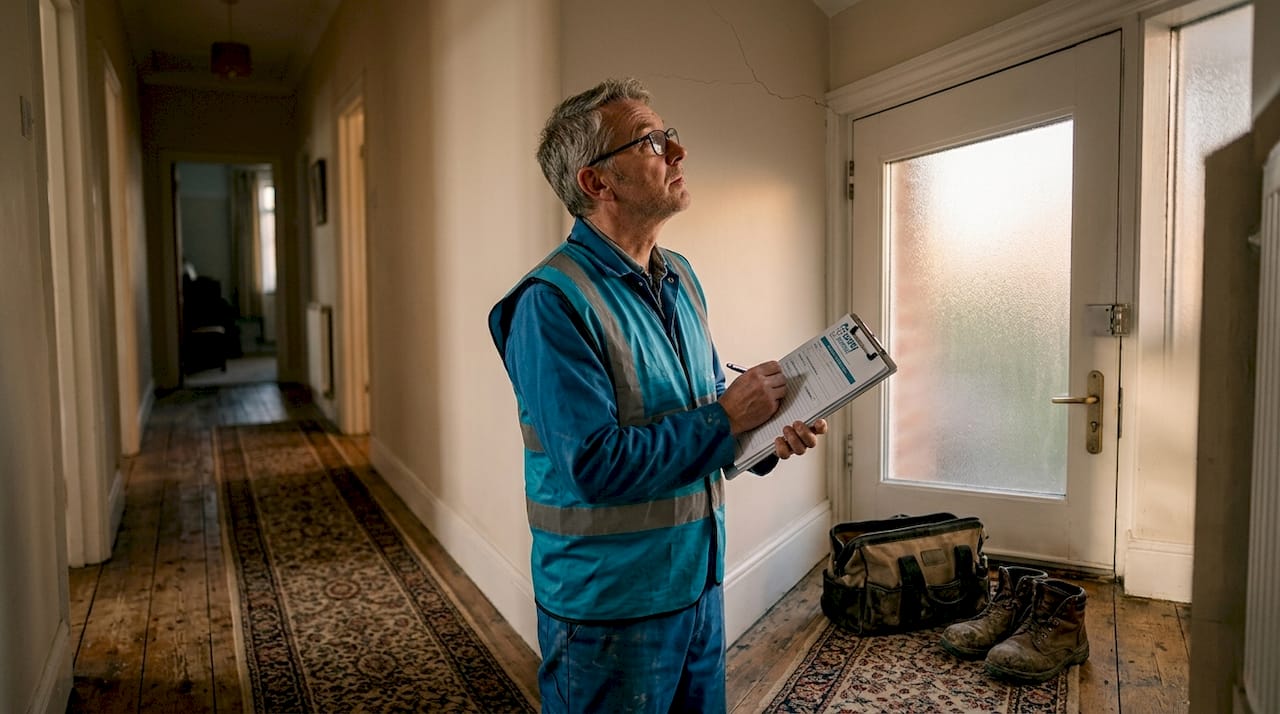
A simple example helps. You view a 1930s semi. It looks tidy, smells freshly painted, and the estate agent says it has been “well maintained”. A surveyor may still spot roof spread, damp concealed by recent decoration, cracking that needs monitoring, or alterations that deserve closer attention. None of those issues necessarily mean “don't buy it”. They mean “buy it with your eyes open”.
Practical rule: Don't think of the survey as a hurdle. Think of it as the moment you replace guesswork with evidence.
If you're trying to keep the whole buying process organised, a practical moving-and-purchase planner like this ultimate first home checklist can help you keep the survey, mortgage, solicitor paperwork, and moving tasks in one place.
Your offer has been accepted on a house that looks spotless. The kitchen is new, the walls are freshly painted, and the viewing went well. The next question is not only, “Should I get a survey?” It is, “Which survey gives me enough information to judge the risk properly?”
That is where the three RICS survey levels help. They are not different names for the same report. They are three different depths of inspection, and choosing the right one affects how much you learn about defects, likely repair costs, and your room to renegotiate before you are legally committed.

Level 1 is the most basic report. It gives you a surface-level condition summary and is usually suited to newer, simpler homes where there are few obvious risk factors. If you want detailed advice on defects, repairs, or likely future spending, Level 1 will usually feel too light.
Level 2 is the report many buyers mean when they say “homebuyer survey”. It is the standard choice for conventional properties that appear to be in reasonable condition. The surveyor carries out a visual inspection and flags issues that matter to you as a buyer, such as damp, timber problems, roof defects, movement, and maintenance concerns. The traffic-light ratings are useful because they help you see what needs attention now, what needs watching, and what may affect value or saleability.
Level 3 is the fullest survey. It is usually the right fit for older homes, buildings that have been extended or altered, properties of unusual construction, or homes where the first viewing leaves unanswered questions. You get more explanation, more detail on likely causes, and clearer guidance on what repairs or further investigations may be sensible.
The easiest way to separate them is by the question each one answers.
Level 1 asks, “What is the general condition?”
Level 2 asks, “What are the main defects and risks before I buy?”
Level 3 asks, “What is happening in this building, why might it be happening, and what should I budget or investigate next?”
That difference matters because a survey is not only about spotting faults. It helps you judge whether the agreed price still makes sense. A short report may confirm that a straightforward flat is low risk. A fuller report may reveal enough about roof repairs, damp treatment, or structural movement to support a price reduction or a request for specialist checks before exchange.
One practical rule helps many first-time buyers. Match the survey to the property's story. If the home is modern, standard, and appears well cared for, Level 2 is often enough. If the property is old, heavily altered, timber-framed, thatched, listed, or simply puzzling, Level 3 is usually money well spent because the extra detail can save you from guessing.
| Feature | Level 1 Condition Report | Level 2 HomeBuyer Report | Level 3 Building Survey |
|---|---|---|---|
| Best for | Newer or simple properties where you want a basic condition overview | Conventional homes in reasonable condition | Older, altered, larger, or non-standard properties |
| Depth | Basic | Mid-level | Most detailed |
| Inspection style | Visual and non-invasive | Visual and non-invasive | More detailed visual inspection with fuller analysis |
| Main purpose | Condition summary | Identify significant defects and maintenance issues | Detailed diagnosis and repair advice |
| Traffic-light ratings | Typically used to indicate condition | Used to help prioritise urgent issues | May include ratings plus more extensive commentary |
| Repair advice | Limited | Practical guidance on defects and upkeep | Detailed advice on causes, implications, and remedial works |
| Suited to major alterations or unusual construction | Usually no | Often not ideal | Usually yes |
| Typical buyer question it answers | “Is anything obviously wrong?” | “What are the main risks before I buy?” | “What exactly is happening in this building and what should I do about it?” |
Buyers often hesitate between Level 2 and Level 3 because they do not want to overpay for the survey itself. That is understandable. But the better test is whether the cheaper report would leave you with unanswered questions on a purchase worth hundreds of thousands of pounds.
If you are deciding between the middle and highest level, this Level 2 vs Level 3 survey comparison guide is useful because it breaks the choice down by property type and risk.
A good survey level does more than describe the home. It gives you evidence you can use.
This is the misunderstanding that catches buyers out most often. They pay for a valuation through the mortgage process and assume someone has checked the building thoroughly. In many cases, that assumption is exactly what leads to nasty surprises after completion.
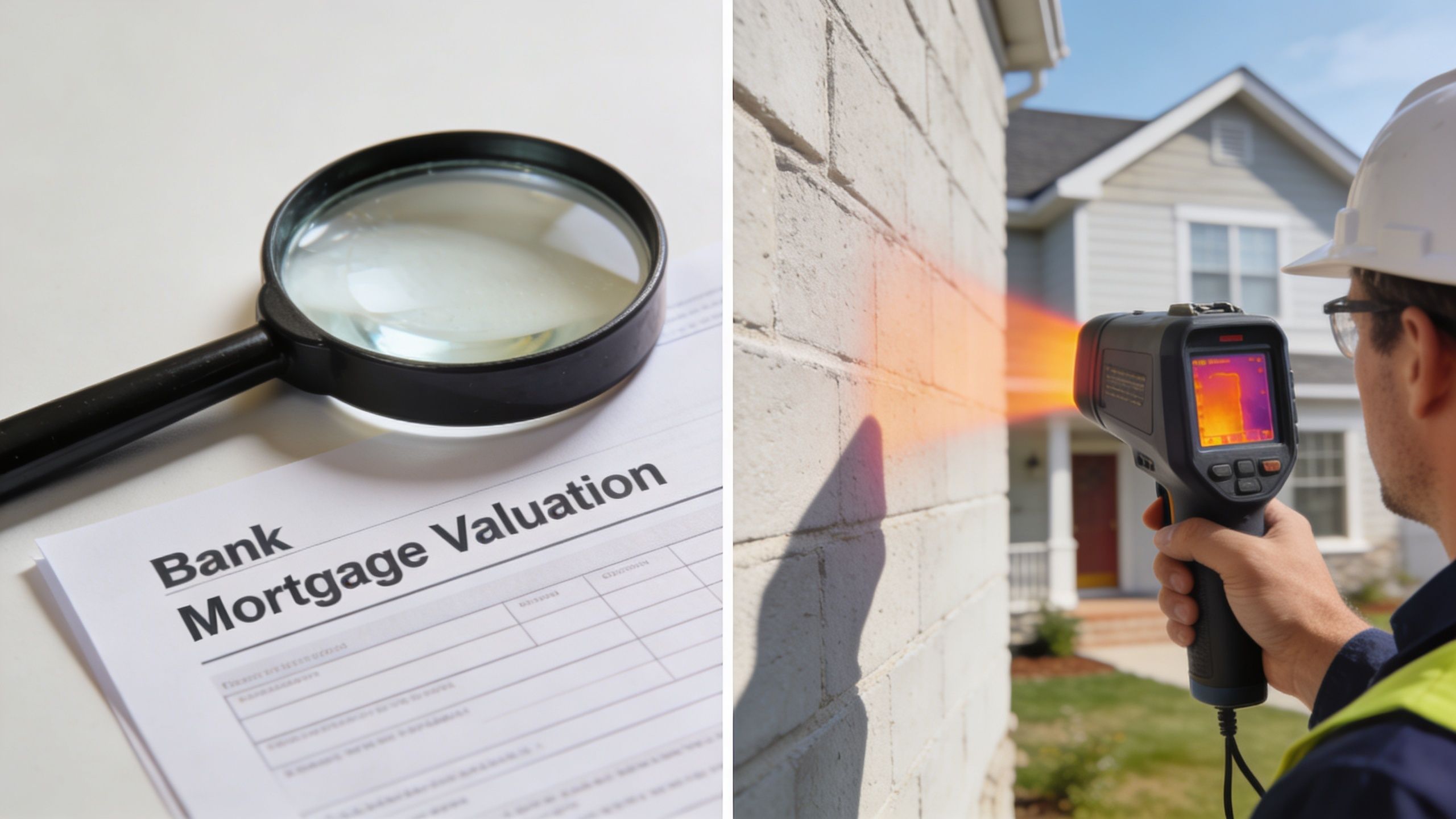
Both happen around the same time. Both relate to the same property. Both may involve a professional visiting or reviewing the home. So it's easy to think they overlap.
They don't, at least not in the way that protects you.
A mortgage valuation is for the lender. The lender wants to know whether the property is suitable security for the loan. That's a lending decision. It is not a full condition investigation carried out for your benefit.
A homebuyers survey is for the buyer. Its purpose is to assess condition, identify visible defects, explain likely risks, and help you make a better decision about price, repairs, and whether to proceed.
Think of buying a used car.
A mortgage valuation is the equivalent of someone asking, “Is this car broadly worth lending against?” A survey is closer to taking the car to a mechanic who checks for warning signs before you hand over your money.
That's why a valuation offers limited protection if the roof covering is nearing failure, the walls show movement, or the property has damp-related deterioration. The lender may still lend. You still inherit the problem.
If you want a fuller explanation of what the lender's check does and doesn't cover, this guide on what a mortgage valuation is breaks it down clearly.
The bank is checking its risk. You need someone checking yours.
A survey matters because houses can look fine on a viewing and still have costly issues. Fresh paint, tidy staging, and a sunny day can hide a lot.

Damp and moisture problems
Surveyors regularly look for staining, tide marks, musty smells, damaged plaster, defective pointing, poor ventilation, and timber exposed to moisture. The important point isn't just “there is damp”. It's where it's coming from and what it may already have damaged.
Movement and cracking
Not every crack is serious. Some are minor and linked to shrinkage or old settlement. Others may suggest ongoing movement, failed lintels, or structural stress around openings. A surveyor helps you distinguish cosmetic blemishes from signs that need further investigation.
Roof defects
Roofs are easy to ignore from ground level. A survey may identify slipped coverings, uneven roof lines, defective flashings, ageing felt, poor rainwater disposal, or signs that leaks have affected ceilings and timbers.
Timber decay
Where moisture persists, timber can deteriorate. Floorboards, roof timbers, window frames, and hidden structural woodwork may all be affected. Early signs often sit behind furniture, under coverings, or in roof spaces buyers rarely inspect properly.
A defect doesn't exist in isolation. It usually affects one of three things.
The report may also flag concerns outside the surveyor's core brief, such as outdated services, suspected asbestos-containing materials, drainage concerns, or invasive plant risks, and recommend specialist follow-up where needed.
Here's a useful visual walkthrough of the kinds of problems buyers should take seriously:
A surveyor's job isn't to alarm you. It's to separate normal wear from expensive surprises.
One point often confuses buyers. A survey is usually visual and non-invasive. That means the surveyor doesn't rip up floors, break into walls, or move heavy fitted items. Even so, a skilled inspection can reveal plenty through patterns, staining, distortion, cracking, ventilation defects, and the condition of accessible elements.
Opening the report can feel daunting. You expected a simple yes or no. Instead, you have pages of observations, condition ratings, and recommendations. That's normal. A survey is not a pass or fail certificate. It's a decision-making document.
In a Level 2 report, the traffic-light system is there to help you prioritise.
Don't make the mistake of scanning only for red items. Several amber findings together can still add up to a meaningful repair bill or signal poor overall upkeep. Read the comments, not just the colour.
1. Renegotiate the price
This is often the most practical route. If the report identifies defects that affect value, condition, or immediate expenditure, you can go back to the seller with evidence. Keep it factual. Refer to the report. Focus on the items that materially change the cost of ownership rather than trying to argue over every minor maintenance point.
2. Ask the seller to deal with specific issues
Sometimes the better route is not a price reduction but a request for action. That may suit both sides where the defect is clear, time-sensitive, and capable of being addressed before exchange. Be careful, though. If works are done, ask for confirmation of what was repaired, who carried it out, and whether any guarantees or certificates exist.
3. Walk away
This can feel painful after the emotional effort of getting an offer accepted, but it's sometimes the soundest decision. If the survey raises major unknowns, points to extensive hidden cost, or reveals a property that no longer fits your budget or appetite for risk, stepping back may save you from a much bigger problem later.
A sensible way to respond is:
Treat the report like leverage, not bad news. It gives you facts at the exact moment facts have value.
The strongest negotiations are calm and specific. “The survey says the roof needs repair and there is evidence of damp to the rear wall. We'd like to revise our offer to reflect those works” lands better than “The survey was terrible so we want a discount”.
Your offer has been accepted, the estate agent is asking for updates, and everyone seems to want the purchase to race ahead. This is the point where choosing the right surveyor matters most. A good survey does more than describe defects. It gives you reliable facts while your price and your commitment are still flexible.
Start with the basics. You want a RICS-accredited surveyor who carries out this kind of work regularly and can explain their recommendation in plain English.
Experience should match the property, not just the survey label. A Victorian terrace with signs of alteration calls for a different level of judgement than a modern flat in apparently good order. Two surveyors may both offer a Level 2 or Level 3 survey, but the better one will ask sensible questions first. How old is the property? Has it been extended? Is it standard brick construction or something less common? Have you already noticed cracks, damp, or movement?
Local knowledge helps too. A surveyor who knows the area is often more alert to the defects that turn up again and again in that local housing stock, whether that is aging roofs, solid walls, outdated electrics, or issues linked to past alterations.
Ask about Professional Indemnity insurance. Ask whether you can speak to the surveyor after the report arrives. That follow-up call often makes the report far more useful, because you can separate routine maintenance from findings that may affect price, insurance, or your decision to proceed.
The cheapest quote is not always the best value. A survey works like a pre-purchase health check. If the inspection is rushed or the report is hard to understand, you lose the very thing you are paying for, which is clear judgement at the moment it matters.
When you compare quotes, ask three practical questions:
The answers tell you a lot. A careful surveyor will tailor their advice to the property. A vague answer usually means a more generic service.
If you want a useful checklist before you book, this guide on how to choose a surveyor for a UK property purchase sets out the questions worth asking.
Once you have chosen a surveyor, the process is usually straightforward. You agree the fee, provide the property details, and book the inspection. The surveyor then visits the property, carries out a visual inspection, and prepares the report.
Before the inspection, send over anything you already know. Sales particulars, details of extensions, and your own concerns can all help. You are not trying to direct the surveyor. You are giving them context, much like telling a doctor where the pain is before the examination begins.
Then read the report with a practical mindset. The aim is not to find a perfect house. It is to understand the actual condition of this house, the likely costs ahead, and whether the agreed price still makes sense.
Done properly, choosing a surveyor is the step that turns a survey from a box-ticking exercise into one of the strongest risk and negotiation tools in the whole purchase.
Usually, yes, though the type may differ. A new-build may not need the same survey approach as an older house, but buyers often benefit from a snagging inspection to identify defects, incomplete finishes, or workmanship issues before or shortly after completion.
No. A survey is not a driving test or compliance certificate. The surveyor is assessing condition and risk, not awarding a pass mark. The key question is whether the findings are acceptable to you at the agreed price.
That should make you pause. A seller doesn't usually have to like the process, but a genuine refusal limits your ability to carry out proper due diligence. Ask why, speak to your solicitor, and consider whether you're comfortable proceeding without independent advice.
Start by reading the survey's terms and the report carefully. Remember that surveys are visual and subject to access limits. If you think something significant was missed, raise it promptly with the firm and follow its complaints process. Professional firms should also carry Professional Indemnity insurance.
A final point often helps buyers: the value of a survey isn't only in finding reasons to pull out. Often, it gives you confidence to proceed because you understand the defects, the likely maintenance, and the budget you'll need.
If you're ready to move from uncertainty to evidence, Survey Merchant can help you compare and arrange the right survey for the property you're buying, whether that's a Level 2 for a conventional home or a Level 3 for an older or altered building.
Survey Merchant provides vetted RICS surveyors across 100+ UK locations at fixed fees:
→ Level 2 Home Survey (HomeBuyer Report)
→ Level 3 Building Survey (full structural survey)
→ RICS Red Book property valuations
→ Party wall surveyors — notices, awards & schedules of condition
→ Expert witness surveyors — CPR Part 35 reports for property disputes