We use cookies to improve your experience on our site, analyze site traffic, and assist in our marketing efforts. By clicking "Accept all," you agree to the storing of cookies on your device. You can choose to "Reject all" non-essential cookies. For more information, please read our Cookie Policy.
Radon gas when buying a house in the UK: how to check the UKHSA map and address search, what a three-month test costs, how retentions of GBP 800-3,000 work, remediation costs, new-build protection and the 2026 HHSRS changes.
Radon gas is the one hazard most UK homebuyers never think about until a solicitor’s environmental search flags it. It cannot be seen, smelt or tasted, yet the UK Health Security Agency (UKHSA) links it to around 1,100 lung cancer deaths a year in the UK. If you are buying a house in 2026, this guide explains what radon gas is, how to check whether a property sits in a radon Affected Area, what a test costs, how retentions work on exchange, what remediation involves and how a suitably qualified, accredited surveyor fits into the picture.
Key takeaways
Radon is a naturally occurring radioactive gas from uranium in rocks and soil. The average UK home measures about 20 Bq/m³; UKHSA recommends action at 200 Bq/m³ and aims for below 100 Bq/m³ after remediation.
A radon Affected Area is one where UKHSA estimates at least 1% of homes exceed the Action Level. You can check any address on the UKradon map, or buy an instant address search report for £3.90.
Only a three-month measurement (two detectors, £52.80 from UKradon) tells you the actual level. A map or search report only gives the probability.
In Affected Areas, buyers typically ask the seller for a past test result or negotiate a retention of £800–£3,000 held by the solicitor for six months.
Remediation usually costs around £1,000; an active sump with a fan is the most effective fix for solid floors.
New homes in Affected Areas must have basic or full radon protection under Approved Document C, and should still be tested in the first year of occupation.
What is radon gas and why does it matter when buying a house?
Radon gas is a colourless, odourless radioactive gas produced by the natural decay of uranium found in all rocks and soils. Outdoors it disperses harmlessly, but indoors it can build up through floors, service entries and cracks. Long-term exposure to high levels raises the risk of lung cancer, which is why UKHSA advises testing homes in radon Affected Areas and reducing levels above 200 Bq/m³.
Granite and limestone geology make parts of the South West, the Peak District, Wales and the Pennines more likely to have elevated radon gas levels.
Radon matters at purchase for three practical reasons. First, your conveyancer’s environmental search will almost always include a radon screen, so the question will arrive whether you expect it or not. Second, the result can affect negotiations, retentions and in some cases lender conditions. Third, remediation is a building works issue: sumps, membranes and under-floor ventilation are exactly the kind of works a Level 3 building survey should assess for quality and completeness.
Radon levels explained: Action Level, Target Level and the UK average
Radon is measured in becquerels per cubic metre of air (Bq/m³). According to UKHSA’s UKradon service, the Government-endorsed figures are:
Average UK home: about 20 Bq/m³.
Action Level: 200 Bq/m³ as an annual average. UKHSA recommends reducing radon in any home above this figure.
Target Level: 100 Bq/m³, the ideal outcome for remediated homes and for protective measures in new buildings.
Between 100 and 200 Bq/m³: action should be considered, particularly if a smoker or ex-smoker lives in the home, because smoking multiplies the risk from radon.
How do I check if a house is in a radon Affected Area?
A radon Affected Area is a 1 km grid square where UKHSA estimates that 1% or more of homes are above the Action Level. There are three ways to check before you commit to a purchase:
The free UKradon map. Darker shading means a higher chance of elevated radon; white areas have less than a 1-in-100 chance and the darkest areas more than a 1-in-3 chance. The map was fully updated by UKHSA and the British Geological Survey in December 2022, the first revision in more than a decade, and was extended to cover the Isle of Man in October 2025.
A UKradon address search report. For £3.90 including VAT you receive an instant PDF giving the estimated probability that the specific address exceeds the Action Level. It covers homes and small workplaces within 25 metres.
Your conveyancing environmental search. Most environmental reports used by solicitors include the UKHSA/BGS radon dataset alongside flooding, contaminated land and ground stability. Our guide to property searches explains what these reports cover.
One caution: the map should not be relied on for basements and cellars, which UKHSA says should be treated as having a higher chance of high radon wherever they are. If you are also weighing up other ground-related risks, read our flood risk guide for homebuyers.
Which parts of the UK have the highest radon levels?
Radon potential follows geology rather than county boundaries. Granite, limestone and certain shales and ironstones are the usual culprits, which is why Cornwall and Devon, the Peak District, the Mendips and Cotswolds, parts of Wales, Northamptonshire, the Yorkshire Dales and the Pennines, and areas of Aberdeenshire and the Grampians feature strongly on the map. Pockets of elevated radon exist in many other regions, so always check the individual address rather than assuming.
How is radon tested, and what does it cost?
A map tells you the probability; only a measurement tells you the level. The standard UK test is simple and cheap:
A domestic radon measurement uses two passive detectors, one in a bedroom and one in the living room, left in place for three months.
Cost: £52.80 including VAT for a UKradon domestic measurement pack (two detectors, instructions, pre-paid return envelope and advice on the result).
Duration: three months, to smooth out daily and seasonal swings. Short-term electronic monitors can be useful for screening but do not replace the three-month test used for the Action Level.
Turnaround: detectors are dispatched within 7–10 working days and results normally arrive around four weeks after you return them.
Who tests: the occupier. Holiday homes should only be tested during a period of occupation.
Because the full test takes three months, it rarely fits inside a typical conveyancing timetable. That is why UKHSA’s house-sale guidance focuses on past results and retentions rather than delaying exchange.
Buying in a radon Affected Area: what buyers and sellers should do
Buyers: ask whether the seller has carried out a three-month test and request a copy of the report. The Law Society’s TA6 Property Information Form includes radon questions, so your solicitor should raise it. If no test exists, discuss a retention and test in your first year of occupation.
Sellers: dig out any previous result (your test provider can usually reissue it) and be prepared for a retention request.
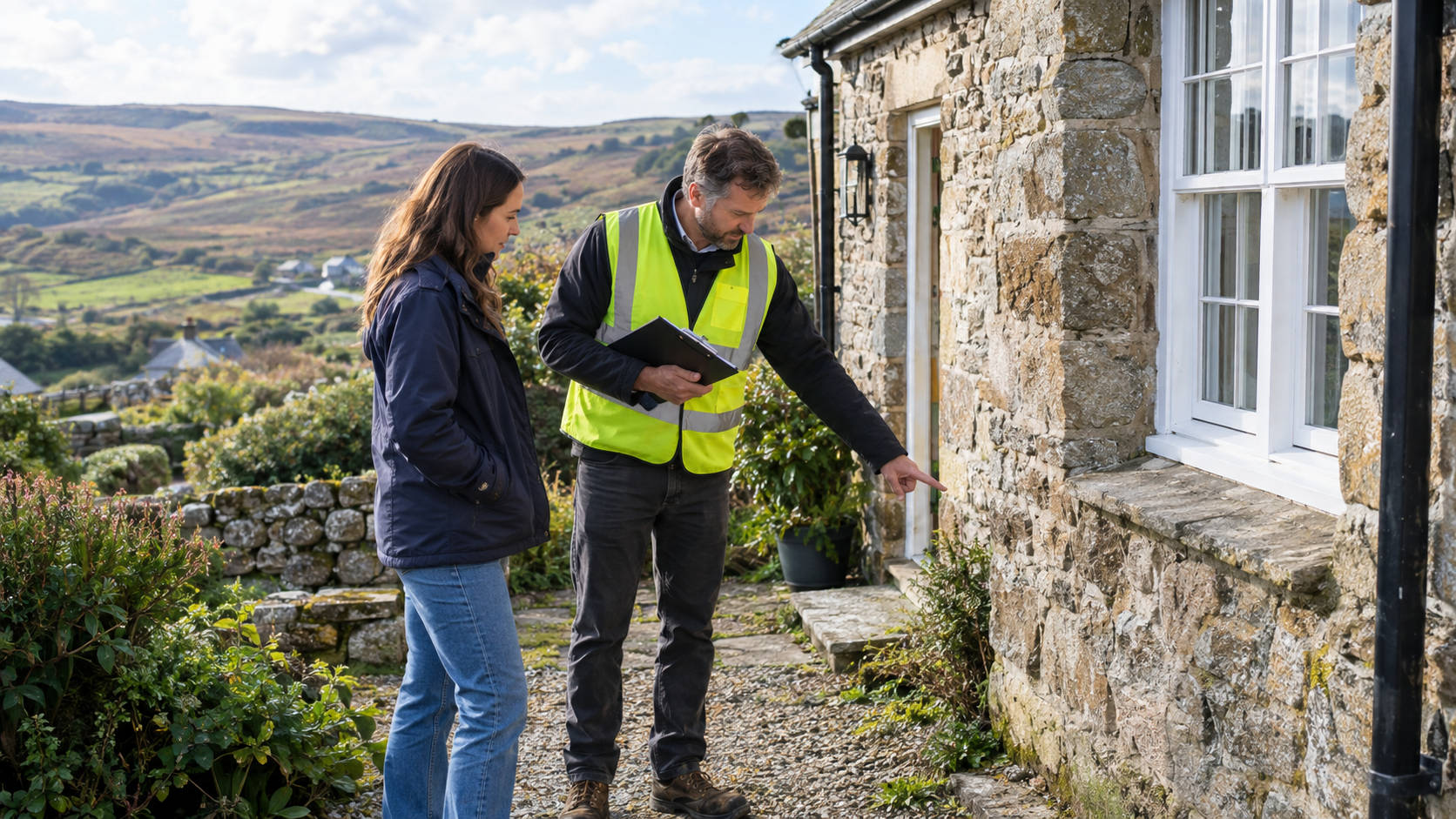
New builds: check with the developer, or via a radon search, whether basic or full protection was installed, and still test once you move in. See our guide on whether you need a survey on a new build.
Buy-to-let: a rented property in an Affected Area requires a hazard assessment, which landlords can arrange through the local council (see the HHSRS section below).
How does a radon retention work?
A retention is a sum held back from the sale price by the buyer’s solicitor to cover remedial works if the test comes back high. UKHSA notes that remediation typically costs about £1,000 and that retentions usually range from £800 to £3,000. The money is held for six months, long enough to move in, run the three-month test and receive the report. If the result is below the Action Level the sum is released to the seller; if it is above, the funds pay for works and a re-test, with any surplus returned to the seller. A retention is not ideal if you plan major building work straight away or will not occupy the property immediately, in which case a price adjustment may be simpler. Our article on negotiating the price after a survey covers the wider tactics.
Radon remediation methods and costs
Fixing a high reading is usually straightforward and far cheaper than many buyers fear. UKHSA’s guidance on reducing radon levels lists the main methods and typical installed costs:
Remedy
Best suited to
Typical cost
Normal range
Active radon sump with fan
Solid floors; the most effective option
£800
Up to £2,000
Active sump (DIY)
Competent DIY on solid floors
£300
Up to £700
Passive sump (no fan)
Modest levels on solid floors
£450
Up to £1,000
Natural under-floor ventilation
Suspended timber floors
£200
Up to £600
Active under-floor ventilation
Suspended floors where natural airflow is poor
£700
Up to £1,500
Positive ventilation unit
Lower readings; fan in the loft pushes fresh air in
£550
Up to £1,000
UKHSA’s figures are averages drawn from 2007–2017 installations, so expect contractors to quote somewhat higher in 2026. Sealing loft hatches or floor openings alone does not reduce radon, but it can help alongside a sump or ventilation. After any works, a further three-month test confirms the level has dropped, ideally below the 100 Bq/m³ Target Level.
New-build homes: radon protection under the Building Regulations
In England, Approved Document C of the Building Regulations requires protection against ground gases, including radon, in new buildings and many extensions and conversions in Affected Areas. There are two tiers:
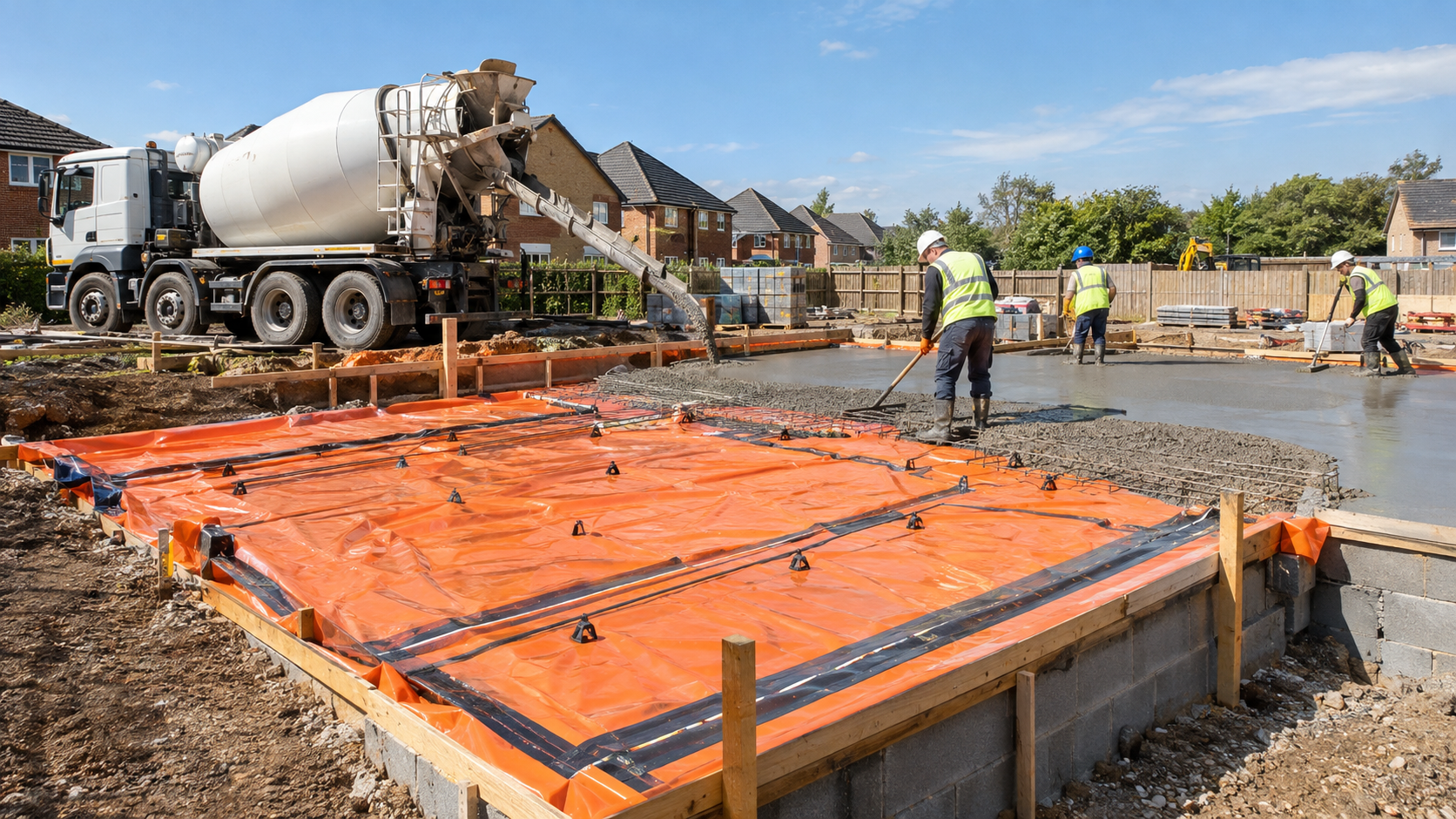
Basic radon protection extends the damp-proof membrane into a sealed radon barrier across the whole footprint; full protection adds a sump or ventilated sub-floor that can be activated later.
Basic protection: a continuous radon-proof barrier, usually the damp-proof membrane extended and sealed across the full footprint of the building, including service penetrations and cavity trays.
Full protection: the barrier plus a radon sump or ventilated sub-floor void that can be fitted with a fan if a post-occupation test comes back high.
Which tier applies depends on the estimated proportion of homes above the Action Level in that location, as shown on the BGS/UKHSA map. Even with protection installed, UKHSA recommends a three-month test during the first year of occupation. A pre-completion snagging inspection by a suitably qualified building surveyor can check for obvious membrane damage at service entries before the floor finishes go down.
What’s new in 2026: the revised HHSRS and landlord duties
The most significant radon-related change this year sits in the private rented sector. The Housing Health and Safety Rating System (England) (Amendment) Regulations 2026 (SI 2026/571) came into force on 23 June 2026, consolidating the 29 original hazards into 21 and replacing the 2006 operating guidance. “Radiation”, which covers radon, remains a standalone hazard. RICS’s Built Environment Journal (17 July 2026) highlighted that the revised scoring and hazard profiles affect stock condition surveys, compliance inspections and expert witness work. For landlords buying in an Affected Area, that means a documented radon assessment should be part of the pre-letting checks alongside the items in our landlord property inspection checklist.
For owner-occupiers the framework is unchanged: there is still no legal duty to test, but UKHSA’s advice to test in Affected Areas is clear, and solicitors increasingly treat a missing result as a negotiating point.
Does a house survey check for radon?
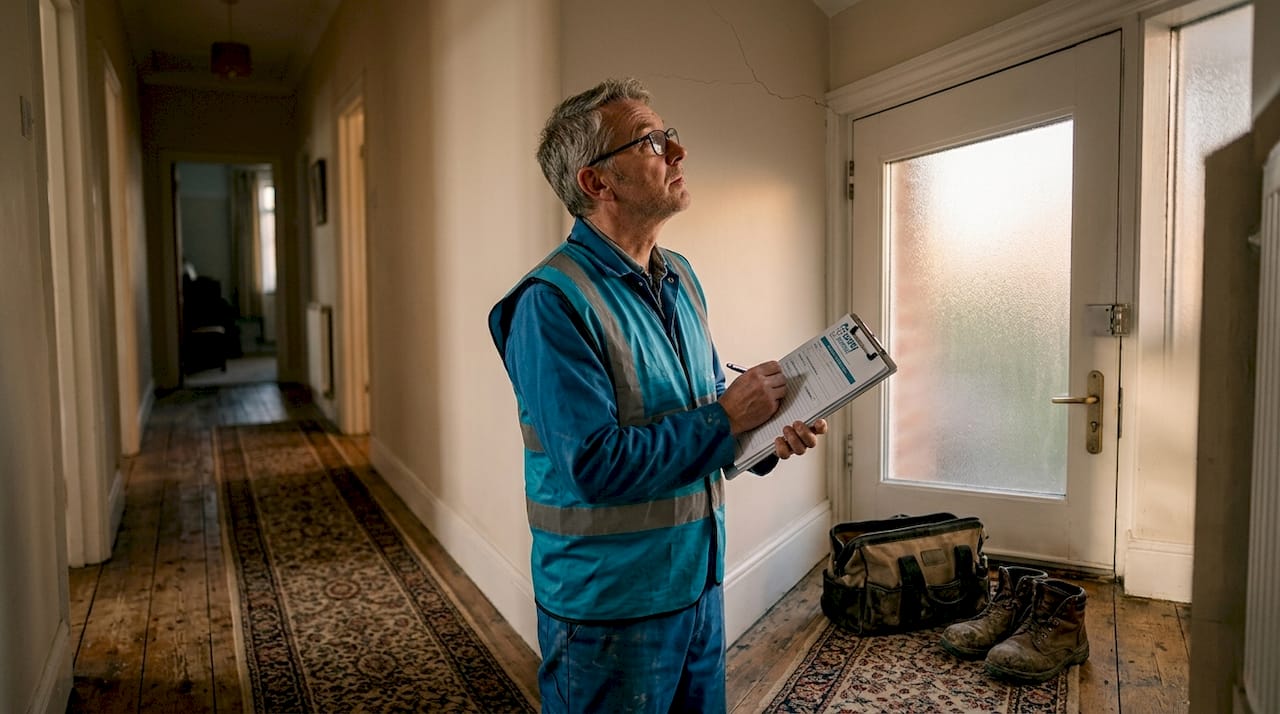
A standard RICS Home Survey Level 2 or Level 3 does not measure radon, because measurement needs three months of detectors in place. What a good surveyor will do is:
note whether the property is in a radon Affected Area and recommend a test or retention;
identify construction details that influence radon ingress, such as solid versus suspended floors, cellars, sealed-up airbricks and unsealed service entries;
inspect any existing remediation (sump, fan, membrane, ventilation unit) and flag defects or missing documentation;
advise on how remediation works interact with other defects, for example damp, timber decay or sub-floor ventilation.
A high reading rarely changes a property’s value materially once remediated, because the fix is modest in cost and well understood. Lenders do not generally decline a mortgage because of radon, although a valuer may request confirmation that remediation has been carried out where a high result is known. If you need an independent opinion on how any ground-related issue affects worth, an impartial RICS Red Book valuation from Survey Merchant’s panel gives you a defensible figure to negotiate from.
Radon gas checklist for UK homebuyers in 2026
Check the UKradon map and, for any shaded square, buy the £3.90 address report.
Ask the seller (via the TA6 form) for any three-month test result and remediation paperwork.
Agree a retention of £800–£3,000 or a price adjustment where no test exists.
Commission a Level 3 survey if the property has a cellar, solid floors in a high-potential area, or existing remediation to inspect.
Test within the first year of occupation, including in new builds with protection installed.
If above 200 Bq/m³, remediate (typically about £1,000) and re-test to confirm you are below 100 Bq/m³.
Why choose Survey Merchant for your radon-area property survey?
Survey Merchant connects you with a nationwide panel of suitably qualified, accredited surveyors regulated by bodies including RICS, CIOB and RPSA, matched to the job in hand. For purchases in radon Affected Areas that means a surveyor who knows the local geology, understands sumps, membranes and sub-floor ventilation, and will write a clear, impartial report you can hand to your solicitor to support a retention or price negotiation. You get transparent, competitive fixed fees agreed up front, fast turnaround so your purchase is not held up, and end-to-end support from choosing between a Level 2 and Level 3 survey through to interpreting the findings. Whether you are buying a granite cottage in Cornwall or a new-build in Northamptonshire, book a building survey with Survey Merchant or contact our team for impartial advice today.
No. A RICS Home Survey Level 2 or Level 3 does not measure radon because a reliable result needs two detectors in place for three months. A good surveyor will note whether the property is in a radon Affected Area, recommend a test or retention, and inspect any existing remediation such as a sump, fan or membrane.
How much does a radon test cost in the UK?
A UKHSA UKradon domestic measurement pack costs 52.80 pounds including VAT. It includes two passive detectors, one for a bedroom and one for the living room, a pre-paid return envelope and advice on the result. Results normally arrive about four weeks after the three-month test ends.
What is a safe level of radon in a house?
The average UK home measures about 20 Bq per cubic metre. UKHSA recommends action at or above 200 Bq per cubic metre (the Action Level) and aims for below 100 Bq per cubic metre (the Target Level) after remediation or in new buildings. Between the two, action should be considered, especially if a smoker lives in the home.
Should I buy a house in a radon Affected Area?
Yes, provided you manage the risk. Most homes in Affected Areas are below the Action Level, and those above it can usually be fixed for around 1,000 pounds. Ask the seller for a previous test result, agree a retention of 800 to 3,000 pounds or a price adjustment if none exists, and test within your first year of occupation.
How does a radon retention work when buying a house?
Your solicitor holds back an agreed sum, typically 800 to 3,000 pounds, from the purchase price for six months. You move in, run the three-month test and receive the report. If the level is below 200 Bq per cubic metre the money goes to the seller; if it is above, the retention pays for remediation and a re-test, with any surplus returned to the seller.
Do new-build homes need radon protection?
In radon Affected Areas, yes. Approved Document C of the Building Regulations in England requires basic protection (a sealed radon-proof membrane) or full protection (the membrane plus a sump or ventilated sub-floor) depending on the estimated risk. UKHSA still recommends a three-month test during the first year of occupation.