Building Surveying
Sep 29, 2026
Level 3 House Survey: Your Comprehensive Guide
Considering a Level 3 house survey? Our guide covers what it includes, who needs one, costs, & how to use the report for negotiation. Make an informed decision.

You’ve found a house with bay windows, uneven floorboards, a fireplace that looks original, and the kind of character estate agents love to call “full of potential”. You also have that knot in your stomach. Is the crack above the rear window harmless settlement, or the start of an expensive structural story? Is that musty smell just an old house being an old house, or evidence of damp, rot, and years of deferred maintenance?
That anxiety is normal. First-time buyers often feel they’re making a decision with only half the information. The seller knows the place. The agent knows the script. You’re left trying to decode clues from fresh paint, a recent patch repair, or a loft hatch nobody seems keen to open.
A level 3 house survey is how you replace guesswork with evidence. It’s the most detailed visual inspection available within the RICS Home Survey framework, and it exists for exactly this sort of purchase. Not to kill the dream, but to tell you what the dream will cost.
The useful part isn’t just the list of defects. It’s the “so what”. Which issues need urgent attention, which can wait, which affect value, which matter to your lender, and which should become negotiation points before you exchange contracts. That’s where a good survey earns its fee.
You view a Victorian terrace twice, offer, and start planning where the sofa will go. Then, on the third visit, you spot a brown mark under the chimney breast, a rear window that will not close square, and a crack above the door that has been filled more than once. None of that proves the house is a bad buy. It does mean the price and your repair budget need a dose of reality before you commit.
That is where a Level 3 house survey earns its fee.
Older and altered homes often hide risk in plain sight. New paint can disguise long-term damp staining. Stored belongings in the loft can block the view of rafters and roof coverings. Previous owners may have removed walls, changed windows, or patched defects without dealing with the underlying cause. Once you complete, those problems become yours to fund and organise.
A Level 3 survey gives you a detailed visual assessment of the building and, equally, explains what the findings mean in practice. For a first-time buyer, that shift matters. A dense report can feel intimidating until you read it as a decision-making document. Which defects are routine maintenance? Which need quotes before exchange? Which justify a price reduction? Which suggest the house no longer fits your budget or tolerance for disruption?
I often tell buyers to read the report with one question in mind. So what?
A cracked render finish may be cosmetic, or it may point to movement that needs closer investigation. Damp around a chimney breast may call for a modest repair to flashings, or it may signal a longer history of water ingress, timber decay, and replastering. The survey helps separate a manageable project from a false economy.
If you are still weighing the right survey level, this Level 2 vs Level 3 survey comparison guide is a useful starting point.
A good Level 3 report is not just a list of defects. It should leave you with a workable plan:
That is what settles nerves. Not a defect-free house, because older properties rarely are, but a clear view of condition, likely costs, and your options before exchange.
You view a Victorian house and fall for the bay window, fireplaces, and wavy floorboards. Then the survey question arrives. Do you need the fuller inspection, or are you paying for detail you will never use?
For a plain, modern flat in good order, a Level 3 is often more than you need. For an older house, a heavily altered property, or a building already showing signs of wear, it is usually the sensible choice because the true risk is not spotting a defect. It is misunderstanding what that defect means for cost, urgency, and your negotiating position.
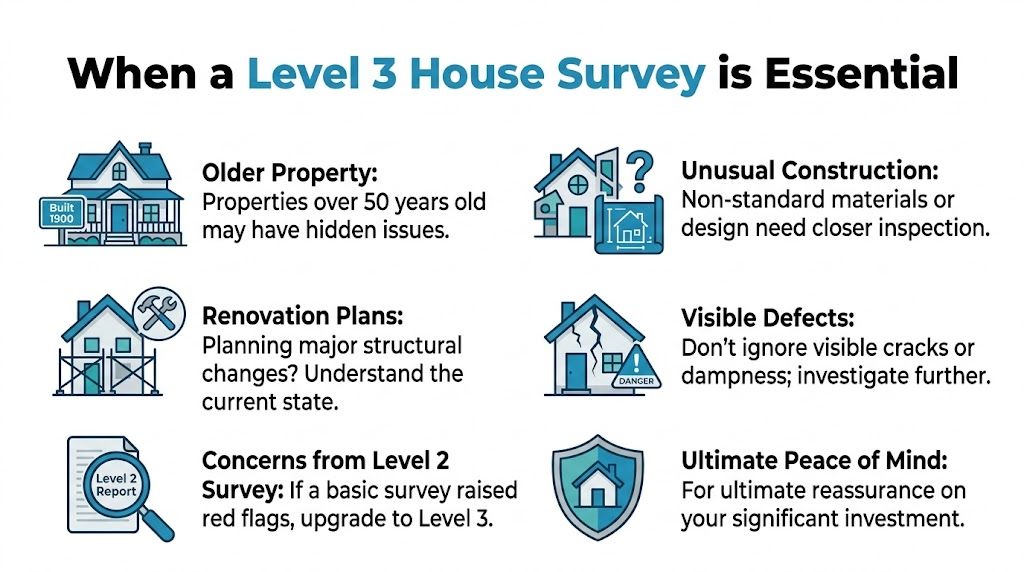
RICS generally points buyers toward Level 3 where the property is particularly old, unusually large, in poor condition, or built in a less standard way. In practice, I would widen that test slightly. The right trigger is complexity. Age creates complexity. Extensions create complexity. Past patch repairs create complexity. Once that is present, a shorter report can leave you with warnings but not enough context to judge whether you are looking at a manageable repair job or a purchase that needs serious capital.
A Level 3 survey is usually the right call when one or more of these apply:
That last point matters more than buyers often realise.
If your first-year plan includes works, the survey is part condition report and part budgeting tool. A finding such as ageing roof coverings, bridging dampness, or movement around an extension joint is not just technical background. It can change the order of works, the contingency you hold back, and the figure you use when renegotiating.
The problem with choosing too light a survey is not just that it contains less detail. It can leave the big decisions half-formed.
A Level 2 may tell you that damp needs further investigation. A Level 3 should do more to explain the likely sources, the building context, the repair implications, and whether the issue looks local or widespread. That difference matters when you are deciding whether to proceed, how much to ask off the price, and which specialists to line up before exchange.
If you are still comparing the two, this Level 2 vs Level 3 survey comparison guide will help you judge whether the extra detail matches the risk in the property you are buying.
If the house has character, ask what sits behind it.
Original timber windows may also mean deferred external joinery repairs. Uneven floors may be harmless historic settlement, or they may point to altered structure, decay, or poor-quality past work. A charming rear extension may hide awkward roof junctions and drainage defects. The point of a Level 3 is to sort ordinary age-related imperfection from findings that should affect price, timescale, or your appetite for the project.
Buyers often ask whether a Level 3 is worth it for peace of mind. I would frame it differently. It is worth it when the wrong survey could leave you underestimating the cost of ownership in the first few years.
A Level 3 inspection is best understood as a structured investigation of how the building stands up, keeps water out, breathes, drains, and has been altered over time. The surveyor isn’t just noticing defects. They’re tracing patterns. Why is a crack there, and not elsewhere? Why is timber decay concentrated near one wall? Why does one roof slope dip while the rest remains straight?
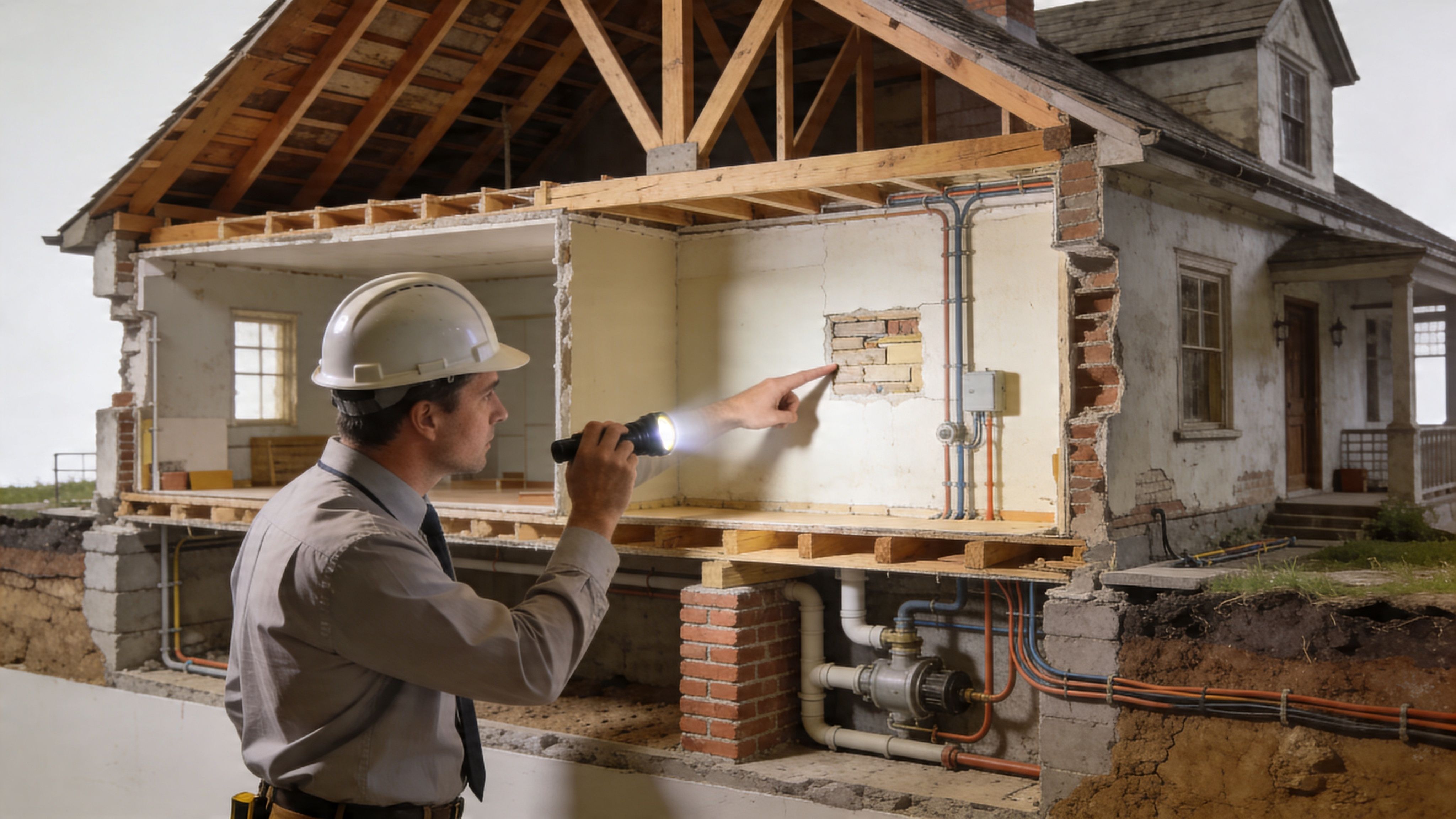
RICS sets out a more technical methodology than many buyers realise. A Level 3 surveyor uses calibrated tools such as damp meters, binoculars, torches, and ladders for access up to 3 metres. They enter the roof space where accessible, inspect structural elements, and may lift small corners of insulation to check its type and thickness and assess the underlying ceiling construction. That level of detail feeds into both repair advice and energy-related observations, as described in the RICS Level 3 survey standard.
The inspection usually moves methodically through the building envelope and its accessible internal areas.
Roof coverings and roof structure
The surveyor looks beyond missing slates or tiles. They assess line and shape, signs of spread, failed repairs, chimney condition, flashings, and visible timber distortion in the loft.
Walls and movement
Cracks are considered in context. Width, direction, location, and relationship to openings all help distinguish cosmetic movement from something more concerning.
Floors and internal structure
Sloping floors, springiness, gaps at skirtings, and distorted door frames can point to settlement, timber decay, or altered load paths.
Windows and doors
In Level 3, all openable windows and internal doors are tested where possible, which gives a fuller picture of distortion, wear, and condition than a representative-sample approach.
Damp and timber
Surveyors look for moisture patterns, defective rainwater goods, bridging, poor ventilation, fungal decay, and vulnerable joinery.
Drainage and below-ground clues
Accessible drains, manholes, and external ground levels matter because many internal symptoms begin outside.
A buyer often expects a surveyor to “spot problems”. The stronger surveyor does more than that. They explain the likely mechanism behind them.
For a practical walk-through of the on-site process, this guide to what surveyors do during a Level 3 building survey helps show where the extra time goes.
The easiest way to see the difference is to compare scope, not marketing labels.
| Feature | Level 2 HomeBuyer Report | Level 3 Building Survey |
|---|---|---|
| Inspection depth | General visual inspection of accessible areas | More detailed visual inspection of accessible areas with broader investigation where safe and practical |
| Best suited to | Standard, more straightforward homes | Older, altered, larger, unusual, or higher-risk homes |
| Reporting style | More standardised and concise | More detailed and bespoke |
| Defect analysis | Flags defects and risks | Explains likely causes, implications, and repair considerations in greater depth |
| Testing of windows and doors | More limited approach | All openable windows and internal doors tested where possible |
| Roof space detail | More limited commentary | Closer inspection of structure and related defects where accessible |
| Repair cost guidance | Typically less detailed | Includes remedial cost estimates where practicable |
A short visual overview can help if you want to see the process before reading a report in full:
Buyers sometimes assume Level 3 means invasive opening up. It doesn’t. It’s still a visual inspection. The difference is depth of observation, breadth of coverage, and the standard of explanation.
What works is treating the survey as evidence gathered from visible and accessible parts of the building. What doesn’t work is expecting it to replace specialist testing or opening-up works that can only happen later, with consent and a proper contractor.
When the report lands in your inbox, it can feel dense. That’s normal. A proper Level 3 report is written to stand up to scrutiny, not to read like a property brochure. Its value is in the detail, but you need a way to sort urgent issues from background noise.

A key strength of the report is its level of detail and practical standing. It records problems with a likely cause, an urgency rating, and quantified repair costs, and that can directly affect a lender’s valuation and view of risk. Surveyors also have a legal obligation to discover and disclose major problems, including those found inside cupboards or under manhole covers, as explained in the HomeOwners Alliance guide to building surveys.
Most buyers look first at the coloured ratings. That’s sensible, but don’t stop there.
The mistake buyers make is treating every red item as equal. They aren’t. One red item might be a localised roof repair. Another might indicate structural movement or widespread damp-related decay. The rating tells you urgency. The narrative tells you significance.
Read the comments beside the rating, not just the colour. The colour tells you where to look. The words tell you what it means.
The most valuable pages are usually the ones buyers skim too quickly. Look for four things.
First, the summary of significant defects. This is your negotiation shortlist.
Second, the surveyor’s explanation of cause. A symptom without a cause is hard to price. A report that links cracking to movement, or staining to defective rainwater disposal, gives you something concrete to discuss with contractors and the seller.
Third, the repair options and order of works. This helps you distinguish immediate safety or weather-tightness issues from medium-term maintenance.
Fourth, the cost guidance where practicable. This is not a builder’s quote, but it’s often enough to frame a realistic conversation about value and budget.
If the roof is a major concern, it can help to compare the survey comments with a more focused explanation of what a roof inspection report typically covers, especially where defects involve coverings, flashings, drainage, or hidden water entry points.
Don’t read the report from page one to page last like a novel. Use this order instead:
That turns a long technical document into a working decision paper.
The serious value of a level 3 house survey shows up when it finds the defects that alter both price and plans. This is particularly relevant in an older housing market. A detailed, brick-by-brick inspection is important for the 37% of UK homes built before 1965, and case studies report that it can prevent post-purchase structural repair costs averaging £10,000 to £20,000, with negotiation savings often exceeding £15,000, according to this review of what Level 3 surveys cover.
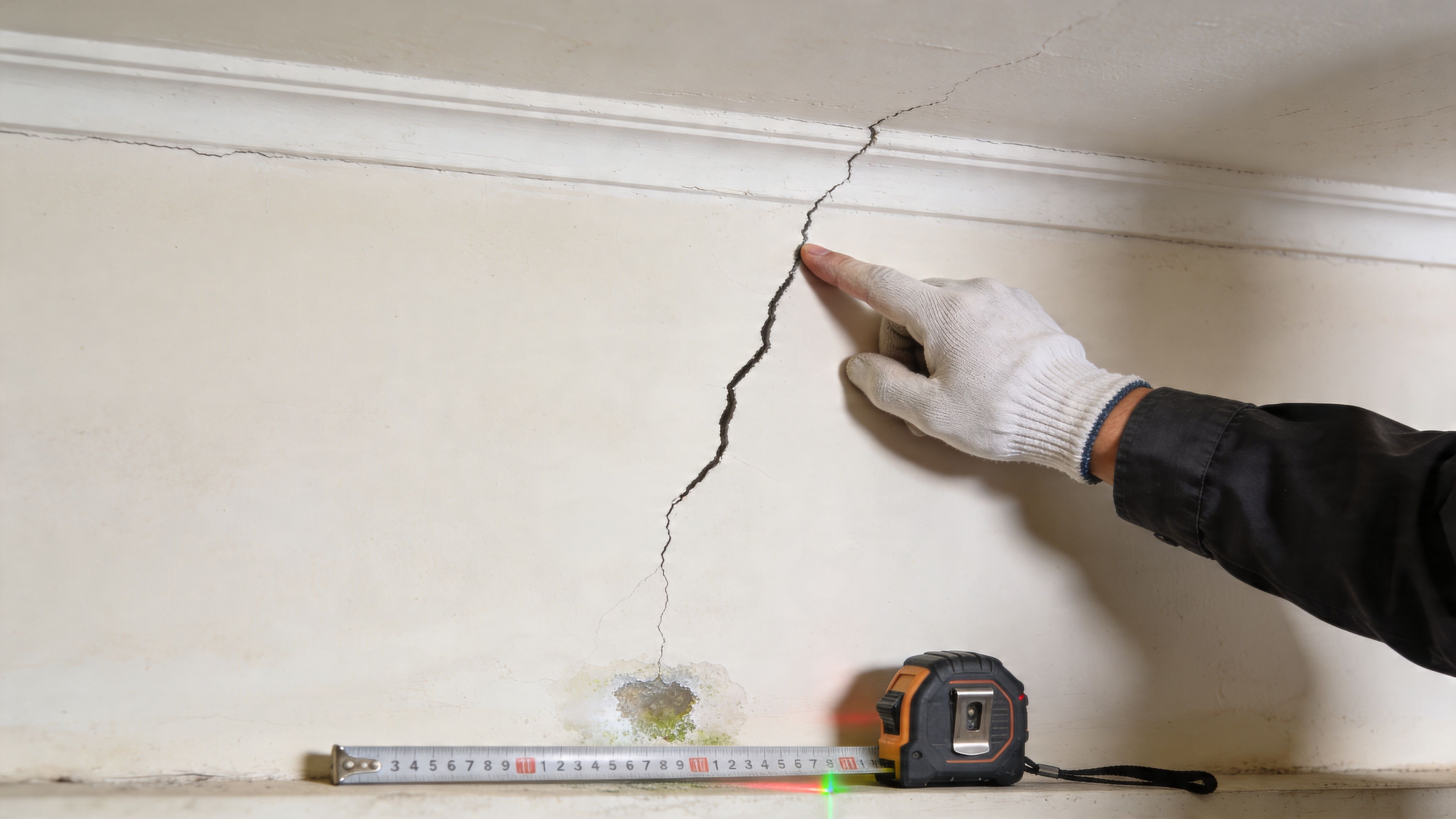
Structural movement is the one that unsettles buyers fastest. A surveyor may find stepped cracking, distorted openings, sloping floors, or signs that openings have been repaired more than once. The financial impact isn’t just the repair itself. It can affect lender confidence, insurance conversations, and the speed at which you need specialist advice.
Significant damp and timber decay can be just as disruptive. A patch of staining rarely stays local in an old house. The report may connect internal dampness to failed rainwater goods, bridging, poor ventilation, or defective external finishes. Once decay reaches hidden timber ends, floor structure and joinery can become part of the job as well.
Roof failure is another common tipping point. On site, this may begin with slipped coverings, defective flashings, daylight where it shouldn’t be, or sagging timbers in the loft. In practical terms, roof problems don’t wait politely. Water gets in, insulation performance drops, ceilings stain, timber condition worsens, and buyers suddenly inherit a project that has to start immediately.
A defect matters financially when it forces your timetable, not just your wallet.
Drainage problems have a similar effect. Slow-running or defective drains can sit unnoticed in the background until they cause smells, dampness, local movement, or repeat blockages. Buyers often underestimate these because they’re underground. Surveyors don’t.
The key issue isn’t whether an old house has defects. Most do. The key issue is whether the defects are already reflected in the agreed price and whether you can absorb the disruption of putting them right.
A red-rated issue can have several layers of cost:
Buyers often face unexpected complications. They budget for one visible problem and miss the chain reaction. A failed roof covering can become ceiling repairs, timber treatment, insulation upgrades, and decoration. A movement issue can become monitoring, drainage checks, and changes to lending terms.
What works is using the survey to identify the defects that alter ownership cost in the first year. What doesn’t work is treating every issue as mere “old house stuff”.
A good outcome depends as much on the surveyor as the survey type. You need someone with the right qualification, experience with the property type, and a reporting style that turns technical findings into decisions you can use.
Start with the basics. Confirm the surveyor is RICS-chartered and ask whether they regularly inspect properties like the one you’re buying. Experience matters because a surveyor who mostly sees modern estate housing may approach a heavily altered period property very differently from someone who deals with them every week.
Then ask practical questions:
What property types do you inspect most often
This tells you whether old, listed, extended, or non-standard homes are routine work for them.
Will the report include repair cost guidance where practicable
That point matters if your main aim is negotiation and budgeting.
How do you handle roofs that are hard to inspect from ground level
Modern methods can add useful evidence in such situations.
Emerging technology is becoming more relevant here. Data cited for 2025 reports that drone surveys identify 28% more roof defects in older properties than traditional methods, yet only 12% of Level 3 reports currently include this, according to this discussion of Level 3 survey technology and drone use. That doesn’t mean every house needs a drone. It does mean you should ask whether difficult roof areas can be assessed more effectively.
If you want background on how drones are being discussed within the profession, the RICS Technical Partner Program is a useful reference point for understanding why some surveyors are integrating those tools more confidently.
A better instruction produces a better report. Don’t just send the address and ask for a quote.
Give the surveyor:
For buyers who want a straightforward route to local options, Survey Merchant’s guide on choosing a surveyor for a property purchase is helpful, and Survey Merchant itself is one example of a UK platform that matches instructions to a panel of qualified surveyors across multiple disciplines.
Don’t choose on price alone. Choose on fit. The cheapest report is poor value if it leaves you with the same unanswered questions you started with.
The right instruction is clear, early, and specific. Tell the surveyor what worries you. Good surveyors want that context.
A Level 3 report becomes most useful the day after you read it. That’s when you stop treating it as information and start using it for advantage.
Don’t go back to the seller with a vague complaint that “the survey found lots wrong”. That usually gets nowhere. Build your case around three categories only:
Then present them calmly through the agent or solicitor. Keep emotion out of it. The strongest position is factual: these issues were not fully apparent during viewing, they affect the true cost of acquisition, and the agreed price should reflect that.
You usually have three realistic options:
The report is not an argument. It’s evidence. Use it that way.
Your first repair budget should be a phased plan, not one large guess. Split works into immediate, early, and later items.
Immediate items are the defects that protect the building or its occupants. Early items are the repairs that prevent deterioration over the next period of ownership. Later items are maintenance and upgrades that can be planned around cash flow.
That approach helps in two ways. First, it stops you overreacting to a long list of defects that aren’t all urgent. Second, it stops you under-budgeting for linked works that need doing together.
A practical post-survey plan looks like this:
A good Level 3 report gives you more than permission to renegotiate. It gives you a roadmap for ownership. Even if the seller won’t move on price, you can still decide with your eyes open, your budget grounded, and your expectations realistic.
If you need a level 3 house survey for an older, altered, or higher-risk property, Survey Merchant can connect you with a suitable qualified surveyor from its UK-wide panel so you can get a detailed report, understand the actual condition of the building, and make a better-informed decision before you commit.
Survey Merchant provides vetted RICS surveyors across 100+ UK locations at fixed fees:
→ Level 2 Home Survey (HomeBuyer Report)
→ Level 3 Building Survey (full structural survey)
→ RICS Red Book property valuations
→ Party wall surveyors — notices, awards & schedules of condition
→ Expert witness surveyors — CPR Part 35 reports for property disputes