Building Surveying
Sep 4, 2026
Top surveyor platforms UK: your practical booking guide
Discover the top surveyor platforms UK to easily book RICS-regulated chartered surveyors with clear terms and reliable quotes.

Use an RICS-aligned surveyor marketplace that matches you with regulated chartered surveyors and shows clear engagement terms before you pay. That is the short answer. The best surveying platforms in the UK do three things well: they pre-qualify surveyors against RICS membership, they let you review a sample report before committing, and they give you a written scope of what the inspection will and will not cover.
Three steps to get started now:
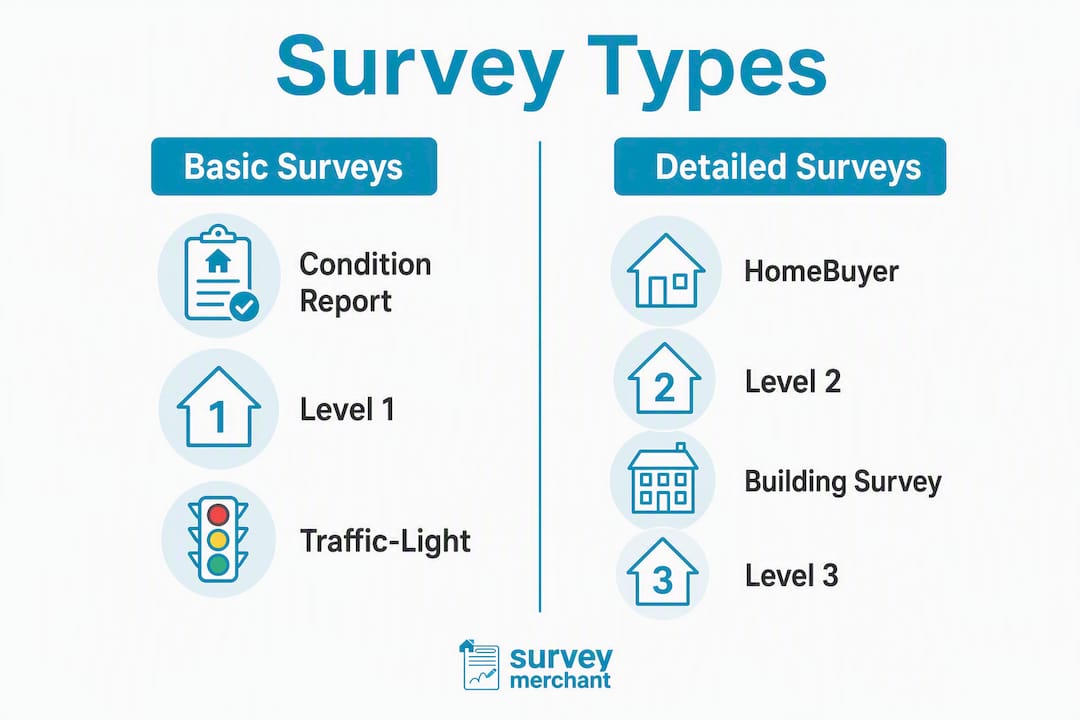
RICS defines surveying services across three residential levels and a broad range of specialist disciplines. Knowing which one you need before you search saves time and prevents you from paying for a scope that does not match your situation.
| Survey type | What it covers | Typical use case |
|---|---|---|
| Condition report (Level 1) | Basic traffic-light condition ratings; no advice on repairs | New or near-new properties in good condition |
| Homebuyer survey (Level 2) | Visible defects, maintenance priorities, brief valuation option | Standard residential purchase |
| Full building survey (Level 3) | Detailed construction analysis, defect causes, remediation guidance | Older, unusual, or significantly altered properties |
| Specific defect report | Targeted investigation of one known issue (damp, crack, roof) | Pre-purchase concern or post-purchase dispute |
| RICS valuation | Formal Red Book valuation for mortgage, probate, or litigation | Lender requirement or legal proceeding |
| Party wall survey / award | Formal notice, agreement, and award under the Party Wall Act 1996 | Extensions, loft conversions, boundary works |
| Snagging inspection | Defect list for new-build handover | New-build purchase before legal completion |
| Expert witness report | CPR Part 35-compliant report for court or tribunal | Construction disputes, insurance claims |
| Commercial property survey | Condition and compliance assessment for commercial premises | Acquisition, lease renewal, dilapidations |
The survey level matters beyond cost. A Level 2 report will not investigate concealed defects or provide structural calculations. If your lender requires a specific valuation format, a condition report will not satisfy it. Surveymerchant’s building surveying services page sets out what each level delivers so you can match the scope to your actual need before requesting quotes.
“RICS advises consumers to check whether a firm is ‘Regulated by RICS’ for peace of mind and protection; regulated firms must demonstrate appropriate professional indemnity insurance and client-money protections where applicable.” — RICS consumer guide on regulated protection
Choosing a platform that only lists RICS-regulated firms is not a formality. RICS-regulated firms must maintain minimum professional indemnity insurance, follow the RICS Rules of Conduct, and give clients access to a formal complaints process if something goes wrong. That last point matters more than most buyers realise: without a regulated firm, your dispute route is limited to civil litigation.
On any platform or surveyor profile, look for the phrase “Regulated by RICS” rather than simply “member of RICS.” Individual surveyors may hold MRICS (Member) or FRICS (Fellow) designations, but the firm itself must carry regulated status for the consumer-protection framework to apply. You can cross-check any surveyor’s credentials directly via the RICS Find a Member database.
Pro Tip: Ask the platform whether the surveyors on its panel are employed by RICS-regulated firms, not just individually qualified. A sole practitioner holding MRICS but operating outside a regulated firm structure may not carry the same formal protections.
A short checklist prevents the most common booking mistakes. Work through these before confirming any instruction:
Red flags in a sample report: missing property measurements, vague recommendations with no remediation priority, no mention of what was excluded from inspection, and no guidance on approximate repair costs or urgency. A report that reads like a liability disclaimer rather than technical advice is a signal to look elsewhere.
Costs vary with property size, age, construction type, and location. The figures below are indicative shapes only.
| Survey type | Approximate cost range | Typical turnaround (instruction to report) |
|---|---|---|
| Condition report (Level 1) | £250 | 3–5 working days |
| Homebuyer survey (Level 2) | £400 | 5 working days |
| Full building survey (Level 3) | £600 | 14 working days |
| Specific defect report | £300 | 5 working days |
| Snagging inspection | £300 | 3 working days |
| Party wall survey / award | £700 | 4–8 weeks (statutory timescales apply) |
| Expert witness report | £1,500 | 4–8 weeks |
| RICS valuation | £300 | 5 working days |
“A building survey investigates the construction and condition of a property; the report references visible defects and guidance on maintenance and remedial measures; the extent is agreed at instruction.” — RICS Guidance and Definitions of Surveying Services
Standard reports cover visible defects, maintenance priorities, and remediation guidance. They do not cover hidden defects behind finishes, invasive testing (unless separately instructed), or structural calculations. Cancellation policies vary: some platforms apply a cancellation fee once an inspection date is confirmed; others allow rescheduling within a set window at no charge. Always read the platform’s terms before confirming a date.
The process is straightforward when you know what each step involves.
For a detailed walkthrough of the full process, the property survey workflow guide on Surveymerchant covers each stage from instruction to report review.
Before the inspection, prepare: the title register or lease documents, a note of any recent repairs or known defects, your preferred access windows, and contact details for the vendor or managing agent. Surveyors who receive this information in advance produce more accurate reports and fewer follow-up queries.

Most residential purchases are served by a Level 2 or Level 3 survey. Several scenarios call for something more specific.
Party wall matters arise whenever you or a neighbour plan works that affect a shared wall, boundary, or excavation near a boundary. The Party Wall etc. Act 1996 sets out formal notice requirements and timescales. A party wall surveyor prepares the award that protects both parties. Surveymerchant’s party wall services page explains the process, and the step-by-step party wall agreement guide covers the five procedural stages and typical timings.
Expert witness instructions are needed when a construction dispute reaches court or tribunal. The surveyor acts as an impartial expert under CPR Part 35, not as an advocate for either party. Lead times are longer (typically four to eight weeks), fees are higher, and the engagement letter is more formal. Surveymerchant’s construction expert witness service covers CPR Part 35 reports specifically.
Snagging inspections apply to new-build purchases. Developers are not obliged to fix defects identified after legal completion, so commissioning a snagging report before handover gives you a documented defect list to present to the developer while they remain contractually liable. The complete snagging inspection guide from BRCKS provides a useful independent checklist of what a thorough snagging report should cover.
Commercial property surveys follow different standards and typically require a surveyor with commercial experience. Surveymerchant lists commercial property survey services for acquisitions, lease renewals, and dilapidations assessments.
When requesting a specialist instruction, ask the platform to confirm the surveyor’s specific experience in that discipline, not just their general RICS membership. For party wall and expert witness work, expect a formal engagement letter rather than a standard booking confirmation.
Surveymerchant connects property owners, buyers, developers, and estate agents with a curated panel of RICS-aligned surveyors across the UK. The platform covers the full range of residential and commercial instructions: building surveys, RICS valuations, specific defect reports, party wall services, snagging inspections, expert witness reports, and commercial property surveys.
The fee model is straightforward: you pay the surveyor for their services, not the platform. Surveymerchant generates revenue through referral arrangements with the professionals on its panel, which keeps the booking process transparent for the client. Published service pages describe scope and deliverables for each instruction type, and sample reports are available before you commit.
For first-time buyers, the platform’s informational content explains what each survey level covers and what lenders typically require. Developers and estate agents benefit from the specialist categories and the ability to match instructions by postcode and property type. The complaints and support pathway is published, so if a dispute arises, the escalation route is clear from the outset.
Choosing an RICS-regulated surveyor via a transparent marketplace is the most reliable way to protect your position in any UK property transaction.
| Point | Details |
|---|---|
| Verify RICS regulation first | Confirm the firm (not just the individual) is RICS-regulated before paying any fee. |
| Match the survey level to the property | A Level 2 report will not cover structural calculations; a Level 3 is worth the extra cost on older or altered properties. |
| Request a sample report before booking | A credible sample shows scope, photos, prioritised remediation, and inspection limitations. |
| Check cancellation and PI cover terms | Understand the refund window and confirm the surveyor’s professional indemnity level before confirming a date. |
| Surveymerchant as your starting point | Surveymerchant offers a curated RICS-aligned panel covering building surveys, valuations, party wall, snagging, and expert witness across the UK. |
The property survey market has a persistent problem: buyers often choose a surveyor on price alone, without checking qualifications, reading a sample report, or understanding what the scope excludes. The result is a report that satisfies a lender’s checkbox but leaves the buyer with no useful guidance on what the property actually needs.
The platforms that genuinely serve buyers are the ones that make the pre-booking information as detailed as the post-booking report. That means publishing sample reports, stating the firm’s RICS-regulated status clearly, and explaining the fee model without burying it in terms and conditions. When a platform is transparent about how it earns money and what the surveyor will and will not inspect, buyers make better decisions and disputes are rarer.
The conventional wisdom is that any RICS-qualified surveyor will do. In practice, the surveyor’s experience with your specific property type, their willingness to discuss scope before inspection, and the platform’s support if something goes wrong are what separate a useful survey from a document that sits in a drawer.
Surveymerchant gives you direct access to a curated panel of RICS-regulated surveyors without the guesswork of cold-searching directories. You pay the surveyor, not the platform, and every instruction starts with a clear written scope.

Before you make contact, have these ready: your property address and tenure (freehold or leasehold), the reason for the survey (purchase, mortgage, dispute, or renovation), any known defects or recent repair history, and your preferred inspection windows. That information lets the platform match you accurately and speeds up report delivery.
Browse building surveying services to select your survey level, or go straight to commercial property surveys if you are dealing with a non-residential instruction. Request quotes, review sample reports, and confirm your written engagement before the inspection date is set.
The following authoritative sources confirm the consumer-protection points and technical definitions covered in this guide.
“RICS Home surveys are compiled by qualified surveyors after a physical inspection of a property, assessing its condition, identifying risks and potential legal issues.” — RICS Home Surveys standards page
Survey Merchant provides vetted RICS surveyors across 100+ UK locations at fixed fees:
→ Level 2 Home Survey (HomeBuyer Report)
→ Level 3 Building Survey (full structural survey)
→ RICS Red Book property valuations
→ Party wall surveyors — notices, awards & schedules of condition
→ Expert witness surveyors — CPR Part 35 reports for property disputes