We use cookies to improve your experience on our site, analyze site traffic, and assist in our marketing efforts. By clicking "Accept all," you agree to the storing of cookies on your device. You can choose to "Reject all" non-essential cookies. For more information, please read our Cookie Policy.
Build Over Agreement: 2026 UK Guide to Costs & Rules
A complete 2026 guide to build over agreements in the UK: the 3-metre rule, the 2011 sewer transfer, published water company fees, the application process, retrospective consent and why an accredited surveyor makes approval faster.
Planning a rear extension, a side return, a conservatory or a basement in 2026? If a public sewer runs under or close to your home, you will almost certainly need a build over agreement from your water company before the first trench is dug. It is one of the most commonly overlooked approvals in UK home improvement, and missing it can stall your building control sign-off, complicate a future sale and, in the worst cases, lead to a water company demanding changes to a finished structure. This guide explains what a build over agreement is, when the 3-metre rule applies, what it costs in 2026, how long it takes, and what to do if you have already built without one.
What is a build over agreement?
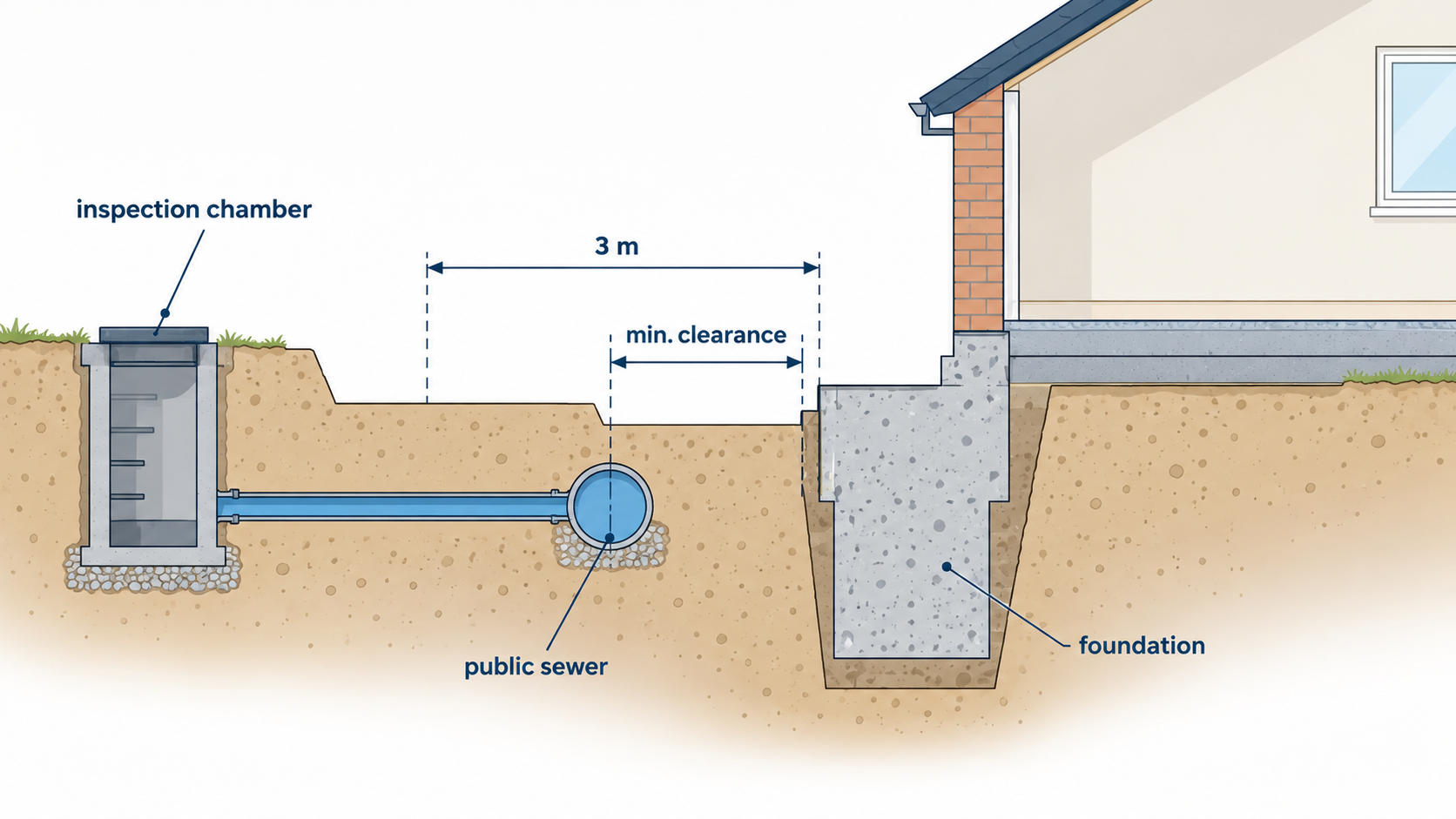
A build over agreement is written consent from your water and sewerage company to build over, or within 3 metres of, a public sewer or lateral drain. It confirms your foundations will not damage the pipe and that the company can still access it, and building control will not sign off the work without it.
Key takeaways
A build over agreement is formal written consent from your sewerage undertaker (Thames Water, Southern Water, Anglian Water, Severn Trent and so on) to build over or within 3 metres of a public sewer or public lateral drain.
The requirement flows from Requirement H4 of the Building Regulations and water company powers under the Water Industry Act 1991. Planning permission does not cover it.
Many water companies now offer a cheap self-declaration route for simple cases and a formal application (with a CCTV drain survey) for everything else; Southern Water’s published 2026/27 prices are £102 and £771.60 respectively.
Simple consents can be issued in two to three weeks; formal applications that need CCTV surveys typically take six to eight weeks, and complex cases involving diversions can run for months.
Without an agreement, building control will usually refuse a completion certificate, and buyers’ solicitors will raise the missing consent on sale.
A suitably qualified, accredited building surveyor can locate the sewer, prepare compliant drawings and foundation details, and coordinate the application alongside party wall and building regulations approvals.
Who does the agreement protect?
The agreement protects two parties. It protects you, because an extension built over a collapsing or inaccessible sewer is a structural and financial liability. And it protects the sewerage undertaker, which has statutory powers under section 159 of the Water Industry Act 1991 to inspect, maintain, repair and alter its pipes on private land, after giving reasonable notice. If your foundations sit on top of that pipe, those powers still apply, and the cost of working through your new floor can land on you.
A manhole in the lawn is the first clue that a public sewer may run beneath your extension footprint.
Why did the 2011 sewer transfer make this so common?
Until 1 October 2011, most of the drains running between neighbouring houses and the street were privately owned. On that date, the Private Sewers Transfer moved ownership of most shared sewers and lateral drains (the section of pipe beyond your property boundary) to the regional water companies. Overnight, pipes that had been treated as private drains became public sewers, and the 3-metre consent rule began to apply to them.
This is why so many owners of semi-detached and terraced houses in England and Wales are surprised to find a “public sewer” in their back garden. The shared pipe serving several houses, often marked by inspection chambers along a row of gardens, is now public and frequently sits exactly where people want to extend. A surveyor’s first job on any extension project is therefore to establish ownership and position of every pipe within the footprint.
When do you need a build over agreement? The 3-metre rule explained
The trigger is set out in Requirement H4 of Schedule 1 to the Building Regulations, with guidance in Approved Document H. In practical terms you need to engage the water company if any of the following apply:
You are building directly over a public sewer or public lateral drain.
Any part of your new foundations will be within 3 metres of a public sewer (water companies measure from the centreline of the pipe, not its outer face).
You are within 1 metre of a public lateral drain (Thames Water’s published threshold).
You are underpinning, piling, excavating a basement or carrying out other deep groundworks near a public pipe.
There is an inspection chamber, manhole, junction or change of direction inside the proposed footprint. Approved Document H says these should not be built over where the sewer serves more than one property, so the chamber usually has to be relocated outside the new building.
Typical projects that fall into the net include single-storey rear extensions, side-return and wrap-around extensions, garage conversions with new foundations, conservatories and orangeries on new bases, and basement excavations. Detached garden rooms more than 3 metres from any public pipe generally do not need an agreement. Note that if you are creating an entirely new dwelling over a sewer, water companies will normally require a sewer diversion rather than a build over agreement.
One point catches people out: planning permission and permitted development rights have nothing to do with sewers. You can have full planning consent and still be refused a build over agreement, so check drainage before you commit to a design.
The assessment looks at horizontal clearance, foundation depth relative to the pipe invert, and whether access chambers remain outside the building.
What does a build over agreement cost in 2026?
There is no single national fee. Each sewerage undertaker publishes its own charges, and most now split applications into a low-cost self-declaration for simple, compliant proposals and a full technical application for anything else. The figures below are drawn from published 2026/27 price lists and water company guidance; always confirm the current fee with your own undertaker before applying.
Route
Typical fee (2026)
Typical timescale
Notes
Self-declaration (simple, compliant proposal)
Southern Water: £102 inc. VAT (2026/27)
Around 2 weeks
Online form; if the proposal fails the criteria it is upgraded to a formal application and the extra fee is charged.
Formal build over application with CCTV survey
Southern Water: £771.60 inc. VAT (2026/27); other undertakers commonly in the £300–£800 range
6–8 weeks (Southern Water: CCTV within 20 days, approval letter within 8 working days of the survey)
Includes a pre-construction CCTV survey of the pipe; you may supply your own compliant survey and have that element refunded.
Larger or deeper sewers, protection agreements
Varies; some undertakers add a legal agreement fee
Often 3–6 months
Needed where more than a few metres of pipe will sit under the building, or where access is restricted; expect pre- and post-construction CCTV.
Sewer diversion (section 185) instead of building over
Southern Water: from £580.80 developer-led or £3,069.60 company-led (2026/27), plus construction
Several months
Required for new dwellings over sewers, large-diameter pipes or where the proposal cannot be made compliant.
Drawings and surveys
Drainage layout and sections from an architect or surveyor; CCTV survey if self-supplied
1–2 weeks
Scale location plan, existing and proposed drainage layouts and a foundation cross-section are standard requirements.
Thames Water, which covers London and the Thames Valley, does not publish a flat residential fee on its help pages; its build over agreement guidance sets out a six-step process (apply and pay, processing, pre-construction surveys, construction, post-construction surveys, agreement issued) and confirms that an agreement must be in place before any construction starts. Fees for larger pipes rise sharply because pre- and post-construction CCTV surveys are mandatory.
The process is similar across undertakers, even if the forms differ:
Find the sewer. Lift inspection chamber covers in your garden and your neighbours’, obtain the public sewer map from the water company or a search provider, and check your title deeds for easements or covenants. Pipes added by the 2011 transfer are often unmapped, so treat any shared pipe as public until proven otherwise.
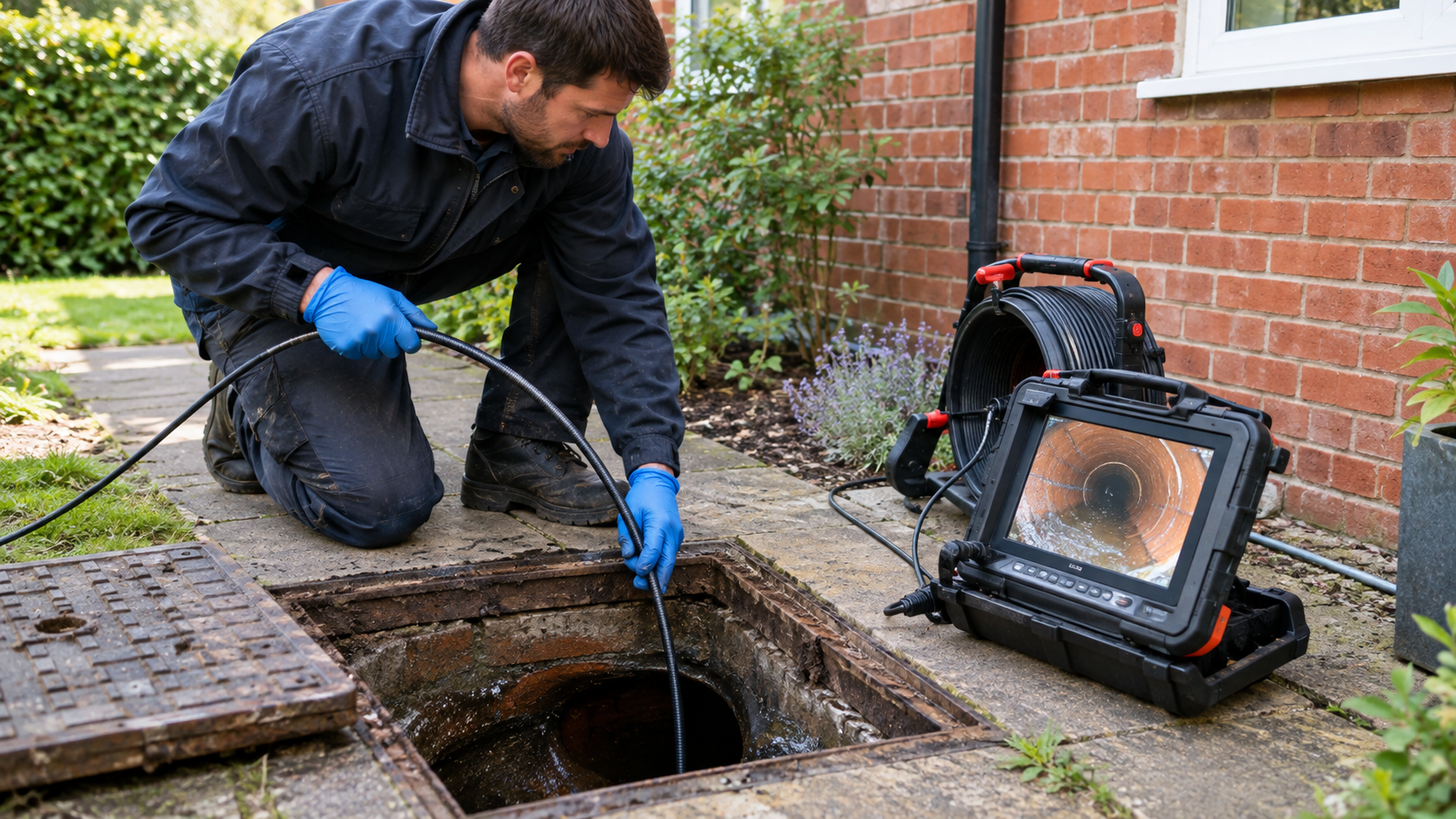
Commission a CCTV drain survey. For formal applications most undertakers want a recent (usually within six months) survey with sonde tracing so the pipe can be located and its depth and condition confirmed. A drainage survey also tells you whether repairs are needed before consent can be granted.
Design the foundations. The usual solution is a trench-fill or strip foundation taken down below the pipe’s invert level, with the pipe sleeved or bridged through the wall, pea-shingle bedding retained, and any manhole relocated outside the footprint. Raft, pad and cantilever foundations directly over the sewer are commonly refused; auger piles need stand-off distances; driven piles are generally not allowed.
Submit the application. Provide a location plan, existing and proposed drainage layouts, a foundation cross-section, your Building Regulations drawings and the fee. Deposit full plans with building control; the Building Notice route is not available for work over or near a public sewer.
Respond to conditions. The undertaker may require pipe replacement (pitch fibre, asbestos cement and unrated plastic pipes usually fail the jetting-pressure test and must be swapped for clay or ductile iron), a relocated chamber, or a protection agreement.
Build and close out. Building control inspects the drainage during the works; larger pipes get a post-construction CCTV survey before the agreement is issued.
A sonde-traced CCTV survey confirms pipe position, depth and condition, and is a standard requirement for formal applications.
What happens if you build without a build over agreement?
This is the most searched question on the subject, and the honest answer is that the consequences range from inconvenient to expensive:
No completion certificate. Local authority building control will not sign off work over a public sewer without the undertaker’s consent. Without a building regulations completion certificate, remortgaging and selling become harder.
Problems on sale. Buyers’ solicitors routinely ask whether an extension was built over or near a public sewer and request the agreement. A missing consent triggers price renegotiation, a demand for indemnity insurance or, occasionally, a withdrawn offer.
Retrospective applications are not guaranteed. Thames Water’s guidance states that retrospective agreements may be refused if the pipework was not protected to its specification. Where they are granted, you will usually need a current CCTV survey showing the pipe intact under the building.
Access rights survive. If the sewer later fails, the water company can still exercise its statutory powers to excavate and repair, and the disruption to your new room is your problem.
If you have already built, do not panic. A surveyor can arrange a CCTV survey, prepare as-built drawings and submit a retrospective application. Where consent is refused and the work was also never signed off, a regularisation certificate from building control may be achievable in parallel. If you are buying a property with an unapproved extension, read our guide on when title indemnity insurance is appropriate, and remember that insurance covers financial loss, not the physical risk of an inaccessible sewer.
Build over agreement vs sewer diversion: which is right for you?
Where the sewer runs through the middle of your proposed footprint, the water company will weigh up two options. A build over agreement leaves the pipe where it is, with your foundations designed around it. A sewer diversion under section 185 of the Water Industry Act moves the pipe outside the footprint; it is more expensive and disruptive but avoids a permanent encumbrance under your floor. Diversions become the only option for new dwellings over public sewers, for large-diameter “critical” sewers, and where an inspection chamber or junction cannot be moved. A third route is simply to redesign so the extension stops 3 metres short of the pipe, which is often the cheapest fix for a marginal encroachment.
What’s new in 2026?
Three developments are worth knowing about this year. First, several undertakers, including Southern Water and Northumbrian Water, have published refreshed 2026/27 build-over guidance and price lists, with Southern Water’s list confirming the £102 declaration and £771.60 formal application fees quoted above. Second, conveyancing practice has hardened: solicitors’ guidance published in 2025 and 2026 increasingly treats a missing build over agreement as a standard enquiry on every extended property, not an occasional one. Third, the online self-declaration routes introduced by the larger undertakers mean that a well-prepared, compliant proposal can now be cleared in around two weeks, which makes early drainage investigation more valuable than ever. Fees and criteria change each April, so always check the current charging scheme before budgeting.
How a surveyor helps with a build over agreement
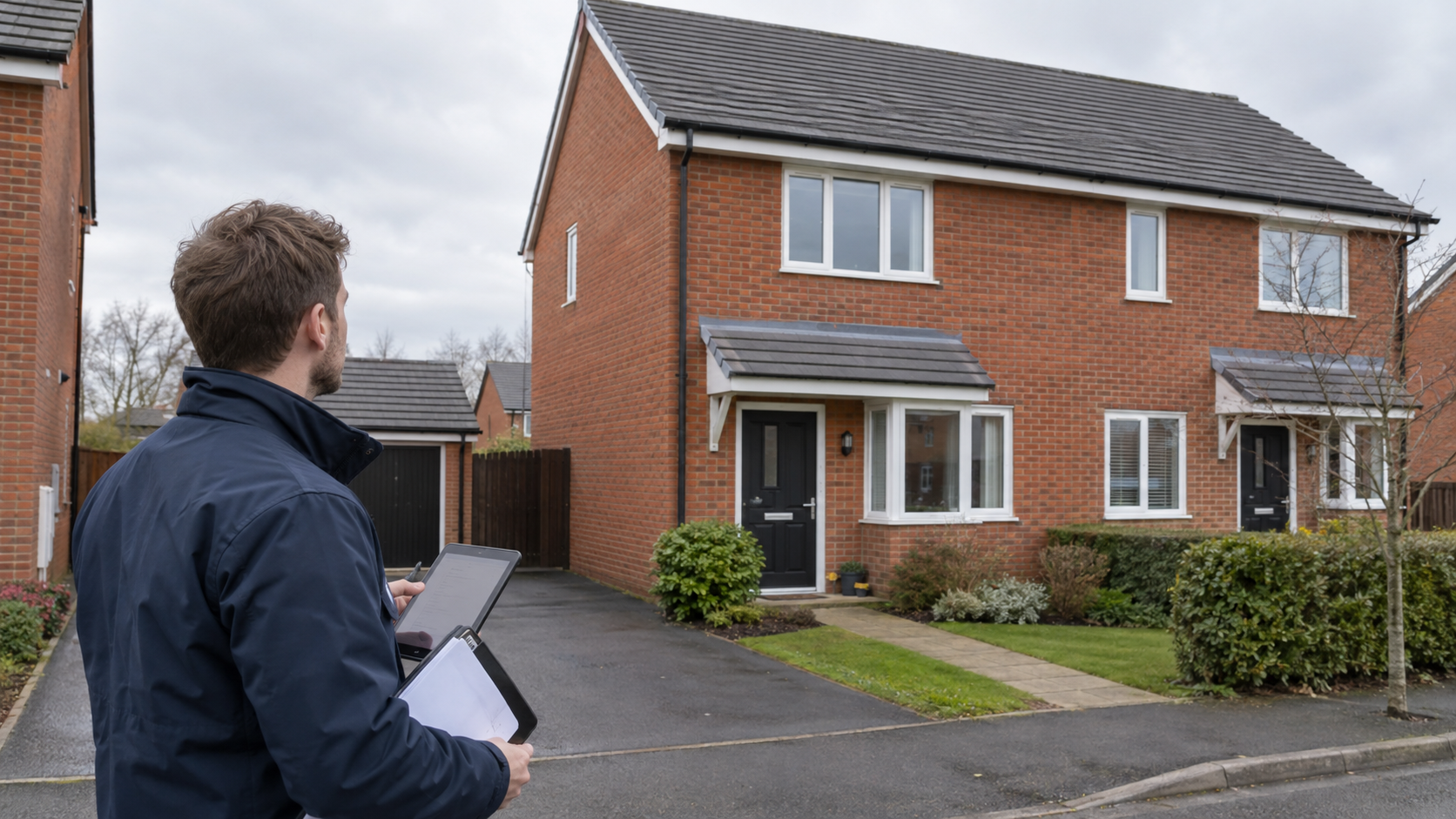
Water companies assess drawings, not intentions. A suitably qualified, accredited building surveyor, whether regulated by RICS, CIOB, RPSA or another recognised body, will locate and record the public sewer, interpret the CCTV survey, specify foundation depths and clearances that meet the undertaker’s technical standards, and prepare the drainage layouts and sections the application requires. Because extension projects almost always involve party wall notices and full-plans building regulations submissions as well, having one professional coordinate all three approvals avoids the delays that come from conflicting drawings.
Why choose Survey Merchant for your build over agreement?
Survey Merchant connects homeowners and developers across the UK with a panel of suitably qualified, accredited surveyors regulated by bodies such as RICS, CIOB and RPSA, matched to the job in hand. For a build over agreement that means:
The right specialist for the job: building surveyors who understand Approved Document H, foundation design near sewers and the technical standards each water company applies.
Nationwide coverage with local knowledge: surveyors familiar with Thames Water, Southern Water, Anglian Water, Severn Trent, Yorkshire Water, United Utilities and Welsh Water processes.
Joined-up approvals: drainage, party wall and building regulations handled together so your project is not held up by one missing document.
Transparent, competitive fixed fees agreed up front, with fast turnaround on site visits and drawings.
Impartial advice: if a redesign or diversion is the cheaper route, we will say so.
End-to-end support: from locating the sewer to the post-construction survey and retrospective applications where work has already started.
Do I need a build over agreement for a single-storey extension?
Yes, if any part of the new foundations will be over or within 3 metres of a public sewer or lateral drain. Planning permission and permitted development rights do not remove this requirement, so check the public sewer map and your garden inspection chambers before finalising the design.
How much does a build over agreement cost in 2026?
It depends on your water company and the route. Southern Water's published 2026/27 prices are £102 for a self-declaration and £771.60 for a formal application with CCTV survey. Other undertakers typically charge a few hundred pounds for straightforward cases, with drawings and any pipe repairs on top.
How long does a build over agreement take?
Simple self-declarations can be cleared in around two weeks. Formal applications that need a CCTV survey usually take six to eight weeks, and cases involving large sewers, protection agreements or diversions can take three to six months. Missing drawings are the most common cause of delay.
Can I sell my house without a build over agreement?
You can, but expect the buyer's solicitor to raise it. A missing agreement often leads to a request for a retrospective consent, indemnity insurance or a price reduction, and without building control sign-off some lenders will be cautious. Resolving it before marketing the property is usually cheaper.
Can I get a retrospective build over agreement?
Often, but it is not guaranteed. Water companies such as Thames Water may refuse if the pipe was not protected to their specification. You will normally need a current CCTV survey showing the sewer is intact and accessible, plus as-built drawings of the foundations.
Is a build over agreement the same as building regulations approval?
No. The agreement is consent from the water company that owns the sewer; building regulations approval comes from building control. You need both, and building control will not issue a completion certificate for work over a public sewer until the water company has consented.