Leasehold
Jul 16, 2026
Drainage Surveys for Homebuyers: What to Expect
CCTV drainage surveys reveal hidden pipe defects, estimated costs and how BS EN-coded reports protect buyers before exchange.

When buying a home, a drainage survey is a smart step to avoid costly surprises. Standard property surveys don’t check underground drainage systems, but CCTV drainage surveys can help identify hidden issues like cracks, blockages, or tree root damage. These problems, if undetected, can lead to expensive repairs or even structural damage.
Here’s what you need to know:
Timing matters - get the survey done before finalising the purchase to protect yourself from potential liabilities.

Drainage Survey Costs and Benefits for UK Homebuyers
A drainage survey examines all accessible parts of your underground drainage system using cameras inserted through manholes, inspection chambers, and rodding eyes. It checks every segment of the drainage pipes, documenting details like their material, diameter, and depth. The survey also maps the flow direction and locations of pipes, manholes, and connections. Additionally, it identifies shared systems or pipes that may cross into neighbouring land, which could complicate future repairs. Impressively, professional drainage surveys boast a 99% success rate in detecting underlying issues [1]. These inspections are crucial for uncovering common structural problems during the CCTV analysis.
Once the drainage components are thoroughly inspected, CCTV surveys often uncover hidden issues. These can include displaced joints, sections that have bellied or cracked, collapses, and tree roots invading and damaging pipe joints. Older properties, particularly those with original clay drainage systems, are especially prone to these kinds of defects and require careful evaluation [1].
Modern drainage surveys rely on high-definition waterproof cameras attached to flexible rods or crawler units. This technology provides real-time imaging, enabling engineers to diagnose problems without resorting to invasive digging [1]. As UK Drainage Services puts it:
Think of it as an MOT for your drains: a camera goes in, we see exactly what's going on, and you get a clear report telling you the condition of your pipes [1].
Specialist software like WinCan is used to categorise issues according to national industry standards (BSEN13508). Each defect is given a severity rating, and the recorded footage - complete with time-stamped videos and photographs - is widely accepted by insurers and mortgage lenders as proof of the drainage system's condition. Remarkably, over 50% of serious home drainage problems are detected solely through these camera surveys [3]. This cutting-edge imaging technology plays a pivotal role in planning the next steps for addressing drainage issues.
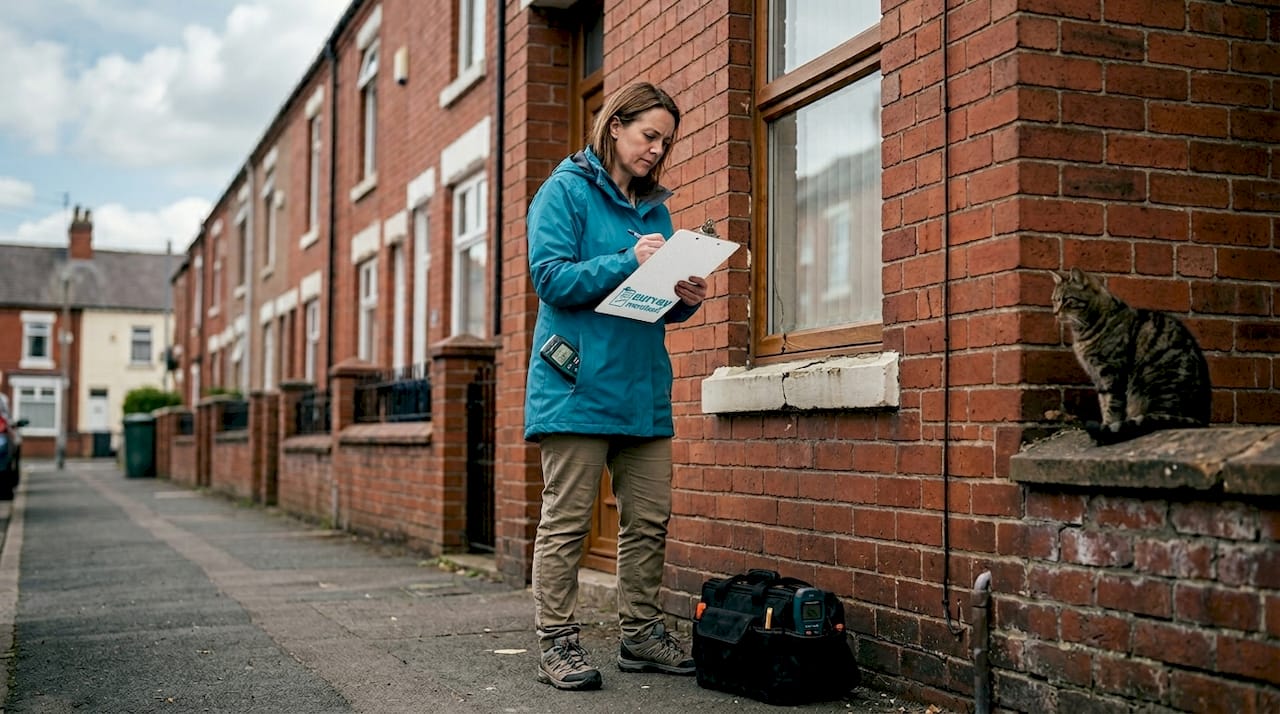
Before any cameras come into play, the process begins with a thorough site assessment. The surveyor will walk around the property, identifying access points such as manholes, inspection chambers, and rodding eyes. This step helps map out the inspection route. During this stage, they’ll also discuss the property’s history with you - covering recurring blockages or any known drainage issues - and assess the likely pipe materials, diameters, and depths. This information helps them select the right camera equipment for the job.
It’s a good idea to clear any obstructions, like vehicles or garden furniture, from manholes and inspection chambers before the survey begins. If you’re aware of past repairs, sharing these details can help the engineer locate potential weak spots. For a typical domestic property, a standard CCTV drainage survey usually takes between one and three hours to complete [1].
Once the site assessment is complete, the technical inspection begins. High-definition waterproof cameras are inserted into the drainage system through the identified access points. These cameras, which are mounted on flexible rods or crawler units, navigate the entire pipe network while recording live footage. The engineer monitors this feed in real time, carefully noting any defects, blockages, or structural problems. Every accessible section of the drainage system is thoroughly inspected, and the footage is time-stamped for detailed analysis later.
It’s worth noting that standard RICS Homebuyer Surveys (Level 2) and Building Surveys (Level 3) do not include this type of in-depth drainage inspection. If you require this level of detail, you’ll need to arrange a dedicated CCTV drainage survey separately [1][2].
Once the CCTV inspection wraps up, you’ll receive a detailed report outlining the condition of your drainage system. This report includes technical drawings that map out the layout and location of all drainage components. It also clarifies which parts of the system are your responsibility and which fall under the water company’s remit.
Each defect identified during the inspection is given a severity rating, and the report includes time-stamped footage as evidence. This documentation is widely recognised by mortgage lenders, insurance companies, and solicitors. Additionally, the report may flag issues like vermin infestations and provide recommendations for any necessary repairs or remedial actions.
Hold onto this report - it’s valid for five years and can be a useful asset if you decide to sell the property within that timeframe. To ensure the report meets industry standards, make sure your surveyor is NADC certified and holds EU Skills Certification [4].
The size of your property and the complexity of its drainage system play a major role in determining survey costs. Larger properties naturally have longer pipe runs - sometimes exceeding 30 metres - which means more time is needed to inspect the entire system. Homes with multiple extensions, converted lofts, or annexes often feature intricate networks of lateral connections, gullies, and rainwater pipes, all of which require individual assessment.
Older properties, particularly Victorian or Edwardian homes, often present additional challenges. These houses may have drainage systems made from deteriorating materials like clay or pitch fibre, and the layouts are often undocumented. As one surveyor from Terrain Surveys explains:
A straight 10-metre run is quicker to check than a maze of interconnected drains [5].
Hidden manholes can also increase costs. If they’re concealed under decking, paving, or located in difficult-to-access areas like beneath a conservatory, additional labour or specialised equipment may be required.
In terms of pricing, a basic CCTV survey for the main drain run typically costs £150–£250, while a more comprehensive survey covering all laterals and connections ranges from £250–£500. If blockages need clearing, this could add around £150 to the total [7][5].
The level of detail you need from the survey can also impact the cost. Basic inspections might only include a verbal summary or video footage. However, mortgage lenders and insurers usually require a BSEN13508-coded report. These reports include condition ratings, time-stamped footage, and a drainage map [8].
For building work or a Build Over agreement, a more detailed survey is essential. This type of survey often includes CAD drawings showing pipe diameters and depths, with prices ranging from £300 to £800+ [6][7].
Professional reports use a condition grading scale from 1 to 5, in line with WRc standards. Grade 1 indicates excellent condition, while Grade 5 signifies a collapsed or failed pipe [7]. This standardised system ensures the report is widely accepted by parties such as lenders and contractors.
Where you live can also affect survey costs. In London and the South East, for instance, homeowners typically pay 10–20% more than those in Northern England, Wales, or Scotland due to higher overheads and demand [5]. For example, a survey costing £300 in Manchester might cost around £330–£360 in central London.
It’s important to check whether quotes include VAT, as many companies list prices without it [8]. If you need a quick turnaround - such as a report within 24–48 hours - be prepared for a 20–30% price increase [8]. To get the best deal, it’s wise to gather at least three quotes, as prices for the same property can vary by 50% or more between providers [7].
As Regan Cordner from 247 Drainage UK points out:
Compared to the four-figure repair bills these surveys routinely prevent, the upfront fee rarely stings [8].
A drainage survey is an affordable way to protect yourself before committing to a property purchase. With around 18% of UK homebuyers encountering defects - and nearly half facing repair costs between £2,000 and £7,000, with average hidden expenses exceeding £7,250 - a survey costing just £300–£400 can save you from significant financial headaches[10][9].
By arranging a pre-contract drainage survey, you gain the ability to renegotiate the purchase price or request repairs before the deal is sealed. Once contracts are exchanged, the legal responsibility for the drains falls squarely on you. As 247 Drainage Services Ltd puts it:
Your legal responsibility for drains starts the day you sign, not after a problem appears[9].
In addition to preventing unexpected costs, a professional BS EN 13508-coded drainage report can protect you from insurance claim rejections and meet the growing documentation requirements of mortgage lenders, especially for older properties. It also clarifies shared drainage responsibilities, which is crucial since 1-in-5 post-move disputes and 1-in-8 major insurance claims stem from liabilities overlooked during early underground mapping[9]. This survey not only safeguards your finances but also confirms the condition of the property's hidden drainage system.
Timing is critical. Once your offer is accepted, but before exchanging contracts, arrange a drainage survey. This period is your chance to act on the findings, whether by renegotiating, requesting repairs, or even walking away if necessary. Make sure the survey report adheres to BS EN 13508 standards to satisfy both lenders and insurers.
Survey Merchant offers access to a network of experienced surveyors who can conduct drainage surveys alongside other essential property checks. Their platform ensures you receive unbiased, high-quality service tailored to your specific property - be it a Victorian terrace or a modern build. Acting early can help you avoid costly surprises and give you confidence in your investment.
Absolutely, a drainage survey remains important. While Level 2 and Level 3 property surveys give you a comprehensive overview of the building’s condition, they usually don’t delve deeply into the drainage system. A drainage survey focuses specifically on the state of the drains and pipes, helping to uncover potential problems that might not be immediately visible.
A drainage survey can help determine if your drains are shared with your neighbours. By inspecting and mapping the drainage system, it provides a clear picture of connections and ownership details. This can be crucial for understanding shared responsibilities and any potential liabilities.
If the drainage survey reveals major problems like structural damage or leaks, take time to carefully review the report to understand the extent of the issues. Speak with your solicitor or conveyancer about your next steps. These might include negotiating for repairs, seeking a price reduction, or even deciding to pull out of the purchase altogether.
Should repairs be agreed upon, make sure everything is clearly documented and that the work is carried out by qualified professionals. If you choose not to go ahead with the purchase, ensure you follow the correct contractual procedures to avoid complications.
Survey Merchant provides vetted RICS surveyors across 100+ UK locations at fixed fees:
→ Level 2 Home Survey (HomeBuyer Report)
→ Level 3 Building Survey (full structural survey)
→ RICS Red Book property valuations
→ Party wall surveyors — notices, awards & schedules of condition
→ Expert witness surveyors — CPR Part 35 reports for property disputes