We use cookies to improve your experience on our site, analyze site traffic, and assist in our marketing efforts. By clicking "Accept all," you agree to the storing of cookies on your device. You can choose to "Reject all" non-essential cookies. For more information, please read our Cookie Policy.
List by 6 October 2026 or Miss a Christmas Completion: The 68-Day Reality and Where Your Survey Fits
October 2026 news: HomeOwners Alliance says 6 October is the last day to list for a pre-Christmas sale as time-to-offer slows to 68 days. Regional timings, the conveyancing reality and where your RICS survey fits.
Ten days. That is how much slower the UK property market has become in a single year, and it is the margin standing between sellers who agree a sale before Christmas and those who do not. According to the HomeOwners Alliance, reporting on 5 October 2026, sellers now need 68 days on average to go from listing a home to accepting an offer, a timeline that puts the 6 October listing deadline into sharp focus for anyone hoping to be settled before the festive break.
The maths is simple but unforgiving. Count back from Christmas Day, subtract 68 days, and the last realistic date to list a property lands on 6 October 2026. Miss it, and the odds of an agreed sale before the tree goes up start falling fast.
Key Takeaways
HomeOwners Alliance says 6 October 2026 is the last practical day to list a home for a realistic chance of an agreed sale before Christmas, based on an average 68-day listing-to-offer timeline.
That average is roughly 10 days slower than the same point last year, and varies hugely by region, from 25 days in Glasgow city centre to 85 days in South West England.
An accepted offer is not a completed sale. Conveyancing typically runs into January, so buyers should have instructed a solicitor by mid-September for the best shot at completing before Christmas.
Booking a RICS Level 2 or Level 3 survey within days of an accepted offer is one of the few steps buyers fully control, and winter surveys often catch damp and heating faults that summer inspections miss.
Wider market conditions, slowing house price growth, falling mortgage approvals and the upcoming Autumn Budget, mean both buyers and sellers should build in contingency time.
Why the 6 October Deadline Matters This Year
The 68-day figure is not an abstract statistic. It is the practical dividing line between a smooth festive move and a sale that drags into the new year without a single box packed. Paula Higgins, CEO of the HomeOwners Alliance, put it plainly: "With the summer over and the evenings getting darker that bit quicker, it may feel a bit premature to mention Christmas. But 6th October is the last day to list a property to have a chance of an agreed sale before the festive break."
That 68-day average is itself a warning sign. It is roughly 10 days slower than the equivalent point a year ago, meaning sellers now have less margin for error than in 2025. Anyone who delays listing into mid or late October is working against a shrinking window, not a generous one.
Regional Variation Changes the Picture Significantly
The national average hides enormous local differences. A seller in Belfast or Glasgow is working to a very different clock than one in Bristol or Bath.
Region
Average days from listing to accepted offer
Glasgow city centre
25 days
Northern Ireland
33 days
London
76 days
South West England
85 days (slowest)
Sellers in faster-moving markets like Northern Ireland or Glasgow have more breathing room and could feasibly list into mid or even late October and still agree a sale before Christmas. Those in the South West or London need to treat 6 October as a hard cut-off, not a guideline.
From Accepted Offer to Keys in Hand: What 68 Days Actually Buys You
An agreed sale feels like the finish line, but it is really only the halfway point. Laura Catania, partner at Attwells Solicitors, is clear about the gap between agreeing a price and moving in: "Starting the process early gives you the best chance of completing before the festive period and provides some flexibility if unexpected delays arise."
Her guidance is specific: buyers hoping to complete before Christmas should ideally have instructed a conveyancer by mid-September 2026. For anyone only now agreeing a sale in October, the conveyancing clock is already running tight.
The Realistic Timeline, Stage by Stage
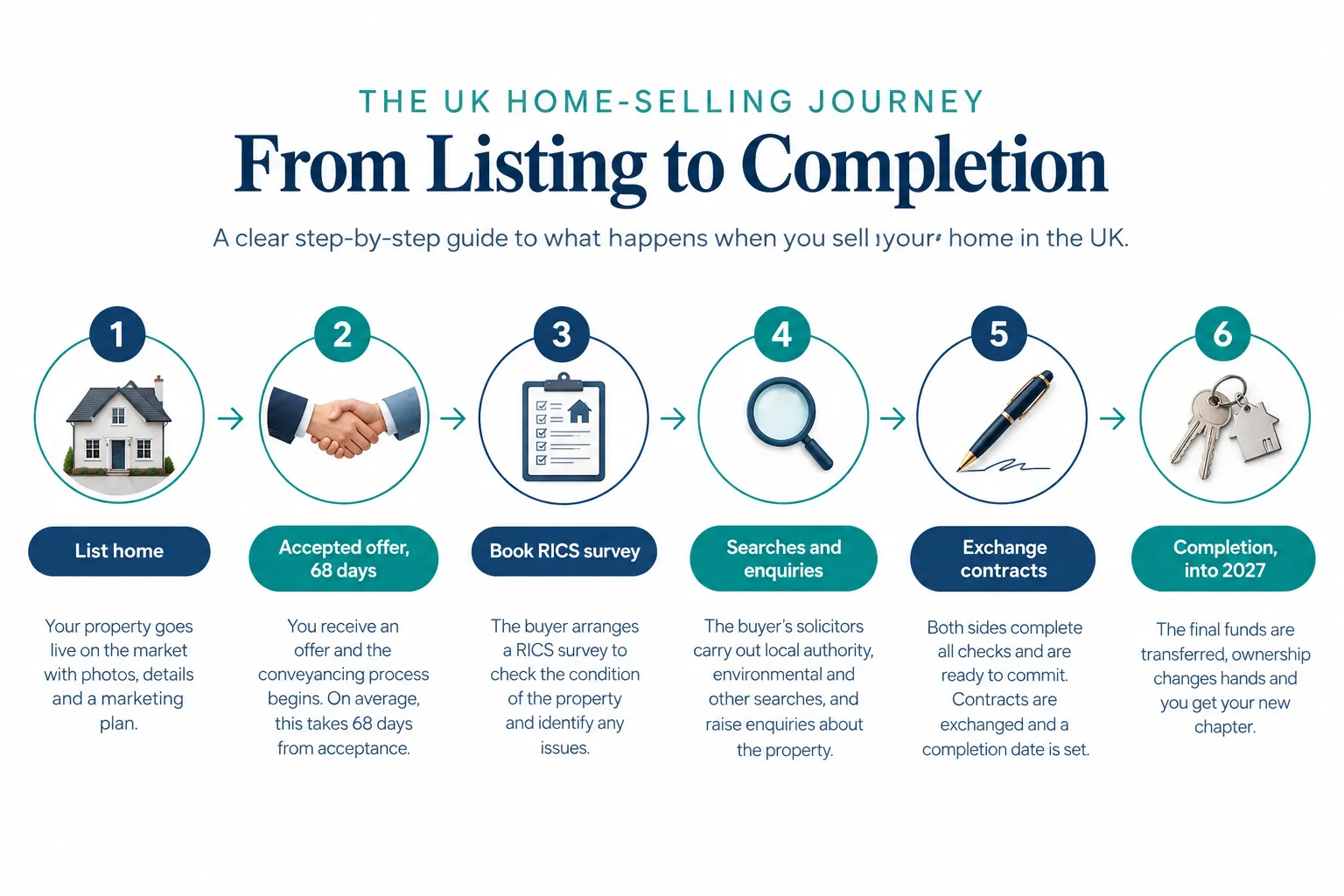
Here is roughly how the months stack up for someone listing around 6 October:
Listing to accepted offer, around 68 days on average, though this varies widely by region.
Survey and mortgage valuation, typically arranged within days of the offer being accepted.
Searches, enquiries and conveyancing checks, usually the longest and least predictable stage.
Exchange of contracts, the legally binding commitment to proceed.
Completion, moving day, which for many autumn sales now realistically falls in January 2027 rather than before Christmas.
The honest takeaway from this timeline is that an agreed sale by Christmas does not mean completion by Christmas. Conveyancing typically continues into 2027, even when everything goes smoothly. Anyone promising friends and family a Christmas Day in the new house should treat that as an optimistic best case, not a certainty.
Where the Survey Fits, and Why It Is One Step Buyers Fully Control
Of everything in the post-offer process, the survey is unusual: it is almost entirely within the buyer's control. Searches depend on local authorities. Enquiries depend on the seller's solicitor. But booking a RICS Level 2 or Level 3 survey can happen within days of an offer being accepted, and the buyer chooses when.
That matters enormously for anyone racing the clock toward Christmas. Delaying the survey by even a week can push the whole chain back, because mortgage lenders typically will not release funds until their valuation, and often the buyer's own survey findings, are satisfied.
Typical survey turnaround is one to two weeks from booking to report, though this varies by region, property type and time of year. Rural areas and remote regions with fewer RICS surveyors operating locally can see turnaround stretch toward the longer end, especially as autumn demand increases. Booking early, ideally the same week as the accepted offer, is the single most effective way buyers can protect their Christmas timeline.
Why Survey Findings Need Not Derail the Christmas Target
A survey that flags issues is not automatically bad news for timing. Most findings, damp patches, ageing boilers, minor roof wear, lead to renegotiation on price or a request for repairs, not a collapsed sale. Handled promptly, these conversations can run in parallel with searches and other conveyancing steps rather than stopping the process entirely.
The risk comes from delay, not from the findings themselves. A buyer who sits on a survey report for two weeks before raising concerns loses time that cannot be recovered before Christmas. Acting on the findings within days keeps the chain moving.
Sellers: Pre-Listing Checks That Prevent Survey Surprises
Sellers racing to list by 6 October have a strong incentive to get ahead of likely survey findings rather than be caught out by them weeks later. A few checks before photographs go up can save real time:
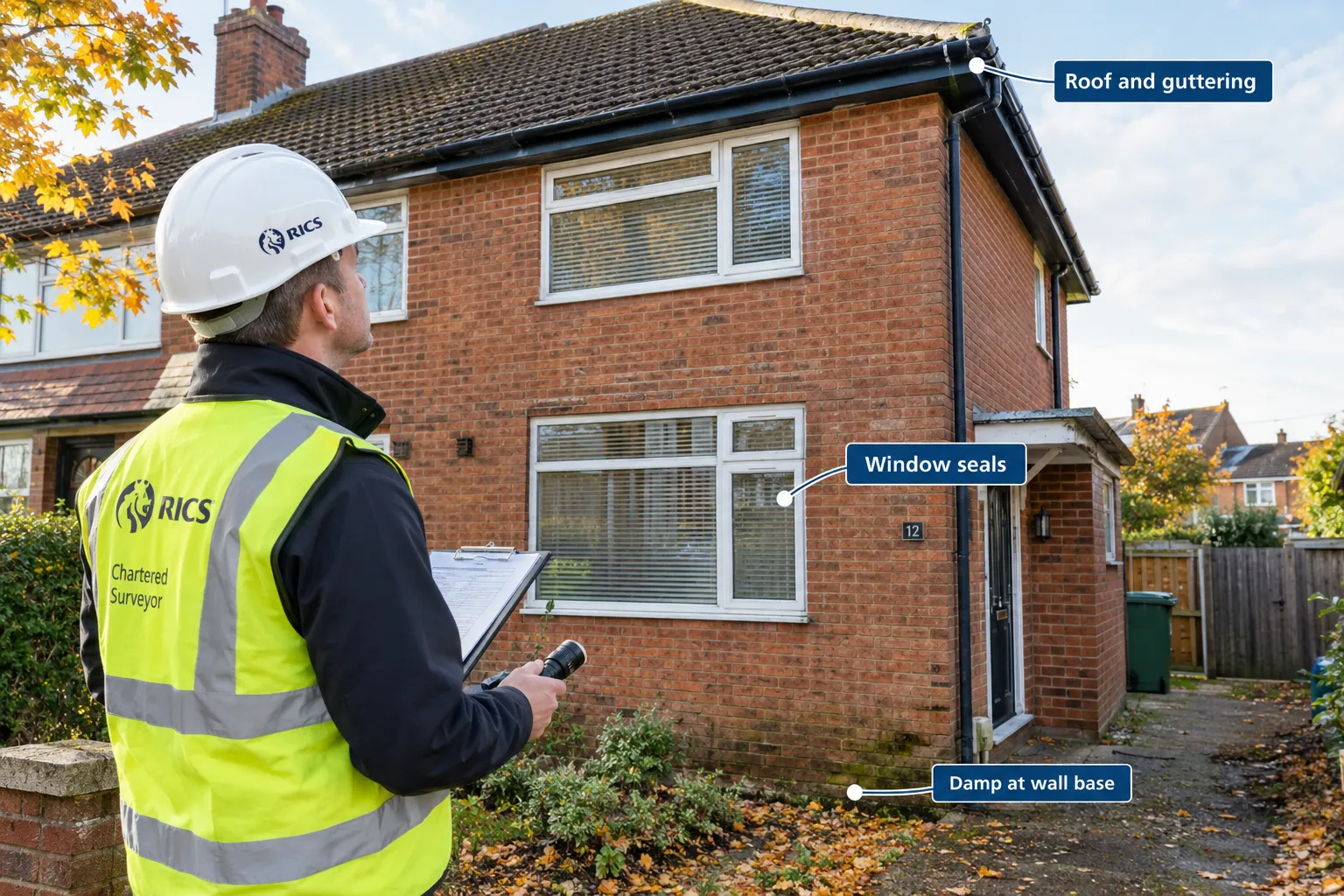
Damp, check skirting boards, external walls and under-stairs cupboards for damp patches or musty smells before a surveyor finds them first.
Roof condition, loose tiles, blocked gutters and flashing issues are common Level 2 and Level 3 findings that can usually be fixed cheaply in advance.
Electrics, an outdated consumer unit or visible wiring faults often trigger further investigation requests that add delay.
EPC, ensure the Energy Performance Certificate is current and accurately reflects the property; an expired or inaccurate EPC can hold up marketing and mortgage offers.
Planning paperwork, extensions, conservatories or loft conversions without building regulations sign-off are a frequent source of last-minute conveyancing queries.
Addressing these before listing reduces the chance of a survey throwing up a surprise that reopens negotiations in November, when there is no spare time left to absorb delay.
Why Winter Surveys Can Reveal More Than Summer Ones
There is a practical upside to surveying a home in the colder months. Damp problems that stay hidden during a dry summer often become visible once heating systems are switched on and the weather turns wet. A boiler that has not been stress-tested since spring can reveal faults the moment it is asked to run consistently. For buyers, an autumn or winter survey can actually provide a more honest picture of how a property performs when it matters most.
This is a reason to treat the survey as valuable information rather than an obstacle to the Christmas deadline. A thorough RICS Level 2 or Level 3 inspection in October or November may surface issues that would otherwise only appear after moving in during the depths of winter.
The Wider Market Backdrop in October 2026
The pressure to list by 6 October is unfolding against a cooling market. Nationwide reported that annual house price growth halved to 0.8% in September 2026, with prices slipping month-on-month. Mortgage approvals fell to 54,900 in August 2026, according to the Bank of England, the lowest figure since December 2023. Both signal a more cautious market than sellers may have experienced in recent years.
Adding further uncertainty, the Autumn Budget lands on 28 October 2026, just weeks after the listing deadline. Buyers and sellers alike should expect some hesitation around that date, as parties wait to see whether policy changes affect affordability or costs. None of this changes the 68-day arithmetic, but it does mean sellers should expect slightly more caution from buyers and should not assume momentum will carry a sale through on its own.
Frequently Asked Questions
Is 6 October really a hard deadline to sell before Christmas? It is a realistic guideline based on the current 68-day national average from the HomeOwners Alliance, not a strict rule. Faster-moving regions like Glasgow or Northern Ireland have more flexibility; slower markets like the South West or London have less.
Does an accepted offer mean the sale will complete before Christmas? No. An agreed sale is only the midpoint. Conveyancing, including searches and enquiries, typically continues into January 2027, even for sales agreed well before the deadline.
When should buyers instruct a conveyancer if they want to complete before Christmas? Laura Catania of Attwells Solicitors recommends instructing a conveyancer by mid-September to maximise the chance of completing before the festive period.
How long does a RICS survey take once booked? Typical turnaround from booking to receiving the report is one to two weeks, though this can vary depending on region, surveyor availability and the time of year.
Can survey findings stop a Christmas completion? Usually not, provided they are acted on quickly. Most issues lead to renegotiation rather than a collapsed sale, but delays in responding to a survey report are what tend to push timelines past Christmas.
Why might a winter survey find more problems than a summer one? Cold, wet weather and heavier heating use can expose damp, insulation and boiler issues that stay hidden during warmer months, giving buyers a more realistic picture of the property.
Conclusion: Acting Fast Is the Only Lever Left
The 6 October deadline is really a story about margins that have narrowed. Sellers have ten fewer days of slack than last year. Mortgage approvals are at their lowest since late 2023. The Budget on 28 October adds a layer of uncertainty just as chains are forming. In that environment, the steps within a buyer's or seller's own control matter more than ever.
For sellers, that means tackling damp, roof, electrics, EPC and planning paperwork before listing, not after a survey flags them. For buyers, it means instructing a conveyancer promptly and booking a RICS Level 2 or Level 3 survey within days of an accepted offer, since turnaround and renegotiation both depend on acting fast rather than waiting.
Survey Merchant connects buyers across the UK with local RICS surveyors for Level 2 and Level 3 surveys and valuations, helping avoid the delays that can turn a Christmas completion into a January one. Get quotes from local RICS surveyors through Survey Merchant to keep the timeline on track this October.
Related guides
No items found.
Book a RICS surveyor
Survey Merchant provides vetted RICS surveyors across 100+ UK locations at fixed fees: