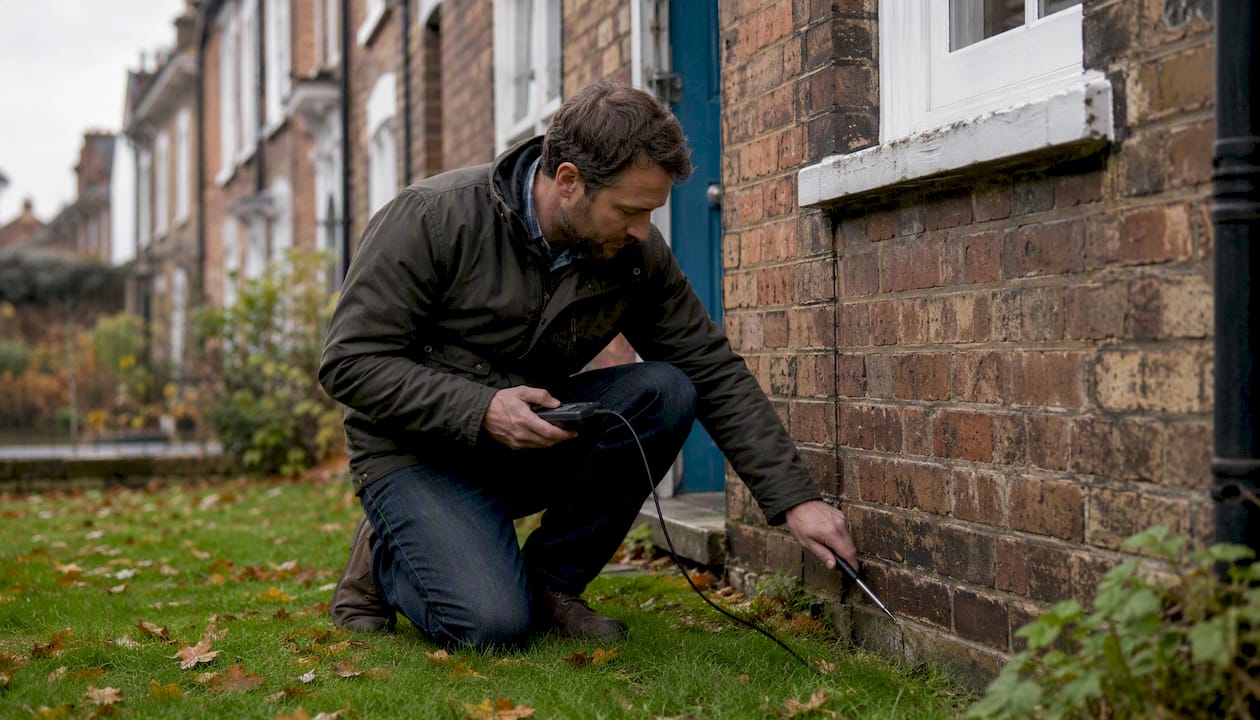
A homeowner claimed £75,000 for the loss in value of a house that kept flooding. The only valuation evidence was a chartered surveyor's report that the court had never given permission to use. The trial judge gave that report little or no weight, and still awarded £25,000. On appeal, the High Court in Eaton v Cheshire East Council [2026] EWHC 2423 (KB) upheld the award [1]. For anyone who instructs an expert witness surveyor, the case is a clear lesson in what happens when valuation evidence is weak, dated or procedurally loose.
Updated 19 November 2026. This article is general information for property owners, solicitors and surveyors. It is not legal advice.
Key Takeaways
- A valuation report was relied on at trial without permission under CPR Part 35. The High Court said permission should have been sought.
- The defendant council did not object before trial, did not apply to exclude the report and did not ask to cross-examine the surveyor. Its later complaint on appeal failed.
- The trial judge found the report significantly out of date, gave it little if any weight and made his own assessment of the loss.
- The claimants recovered £25,000 for diminution in value, one third of the £75,000 claimed.
Key Facts of the Case at a Glance
The case is a private nuisance claim about repeated flooding of a home from a public highway. The details below come from the High Court judgment [1].
- Case: Colin Eaton and another v Cheshire East Council
- Citation: [2026] EWHC 2423 (KB)
- Court: High Court, King's Bench Division, on appeal from the County Court at Chester
- Appeal judge: Mr Justice Mansfield
- Trial judge: Mr Recorder Shaw
- Trial: 17 to 19 September 2025
- Appeal hearing: 26 June 2026
- Judgment handed down: 22 September 2026
- Total damages: £42,500
- Diminution in value: £25,000 awarded, against £75,000 claimed
- Loss of amenity: £17,500 in total, being £8,750 for each claimant
- Outcome: Council's appeal dismissed in full
What Was the Dispute About?
The claimants said that water ran off the highway and flooded their driveway and front garden again and again. The judgment records flooding from about 2012 until late 2024 at their cottage in Wrenbury, Cheshire [1].
They sued the council in private nuisance, and the trial judge found the council liable. The flooding stopped after the drain and gullies were jetted in late 2024, and the judge said the problem appeared to have been resolved.
That left a hard question on damages. If the flooding has stopped, has the property still lost value? The trial judge decided that it had. A history of flooding would have to be disclosed on a sale and would be likely to affect the price, although he expected that effect to fade over time [1].
What Expert Evidence Did the Court Have?
The court had two very different kinds of expert evidence: properly directed drainage evidence, and a valuation report that had no court permission behind it.
The drainage experts
Each side had a drainage expert, and the experts produced a joint report. According to the judgment, they agreed that a reduction in pipe diameter in the drainage system was very unusual and could restrict flow. They also agreed it was too simple to treat that as the only cause. Tree roots or debris were likely to have played a part [1]. The appeal judge saw no problem in how the trial judge dealt with this evidence.
The surveyor's valuation report
The claimants relied on a valuation report from a chartered surveyor to support the £75,000 claim. No permission had been given for it under CPR Part 35. Under CPR 35.4(1), no party may put in an expert's report without the court's permission. Mr Justice Mansfield said that permission should have been sought [1].
The council's counter schedule of loss criticised the content of the report. But the judgment records that the council did not argue the report was inadmissible, did not apply to exclude it, did not seek to call its own valuation expert and did not ask for the surveyor to attend for cross-examination [1].
At trial, the judge accepted many of the criticisms. He described the report as "significantly out of date" and gave it little, if any, weight.
Why Did the Expert Witness Surveyor Evidence Carry So Little Weight?
The report carried little weight because it was old and had defects that the council's barrister was able to point out. The judgment does not list every defect, so it would be wrong to guess at them [1].
What the judgment does show is the result. The judge did not adopt the surveyor's figure. He made his own assessment and landed on £25,000, about one third of the sum claimed.
Three points stand out for surveyors and those who instruct them:
- Currency matters. A valuation prepared long before trial may not reflect the facts at trial. Here the flooding had apparently stopped by the time the case was heard.
- Status matters. A report without Part 35 permission is exposed to attack.
- Testing matters. A valuer who is never questioned cannot explain or defend the opinion.
What Did the High Court Decide on Appeal?
The High Court dismissed the appeal on every ground, so the £42,500 award stands. On the valuation point, the council argued that the judge had relied on inadmissible expert evidence and that £25,000 was a figure with no proper basis [1].
Mr Justice Mansfield rejected that argument for these reasons:
- The council had not objected to the report before trial and had not been denied the chance to respond to it.
- The trial judge was not wrong to leave the report in evidence.
- The trial judge had not ignored the report's errors. He gave it little or no weight and assessed the loss himself.
- The finding that the property was blighted by its flood history could not be criticised.
- Although there was no specific evidence supporting any exact figure, the judge was entitled to do the best he could on the material available. The £25,000 figure was not perverse.
This should not be over-read. The decision does not say that valuation evidence is unnecessary in a diminution claim. It says that, on these facts, an appeal court would not interfere with a trial judge who had to work with imperfect material.
What Does This Mean for Property Owners and Solicitors Instructing an Expert Witness Surveyor?
The main lesson is to treat valuation evidence as formal expert evidence from the start. A claim for lost value is only as strong as the surveyor's report behind it, and the way that report is put before the court.
For claimants:
- Ask the court for permission to rely on valuation evidence at the directions stage. CPR 35.1 limits expert evidence to what is reasonably required, so be ready to explain why it is needed.
- Update the valuation before trial if the facts have changed. A flood that has stopped is a different valuation problem from one that continues.
- Ask the surveyor to explain the evidence for stigma or blight, such as comparable sales, rather than a bare percentage.
For defendants:
- Object early. A point about admissibility taken for the first time at trial or on appeal is unlikely to succeed.
- Consider putting written questions to the expert, or applying for permission to call a valuer of your own.
- Do not assume that a weak report means a nil award. In this case it still produced £25,000.
For property owners across the UK, the case also shows that a past flooding problem can support a claim for reduced value even after the cause is fixed, if the court accepts that the history would affect a sale.
What Should Surveyors Take From the Case?
A surveyor asked for a valuation that may end up in court should ask one question straight away: is this a Part 35 report? If it is, the surveyor's duty is to the court. Practice Direction 35 says expert evidence should be the independent product of the expert, and that experts should consider all material facts, including those that might detract from their opinion [2].
Practical steps include:
- Confirm in writing whether the court has given, or will be asked to give, permission for the report.
- State the valuation date clearly and offer to update the report before trial.
- Address the position if the defect is cured, as well as the position if it continues.
- Show the working. Set out the comparables, the adjustments and the reasons for any allowance for stigma.
Frequently Asked Questions
What is an expert witness in a civil case?
An expert witness is a person with specialist knowledge who gives opinion evidence to help the court decide a technical issue. In England and Wales the role is governed by CPR Part 35. The expert's duty is to help the court, and the court's permission is needed before an expert report can be used.
How do I find an expert witness?
Most solicitors approach surveying firms with court experience or use directories kept by professional bodies. Look for a chartered surveyor who works in the relevant specialism, such as valuation, building defects or boundaries, has prepared Part 35 reports before, has no conflict of interest and can meet the court timetable.
Can a judge award damages for lost property value without relying on a valuer?
In Eaton v Cheshire East Council the trial judge did so after giving the only valuation report little or no weight, and the High Court upheld the award. That outcome depended on the facts. Reliable expert valuation evidence remains the safer way to prove, or to resist, a claim for diminution in value.
Conclusion
Eaton v Cheshire East Council shows both sides of the expert evidence problem. The claimants recovered only a third of what they claimed for lost value, with a report that was out of date and had no Part 35 permission. The council, having left its objections until too late, could not overturn the award.
The next steps for anyone in a similar dispute are simple: decide early whether valuation evidence is needed, ask the court for permission, instruct a surveyor with the right specialism, keep the report current, and raise any objection to the other side's expert evidence promptly.
Survey Merchant provides independent surveying and expert witness reports for property disputes across the UK. This article is general information only and is not legal advice. Specific advice should be taken on the facts of any case.
References
- [1] Colin Eaton and another v Cheshire East Council [2026] EWHC 2423 (KB), The National Archives, Find Case Law. caselaw.nationalarchives.gov.uk.
- [2] Practice Direction 35: Experts and Assessors, Ministry of Justice. justice.gov.uk.