We use cookies to improve your experience on our site, analyze site traffic, and assist in our marketing efforts. By clicking "Accept all," you agree to the storing of cookies on your device. You can choose to "Reject all" non-essential cookies. For more information, please read our Cookie Policy.
What Is a Building Surveyor? Costs & Duties Guide 2026
A 2026 UK guide to building surveyors: what they do, how they differ from valuers and structural engineers, costs by survey level, the RICS, CIOB and RPSA accreditations to look for, and how to choose one.
If you are buying, selling, extending or simply maintaining a property in the UK, a building surveyor is often the most important professional you will hire. A good building surveyor protects you from costly surprises – uncovering damp, movement, roof problems and hidden defects long before they become expensive emergencies. Yet many buyers are unsure what a building surveyor actually does, how much one costs in 2026, or how to tell a genuinely qualified surveyor from the rest. This guide answers all of that, in plain English, so you can instruct the right person with confidence.
Key takeaways
A building surveyor independently inspects a property’s condition, identifies defects, and advises on repairs, alterations and compliance for both homes and commercial buildings.
In 2026, a RICS Level 2 survey typically costs £400–£1,000 and a Level 3 building survey around £600–£1,500, depending on size, age, value and location.
Always use a suitably qualified, accredited surveyor – look for regulation by RICS, CIOB or RPSA and current professional indemnity insurance.
Building surveyors differ from valuers (who price a property) and structural engineers (who calculate structural design and remedial works).
Choose your survey level to match the property: newer homes may only need Level 1 or 2, while older, altered or non-standard buildings warrant a Level 3 building survey.
2026 has brought significant building-safety and leasehold reform changes, making accredited, up-to-date surveyors more valuable than ever.
What is a building surveyor?
A building surveyor is a qualified property professional who inspects buildings to assess their condition, diagnose defects, and advise on repairs, alterations, maintenance and regulatory compliance. They survey both residential and commercial property, producing clear written reports that help buyers, sellers and owners make informed, evidence-based decisions about a building.
Building surveying is one of the broadest property disciplines. The same professional who carries out a pre-purchase building (structural) survey for a homebuyer might also manage a refurbishment project, prepare a schedule of dilapidations for a commercial landlord, or advise on a party wall matter. The common thread is deep, practical knowledge of how buildings are constructed, how they fail, and how they are put right.
What does a building surveyor do?
Day to day, a building surveyor combines inspection, diagnosis and advice. Their core services usually include:
Building surveys and condition reports – including the RICS Home Survey Levels 1, 2 and 3 for residential buyers.
Defect diagnosis – investigating damp, cracking, subsidence, timber decay, roof and damp-proofing problems, and recommending remedies.
Commercial building surveys and technical due diligence – assessing offices, retail and industrial units before purchase or lease.
Dilapidations – preparing or negotiating schedules between landlords and tenants at lease end.
Project work – designing and overseeing extensions, refurbishments and repairs, and administering building contracts.
Party wall and neighbourly matters – serving notices and producing awards under the Party Wall etc. Act 1996.
Specialist reports – from single-issue damp or movement assessments to expert-witness reports for disputes.
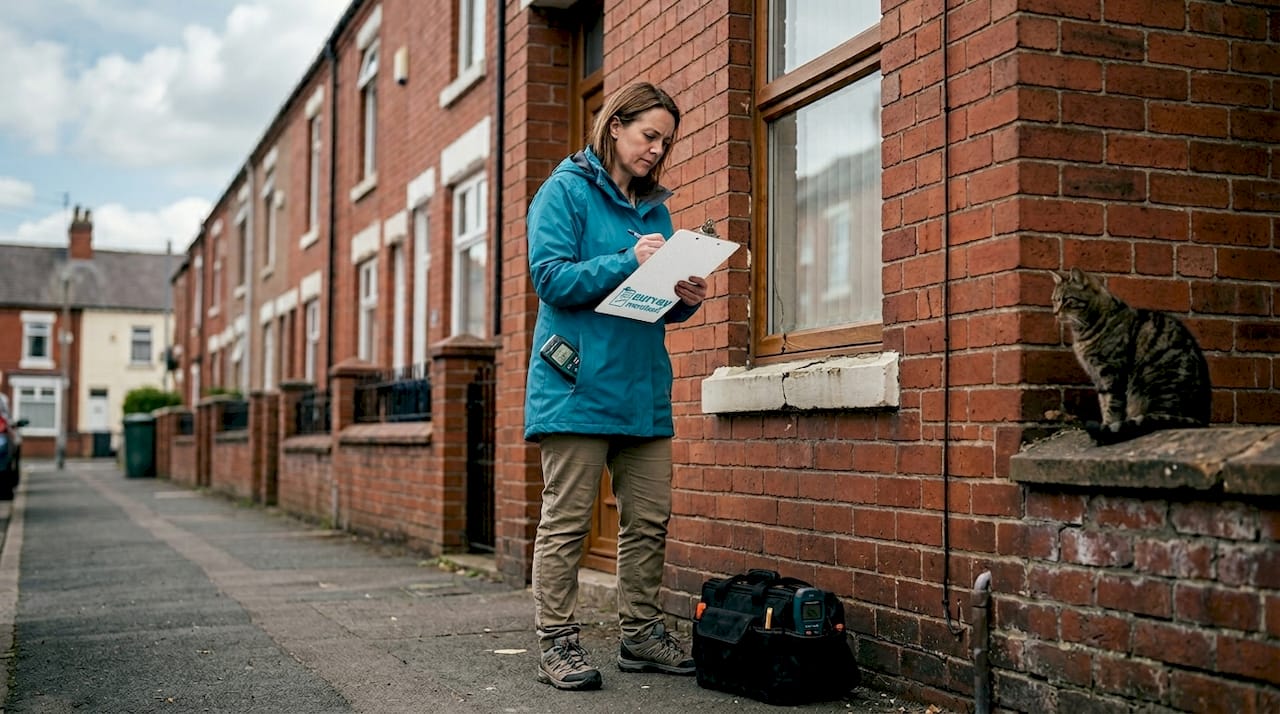
A building surveyor inspects every accessible part of a property – inside and out – to assess condition and identify defects.
Building surveyor vs valuer, chartered surveyor and structural engineer
These titles are often confused, but they answer different questions:
Building surveyor – assesses the condition and construction of a building (“what state is it in, and what needs doing?”).
Valuer – a RICS Registered Valuer who determines a property’s market value under the RICS ‘Red Book’ for lending, probate, tax or matrimonial purposes. Explore our valuation services if you need a figure rather than a condition report.
Chartered surveyor – a surveyor who has achieved chartered status (MRICS or FRICS) with RICS. A chartered building surveyor specialises in building condition and construction.
Structural engineer – calculates structural loads and designs remedial works (for example, when a surveyor identifies movement that needs an engineered solution).
In practice these professionals work together. A building surveyor frequently flags an issue and, where needed, recommends a valuer or structural engineer for the next step.
When do you need a building surveyor?
You should consider instructing a suitably qualified building surveyor when you are: buying a home (especially anything older, extended or non-standard); selling and want to pre-empt buyer concerns; planning an extension or major works; worried about damp, cracks or a leaking roof; dealing with a leasehold, party wall or boundary issue; or managing a commercial property. For buyers, choosing the right survey level is key – see our guide to the difference between Level 2 and Level 3 surveys and our overview of the RICS Level 2 HomeBuyer survey.
How much does a building surveyor cost in 2026?
Building surveyor fees depend on the survey type and the property’s size, age, value, location and complexity. The figures below are indicative 2026 UK ranges based on industry data from the HomeOwners Alliance and Compare My Move; always obtain a fixed quote for your specific property.
Service
Best for
Typical 2026 cost
RICS Level 1 (Condition Report)
Newer, conventional homes in good condition
£300–£900
RICS Level 2 (HomeBuyer Survey)
Most standard homes – the most popular option
£400–£1,000
RICS Level 3 (Building Survey)
Older, larger, altered or non-standard properties
£600–£1,500
Commercial building survey
Offices, retail and industrial units
Quote-based (often from £500+)
Specific defect / specialist report
A single issue such as damp or cracking
Typically £300–£700
As a rule, older and more complex buildings cost more to survey because they take longer to inspect and report on. For a fuller cost breakdown, see our guide to building survey reports.
What accreditations should a building surveyor have? RICS, CIOB and RPSA
Anyone can call themselves a ‘surveyor’, so accreditation is your single most important safeguard. Use a suitably qualified, accredited surveyor who is regulated by a recognised professional body and carries professional indemnity insurance. The main UK bodies include:
RICS (Royal Institution of Chartered Surveyors) – the gold standard for surveys and valuations; RICS Registered Valuers must follow the Red Book.
CIOB (Chartered Institute of Building) – recognised expertise in construction, building pathology and project delivery.
RPSA (Residential Property Surveyors Association) – a respected accreditation focused on residential surveying.
Survey Merchant works with a panel of suitably qualified, accredited surveyors regulated or accredited across bodies such as RICS, CIOB and RPSA – so the surveyor matched to your job has the right credentials for it. To understand the qualifications in more detail, read our explainer on RICS accreditation.
Always instruct a suitably qualified, accredited surveyor – regulated by RICS, CIOB or RPSA and covered by professional indemnity insurance.
How to choose a building surveyor
To choose well, check these five things before you instruct: that the surveyor is accredited and regulated (RICS, CIOB or RPSA); that they hold current professional indemnity insurance; that they have genuine experience of your property type and local area; that the quote is a clear, fixed fee for the correct survey level; and that turnaround times, sample reports and reviews meet your expectations. Asking to see an example report is one of the quickest ways to judge quality and clarity.
How to become a building surveyor
For those researching the career rather than hiring one: most building surveyors hold a RICS-accredited degree (or convert via a postgraduate route or degree apprenticeship), then complete the RICS Assessment of Professional Competence (APC) to become chartered (MRICS). Degree apprenticeships now allow people to qualify while working, and the profession remains in steady demand. You can read more about the wider role in our guide to what a surveyor does.
Building surveying in 2026: regulation and market update
2026 is a significant year for building surveyors. The Building Safety Act 2022 and the Leasehold and Freehold Reform Act 2024 continue to reshape how higher-risk and leasehold buildings are assessed and managed. RICS’s new Service Charge Residential Management Code took effect on 7 April 2026, reflecting both Acts, and RICS published a second edition of its fire-safety guidance in May 2026 (effective 1 November 2026). The profession also gathered at the RICS UK Building Surveying Conference on 7 May 2026 to address these reforms.
On the market side, RICS reported that UK construction activity was broadly flat in late 2025, with forward indicators pointing to a modest recovery through 2026. For property owners, the practical message is clear: building-safety obligations are tightening, so engaging an accredited, up-to-date surveyor who understands the current standards is more important than ever.
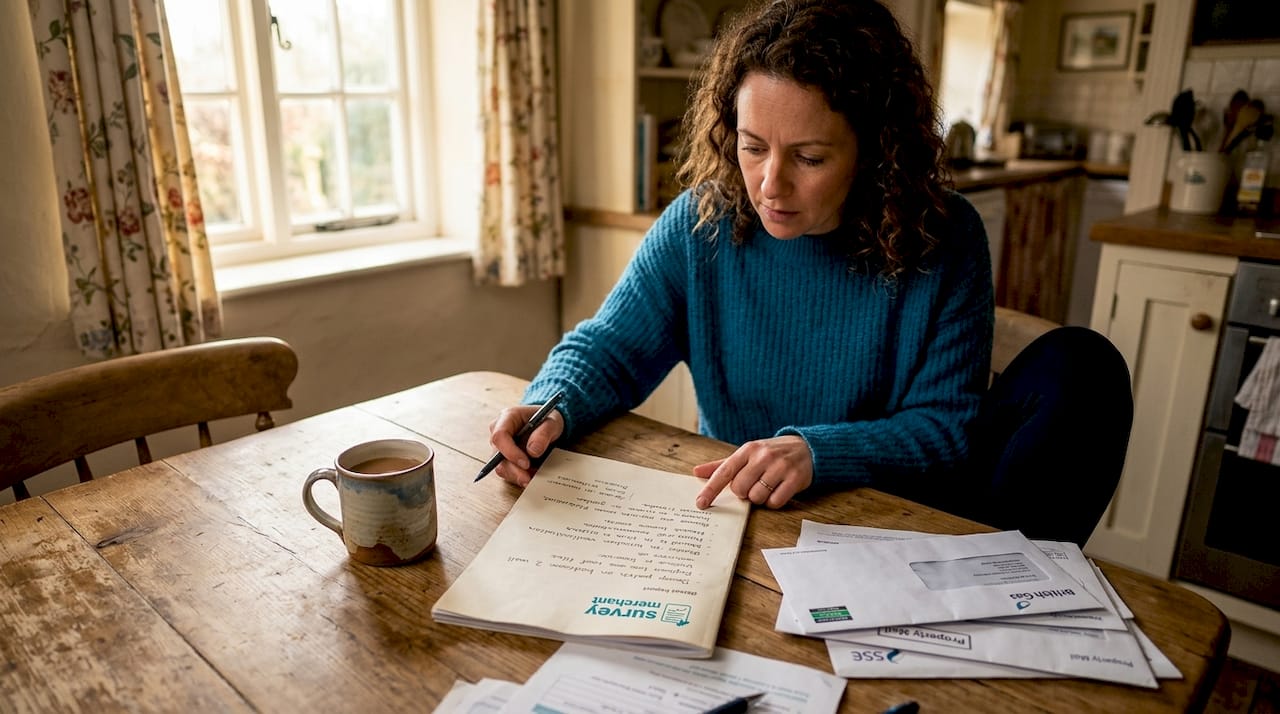
A clear, well-evidenced report from an accredited building surveyor helps you negotiate, budget and plan with confidence.
Why choose Survey Merchant for your building survey?
When you need a building surveyor you can trust, Survey Merchant makes it simple to instruct the right professional for the job. Here is why property owners and buyers across the UK choose us:
Accredited panel – suitably qualified surveyors accredited across RICS, CIOB and RPSA, matched to your specific property and survey type.
Nationwide coverage – local expertise wherever your property is, from city flats to rural and period homes.
Fast turnaround – efficient scheduling and prompt, readable reports so you can act quickly.
Transparent, competitive fixed fees – clear quotes with no hidden extras.
Impartial, end-to-end advice – independent guidance from your first question through to next steps.
A building surveyor is a property professional who inspects buildings to assess their condition, identify defects, and advise on repairs, alterations, maintenance and compliance. Suitably qualified surveyors are typically accredited by bodies such as RICS, CIOB or RPSA and work on both residential and commercial property.
What does a building surveyor do?
A building surveyor carries out condition surveys and RICS Home Surveys, prepares defect and dilapidations reports, advises on damp, movement and structural issues, oversees building projects and party wall matters, and provides technical due diligence for buyers and owners across residential and commercial property.
How much does a building surveyor cost in 2026?
In 2026, a RICS Level 2 (HomeBuyer) survey typically costs £400–£1,000 and a RICS Level 3 building survey around £600–£1,500, depending on the property's size, age, value and location. Commercial surveys and specialist defect reports are usually quoted individually. Always confirm a fixed fee before instructing.
What is the difference between a building surveyor and a valuer?
A building surveyor focuses on the physical condition and construction of a property, while a valuer (a RICS Registered Valuer) determines its market value under the RICS Red Book. The roles overlap, and many firms offer both, but they answer different questions: 'what condition is it in?' versus 'what is it worth?'.
Do I need a chartered building surveyor?
For most home purchases a suitably qualified, accredited surveyor (RICS, CIOB or RPSA) is sufficient. A chartered (MRICS/FRICS) building surveyor is advisable for older, listed, non-standard or high-value properties, structural concerns, commercial buildings, party wall awards and expert-witness work where formal regulation matters.
How do I choose a good building surveyor?
Check the surveyor is accredited and regulated (RICS, CIOB or RPSA), insured with professional indemnity cover, and experienced with your property type and area. Compare fixed quotes, confirm the survey level you need, ask to see a sample report, and check turnaround times and reviews before instructing.