We use cookies to improve your experience on our site, analyze site traffic, and assist in our marketing efforts. By clicking "Accept all," you agree to the storing of cookies on your device. You can choose to "Reject all" non-essential cookies. For more information, please read our Cookie Policy.
What Is a Maisonette? 2026 UK Guide to Pros, Cons & Surveys
Everything UK buyers need to know about maisonettes in 2026: what they are, how they compare with flats and houses, leasehold and freehold issues, the latest leasehold reforms, mortgage considerations and the right survey.
What is a maisonette? If you have been scrolling property listings in 2026 you will have seen the word again and again, often attached to homes that look like flats but are priced and laid out quite differently. A maisonette is a self-contained home, usually set over two floors, with its own private front door rather than a shared communal entrance. This guide explains the maisonette meaning in plain English, how maisonettes differ from flats and houses, what leasehold and freehold ownership mean for you, the pros and cons, what they cost, and which survey a suitably qualified, accredited surveyor would recommend before you buy.
Key takeaways
A maisonette is a self-contained home within a larger building, typically arranged over two storeys with a private internal staircase and its own street-level front door.
Unlike a flat, there is usually no communal hallway, which often means lower service charges, more privacy and, in many cases, a private garden or balcony.
Most maisonettes are leasehold, though freehold and share-of-freehold maisonettes exist; each has different costs, rights and lender considerations.
Flats and maisonettes do not benefit from the permitted development rights that houses enjoy, so extensions and many alterations need planning permission.
New leaseholder protections on service charges begin on 1 April 2027, with further transparency rules from 1 November 2027, according to GOV.UK (11 November 2026).
An RICS Home Survey Level 2 suits most conventional maisonettes; a Level 3 is wiser for older conversions, properties above shops or where major works are planned.
What is a maisonette?
A maisonette is a self-contained dwelling that forms part of a larger building but has its own private entrance, usually directly from the street, and is typically spread over two floors connected by an internal staircase. The word comes from the French for “little house”, which neatly captures the idea: a home with house-like independence inside a shared structure.
In the UK, maisonettes come in three common forms. The first is the purpose-built maisonette, often found in post-war and 1960s to 1970s local-authority estates, where two-storey homes are stacked on top of one another and reached by their own doors or external staircases. The second is the converted maisonette, where a Victorian or Edwardian house has been split horizontally into an upper and a lower home, each with its own front door. The third is the maisonette above commercial premises, such as a two-storey home above a shop or café on a high street.
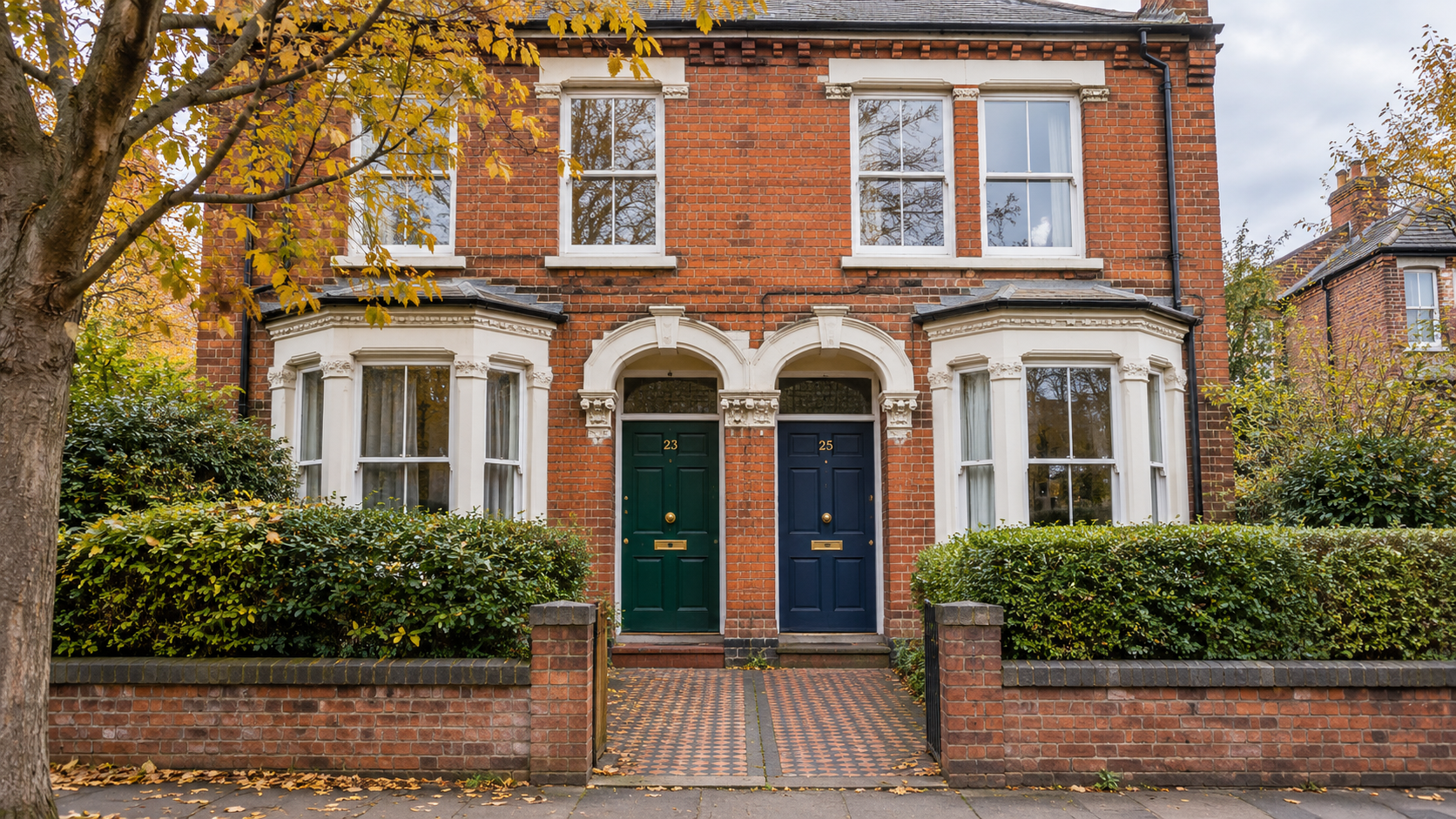
Converted maisonettes are easy to spot: one building, two separate front doors at street level.
Maisonette vs flat vs house: what is the difference?
The distinction matters because it affects how you live, what you pay each year and what a surveyor needs to inspect. A flat is normally on a single level and accessed through a communal front door, hallway and stairs or lift, with the costs of those shared areas recovered through a service charge. A house sits on its own plot, is usually freehold, and benefits from permitted development rights. A maisonette sits between the two: it shares a structure with at least one other home, but offers a private entrance, a split-level layout and often some private outdoor space.
Feature
Maisonette
Flat
House
Floors
Usually two, linked by a private staircase
Usually one
Two or more
Entrance
Own front door, usually from the street
Shared communal entrance and hallway
Own front door
Typical tenure
Leasehold, share of freehold or freehold
Leasehold or share of freehold
Freehold (some leasehold)
Service charge
Often low or none, but shared external repairs
Usually payable for communal areas, lifts and grounds
Rarely, unless on a managed estate
Outdoor space
Often a private garden, yard or balcony
Balcony or communal grounds, if any
Private garden
Permitted development
No: planning permission usually needed
No: planning permission usually needed
Yes, subject to limits
Usual survey level
Level 2; Level 3 for older or altered conversions
Level 2
Level 2 or Level 3 depending on age
Maisonette vs duplex and apartment
Estate agents sometimes use “duplex” or “duplex apartment” for a two-floor home inside a larger block. The practical difference is the entrance: a duplex is normally reached through a shared lobby and corridor, whereas a true maisonette has its own external door. “Apartment” is simply a more upmarket word for a flat and does not change the legal position.
Are maisonettes leasehold or freehold?
Most maisonettes in England and Wales are leasehold, meaning you own the home for the remaining term of the lease and the freeholder owns the building and the land. That brings ground rent on older leases, possible service charges, and restrictions on alterations and subletting. Our guide to leasehold vs freehold explains the fundamentals in more depth.
Two other structures are common. A share of freehold arrangement means the owners of the upper and lower maisonettes jointly own the freehold, usually through a company or as joint names on the title, while each still holds a long lease. A freehold maisonette is rarer and more complicated: each owner holds the freehold of their part of the building, which can leave the roof, foundations and shared walls without clear, enforceable repair obligations. Many lenders are cautious about freehold maisonettes for exactly that reason, and the same issue arises with a flying freehold. Your conveyancer should check that the lease or title deeds set out who maintains what, and your surveyor should confirm the condition of those shared elements.
Who is responsible for the roof and the foundations?
In a typical converted maisonette lease, the upper maisonette is responsible for the roof, loft and upper external walls, while the lower maisonette is responsible for the foundations, ground-floor structure and front garden, with each owner having a right to recover a share of costs from the other for genuinely shared items. Purpose-built blocks are usually different: the freeholder or management company maintains the structure and recovers the cost through the service charge. Never assume; read the lease.
Pros and cons of buying a maisonette
Advantages
Privacy and independence. No shared hallway, no neighbours walking past your door, and often your own outdoor space.
Lower running costs. With few or no communal areas to clean, light and insure, service charges are frequently lower than in a comparable block of flats.
More space for the money. Two floors give a house-like layout, usually at a price below a house in the same street.
Fewer neighbours. Typically only one other home shares your structure, which reduces noise transmission compared with a mid-block flat.
Disadvantages
Planning restrictions. The Planning Portal notes that the permitted development rights which apply to many common projects for houses do not apply to flats, and maisonettes are treated the same way. Loft conversions, rear extensions and even some window changes will need an application.
Shared repair decisions. Re-roofing or repointing needs agreement and co-funding with the other owner, which can be slow if they are reluctant or absent.
Lender caution. Freehold maisonettes, homes above commercial premises and short leases can all narrow your choice of mortgage and raise the deposit required.
Resale market. The buyer pool for a maisonette above a takeaway or with a 70-year lease is smaller, which can affect value and time to sell.
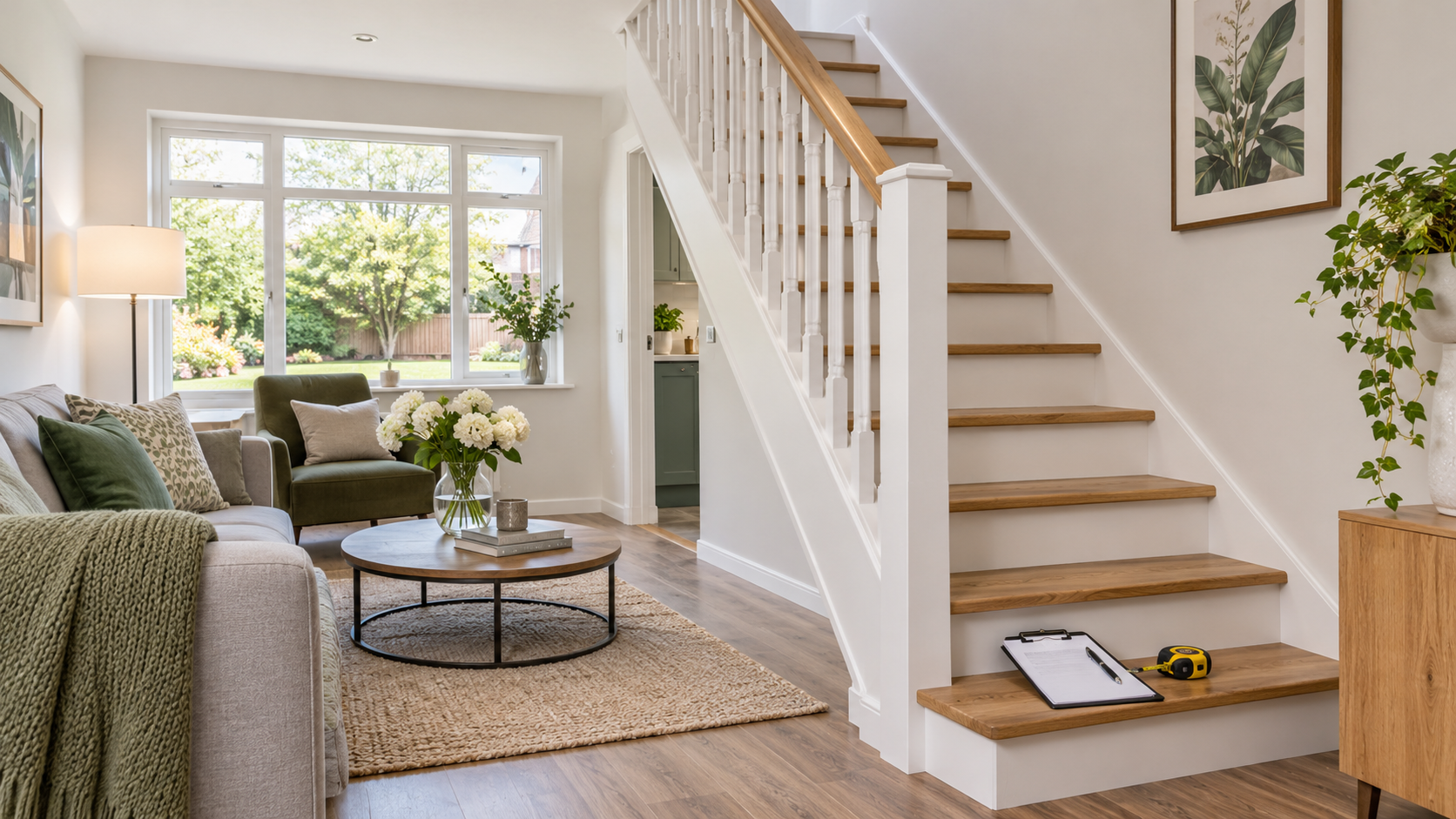
The private internal staircase is the defining feature of most maisonettes, and the stair, floor structure and party walls are key items in any survey.
How much does a maisonette cost in 2026?
Maisonettes are grouped with flats in official statistics, and the latest UK House Price Index gives a useful benchmark. According to GOV.UK’s UK House Price Index for August 2026 (published 21 October 2026), the average UK house price was £273,000, up 0.9% over the year, while the average price of a flat or maisonette in England was £219,000, down 2.9% year on year. In other words, flats and maisonettes have been the weakest-performing property type, which strengthens a buyer’s negotiating position but also makes an accurate valuation and a careful survey more important, not less.
Beyond the purchase price, budget for the recurring costs that come with shared ownership of a building: buildings insurance for the whole structure (often arranged by the freeholder and recharged), a service charge or an informal shared-repairs fund, ground rent on older leases, and the eventual cost of a lease extension if the term is heading towards 80 years. For survey fees, see our building survey cost guide.
Leasehold reform in 2026: what maisonette buyers need to know
Because most maisonettes are leasehold, the reform programme that has dominated property news this year affects them directly. The Leasehold and Freehold Reform Act 2024 is on the statute book but is being switched on in stages. The two-year ownership requirement before a leaseholder can extend a lease or buy the freehold has already been removed, and on 11 November 2026 the Government announced the next commencement dates. According to the GOV.UK press release, from 1 April 2027 leaseholders will be able to demand information about their service charges, including from previous years, and landlords will no longer be able to pass their legal costs on to leaseholders who challenge a charge without court or tribunal approval. From 1 November 2027 private landlords must use standardised service charge demand forms and provide accounts and annual reports, with councils and housing associations following on 1 November 2028. The Government says more than three million leaseholders in England will benefit.
Separately, the HomeOwners Alliance’s reform tracker (updated 12 November 2026) notes that a draft Commonhold and Leasehold Reform Bill was published on 27 January 2026, proposing a ground rent cap and a ban on most new leasehold flats, and that the consultation on the valuation rates used for lease extension premiums closed on 21 October 2026 with the rates not yet finalised. For a maisonette buyer this means two things: check the lease length and ground rent terms now rather than waiting for reform, and ask a RICS Registered Valuer for a lease extension valuation if the term is short.
Can you get a mortgage on a maisonette?
Yes, and for a conventional leasehold maisonette with a long lease the process is no different from a flat. Lenders become more selective in four situations: freehold maisonettes without clear mutual repair covenants, maisonettes above shops, restaurants or pubs, ex-local-authority maisonettes in blocks of non-standard construction or with deck access, and leases with fewer than around 80 years to run. In those cases expect a smaller pool of lenders, a possible lower loan-to-value limit and closer scrutiny of the valuation. A mortgage valuation is not a survey, so even where the lender is satisfied you should commission your own report.
Which survey do you need for a maisonette?
The RICS Home Survey Standard sets out three levels. RICS’s own consumer guidance describes Level 2 as suited to conventional properties in reasonable condition with simple layouts, and Level 3 as the right choice for a large, older or run-down property, an unusual or altered building, or where major works are planned. Our Level 2 vs Level 3 comparison walks through the differences in detail.
Maisonette type
Recommended survey
Why
Purpose-built, post-1980, good condition
RICS Level 2 (Home Survey)
Conventional construction and layout; Level 2 covers condition, risks and maintenance advice
Converted Victorian or Edwardian house
RICS Level 3 (Building Survey)
Altered structure, older roof, timber floors between homes, possible fire separation and sound insulation issues
Above a shop or commercial unit
RICS Level 3
Fire separation, services routed through the commercial unit, damp and ventilation risks, lender scrutiny
1960s–1970s ex-local-authority block
Level 2 or Level 3 depending on construction
Check for non-standard construction, concrete defects, external walkways and communal services
Freehold maisonette
RICS Level 3 plus legal review of repair covenants
Shared structure with potentially weak maintenance obligations
What a surveyor looks at in a maisonette
A good maisonette survey pays particular attention to the elements you share. For an upper maisonette that means the roof covering, flashings, chimney stacks, gutters and loft insulation, plus the condition of the private external staircase if there is one. For a lower maisonette it means the foundations and ground floor, sub-floor ventilation, damp-proof course and drainage. For both, the surveyor will consider the separating floor between the two homes, fire compartmentation, sound insulation, the party walls, the internal staircase and any evidence that structural walls were altered during conversion without building regulations approval. Where alterations are found, our guide to permitted development rights explains why flats and maisonettes need formal consent.
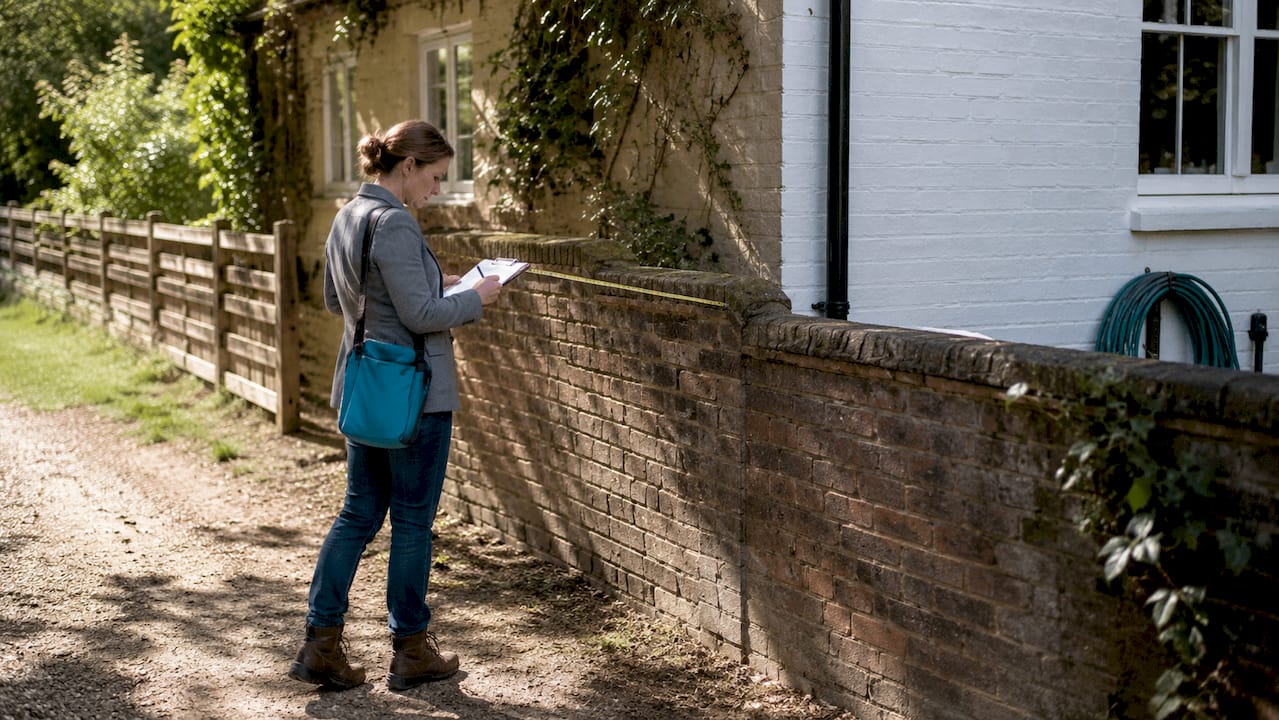
Purpose-built maisonette blocks need checks on the roof, external walkways, concrete elements and communal services.
Is a maisonette a good investment?
For first-time buyers and downsizers, a maisonette often delivers the best balance of space, privacy and price in a given area, and lower service charges improve monthly affordability. For landlords, the private entrance and garden are attractive to tenants, although leases may restrict subletting and lenders apply their own criteria. The weaker price performance of flats and maisonettes in the year to August 2026 shows the market is discriminating: well-maintained maisonettes with long leases, clear repair arrangements and private outdoor space hold value far better than those above commercial units or with short leases. Due diligence, through both the lease and the survey, is what separates the two.
Checklist: questions to ask before buying a maisonette
How many years remain on the lease, and what is the ground rent and any review clause?
Who is responsible for the roof, foundations, external walls and shared drains, and how are costs split?
Is there a service charge, a management company or simply an informal arrangement between two owners?
Was the conversion carried out with planning permission and building regulations approval?
Is the building insured as a whole, and who holds the policy?
Is the property above commercial premises, and what hours and uses does the lease permit downstairs?
Has a suitably qualified, accredited surveyor inspected the shared elements and the separating floor?
Why choose Survey Merchant for your maisonette survey?
Buying a maisonette means buying a share of a building and a set of legal relationships with the people you share it with, which is why an independent, impartial survey matters so much. Survey Merchant matches you with a suitably qualified, accredited surveyor from a panel regulated or accredited by bodies such as RICS, CIOB and RPSA, chosen for the specific job rather than whoever happens to be free. Our surveyors cover the whole of the UK, so you get local knowledge of the conversions, estates and construction types in your area. We offer fast turnaround, transparent and competitive fixed fees agreed in advance, and support from your first quote through to a plain-English report and a post-survey call to talk through the findings. If the lease is short, our RICS Registered Valuers can also prepare the valuation you need to negotiate an extension.
What is the difference between a maisonette and a flat?
A flat is usually on one level and reached through a shared communal entrance and hallway. A maisonette is normally spread over two floors with a private internal staircase and its own front door, often straight from the street, and frequently has a private garden or balcony and lower service charges.
Are maisonettes leasehold or freehold?
Most maisonettes in England and Wales are leasehold. Some are sold with a share of the freehold, where the owners jointly own the building, and a small number are freehold maisonettes. Freehold maisonettes can be harder to mortgage because repair obligations for shared parts such as the roof may not be clearly enforceable.
Do maisonettes have permitted development rights?
No. The Planning Portal confirms that the permitted development rights which apply to many common projects for houses do not apply to flats, and maisonettes are treated in the same way. Extensions, loft conversions and many external alterations therefore need planning permission, and leasehold maisonettes usually need the freeholder's consent as well.
Which survey do I need when buying a maisonette?
An RICS Home Survey Level 2 suits most purpose-built maisonettes in reasonable condition. Choose a Level 3 Building Survey for converted Victorian or Edwardian maisonettes, homes above shops, non-standard construction or where you plan major works. A suitably qualified, accredited surveyor can advise on the right level for the specific property.
Is it hard to get a mortgage on a maisonette?
For a conventional leasehold maisonette with a long lease, no. Lenders are more cautious with freehold maisonettes, maisonettes above commercial premises, some ex-local-authority blocks and leases with fewer than around 80 years to run, which can mean fewer products and a lower maximum loan-to-value.
How much is a maisonette worth in 2026?
Maisonettes are grouped with flats in official data. GOV.UK's UK House Price Index for August 2026, published on 21 October 2026, put the average price of a flat or maisonette in England at £219,000, down 2.9% over the year, against a UK average house price of £273,000. Local values vary widely, so an independent valuation is recommended.