We use cookies to improve your experience on our site, analyze site traffic, and assist in our marketing efforts. By clicking "Accept all," you agree to the storing of cookies on your device. You can choose to "Reject all" non-essential cookies. For more information, please read our Cookie Policy.
Share of Freehold Explained: 2026 UK Pros, Cons & Costs
Share of freehold means you own your flat on a lease and co-own the building's freehold with your neighbours. This 2026 guide covers how it works, pros and cons, lease extensions, collective enfranchisement and the latest leasehold reforms.
Seen “share of freehold” on a flat listing and wondered whether it is better than leasehold, and what you would actually be taking on? This guide explains share of freehold in plain English for 2026: what it means, how it works day to day, the pros and cons, what happens with lease extensions and insurance, how leaseholders buy a share of the freehold in the first place, and how the current leasehold and commonhold reforms affect your decision. It is written by the Survey Merchant team, whose nationwide panel of suitably qualified, accredited surveyors (regulated or accredited by bodies such as RICS, CIOB and RPSA) values freeholds and lease extensions every week.
Key takeaways
Share of freehold means you still own your flat on a lease, but you also co-own the freehold of the whole building with your neighbours, usually through a company or as joint individual owners.
Its biggest advantages are control: no third-party landlord, no ground rent in practice, and the ability to extend leases to 999 years at little or no premium between yourselves.
Its biggest risks are people problems: disagreements over repairs, one owner refusing to pay, and neglected company filings at Companies House.
You still need a valid lease, still pay service charges (to your own company) and still need a formal lease extension deed. Mortgage lenders look at the lease length, not the freehold share.
In England, 4.90 million dwellings (20% of the stock) are leasehold and 10% of leases have 80 years or fewer left, according to MHCLG statistics published on 21 May 2026, so lease length remains the number one thing to check.
Government reforms in 2026 are moving towards commonhold and cheaper enfranchisement, but the new valuation rules are not yet in force, so buying a freehold today is still priced under the current statutory formula.
What does share of freehold mean?
Share of freehold means a flat is owned on a long lease and the leaseholder also holds a share in the freehold of the building that contains it. The freehold is either held jointly by up to four flat owners as individuals, or by a limited company in which each flat owner is a member. Together, the flat owners act as their own landlord.
The critical point that trips up many buyers is that share of freehold is not a third type of tenure. Legally, your flat is still leasehold. There is no such thing as the freehold of an individual flat in England and Wales; only the building has a freehold. What changes is who owns that freehold. Instead of an outside investor or ground-rent company, it is you and your neighbours.
The lease is still needed because it sets out who repairs what, how costs are shared and what each owner can and cannot do. The Leasehold Advisory Service (LEASE), the government-funded advice body, stresses that owning a share of the freehold gives flat owners a range of benefits as well as responsibilities. If you are still getting to grips with the basics, our guide to leasehold vs freehold is a good starting point.
Share of freehold is most common in converted houses and small purpose-built blocks where the flat owners have bought the freehold together.
The two ways a share of freehold is held
Joint individual ownership. Up to four people can be registered at HM Land Registry as the legal owners of the freehold. This suits small conversions of two to four flats but becomes awkward when a flat is sold, because the title must be transferred each time.
Freehold company. A limited company owns the freehold and each flat owner holds a share or membership. When a flat is sold the share simply transfers to the buyer. The trade-off is that the company must keep records and file a confirmation statement and accounts at Companies House every year, and owners usually act as directors.
How does share of freehold work day to day?
In practice, the freehold owners (or the company) take on the landlord’s duties under the leases: arranging buildings insurance, organising repairs to the roof, structure and common parts, collecting service charges, and keeping accounts. In small buildings this is often done informally between neighbours; larger blocks typically appoint a managing agent.
Three practical questions decide whether a share-of-freehold building runs smoothly:
Who arranges buildings insurance? The freeholder must insure the building, so the owners (or company) need a single policy covering the whole structure, not a patchwork of individual flat policies.
How are major works funded? A reserve or sinking fund, agreed in advance, avoids the classic dispute when a £20,000 roof bill arrives and one owner cannot pay.
Who does the administration? Someone has to chase payments, keep minutes and file at Companies House. If nobody does, the company can be struck off and the freehold can pass to the Crown as bona vacantia, which is expensive and slow to unwind.
Share of freehold pros and cons
Advantages
Disadvantages
No external landlord: decisions on repairs, contractors and insurance are made by the people who live there.
Shared responsibility: if one owner will not co-operate or pay, everyone else carries the problem.
Ground rent is usually reduced to a peppercorn (nil) when the freehold is acquired.
You still pay service charges; they are simply paid to your own company or shared account.
Leases can be extended to 999 years for little or no premium, protecting value and mortgageability.
An extension still needs a formal deed and every freeholder’s agreement, so an absent or obstructive co-owner can block it.
Flats with a long lease and a share of freehold are generally easier to sell and finance.
Company administration and directors’ duties; failure to file at Companies House can lead to strike-off and fines.
Transparency: you can see exactly what insurance and maintenance cost.
Disputes between neighbours can be harder to resolve than a formal complaint against a professional landlord.
Common share of freehold problems, and how to avoid them
The problems our surveyors see most often are a short lease that nobody thought to extend when the freehold was bought; a freehold company that has been dissolved for non-filing; no buildings insurance or under-insurance because nobody updated the reinstatement value; and a running feud between two flats over a leaking roof. Most are avoidable with a written participation agreement, a simple reserve fund, an annual meeting and an up-to-date insurance reinstatement cost assessment so the building is insured for what it would actually cost to rebuild.
Is share of freehold better than leasehold?
For most owner-occupiers in a small, well-run building, yes. Government data shows why control matters: in 2024-25 there were 4.90 million leasehold dwellings in England (20% of the housing stock), 3.38 million of them flats, and around 246,000 owner-occupied households were living with a lease of under 80 years, according to MHCLG’s Leasehold dwellings 2024 to 2025 release (21 May 2026). Short leases reduce value and make flats harder to sell or remortgage, and a share of freehold gives you the power to fix that yourselves.
It is not automatically better, though. A share of freehold in a building where the owners do not get on, or where the company has been struck off, can be more trouble than a well-managed leasehold block with a responsible freeholder. That is why a pre-purchase inspection of the building fabric matters just as much as the paperwork: as a co-freeholder you will be paying your share of every structural repair. A Level 3 building survey of the flat and common parts tells you what is coming before you commit.
Do you still pay service charges with a share of freehold?
Yes. The building still needs insuring, cleaning, maintaining and, eventually, re-roofing. The difference is that the money goes into an account controlled by the owners rather than to a third-party landlord who may add management fees and insurance commissions. Many share-of-freehold buildings run a simple annual budget and reserve fund; larger ones use a managing agent whose fee is itself a service charge item.
Extending your lease with a share of freehold
Owning a share of the freehold does not extend your lease by itself. Buyers are sometimes surprised to find a share-of-freehold flat with only 70 years left on the lease, because the previous owners bought the freehold and never got round to granting themselves new leases. Lenders assess the unexpired lease term, so a short lease still causes mortgage problems even with a freehold share.
The good news is that extending is usually simple and cheap. Because you and your neighbours are the freeholder, you can agree to grant each flat a new 999-year lease at a peppercorn ground rent, with each owner paying only legal and HM Land Registry costs. The main requirement is unanimity: every freehold owner (or the company acting through its directors) must sign. Where one owner refuses, or has died or disappeared, a leaseholder can still use the statutory route under the Leasehold Reform, Housing and Urban Development Act 1993, which adds 90 years at a peppercorn rent for a premium. Our guides on how to extend a lease and extending leasehold costs walk through both routes, and the free leasehold calculator gives an instant statutory premium estimate.
Whether you are buying the freehold together or extending a single lease, the premium is a formal valuation exercise, not a rule of thumb.
How do you get a share of freehold? Collective enfranchisement explained
Most share-of-freehold buildings came about through collective enfranchisement: the statutory right for leaseholders of flats to join together and buy the freehold of their building, set out in Part I of the Leasehold Reform, Housing and Urban Development Act 1993. The freeholder cannot refuse a valid claim; the only argument is the price, which is calculated by a formula in the Act.
Who qualifies?
The building must contain at least two flats.
At least two-thirds of the flats must be held by qualifying tenants (leases originally granted for more than 21 years).
At least half of the flats in the building must participate in the claim.
Under the rules currently in force, no more than 25% of the internal floor area may be non-residential (for example, a shop below). The Leasehold and Freehold Reform Act 2024 raises this to 50% once the relevant section is commenced.
Since 31 January 2025 there is no longer a requirement to have owned your flat for two years before making a claim, following regulations made under the 2024 Act.
The statutory process and timetable
Stage
What happens
Statutory timing
1. Valuation and participation agreement
An accredited valuer prices the freehold; participants sign an agreement on shares and funding and set up a nominee purchaser (usually a company).
Before any notice is served
2. Section 13 initial notice
Served on the freeholder through the nominee purchaser, stating the proposed price.
Starts the statutory clock
3. Counter-notice
Freeholder admits or disputes the claim and states a counter-price.
By the date in the notice, at least 2 months later
4. Negotiation
The two surveyors negotiate the premium.
Up to 6 months after the counter-notice
5. First-tier Tribunal (if needed)
Either side applies for the Tribunal to determine the price.
Between 2 and 6 months after the counter-notice
6. Completion
Freehold transferred to the nominee purchaser; new 999-year leases usually granted at the same time.
Typically several months to a year or more overall
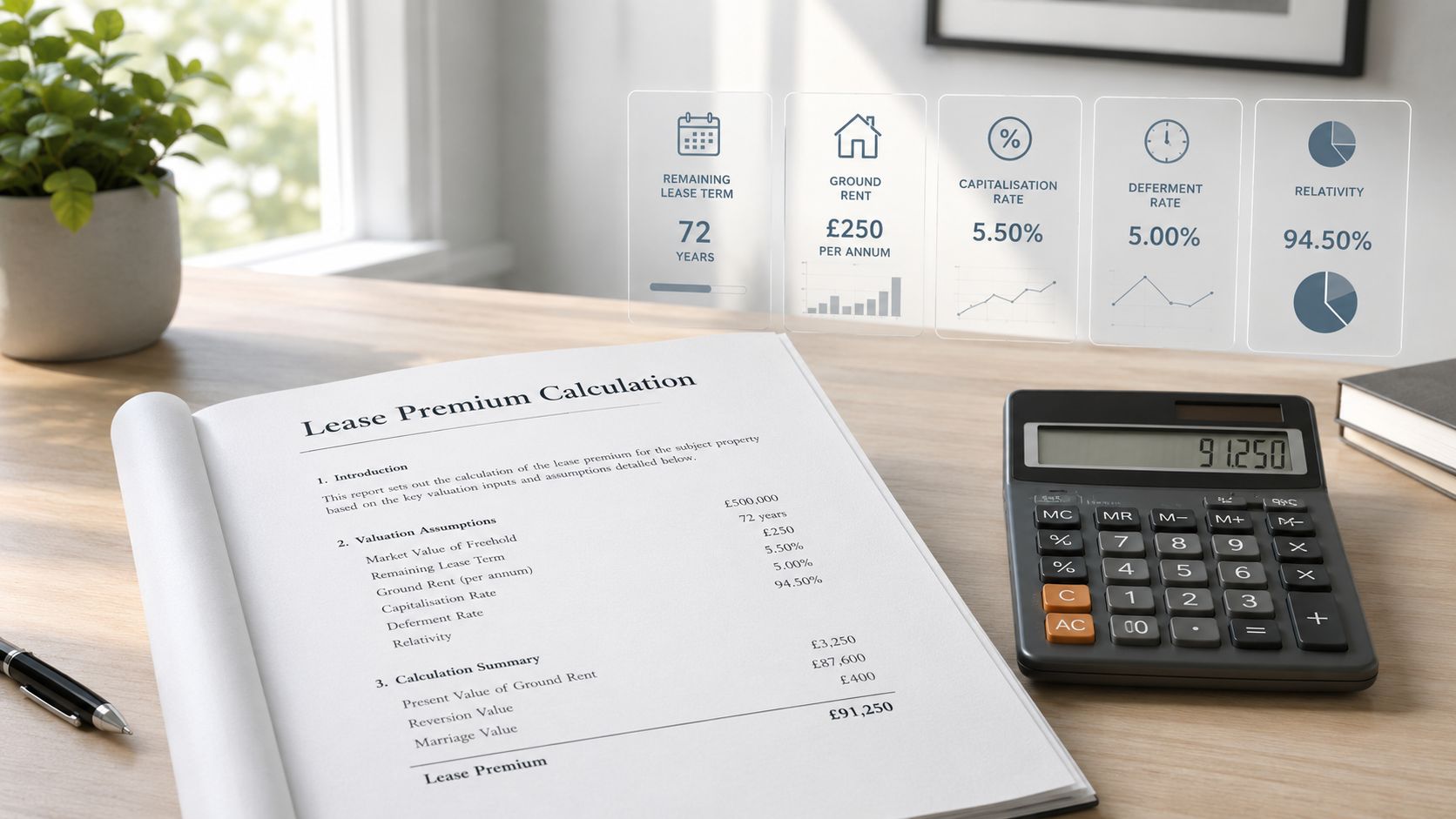
The price is built up flat by flat from the capitalised ground rents, the value of each reversion and, for leases under 80 years under the current regime, a share of marriage value, plus any hope value for non-participating flats and development value (for example an unconverted loft). LEASE’s guide to buying a share of the freehold for your flat explains each step, and our how do I buy the freehold of my flat article covers the practicalities. Alternatively, if the freeholder decides to sell, leaseholders of flats usually have a statutory right of first refusal to buy it first.
What the 2026 leasehold and commonhold reforms mean for share of freehold
This is the fastest-moving part of leasehold law, and the position in September 2026 is as follows, drawing on the House of Commons Library briefing Leasehold reform in England and Wales: what’s happening and when? (published 5 August 2026, updated 10 September 2026):
Leasehold and Freehold Reform Act 2024. Royal Assent on 24 May 2024, but most provisions are not yet in force. The two-year ownership rule was scrapped on 31 January 2025 and the new right-to-manage rules commenced on 3 March 2025.
Cheaper enfranchisement is coming, but not yet. The Act abolishes marriage value and lets the government prescribe the deferment and capitalisation rates used in freehold and lease extension valuations. The consultation on those rates closes on 23 September 2026 and secondary legislation must follow, so every claim started today is still valued under the existing formula. The High Court dismissed freeholders’ legal challenges on 24 October 2025, although the Court of Appeal has given permission for appeals.
990-year lease extensions. The standard statutory extension term will rise from 90 to 990 years once commenced.
Commonhold. The government published its commonhold white paper on 3 March 2025 and a draft Commonhold and Leasehold Reform Bill on 27 January 2026. The Housing, Communities and Local Government Committee’s scrutiny report of 27 May 2026 urged the government to go “further and faster”, and the King’s Speech 2026 confirmed a Bill in the 2026-27 session. It would ban leasehold for most new flats, cap existing ground rents at £250 a year (likely from late 2028) and abolish forfeiture.
Service charge transparency. On 15 July 2026 the government confirmed standardised service charge demands, an annual report to leaseholders and reform of litigation costs, with secondary legislation in 2026 and implementation from 2027.
For share-of-freehold owners the practical implications are: existing arrangements are unaffected; a conversion route from share of freehold to commonhold is expected (the Committee recommended that commonhold should become the default outcome of a collective enfranchisement); and if you are considering buying your freehold with leases under 80 years, you face a genuine timing decision between paying marriage value now or waiting for rules that may not commence until 2027 or later. An accredited valuer can model both scenarios for your building. See our explainer on leasehold marriage value for the numbers behind that decision.
Share of freehold vs leasehold vs commonhold
Feature
Standard leasehold
Share of freehold
Commonhold
Who owns the building?
Third-party freeholder
The flat owners jointly (or via their company)
Commonhold association owned by unit holders
Do you have a lease?
Yes, wasting asset
Yes, usually extended to 999 years
No, freehold unit in perpetuity
Ground rent
Often payable (cap proposed)
Peppercorn in practice
None
Control of management
Freeholder or their agent
The owners
The owners through the association
Lease extension cost
Statutory premium plus fees
Usually legal fees only
Not required
Availability in 2026
Widespread
Common in converted houses and small blocks
Rare; new legal framework awaited
Where a surveyor fits in
Three moments call for a suitably qualified, accredited surveyor. First, before you buy a share-of-freehold flat: a building survey of the flat and common parts, because you will be co-funding every repair. Second, when leaseholders decide to buy the freehold: a valuation that sets a defensible Section 13 figure and a negotiator who can argue relativity, deferment rates and development value with the freeholder’s surveyor, and give expert evidence if the matter reaches the First-tier Tribunal. Third, once you own the freehold: a reinstatement cost assessment so the building is insured correctly, and a periodic condition survey so the reserve fund matches reality.
As a co-freeholder you pay a share of every repair to the structure and common parts, so inspect them before you buy.
Why choose Survey Merchant for your share of freehold valuation or survey?
An accredited panel matched to the job. Survey Merchant’s panel includes suitably qualified surveyors regulated or accredited by bodies such as RICS, CIOB and RPSA, including RICS Registered Valuers for enfranchisement and lease extension valuations and building surveyors for pre-purchase inspections.
Nationwide UK coverage with local knowledge. Surveyors across 100+ locations who know local relativity evidence and building types, from London conversions to northern purpose-built blocks.
Transparent fixed fees. Valuation fees are quoted before you instruct and scaled to the size of the building and number of participating flats.
Fast turnaround. Lease extension valuations are typically delivered within 3 to 5 working days of inspection; enfranchisement valuations within a week or two.
Impartial, end-to-end support. From the initial valuation and Section 13 or Section 42 notice figure, through negotiation, to expert witness evidence at the Tribunal, and we can introduce solicitors who work alongside your surveyor.
This article is general information, not legal or valuation advice for your specific building. Always take advice from a suitably qualified, accredited surveyor and a solicitor before serving notices or agreeing terms.
Share of freehold means you own your flat on a long lease and also hold a share of the freehold of the building, either jointly with up to three other owners as individuals or through a company in which each flat owner is a member. You and your neighbours act as your own landlord.
Is share of freehold better than leasehold?
Usually yes for owner-occupiers in a well-run building: there is no third-party landlord, ground rent is a peppercorn and leases can be extended to 999 years cheaply. It is only better if the co-owners co-operate, keep the freehold company in good standing and fund repairs properly.
Do you still pay service charges with a share of freehold?
Yes. Buildings insurance, repairs, cleaning and a reserve fund still have to be paid for. The difference is that the money is controlled by the flat owners or their company rather than an external freeholder.
Do I still need to extend my lease if I have a share of freehold?
Yes. A freehold share does not lengthen your lease, and lenders look at the unexpired lease term. As co-freeholders you can grant each other new 999-year leases at a peppercorn rent for legal costs only, provided every freehold owner agrees. If one refuses, the statutory 90-year extension route under the 1993 Act is still available.
How do leaseholders get a share of freehold?
Most commonly through collective enfranchisement under the Leasehold Reform, Housing and Urban Development Act 1993: at least half the flats participate, a valuer sets the price, a Section 13 notice is served and the freehold is bought by a nominee purchaser, usually a company. Since 31 January 2025 there is no two-year ownership requirement.
Will the 2026 leasehold reforms make buying a freehold cheaper?
The Leasehold and Freehold Reform Act 2024 abolishes marriage value and introduces prescribed valuation rates, but those provisions were not in force as of September 2026. The government consultation on the rates closes on 23 September 2026 and secondary legislation must follow, so claims made now are priced under the existing formula. The draft Commonhold and Leasehold Reform Bill would separately ban leasehold for most new flats and cap ground rents at £250.