Two expert valuers were £810 apart on the value of a short lease. The tribunal hearing the case then picked a figure more than £32,000 higher than either of them. On 28 October 2026 the Upper Tribunal (Lands Chamber) set that result aside in Brickfield Properties Limited v Paul and Sarah Haines [2026] UKUT 421 (LC), a lease extension valuation dispute about a flat in a 1930s block in north-west London [1].
The message for leaseholders, freeholders, solicitors and expert surveyors is clear. A tribunal may not swap the experts' near-agreed position for a method of its own without first letting the parties respond. And averaging a single sale with the published relativity graphs is not a sound way to value a short lease.
Key takeaways
- The decision: Judge Elizabeth Cooke allowed the landlord's appeal on 28 October 2026 and replaced the First-tier Tribunal's short lease value of £433,510 with £400,000 [1].
- The premium changed: the price for the new lease rose from the £87,815 set by the First-tier Tribunal to £104,570, a figure the parties agreed followed from the Upper Tribunal's ruling [1].
- Fairness came first: neither valuer had been cross-examined on the short lease value because their figures were so close. The tribunal should have told the parties if it did not accept that near-agreement [1].
- Method matters: adding one isolated transaction to the average of two relativity graphs and averaging again was described as "unsatisfactory and irrational" [1].
The facts behind this lease extension valuation dispute
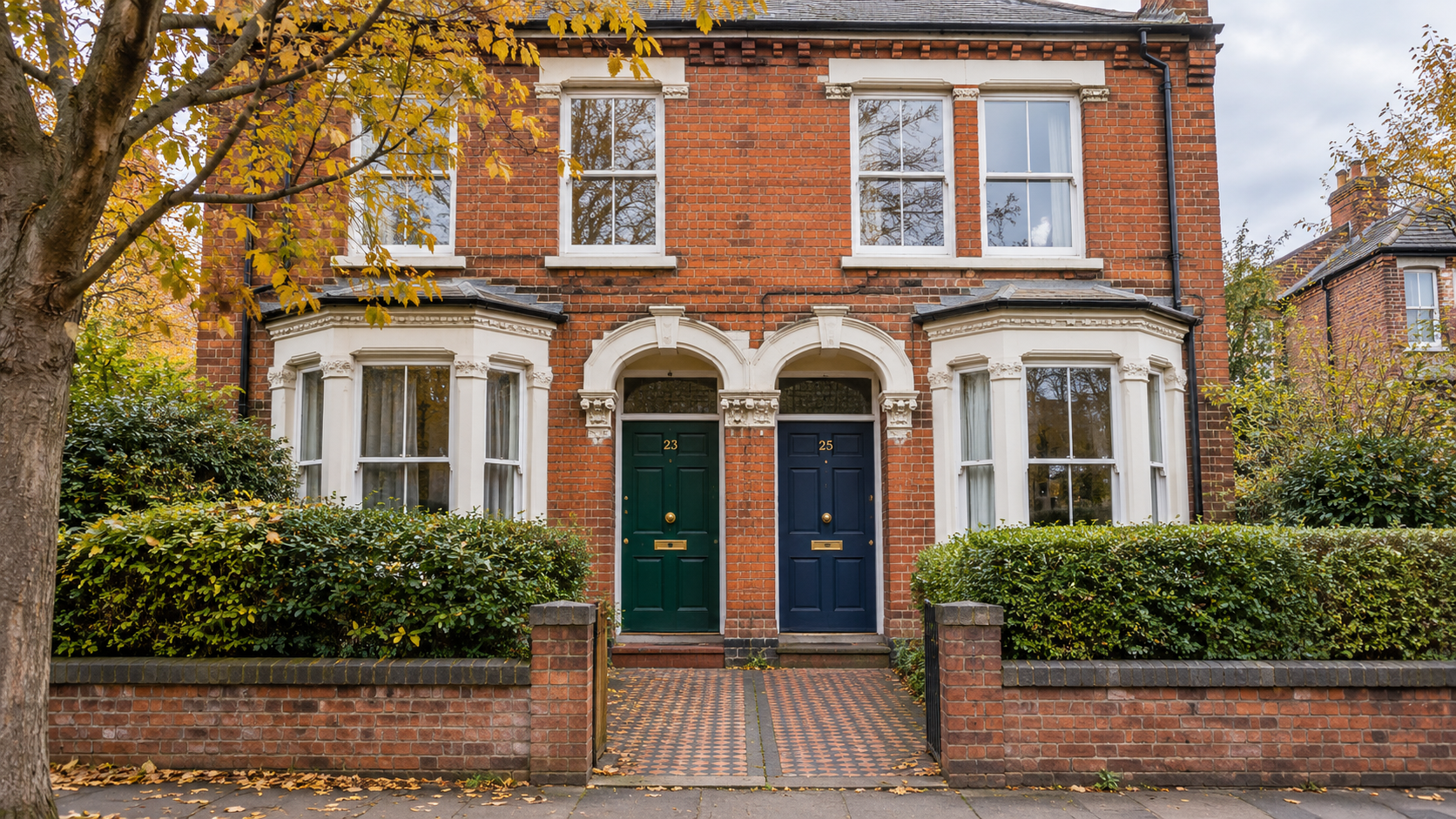
The flat is 33 Oslo Court, Prince Albert Road, a first-floor flat in a seven-storey listed building constructed in about 1935 [1].
The leaseholders, Paul and Sarah Haines, held an underlease for 99 years from 25 December 1974. By a notice of claim dated 22 July 2024 they exercised the statutory right to a new lease under the Leasehold Reform, Housing and Urban Development Act 1993. At the valuation date the lease had 49.42 years left to run [1].
Their notice proposed a premium of £73,250. The landlord, Brickfield Properties Limited, served a counter-notice admitting the claim and proposing £168,900. The two sides could not agree, and the leaseholders applied to the First-tier Tribunal (Property Chamber) for a determination [1].
Each side relied on a chartered surveyor: Mr Steven Harding MRICS for the leaseholders and Mr Robin Sharp BSc FRICS for the landlord. They could not agree two elements of the calculation: the freehold value with vacant possession (FHVP), and the relativity or short lease value [1].
How the premium is built up
Under Schedule 13 to the 1993 Act, the premium for a new lease is the sum of the fall in value of the landlord's interest, the landlord's 50% share of the marriage value, and any compensation payable to the landlord under paragraph 5 of the Schedule [1].
Marriage value depends partly on what the existing short lease is worth. Where sales evidence is thin or unreliable, valuers normally work that out with a relativity: a percentage applied to the freehold value. Relativity graphs published by surveying practices are the usual source of that percentage [1].
What the two valuers said
The First-tier Tribunal fixed the FHVP at £563,000 using comparable properties. Nobody appealed that finding [1].
On the short lease value the experts used different routes but arrived almost side by side:
- Mr Sharp took a relativity of 70.23%, the average of two standard graphs (Savills 2016 at 70.44% and Gerald Eve 2016 at 70.02%). Applied to his own freehold figure, that gave a short lease value of £400,810 [1].
- Mr Harding used market evidence. He looked at four short lease sales in the block, weighted them, and arrived at £400,000 [1].
Because the gap was only £810, neither expert was cross-examined on the point [1].
What the First-tier Tribunal did instead
The First-tier Tribunal agreed with Mr Sharp that three of Mr Harding's four transactions were too dated. It then took its own course with the fourth, 22 Oslo Court, a sale completed in May 2023 with 50.5 years unexpired [1].
Mr Sharp had analysed that sale as showing a relativity of 83.06%, far above the graphs, and for that reason had relied on the graphs alone. The First-tier Tribunal instead described a "blended approach". It averaged 83.06% with the 70.23% from the graphs to reach 76.65%, and then adopted 77% [1].
It also referred to an earlier First-tier Tribunal case about 11 Oslo Court, in which relativity had been determined at 82.95% [1].
The result was a short lease value of £433,510 and a premium of £87,815 [1]. A higher short lease value means less marriage value, so the premium fell. The landlord appealed, with permission from the Upper Tribunal.
The Upper Tribunal's decision
Judge Elizabeth Cooke decided the appeal on written representations. Ms Nicola Muir of counsel acted for the landlord. Written representations for the leaseholders were provided by Mr Harding [1].
Ground one: the parties were not given a chance to comment
The landlord argued that the tribunal's figure overrode the experts' consensus and that the averaging method had never been put to the parties. Mr Harding replied that the experts had used different methods, that a blended approach is not unusual, and that all the evidence had been before the parties [1].
The judge accepted that the tribunal used evidence that was before it. The difficulty was what it did with that evidence. In her words: "It is basic to the fair resolution of disputes that if a court or tribunal favours an idea or a solution that neither party has suggested it must allow the parties the opportunity to comment on it." [1]
She described the lack of cross-examination on the short lease value as "crucial". If the tribunal was not prepared to accept that the matter was "pretty much agreed", it should have said so and offered its view for comment. That alone made the conclusion unfair, and it was set aside [1].
Ground two: the averaging method was unsound
The judge went on to agree with the landlord about the method itself. Her reasoning ran as follows [1]:
- Market evidence is always best where it is available.
- The graphs are used where it is not available. Where it is, they can serve as a cross-check.
- The graphs are themselves the product of a great deal of data.
- Adding one isolated figure and averaging again distorts the graphs.
With no support for the method from either expert, its adoption was "unsatisfactory and irrational" [1].
She did not need to decide whether 22 Oslo Court was a sensible comparable, or whether rounding 76.65% up to 77% was justified [1].
The substituted figure
The Upper Tribunal did not send the case back. It substituted its own decision: a short lease value of £400,000, the figure Mr Harding had put forward on market evidence. The judge noted that this figure was so close to the average of the graphs that the closeness itself pointed to its reliability, and that the Tribunal consistently prefers market evidence where possible [1].
The parties agreed that this produced a premium of £104,570 [1]. That is £16,755 more than the First-tier Tribunal's figure.
Why this lease extension valuation dispute matters
Three points stand out.
A "win" on an unargued basis is fragile. The leaseholders did better at first instance than their own valuer had asked for on this element. That gain did not survive the appeal.
Near-agreed points should be treated as such. Where experts narrow an issue so far that no one cross-examines on it, a tribunal with doubts must raise them.
Outlier comparables call for scrutiny, not blending. The decision cites an earlier Upper Tribunal case, Deritend Investments (Birkdale) Limited v Fung Tai Engineering Company Limited [2025] UKUT 324 (LC). There the Tribunal said that a short lease value from comparables which produces a relativity significantly different from the standard graphs should have rung alarm bells and prompted a more critical look at the evidence [1]. A sale showing 83.06% against graphs at about 70% is that kind of signal.
The decision also quotes Daejan Investments Limited v Collins [2024] UKUT 26 (LC) [1]. In that case the Upper Tribunal valued the existing lease from a near-contemporaneous sale of the flat itself and used the 2016 graphs only as a cross-check [2]. Brickfield follows the same order of priority: sales evidence first, graphs as the check.
Expert evidence: lessons for valuers and those who instruct them
The First-tier Tribunal has its own expert evidence rule. Under rule 19 of the Tribunal Procedure (First-tier Tribunal) (Property Chamber) Rules 2013, an expert's duty is to help the tribunal on matters within their expertise, and that duty overrides any obligation to the person who instructs or pays them. Expert evidence needs the tribunal's permission, and a report must confirm that the expert understands and has complied with the duty [3].
Brickfield offers practical lessons.
- Explain every comparable, including the ones rejected. Mr Sharp analysed 22 Oslo Court, showed the relativity it implied, and explained why he did not rely on it [1]. That analysis was open and useful. It was the tribunal's later use of the figure, not the expert's treatment of it, that went wrong.
- Record what is agreed and on what basis. Where figures converge by different methods, a joint statement should say whether the experts agree the figure, the method, or both. Here the methods differed while the figures nearly matched [1].
- Keep market evidence and graph evidence in their proper roles. The Upper Tribunal's approach treats sales as the primary evidence and graphs as the fallback or cross-check. Mixing the two into a single average was the step criticised [1].
- Keep expert and advocate roles distinct. In this appeal the leaseholders' valuer also supplied the written representations, and the decision makes no criticism of that [1]. Anyone doing both should be clear which part is independent opinion and which is submission.
What it means for flat owners and freeholders across the UK
The 1993 Act applies to flats in England and Wales, so the statutory formula in this case is relevant there. The lessons about expert evidence travel further: wherever a tribunal or court decides a valuation dispute between competing surveyors, similar expectations of fairness and method apply.
For leaseholders and freeholders, the practical points are these:
- Small differences in relativity move the premium a long way. Here a change in short lease value from £433,510 to £400,000 shifted the premium by £16,755 [1].
- Ask how the short lease value was reached: from sales in the building, from graphs, or from sales cross-checked against graphs.
- Read any tribunal decision against what was argued. If the reasoning uses a method neither side proposed and neither expert was asked about, there may be grounds to seek permission to appeal. Time limits are short, so advice should be taken promptly.
Frequently asked questions
What is relativity in a lease extension valuation?
Relativity is a percentage that expresses the value of an existing short lease as a proportion of the freehold value with vacant possession. Where there is little or no sales evidence, valuers take it from published graphs based on a wide sample of transactions [1].
Why did the Upper Tribunal overturn the First-tier Tribunal?
There were two reasons. The tribunal reached a short lease value that neither party had proposed, using a method that was never put to them, on a point where neither expert had been cross-examined. Its method of averaging one sale with the graph average was also found to be unsatisfactory and irrational [1].
Did the landlord's valuer win the argument?
Not exactly. The landlord won the appeal, but the Upper Tribunal adopted the leaseholders' valuer's figure of £400,000 because it was based on market evidence. The two experts' figures were only £810 apart [1].
Can a tribunal reject a figure that both experts broadly agree?
A tribunal is not bound to accept expert evidence. But this decision confirms that if it is not prepared to accept a position that is close to agreed, it should tell the parties and invite comment before deciding [1].
Conclusion
Brickfield v Haines shows that, in a lease extension valuation dispute, how the evidence is handled matters as much as the numbers. The Upper Tribunal restored a figure within the experts' narrow range, preferred sales evidence, and rejected a blend of one sale and two graphs.
Anyone facing a similar dispute should check how the short lease value has been derived, make sure outlier comparables are explained, record clearly what the experts agree, and compare any tribunal decision against the case that was actually argued.
This article is general information only and is not legal or valuation advice. Anyone involved in a lease extension or enfranchisement claim should take advice on their own circumstances.
References