Building Surveying
Sep 4, 2026
EPC Rating How to Improve: A UK Homeowner's Guide
EPC rating how to improve? Our 2026 guide gives a step-by-step plan for UK homes. Learn about costs, savings, grants, and how to get an expert assessment.

You’ve got the EPC in front of you. The rating is lower than you hoped, the recommendations read like a generic checklist, and every contractor seems to push a different fix. That’s where most homeowners get stuck.
The practical question isn’t just epc rating how to improve. It’s which upgrade gives you the best result for your home, your budget, and your timing. If you’re selling, you want the shortest route to a stronger rating and better presentation. If you’re staying put, you want the work that cuts wasted heat first and avoids spending heavily on the wrong measure.
A standard EPC is a starting point, not a full strategy. The smartest approach is to read the report properly, tackle the best-value quick wins, then only commit to major works that suit the building you own.
You receive an EPC rated E, assume the house needs everything, and start pricing windows, a new boiler, and solar. Then you read the report properly and find the score is only a few points below band D, with one or two weak areas doing most of the damage. That is the point to slow down.

An EPC is a rating model, not a building diagnosis. It gives you a current score, a band, and a list of recommended measures based on standard assumptions about construction, insulation, heating, and fuel costs.
For a homeowner, the first question is simple. How far is the property from the next band up?
That matters more than the headline letter. A home sitting close to a threshold may improve with one well-chosen measure. A home far down in its current band usually needs a more careful sequence of works, because the cheaper jobs may not shift the certificate enough to justify the spend on EPC grounds alone.
Read the certificate with four checks in mind:
I tell clients to treat the EPC like a shortlist, not a specification. The report can point you in the right direction, but it does not rank measures by return on investment for your house, your budget, or your time horizon.
If the weak spots are unclear, a survey that helps identify energy deficiencies in a home gives you a better basis for spending than rereading the same certificate.
Standard EPC recommendations are broad by design. They are useful for compliance and general guidance, but they do not inspect the house in the way a homeowner making a real spending decision needs.
That is where money gets wasted.
A Victorian solid-wall terrace, a 1980s detached house with an ageing boiler, and a top-floor flat with limited upgrade options can all receive familiar recommendations. The right first step is rarely the same across all three. One may justify loft insulation straight away. Another may benefit more from heating controls or cylinder insulation. A third may show a theoretical improvement that is expensive, disruptive, and poor value in practice.
The trade-offs matter:
This is why I advise homeowners to separate three questions before spending anything. What raises the EPC fastest. What saves the most on running costs. What makes the building perform better over the long term. Sometimes one upgrade does all three. Often it does not.
Used properly, your EPC is the starting document. The smarter plan comes from checking which assumptions are right, which recommendations are realistic, and which upgrade gives the best return for this property rather than an average one.
A common mistake is spending £8,000 to £15,000 on replacement windows before dealing with £300 to £1,000 worth of heat loss in the loft, pipework, or controls. If the aim is to raise the EPC with sensible payback, the low-cost jobs come first.

Loft insulation is often the best first spend because it is cheap relative to the score gain, easy to phase, and low risk if the loft is dry and accessible. Installing or upgrading loft insulation to 270mm can improve an EPC rating by 10 to 15 points, while suitable cavity wall insulation can add another 5 to 10 points, according to EPC Advisor’s guidance on improving EPC ratings.
That does not mean every house should book cavity fill straight away. Wall type matters. Exposure matters. Installation history matters. A 1930s semi with clear cavity walls is a different proposition from a solid-wall Victorian terrace or a house with signs of damp and patch repairs.
For practical decision-making, use this order:
Draught-proofing is rarely the star of the EPC, but it often gives the quickest comfort improvement per pound spent. Homeowners notice colder rooms, skirting-level draughts, and uneven temperatures long before they notice a certificate score. Sealing those gaps will not transform the band on its own, but it reduces waste while you decide whether larger work is justified.
LED lighting is a simple housekeeping measure. If halogens or older bulbs are still in use, change them before the next assessment. The cost is modest, the disruption is nil, and there is no design risk.
Heating controls deserve more attention than they usually get. A decent programmer, room thermostat, thermostatic radiator valves, and a sensible setup help the boiler run in a more controlled way. On their own, controls are rarely the biggest EPC driver. In houses with a serviceable heating system, though, they are often one of the better value upgrades because the spend is moderate and the comfort benefit is immediate. If you are reviewing emitter performance at the same time, this guide to efficient UK home heating is a useful reference point.
Low-cost does not mean no-risk.
Boarded lofts can compress insulation and reduce performance. Poor ventilation can trap moisture. Cavity wall insulation can be the wrong call on exposed elevations or walls with existing damp issues. Smart controls are only worth fitting if the household will use them properly. I see plenty of systems with good hardware and poor setup.
If the house has awkward construction, signs of moisture, or a mix of old alterations, get the fabric checked before choosing measures from a generic recommendation list. A full Level 3 building survey for older or altered homes can help identify whether the cheap option is still the right option once condition, access, and defect risk are taken into account.
Before spending on larger works, it helps to see a practical walkthrough of basic household measures and how they fit together:
Cheap measures work best when they are matched to the building. The right £500 job can do more for comfort and EPC progress than the wrong £5,000 one.
A typical version of this decision looks like this. A homeowner has already draught-proofed, topped up insulation where it was easy to do, and fitted better controls. The EPC still sits in band D or low C range. At that point, the next pound spent needs to do more than feel productive. It needs to shift the rating, cut bills, and avoid expensive work with weak payback.

For many homes, the biggest gains come from fixing the main source of heat loss or replacing obsolete heating plant. That usually puts loft insulation, suitable wall insulation, and an old boiler near the top of the shortlist. Which one comes first depends on the house.
A boiler replacement can lift an EPC materially where the existing unit is old and inefficient, especially in homes still running non-condensing models. It can also improve comfort and reliability. The trade-off is that a new gas boiler may help the EPC in the short term without being the best long-term answer if you expect to move to low-carbon heating later. I advise owners to consider remaining boiler life, current running costs, and whether larger fabric works should come first.
If you’re reviewing emitter performance, room responsiveness, and overall heating efficiency at the same time, this guide to efficient UK home heating is a useful companion read. It helps homeowners think beyond the boiler itself and look at how the heat is delivered around the house.
Solar PV can help, but it is rarely the first major job I would choose in a cold, leaky house. It reduces purchased electricity. It does not deal with heat escaping through the roof, walls, or poor glazing. The return usually improves once the fabric and heating basics are already in decent order.
Windows are the upgrade homeowners often want first and should often price later. New glazing can improve comfort, reduce draughts, and help appearance. On EPC return per pound spent, it commonly loses to insulation and heating upgrades unless the existing windows are single glazed, failed, or due for replacement anyway.
This is the comparison that matters. Cost first. Likely rating impact second. Payback and disruption alongside both.
| Upgrade Measure | Typical Cost (2026) | Potential EPC Point Uplift | Est. Annual Bill Savings |
|---|---|---|---|
| Boiler replacement with modern A-rated condensing boiler | £2,500 to £4,500 | Moderate to high where replacing an older non-condensing unit | £150 to £350 |
| Loft insulation to 270mm | £500 to £1,500 | Often high relative to cost in under-insulated homes | £150 to £300 |
| Cavity wall insulation where suitable | £1,500 to £3,000 | Moderate, sometimes strong in homes with empty cavities | £180 to £400 |
| Solar PV panels | £5,000 to £9,000 | Moderate, depends heavily on current rating and electricity use | £300 to £700 |
| Replacement glazing | £6,000 to £15,000 | Low to moderate in many homes | £100 to £250 |
These are working ranges, not promises. A detached house with exposed walls, poor existing fabric, and high energy use will behave very differently from a compact mid-terrace with limited roof area and decent insulation already in place.
The useful way to read the table is cost per likely EPC point, not just total spend. Loft insulation often wins that test. Suitable cavity wall insulation can also stack up well. Boiler replacement can be excellent value where the existing system is obsolete, but less compelling if the current boiler is already reasonably efficient. Replacement glazing usually sits lower on ROI unless you are solving condition problems at the same time.
Property type matters a lot here. Solid-wall homes, older altered properties, and houses with signs of damp need more caution before any large spend. If you are planning several major measures together, a full Level 3 building survey for older or altered homes will usually give you a better basis for decisions than the standard EPC recommendation list on its own.
Three patterns come up repeatedly on site.
The best major upgrade is the one that removes the biggest bottleneck in that property. That is why generic EPC advice often falls short. It suggests measures. It does not rank them by your likely return, defect risk, disruption, and future plans for the house.
For many homeowners, the barrier isn’t deciding what to do. It’s paying for it.
The two grant routes worth checking first are the Boiler Upgrade Scheme and ECO4. They don’t cover every situation, but they can make a major project viable where it otherwise wouldn’t be.
The Boiler Upgrade Scheme offers grants of up to £7,500 for homeowners installing low-carbon heating systems, and ECO4, which runs until March 2026, can cover the full cost of major insulation and heating upgrades for eligible low-income households, according to the UK government’s Boiler Upgrade Scheme guidance.
Those are very different schemes.
If you’re in the middle ground, don’t assume you won’t qualify for anything. It’s worth checking the current criteria carefully because funding routes can depend on the property, the household, and the type of proposed measure.
The worst way to approach grants is to chase funding before you know what the house needs. Start with the building, then the measure, then the scheme.
Use this order:
A grant can improve affordability, but it doesn’t replace judgment. If a measure is wrong for the building, subsidising it doesn’t make it right.
For owners planning to sell in the shorter term, there’s another trade-off. The best grant-backed upgrade isn’t always the best sale-preparation upgrade. Sometimes a targeted insulation or heating improvement is more proportionate than a more disruptive funded project.
You can see the problem in practice. Two houses both sit on a D rating, both have EPC recommendation lists, and both owners are ready to spend money. One needs a few hundred pounds spent on loft top-up insulation and heating controls. The other needs a much harder decision on boiler replacement, floor losses, or whether solid wall insulation is worth the disruption. The EPC format does not explain that difference well.
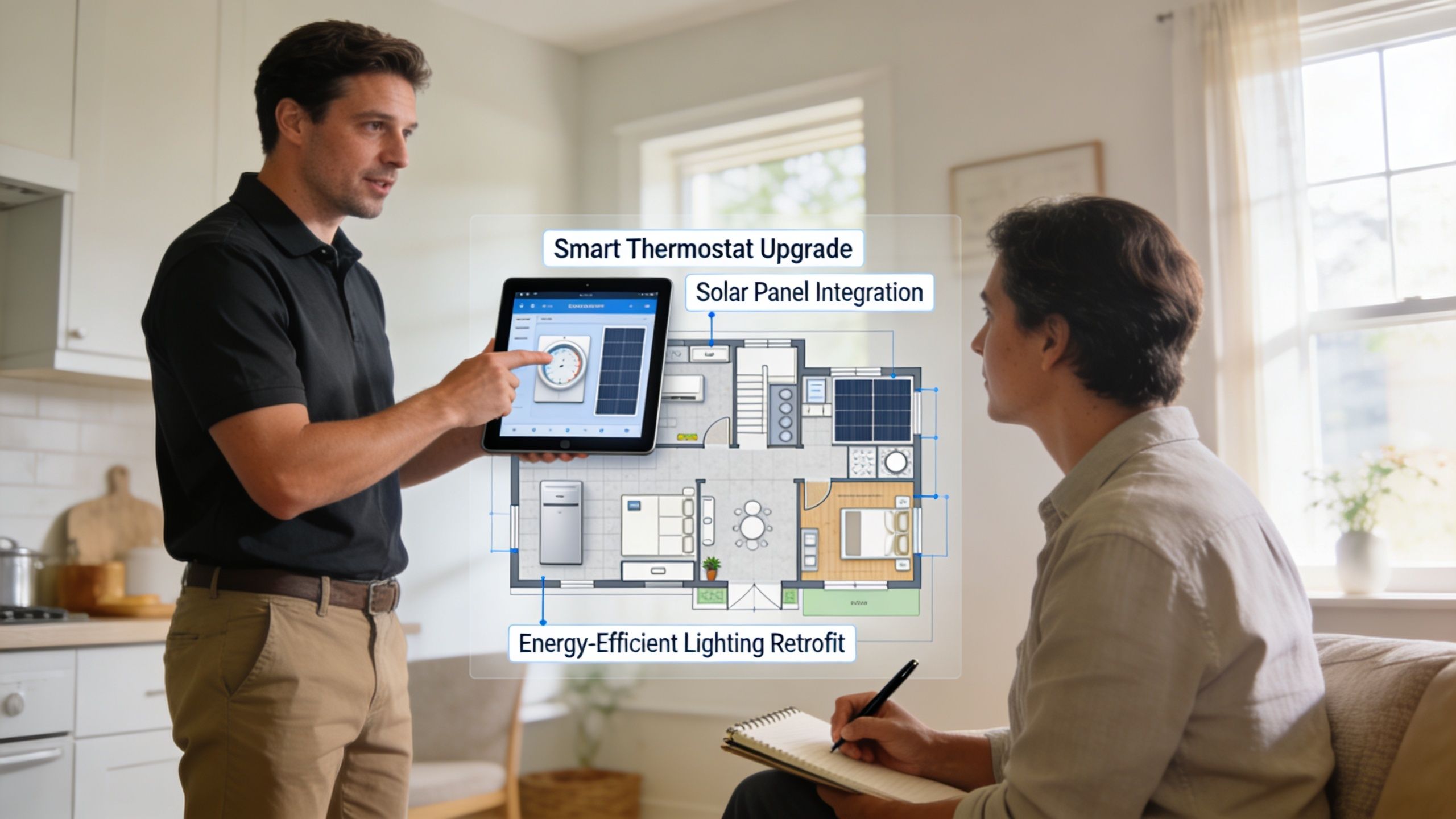
An EPC is useful, but it is still a standardised model. It works from assumptions, age bands, construction types, and visible evidence. That means the recommendation list can be broadly right while the spending order is wrong for your house.
A surveyor looks at the building as it performs and asks a different question. Not just "what could improve the rating?" but "what should you do first if you want the best return for the money?"
That changes the plan.
A proper inspection can establish:
That cost-benefit judgement is the part many homeowners need most. A standard EPC may recommend several improvements together, but it does not tell you clearly whether spending £800, £3,000, or £12,000 is the sensible next step for your situation.
The expensive mistake is usually not the survey fee. It is committing to the wrong measure, or doing the right measure in the wrong order.
I see this most often in older homes and in houses that have been improved in stages over the years. Paperwork may say insulation is present, but the installation quality is poor. A boiler may still work, but old controls drag the efficiency down. Windows may look like the obvious target, yet the EPC gain from replacing them can be modest compared with loft insulation, draught reduction, or heating upgrades.
Sequencing matters too. There is little sense in specifying a new heating system before you understand how much heat the building is losing. Equally, some insulation measures need care if the property already has moisture issues or limited ventilation.
For homeowners unsure who to instruct, this guide on how to find the right surveyor provides a practical starting point.
A good surveyor helps you sort the work into three groups. Do now, do later, and do only if the numbers stack up. That is how you avoid spending heavily for a small EPC gain when a cheaper measure would have moved the rating sooner.
Once the work is finished, don’t assume the new rating will automatically reflect it. The assessor needs clear evidence.
Have your paperwork ready and easy to show.
If you’ve done a lot of work over time, create a simple folder in date order. That’s often the easiest way to avoid confusion during inspection.
Check the updated EPC carefully. Make sure the major improvements appear correctly and that the headline rating reflects the works completed.
Then think about what the document needs to do for you.
If you need a trusted professional for the reassessment itself, use an accredited assessor and make sure they have enough information to give the property full credit for completed works.
Yes. Many homes can make useful progress with loft insulation, draught-proofing, lighting changes, and better heating controls. The right answer depends on what’s currently missing.
Not always. EPC recommendations are often generic, so the order may not reflect the best investment route for your particular property.
Usually only if the windows are failing or the house has already dealt with bigger weaknesses. In many homes, heating or insulation work comes first.
If the home has changed materially, getting a new EPC is sensible. It ensures buyers, tenants, and lenders see the current performance rather than an outdated certificate.
If you want a clearer route from a disappointing EPC to a practical upgrade plan, Survey Merchant can help you find the right surveyor for your property, whether you need an EPC, a Level 2 or Level 3 survey, or impartial advice on which improvements are worth doing.
Survey Merchant provides vetted RICS surveyors across 100+ UK locations at fixed fees:
→ Level 2 Home Survey (HomeBuyer Report)
→ Level 3 Building Survey (full structural survey)
→ RICS Red Book property valuations
→ Party wall surveyors — notices, awards & schedules of condition
→ Expert witness surveyors — CPR Part 35 reports for property disputes