Building Surveying
Jul 18, 2026
Drone Roof Inspection Cost: 2026 UK Price Guide
Find out the true drone roof inspection cost in the UK for 2026. Our guide details typical prices, key cost drivers, and how to get an accurate quote.

A typical drone roof inspection in the UK costs between £150 and £400 for a standard residential property. In practice, the final figure can move quite a bit depending on the report detail you need, how awkward the roof is to inspect, and whether the property is in a higher-cost location such as Central London.
If you're reading this, there's a good chance you've spotted something that doesn't look right. A damp mark on an upstairs ceiling, a slipped tile after a storm, moss around a valley, or a survey report that says the roof needs “further investigation”. Most homeowners don't want guesswork, and they definitely don't want to pay for scaffolding just to find out whether the problem is minor or expensive.
That's where drone inspections have become useful. They give you a way to look closely at difficult roof areas without sending somebody straight onto the covering. But the important bit isn't just the flight. It's what you receive afterwards. A cheap set of aerial photos may satisfy curiosity. It may do nothing for an insurance claim, a repair tender, or a purchase negotiation.
That is the part people often miss when they search for drone roof inspection cost. The question isn't only “how much does it cost?” It's also “what am I buying?”
You have a damp patch on the top-floor ceiling, a builder says the roof needs attention, and you need evidence before you agree to repairs. In that situation, the price of a drone inspection is not just about getting a drone in the air. It is about what comes back after the flight, and whether it is useful enough to help you make a decision.
For a typical house in the UK, expect a drone roof inspection to start in the low hundreds. At the lower end, that usually buys a short site visit and a set of clear photographs. At the higher end, you are paying for more than flying time. You are paying for image review, defect identification, annotations, written findings, and in some cases measurements or thermal output that can support a repair quote, a purchase negotiation, or an insurance conversation. That is why PropLab's investor guide is useful context if you are weighing inspection spend against wider property costs.
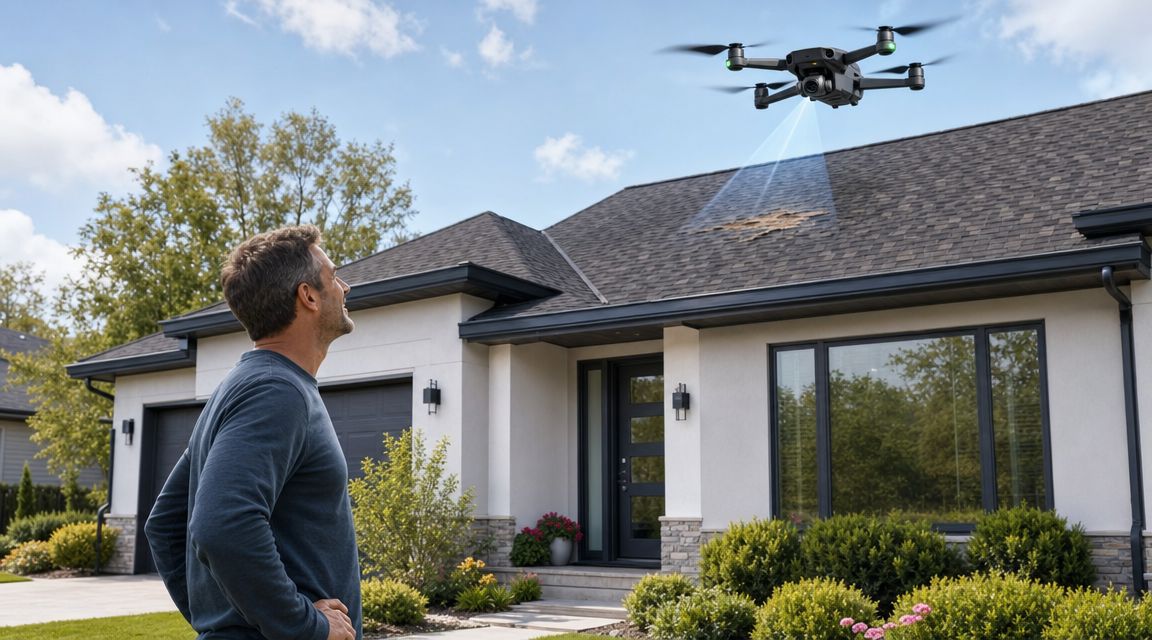
The biggest mistake I see is comparing quotes as if they cover the same thing. They rarely do. One operator may send over ten to twenty photos and a short summary. Another may deliver marked-up images showing slipped tiles, failed flashing, blocked valleys, gutter defects, and areas that need closer attention from a roofer. Those are very different products, even if the visit itself takes a similar amount of time.
A cheap flight can answer a simple question. A better report can save money.
If the inspection may affect a claim, a dispute, or the price you pay for a property, ask what the deliverable includes. Homeowners often focus on access and convenience first, but the stronger value is in having evidence you can show to a contractor, surveyor, insurer, or seller. That is one of the practical drone survey benefits for UK property. Good output reduces guesswork.
A clear quote should spell out:
If a quote does not separate the flight from the reporting, it is hard to judge whether it is good value. In practice, the paperwork and post-processing often matter more than the ten or fifteen minutes spent capturing the roof.
When homeowners compare options, they often look only at the headline price. That's understandable, but it misses where traditional inspection costs really build up. Roof access is rarely just a man and a ladder. On awkward, high, or fragile roofs, the cost comes from access equipment, setup time, labour, and risk.
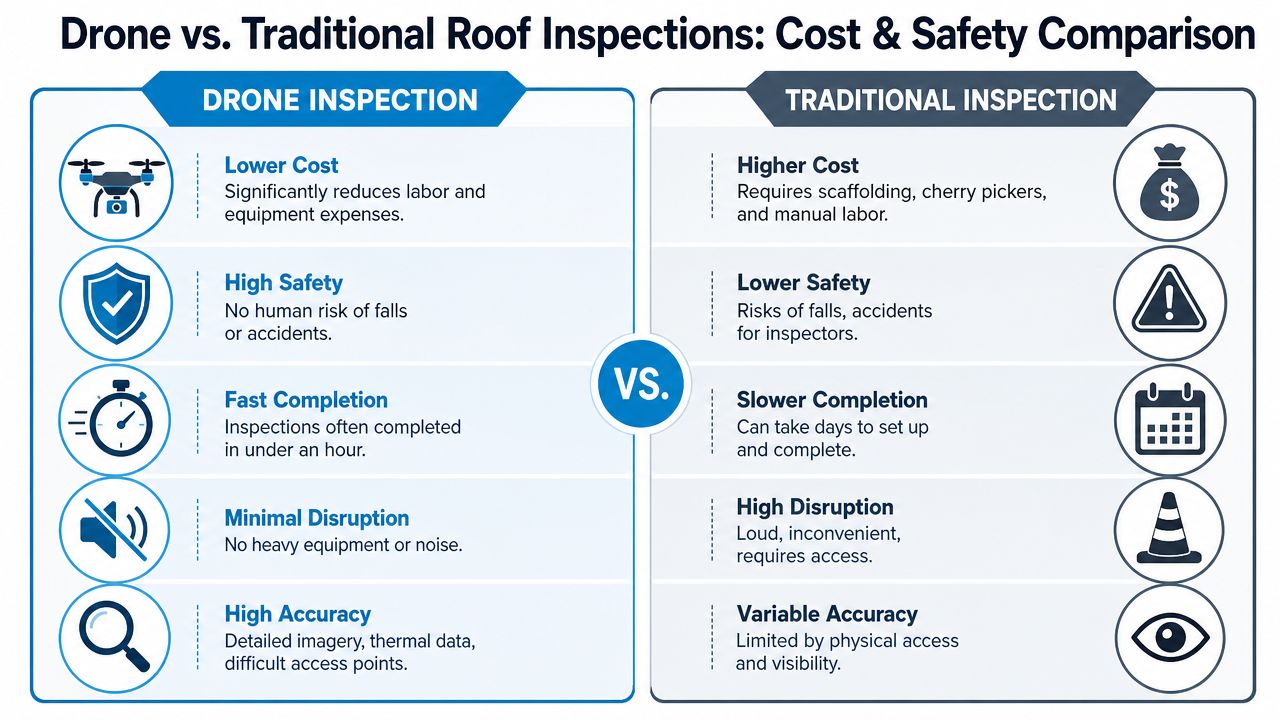
UK-facing providers generally present drone surveys as the lower-disruption option because the roof can often be captured in minutes rather than hours, which cuts labour and access overheads that otherwise dominate the job cost, as noted in Aerially's drone roof inspection guide.
| Factor | Drone inspection | Traditional inspection |
|---|---|---|
| Access method | Camera flown from ground level | Physical roof access by ladder, scaffold, or platform |
| Typical pricing position | Often in the lower hundreds for standard homes | Often higher once physical access and labour are involved |
| On-site disruption | Usually low | Usually higher, especially if access equipment is needed |
| Safety exposure | Inspector remains on the ground | Greater risk because someone must access the roof |
| Image coverage | Strong for high or awkward areas | Can be limited by safe walking routes |
| Best use | Initial diagnosis, visual evidence, reporting, hard-to-reach roofs | Close contact inspection where materials must be physically tested |
The biggest financial advantage of drone work is that it can remove the need for expensive access arrangements on many jobs. That matters far more on a complex house than on a small single-storey extension.
For buyers and investors, it also helps to understand roof inspection costs in the wider context of acquisition due diligence. PropLab's investor guide is useful if you're comparing roof checks with broader inspection budgets on a purchase.
The same principle applies to homeowners weighing methods. The value isn't only that drones are modern. It's that they deal well with the expensive parts of roof access: time, setup, and safety management. That's one reason many owners start by reviewing the broader drone survey benefits for UK property before deciding whether a roof-specific inspection is enough.
A short video gives a good sense of how this looks in practice:
If the real cost of a job is driven by getting safe access to the roof, drone inspection usually wins. If the real need is hands-on testing, it doesn't.
What drones don't do well is replace every traditional method. If a contractor needs to lift coverings, probe moisture within the build-up, or physically test the substrate, someone may still need direct access later. The drone's role is often to narrow the problem first and make that second visit more targeted.
Quotes for the same property can vary significantly because the scope of work differs. One firm is pricing a short flight and a folder of images. Another is pricing evidence you can use to decide whether to repair now, challenge a roofer's recommendation, negotiate a purchase, or support an insurance claim.
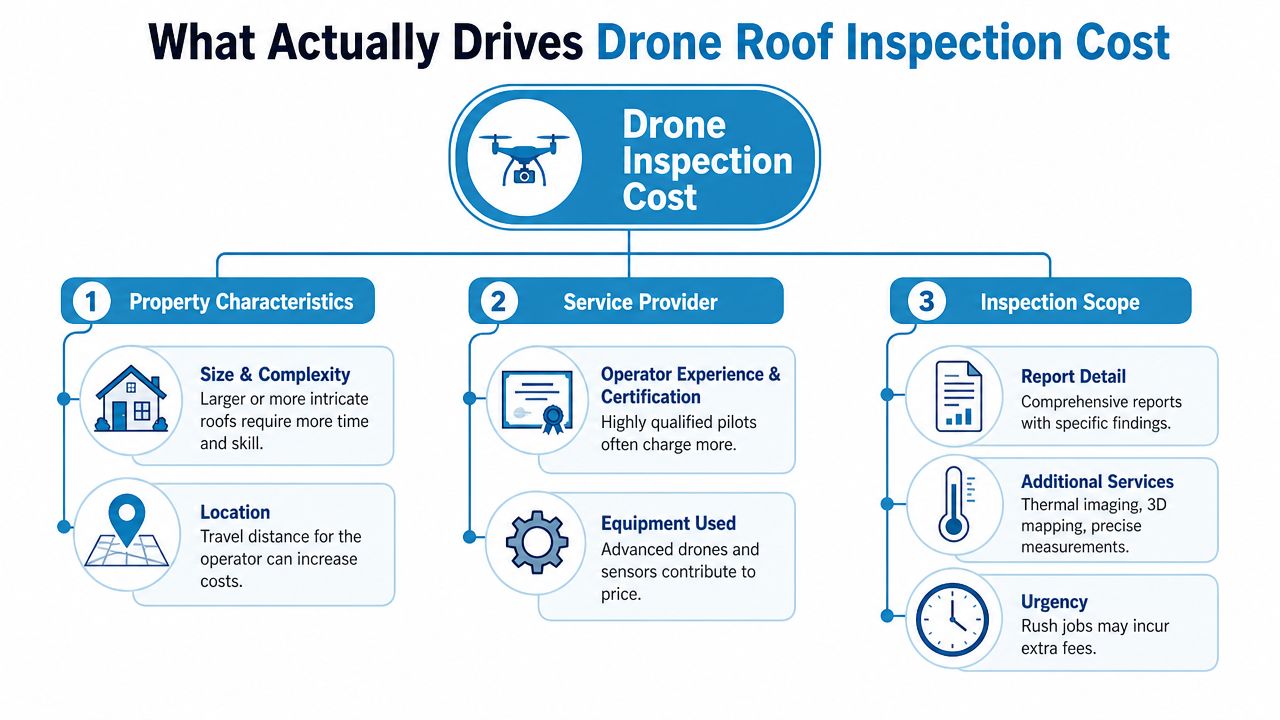
A simple example makes the point. A homeowner with a semi-detached house may only want clear photos of slipped tiles above the rear bedroom. A buyer looking at the same roof may need annotated defects, location references, and enough detail to discuss likely repair liability with a solicitor or surveyor. The property has not changed. The deliverable has.
A plain pitched roof is usually quick to inspect. Add dormers, hips, valleys, parapets, chimney stacks, solar panels, rooflights, or multiple extensions, and the job becomes slower both in the air and at the desk.
That affects price in four places:
This is one reason a "roof inspection" is not a standard product. Two houses of similar floor area can produce very different workloads.
The address changes the quote. A detached house with open space, easy parking, and clear take-off options is straightforward. A terrace on a narrow street, a block with rear access issues, or a property in Central London takes more preparation.
The extra cost is rarely about mileage alone. It comes from working space, neighbouring properties, flight restrictions, setup time, and the precautions needed to carry out the inspection safely. If you have ever compared RICS survey quote costs, the same rule applies here. The harder the site is to inspect and report on, the less useful a headline starting price becomes.
Some operators are skilled pilots. Some are experienced building inspectors. The price often reflects which one you are hiring.
If the brief is limited to image capture, a pilot-only service may be enough. If the question is whether staining near a chimney suggests failed flashing, saturation below the covering, or overflow from blocked gutters, interpretation matters more than the flight itself. That is where survey knowledge earns its fee.
Look closely at the role behind the quote:
This is the part homeowners should focus on first. Flight time is only one cost. The main difference in price often sits in what you receive afterwards.
| Deliverable type | What you usually get | Best for |
|---|---|---|
| Photo set | Still images of key roof areas | A quick visual check |
| Photo set plus commentary | Images with short written findings or marked-up defects | Maintenance decisions and contractor briefing |
| Evidence report | Annotated images, defect schedule, severity notes, and repair context | Budgeting, negotiations, and clearer repair instructions |
| Measured output | Orthomosaic, 3D model, or other measurable record | Insurance, disputes, tendering, and larger repair scopes |
Measured outputs and stronger reports cost more because they take longer to produce and check. Processing imagery into something measurable is desk work, not just flying. Annotating defects properly also takes time, especially where the client needs a document that can stand up in a conversation with an insurer, managing agent, buyer, or contractor.
In practice, the cheapest quote is often for data capture only. The higher quote may include the part that saves money later: a report that reduces guesswork, limits repeat visits, and gives you a clearer basis for decisions. That is usually what you are paying for.
A homeowner asks for a roof drone inspection after spotting damp on an upstairs ceiling. One quote comes back low and promises "inspection with photos". Another is higher and includes marked-up images, defect notes, and a report suitable to share with a roofer or insurer. The difference is usually not the flight. It is the work done after the drone lands.
That is the part to read carefully.
A basic package suits a simple question. Is there an obvious slipped tile, failed flashing, blocked valley, cracked chimney pot, or visible wear at an abutment? If that is all you need, a short visit with a photo set and brief summary can be perfectly sensible. It gives you a quick answer and, in many cases, enough information to book routine repairs.
The limits show up once money or disagreement enters the picture. A few unlabelled images rarely help if you are comparing contractor quotes, querying the cause of a leak, dealing with a purchase negotiation, or trying to explain the issue to a third party.
For that reason, many residential clients are better served by a report-led quote rather than a flight-led one.
A stronger package usually includes clear annotation, a written schedule of observations, and coverage of the details that often cause trouble around the main roof area, such as gutters, parapets, flat roof seams, chimney flashings, and wall junctions. That extra desk work is what turns aerial images into something useful. A roofer can price from it more accurately. A buyer can use it in negotiations. A landlord or managing agent can pass it on without having to interpret each image themselves.
For buyers weighing total due diligence costs, it can help to compare a roof-specific inspection with wider RICS survey quote costs. Sometimes a separate drone report is the right choice. Sometimes it makes more sense to fold the roof evidence into a broader survey if several parts of the property already need review.
The highest tier is measured output. This is usually reserved for larger roofs, awkward layouts, recurring defects, or cases where several parties need to work from the same record. Instead of just receiving photos and comments, you may get a measurable model or mapped roof image that supports repair scoping, tender discussions, or claim documentation. It costs more because the operator has to process, check, and present the data properly.
In practice, quotes often split into three very different products:
The right option depends on what you need the document to do after the visit. If nobody else will rely on it, a simple package may be enough. If the report needs to support a claim, a dispute, or a scope of works, paying for interpretation and presentation usually saves time later. For a general sense of the paperwork mindset that often matters in claim situations, this homeowner's guide to roof inspections and claims is a useful reference.
Cheap quotes often leave out the part that answers the core question. A good quote states the deliverables clearly, explains what level of interpretation is included, and tells you whether you are buying raw images or a report someone can act on.
A drone inspection isn't just about turning up with a quadcopter and taking a few photos. If you're hiring someone to inspect your roof, you should expect proper credentials, proper insurance, and a sensible operating process.
At a minimum, confirm the operator is properly registered for commercial work and insured for drone operations. If the property is in a built-up area, near restricted airspace, or difficult to operate from, competence matters even more. A careful operator will discuss site constraints, neighbouring properties, privacy, and weather before the day of the visit.
Ask straightforward questions:
If you're also trying to understand how roof evidence may be used in a claim context, this homeowner's guide to roof inspections and claims gives a useful general overview of the documentation mindset insurers often expect, even though the process itself differs by case and jurisdiction.
This is the point many clients overlook. Public liability covers accidents and third-party damage. It doesn't address negligent advice in a report. If you are relying on the inspection for a purchase, a defect dispute, or a significant repair decision, ask whether the professional producing the opinion holds Professional Indemnity cover.
That matters most when the service goes beyond photography and includes interpretation, findings, or recommendations. If you want a plain-English explanation of how that protection works, Survey Merchant's PI insurance guide is worth reading.
If the report will influence money, liability, or a legal position, don't treat insurance as a box-ticking exercise.
Also remember that privacy is part of professionalism. A competent operator should focus on the subject property, avoid unnecessary capture of neighbouring areas, and handle image storage and sharing sensibly.
The cheapest quote isn't always the lowest-cost outcome. The best value usually comes from a clear brief, the right deliverable, and an operator whose skill matches the problem.
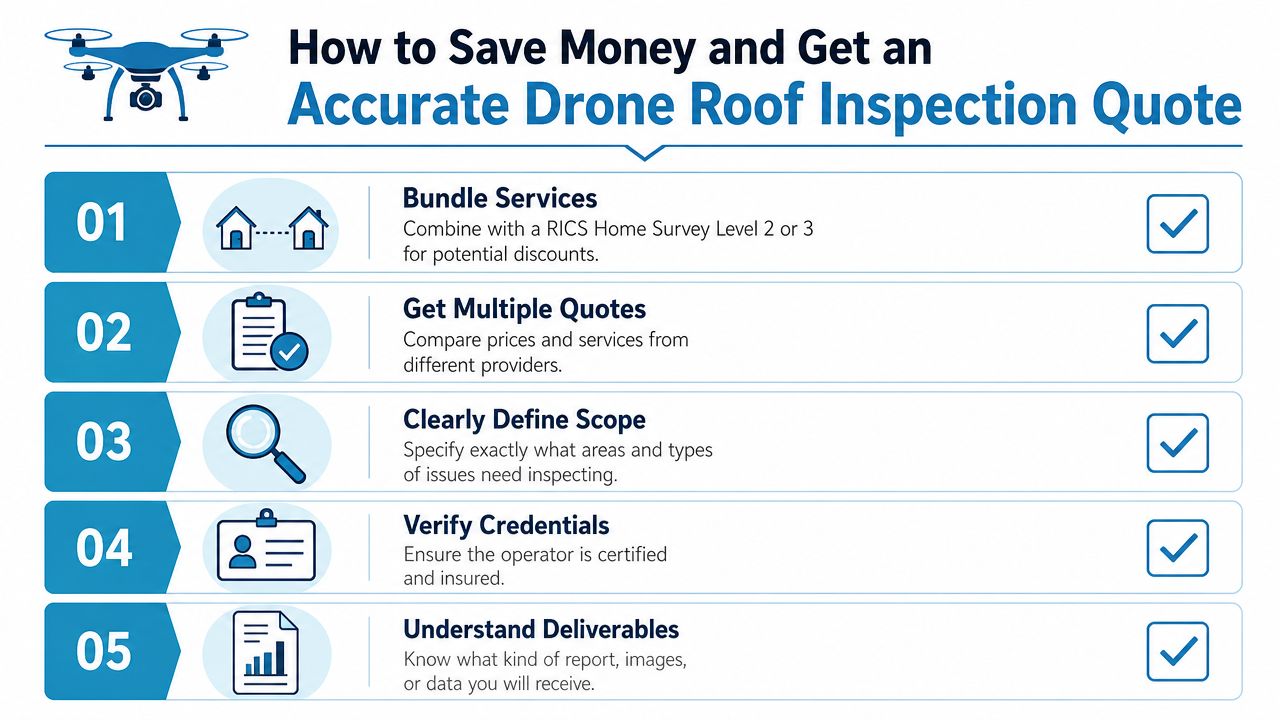
Start by deciding what the report needs to achieve. “Inspect my roof” is too vague. “Check the rear valley and chimney flashings because there is active damp in the back bedroom” is much better. A precise brief helps the surveyor price accurately and helps you avoid paying for unnecessary extras.
Some practical ways to keep costs sensible:
Use this checklist before agreeing to any quote:
A comparison service can help when you want to see different approaches side by side rather than judge one quote in isolation. That tends to produce better decisions than choosing on price alone.
The flying itself is usually quite quick on a standard house, but the full appointment depends on setup, safety checks, and the complexity of the roof. The report often takes longer than the flight.
Usually, poor weather is a reason to postpone. Rain, strong wind, and poor visibility affect safety and image quality. A professional operator should reschedule rather than force a poor inspection.
Not always. Many inspections can be arranged without the owner attending, provided there is clear access and the operator has the necessary instructions. Some clients still prefer to be present so they can explain the concern directly.
It can be, but that depends on what the report contains. A few photographs may not be enough. Annotated findings and measurable outputs are more useful when the insurer or contractor needs clear evidence.
No. It is excellent for visual inspection and documentation, especially where access is awkward or unsafe. If somebody needs to lift materials, test moisture within the structure, or inspect concealed defects, further investigation may still be required.
If the findings will affect spending, negotiation, or a claim, yes. The difference between a gallery of images and a report that supports a decision is often where the primary value lies.
If you want to compare quotes from qualified UK professionals without spending hours ringing around, Survey Merchant can help you find the right surveyor for your roof inspection, defect report, or wider property survey. It's a practical way to match the job to someone with the right experience, the right insurance, and a reporting style that's useful.
Survey Merchant provides vetted RICS surveyors across 100+ UK locations at fixed fees:
→ Level 2 Home Survey (HomeBuyer Report)
→ Level 3 Building Survey (full structural survey)
→ RICS Red Book property valuations
→ Party wall surveyors — notices, awards & schedules of condition
→ Expert witness surveyors — CPR Part 35 reports for property disputes