We use cookies to improve your experience on our site, analyze site traffic, and assist in our marketing efforts. By clicking "Accept all," you agree to the storing of cookies on your device. You can choose to "Reject all" non-essential cookies. For more information, please read our Cookie Policy.
Spray Foam Insulation Problems: 2026 UK Homeowner Guide
Around 250,000 UK homes have spray foam roof insulation. This 2026 guide covers the damp and timber risks, why many lenders refuse to lend, realistic removal costs and the route back to a mortgageable home.
Spray foam insulation problems have become one of the most common reasons UK homeowners struggle to sell, remortgage or release equity from their property in 2026. What was once sold as a quick energy-saving fix is now flagged by surveyors, questioned by mortgage lenders and, in the worst cases, removed at the homeowner’s expense. This guide explains what the problems are, why lenders are cautious, what removal really costs and the practical steps to take – whether you already have spray foam in your loft or you are buying a house that does.
Key takeaways
Around 250,000 UK homes are estimated to have spray foam roof insulation, according to figures from the Residential Property Surveyors Association (RPSA) and Property Care Association (PCA) cited by the House of Commons Library.
BBC research reported in November 2024 found that a quarter of the UK’s biggest mortgage providers – and every equity release lender surveyed – would not lend on homes with spray foam in the roof.
Inspections of more than 500 properties by the PCA and HomeOwners Alliance found 35% had at least one defect caused by spray foam insulation.
Professional removal typically costs £40–£80 per square metre in 2026 – roughly £2,000–£4,500 for a standard three-bedroom loft, before any timber repairs.
RICS advises that spray foam can hide the roof structure from inspection, trap condensation and, if wrongly installed, put roof timbers at risk of decay.
An independent survey by a suitably qualified, accredited surveyor is the essential first step before you pay anyone to remove foam – and Survey Merchant can arrange one quickly anywhere in the UK.
What are the main spray foam insulation problems?
The main spray foam insulation problems are restricted ventilation and trapped condensation, hidden decay of roof timbers, difficulty inspecting the roof structure, reduced property value and mortgage refusals. Because many UK lenders will not lend until the foam is assessed or removed, it can also make a home harder to sell.
Spray polyurethane foam (SPF) is applied wet to the underside of a roof, where it expands and sets. There are two types: open-cell foam, which stays soft and allows some vapour movement, and closed-cell foam, which sets rigid and acts as a vapour barrier. As the RICS consumer guide to spray foam insulation explains, applying foam to the rafters converts a ventilated “cold roof” into a “warm roof” – a fundamental change to how the roof was designed to manage moisture.
Spray foam covers the roof structure, so surveyors often cannot fully inspect the timbers beneath it.
The risks flagged by RICS and other professional bodies include:
Condensation and damp: incorrectly installed foam seals in moisture, which can lead to uncontrolled condensation within the roof space.
Hidden timber decay: once the rafters are coated, leaks can go unnoticed and untreated timber can rot behind the foam.
Inspection problems: a surveyor cannot fully see or test what the foam covers, so lenders’ valuers often cannot confirm the roof is sound.
Fire performance: polyurethane foam is a combustible material, typically rated Class E under BS EN 13501-1.
Energy claims that under-deliver: RICS notes that topping up conventional mineral wool at ceiling level is usually cheaper and often performs better for a standard loft.
Why do mortgage lenders refuse spray foam insulation?
Lenders rely on a valuer’s report before offering a mortgage. If the valuer cannot inspect the roof timbers because they are hidden behind foam, the lender cannot price the risk – so many simply decline. In November 2024, BBC research reported by the HomeOwners Alliance found that a quarter of the UK’s biggest mortgage providers would not lend on homes with spray foam roof insulation, and none of the equity release lenders surveyed would do so. Equity release providers are especially cautious because they may not recover their money for decades.
Practice does vary. Some lenders will consider a property if the foam was installed during construction, or where full installation paperwork, product certification (such as BBA or Kiwa) and a satisfactory specialist report are available. Others take a harder line and require complete removal with a post-removal inspection report before they will lend. If you are unsure how the insulation affects your own borrowing options, our guide to what a mortgage valuation involves explains how valuers approach issues like this.
The scale of the problem is significant: the House of Commons Library briefing on spray foam insulation and mortgages notes industry estimates of around 250,000 affected homes, many insulated under schemes such as the Green Homes Grant, which closed in March 2022. The government has said it has no plans to intervene, leaving the issue between homeowners, installers and lenders.
How serious is the damp and timber risk?
Serious enough that the professional bodies inspected it directly. When the Property Care Association and HomeOwners Alliance examined more than 500 properties with spray foam, 35% had one or more defects resulting from the installation. A typical failure pattern is closed-cell foam applied directly to bitumen sarking felt with no ventilation channel: water vapour rising from the house condenses within the roof build-up, moisture readings in the rafters climb, and decay begins where nobody can see it.
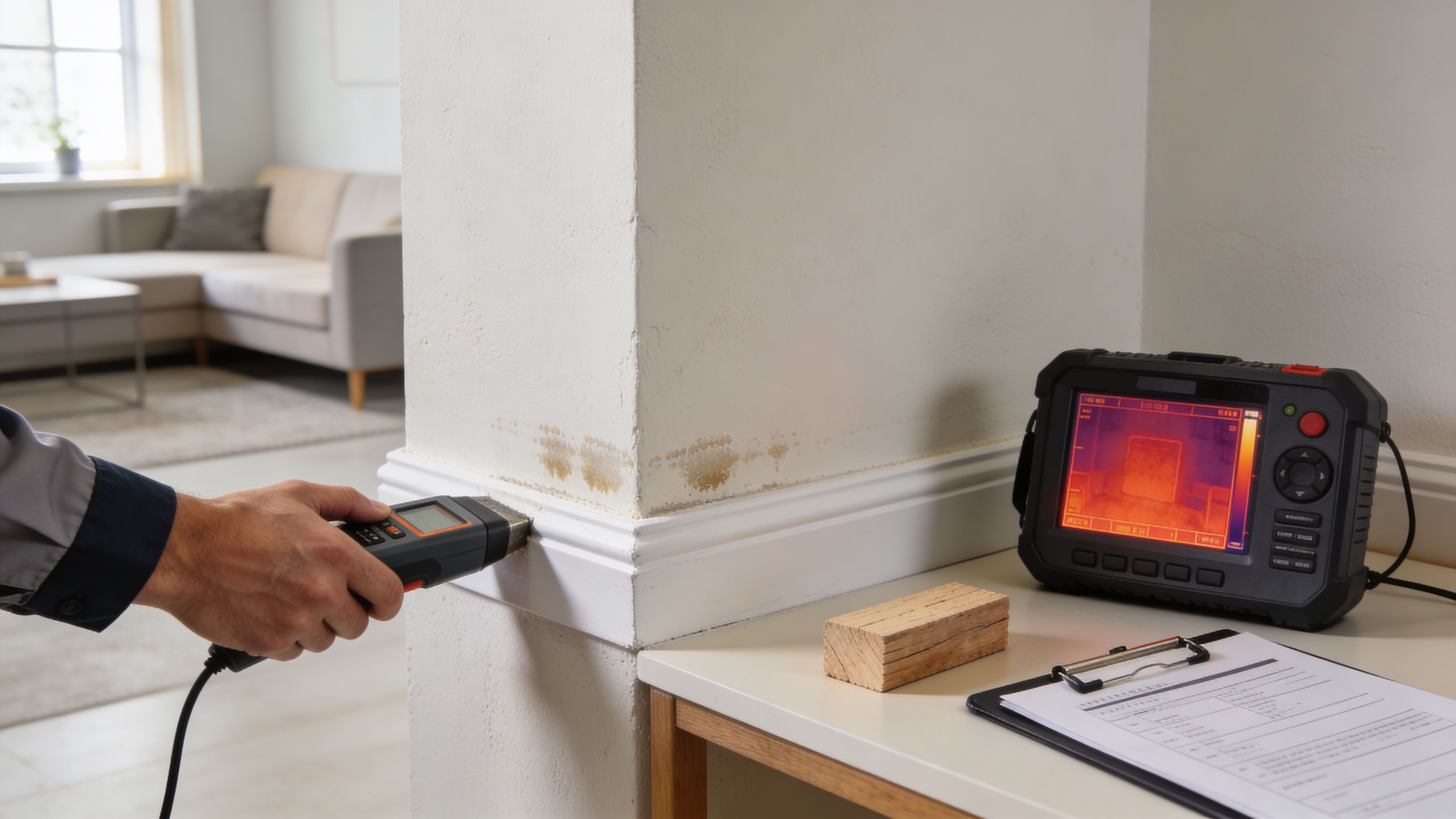
Moisture readings in the rafters are a key test where spray foam is present.
That is why a proper assessment matters. A damp and timber report or a comprehensive RICS Level 3 building survey will record moisture levels, ventilation provision and any visible decay, and will tell you whether the foam is causing active harm – or is simply an obstacle to lending that needs managing.
How much does spray foam removal cost in 2026?
Professional removal is priced by area, foam type and access. Trade cost guides in 2026 put removal at roughly £40–£80 per square metre, with open-cell foam at the cheaper end because it is softer to strip. The House of Commons Library cites around £3,200 for the roof of a three-bedroom detached house at £40 per square metre.
Item
Typical 2026 cost
Notes
Removal – open-cell foam
£40–£65 per m²
Softer foam, faster to strip
Removal – closed-cell foam
£60–£80 per m²
Rigid foam, slower mechanical removal
Standard 3-bed loft (total)
£2,000–£4,500
Includes labour, waste and a removal report
Timber repairs (if decay found)
£200–£1,000+
Depends on extent of damage
Replacement loft insulation
£300–£1,500
Mineral wool at ceiling level
Independent post-removal survey
Varies by property
Often required by lenders before they will lend
Beware of a growing 2026 problem: cold-call “foam removal” firms. RICS and Trading Standards warn against unsolicited offers to install or remove spray foam. Some homeowners have paid for unnecessary or botched removal that damaged tiles and left residue – and still failed the lender’s re-inspection. Always start with an impartial assessment from a suitably qualified, accredited surveyor who has no commercial interest in the removal work, then use a reputable specialist and keep every document: the removal report, photographs, timber treatment records and any warranty.
What should you do if your home has spray foam insulation?
Do not panic, and do not pay a cold-caller. Work through these steps:
1. Gather your paperwork. The installation contract, product certification (BBA or Kiwa), warranty and any condensation-risk calculations all help a surveyor – and a lender – assess the installation.
2. Commission an independent inspection. An accredited surveyor can check moisture levels, ventilation and timber condition, and advise whether the foam is defective or simply needs documenting. Our building surveying service covers this nationwide.
3. Ask your lender what they require. Requirements differ: some accept a specialist report; others require full removal and a clean post-removal inspection.
4. If removal is needed, use a reputable specialist. Obtain a written removal report, have the timbers inspected and treated where required, then reinsulate at ceiling level to modern standards.
5. Re-document the property. A post-removal survey and updated valuation restore lender confidence and protect your sale price.
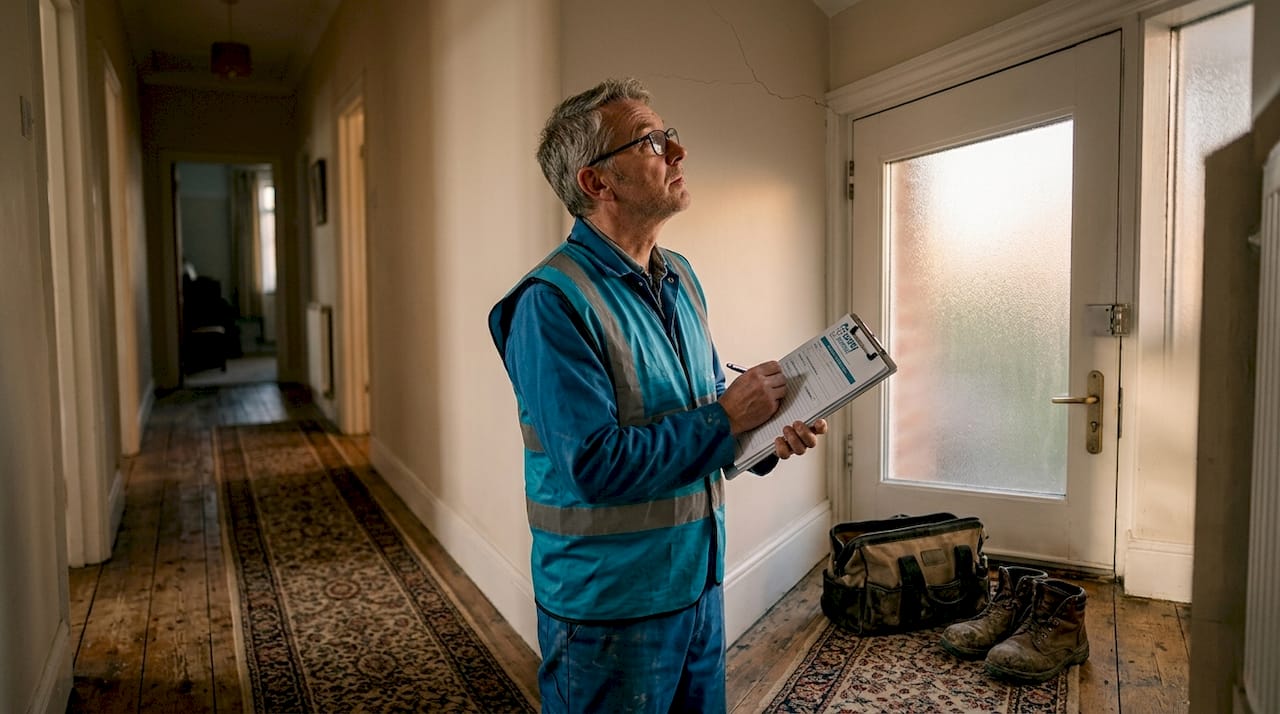
An impartial survey establishes the facts before you spend money on removal.
Buying a house with spray foam insulation?
Spray foam is not automatically a deal-breaker, but it is always a negotiation point. Ask the seller for the full installation paperwork, and commission a Level 3 building survey – or a targeted roof survey – before exchange. If the foam is defective or your lender requires removal, the quoted costs above give you a realistic figure to work with; our guide to negotiating the house price after a survey shows how to use those findings. Note that listed buildings are a special case: RICS states that spray foam should not be installed in a listed building without listed building consent, and retrospective installations can create serious complications for both value and consent.
Why choose Survey Merchant for your spray foam survey?
If spray foam insulation is standing between you and a mortgage, a sale or simple peace of mind, Survey Merchant can help. We connect you with suitably qualified, accredited surveyors drawn from a panel regulated and accredited by recognised UK bodies including RICS, CIOB and RPSA – matched to the job in hand, whether that is a damp and timber inspection, a Level 3 building survey or a pre-purchase roof assessment. You get nationwide UK coverage with local knowledge, fast turnaround, transparent competitive fixed fees and impartial advice from professionals with no stake in selling you insulation or removal services – plus support from first enquiry to final report. Book a building survey today or contact our team for a fast, no-obligation quote.
Can I get a mortgage on a house with spray foam insulation?
Sometimes, but it is harder. BBC research reported in November 2024 found a quarter of the UK's biggest lenders would not lend on homes with spray foam roof insulation. Some lenders will consider it with full installation paperwork and a satisfactory specialist report; others require complete removal first. Check your lender's policy before applying.
Does spray foam insulation cause damp?
It can. Spray foam changes a ventilated cold roof into a warm roof, and if it is installed without proper condensation-risk design it can trap moisture in the roof space. PCA and HomeOwners Alliance inspections of over 500 properties found 35% had at least one defect caused by spray foam, including condensation and damp affecting roof timbers.
How much does it cost to remove spray foam insulation in the UK?
In 2026, professional removal typically costs 40 to 80 pounds per square metre, or roughly 2,000 to 4,500 pounds for a standard three-bedroom loft. Timber repairs, replacement insulation and a post-removal survey are usually extra. Open-cell foam is cheaper to remove than rigid closed-cell foam.
Will spray foam insulation devalue my house?
It may. RICS warns that a surveyor who encounters spray foam during an inspection may reduce their opinion of value, and in some cases the property can be unmortgageable until the foam is assessed or removed. A smaller pool of eligible buyers also tends to depress the achievable price.
Should I remove spray foam insulation before selling?
Not automatically. First commission an independent inspection by a suitably qualified, accredited surveyor to establish whether the foam is defective and what your buyer's likely lender will require. If removal is needed, use a reputable specialist, keep the removal report and have the roof timbers inspected so you can evidence the work.
Can spray foam insulation be installed in a listed building?
RICS states spray foam must not be installed in a listed building without listed building consent obtained in advance. Because it is a permanent, largely irreversible alteration, consent is unlikely to be granted, and unauthorised installation can cause serious valuation and legal complications.