Building Surveying
Sep 4, 2026
Property survey tools for homeowners: choose, commission and act
Discover essential property survey tools for homeowners to select the right survey, verify experts, and protect your investment with confidence.

This toolkit gives you everything you need to pick the right RICS home survey level, verify a qualified surveyor, and use the report to protect your purchase. Three things to do right now:
Platforms like Surveymerchant, the Residential Property Surveyors Association (RPSA), and RICS are the three bodies that matter most when commissioning a home survey in the UK.
Choosing the correct RICS survey level, verifying credentials independently, and using the report to negotiate are the three actions that protect a UK property purchase.
| Point | Details |
|---|---|
| Match the survey level | Level 1 suits new-builds; Level 2 suits standard post-1950 homes; Level 3 suits older, larger, or altered properties. |
| Verify credentials | Look for AssocRICS, MRICS, or FRICS and ‘Regulated by RICS’ labelling before instructing anyone. |
| Brief the surveyor in advance | Send specific concerns (damp, cracks, outbuildings) before inspection day so they are documented in the report. |
| Use the report to negotiate | Rating 3 items are negotiation tools — get contractor quotes before agreeing a price reduction. |
| Surveymerchant simplifies the process | Surveymerchant matches buyers with vetted, RICS-regulated surveyors and provides comparison tools to make instructing straightforward. |
RICS defines three home survey levels, each suited to a different property type, condition, and buyer situation. Choosing the wrong one is the most common and most costly mistake homeowners make.
Decision rules at a glance:
A valuation is not a survey. Many buyers rely on a mortgage lender’s valuation and discover defects only after completion — a point RICS guidance and consumer bodies including Which? and UK Finance consistently make.
Credentials matter, but property-type experience matters just as much. A surveyor who regularly inspects Victorian terraces will spot period-specific defects — lime mortar failure, chimney stack movement, original timber floors — that a generalist might note only vaguely. Homebuilding’s guidance is direct on this: favour local experience for property-type knowledge, and always compare sample reports rather than price alone.
Trust signals to verify before instructing:
Questions to ask when requesting a quote:
Red flags to avoid:
You can find RICS surveyors near you by postcode, or use Surveymerchant’s panel to compare vetted local professionals.
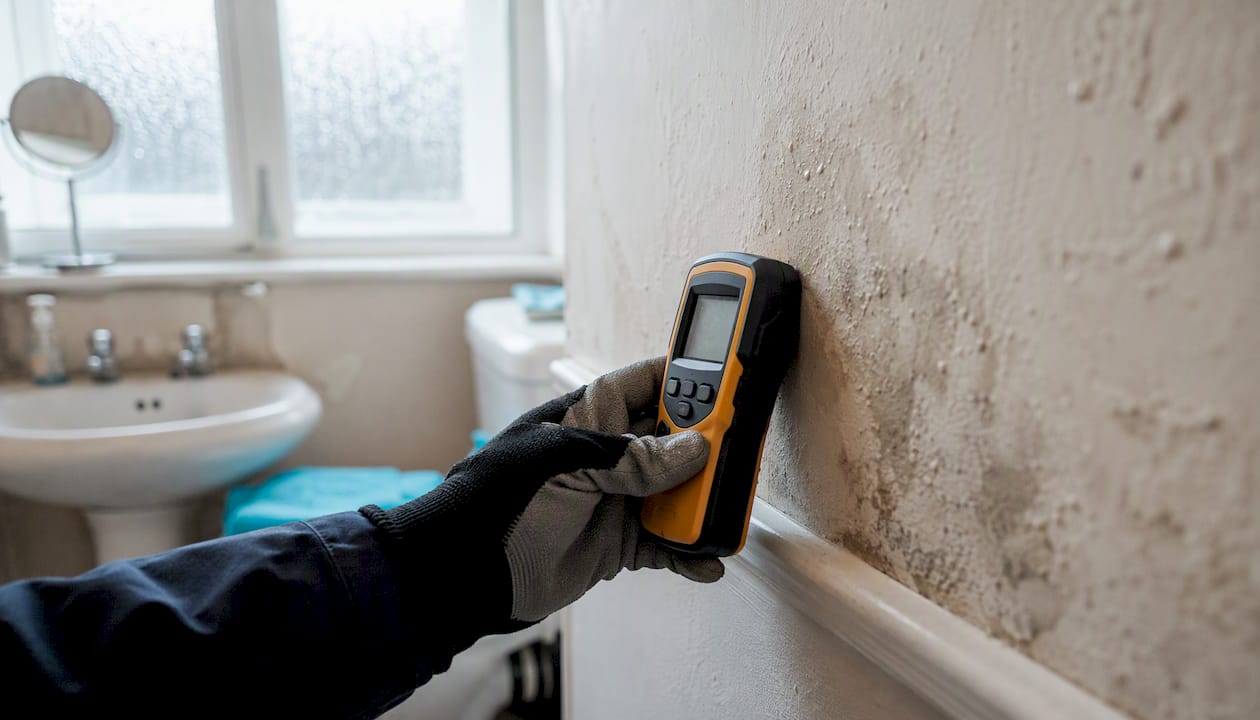
Good preparation shortens the inspection and reduces the risk of the surveyor missing something important. A Level 2 inspection typically takes 2–4 hours on site, and the surveyor will not move furniture, lift carpets, or carry out any destructive testing. Anything hidden stays hidden.
Documents and access to have ready:
Raising specific concerns before inspection day:
Surveyors welcome advance notice of buyer concerns — damp patches, visible cracks, outbuildings, or anything that caught your eye during the viewing. Send a short email before the inspection listing these. The surveyor can then prioritise those areas and document findings specifically, rather than giving them a passing mention in a general section.
On the day itself:
Being present is not required, but it is useful. A brief conversation at the end of the inspection — before the formal report — can clarify whether anything significant was found. Surveyors carry out pre-inspection research, inspect all visible and accessible areas, and photograph observations. What they cannot do is inspect behind wall linings, under concrete floors, or inside sealed roof voids.
Getting three quotes is the minimum. Price variation between surveyors for the same property can be significant, and the cheapest quote rarely reflects the best value when the report is what stands between you and a costly surprise.
What to request in writing from each surveyor:
Ballpark costs and timelines:
Level 2 surveys for a standard three-bedroom house typically fall between £400 and £900, rising with size, age, and location. Level 3 building surveys on larger or older properties commonly range from £600 to over £1,500. London and the South East generally sit at the upper end. Turnaround for a Level 2 report runs around 3–5 working days; a Level 3 may take longer given the depth of analysis required.
Tips to speed up the process:
For a structured comparison of quotes, Surveymerchant’s survey quote comparison guide walks through exactly what to look for.
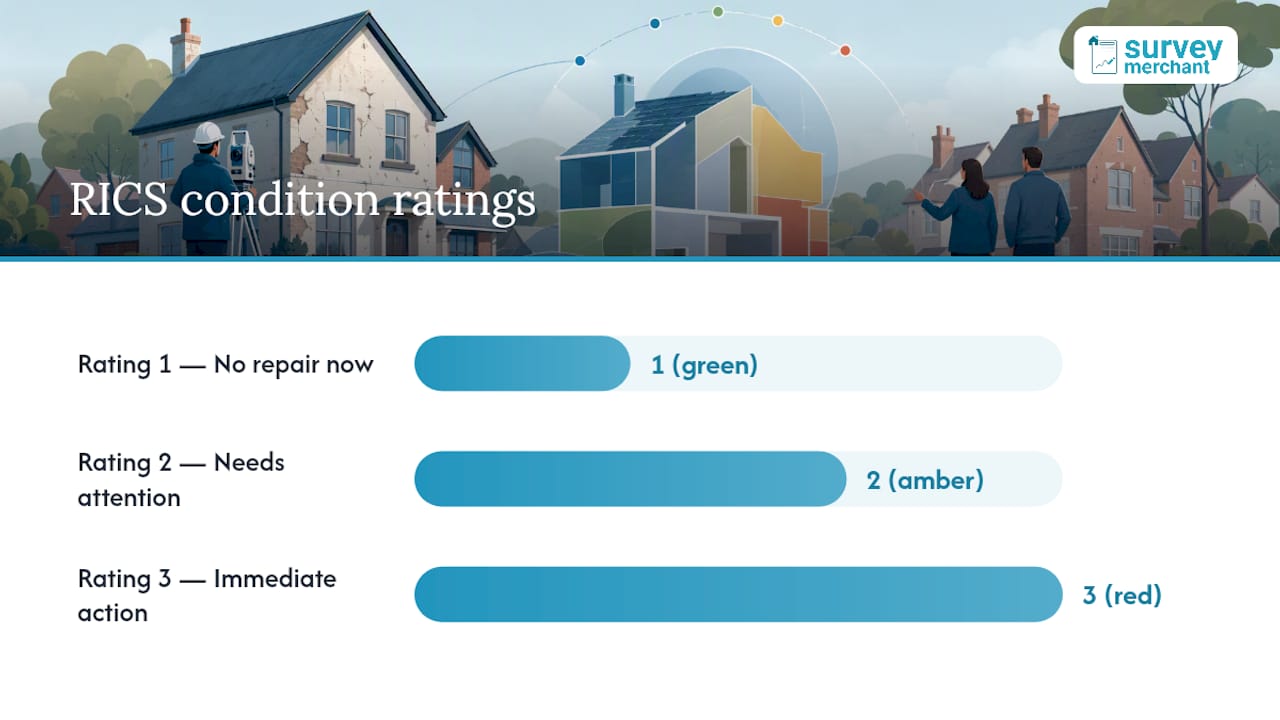
Start with the executive summary and the traffic-light condition ratings, not the appendices. RICS Level 2 and Level 3 reports use a three-colour system: Condition Rating 1 (green) means no repair needed now; Rating 2 (amber) means defects requiring attention but not urgent; Rating 3 (red) means serious defects requiring immediate action or further investigation.
Red flags that justify specialist follow-up:
Deciding what to do with the findings:
A Rating 3 item does not automatically mean walk away. It means get a repair estimate before you decide. A Rating 2 item on a roof covering, for example, might cost £2,000 to fix — a reasonable negotiation point. A Rating 3 on suspected structural movement with no clear cause is a different matter entirely.
Pro Tip: Ask your surveyor for a rough repair-cost bracket alongside any Rating 3 item, even if the report does not include one by default. Many surveyors will provide a ballpark figure in a follow-up call, which gives you a basis for negotiation without commissioning a full contractor quote first.
The RICS Home Survey Standard requires surveyors to make themselves available for post-report client liaison — use that conversation. It is included in your fee.
Most buyers receive the report and freeze. The report is a negotiation tool as much as a technical document.
When to walk away:
If the structural engineer’s report confirms active movement with no clear cause, if remediation costs approach or exceed your negotiating headroom, or if the seller refuses to acknowledge significant defects at all — those are pragmatic reasons to reconsider. A survey that saves you from a bad purchase has paid for itself many times over.
These are homeowner-facing resources, not professional surveying equipment. The goal is to brief surveyors clearly, compare quotes fairly, and track findings without missing anything.
Templates worth having:
Sample RICS reports:
RICS publishes example reports on its website. Before instructing any surveyor, ask them directly for a sample report from a comparable property. A surveyor who hesitates is worth noting.
Surveymerchant’s platform lets you compare local RICS surveyors by location and property type, and the top questions to ask your surveyor guide gives you a ready-made script for the briefing call.
The property survey market has a transparency problem. Most buyers commission a survey because their solicitor mentions it, pick the first name their estate agent suggests, and then read the report alone without knowing which sections to prioritise. That sequence produces the worst outcomes: wrong survey level, unverified credentials, and findings that sit unread until after exchange.
What actually protects a buyer is the opposite sequence: choose the level first, verify credentials independently, brief the surveyor on specific concerns before they arrive, and treat the report as the start of a negotiation rather than the end of a process. The RICS Home Survey Standard exists precisely to enforce that sequence on the surveyor’s side. The homeowner’s job is to hold up their end of it.
Surveymerchant’s approach — connecting buyers to a vetted panel of RICS-regulated surveyors with transparent credentials and service matching — addresses the part of the process most buyers get wrong: finding a qualified professional without relying on an interested party’s recommendation.
Commissioning the right survey is straightforward when you know who to trust. Surveymerchant matches UK homeowners and buyers with RICS-regulated surveyors across the country, covering building surveys, valuations, structural assessments, and defect reports. Every surveyor on the panel carries verified credentials and PI insurance, so you are not relying on an agent’s recommendation or a cold search.

The process is simple: describe your property and survey needs, receive matched quotes from qualified local surveyors, compare sample reports, and instruct with confidence. Get matched with a vetted surveyor at Surveymerchant and have your survey booked within days.
Survey Merchant provides vetted RICS surveyors across 100+ UK locations at fixed fees:
→ Level 2 Home Survey (HomeBuyer Report)
→ Level 3 Building Survey (full structural survey)
→ RICS Red Book property valuations
→ Party wall surveyors — notices, awards & schedules of condition
→ Expert witness surveyors — CPR Part 35 reports for property disputes