Expert Witness
Nov 3, 2026
The Expert Witness Site Inspection: What Happens and Who Attends
What to expect at an expert witness site inspection: who attends, what the surveyor records, how access is arranged, how long it takes and what it costs.

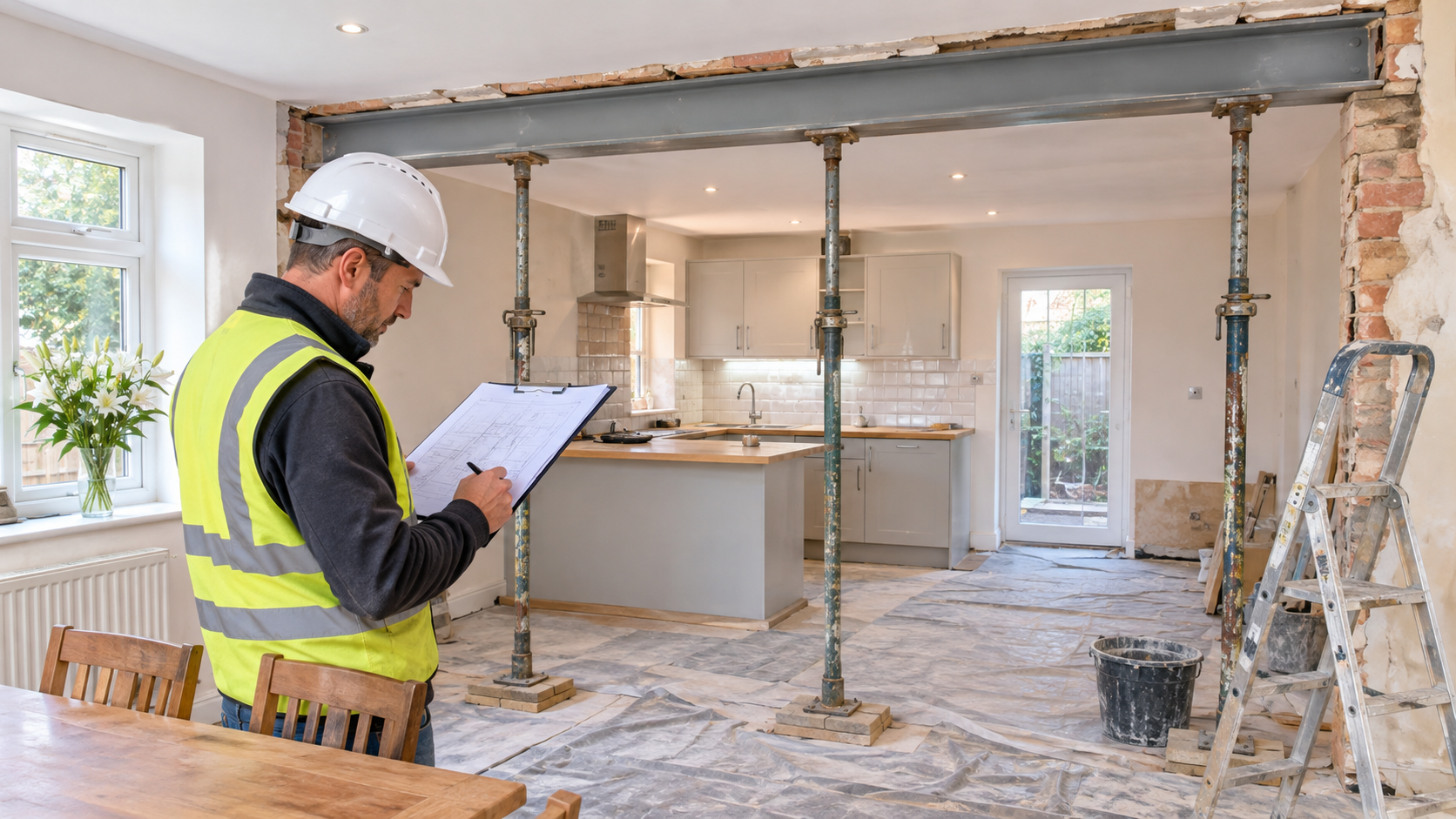
An expert witness site inspection is the visit a RICS surveyor makes to the property at the centre of a dispute before writing a CPR Part 35 report. It is where the expert sees the defect, boundary or disrepair with their own eyes and records the photographs, measurements and readings the court will later rely on. This guide explains who attends, what happens on the day, how access is arranged, how long it takes and how the inspection feeds into the written report.
An expert's opinion is only as good as the facts it rests on. Practice Direction 35 requires every report to say who carried out any inspection and to set out the facts and material relied on, so a report written from one party's photographs is weaker than one built on the expert's own observations. The overriding duty under CPR 35.3 is owed to the court, not to the instructing party, and the inspection is the point at which that duty becomes practical: the expert records what is there, including anything that helps the other side.
Timing matters too. In building defects claims the defect should be inspected before it is repaired wherever safety allows, because once the remedial works are done the cause can no longer be examined. The same applies to dilapidations at lease end, disrepair a landlord is about to put right, and structural movement an insurer plans to underpin. Instructing early, as explained in when to hire an expert witness for construction defects, keeps the evidence intact.
The list is usually shorter than people expect:
Solicitors rarely attend and the judge never does, except on a formal site view ordered by the court, which is a different exercise. The expert should treat everyone present even-handedly: factual questions about the history of the property are welcome, but opinions are not given on the day and any discussion is noted in the report.
A well-run expert witness site inspection follows a sequence that the report will later mirror:
For party wall and neighbour disputes the inspection often starts from an existing schedule of condition, with the expert comparing the current state of each item against the benchmark record; the evidential weight of that schedule depends on how carefully it was prepared.
Access is more often a practical problem than a legal one. The instructing solicitor normally agrees dates with the other side, and in tenanted property the landlord gives the occupier reasonable notice. Where a party refuses access to property that is relevant to the proceedings, CPR 25.1 allows the court to order the inspection of relevant property and entry onto land for that purpose, so a refusal usually delays the inspection rather than preventing it. In housing conditions claims the pre-action protocol sets out the expected timetable for inspection and encourages a single joint expert or a joint inspection.
To keep the timetable on track, confirm the scope of inspection in writing (the solicitor's instruction checklist covers what the letter should contain), agree access dates as soon as the instruction is confirmed, and send the expert the documents at least a week before the visit.
A single defect in one residential property can be inspected in two to four hours. A whole-house disrepair claim, a commercial dilapidations dispute or a boundary dispute across several plots typically takes half a day to a full day, and a complex or multi-property construction matter can run to two days or more, sometimes across separate visits for opening up. The written report usually follows two to six weeks after the inspection, depending on the volume of documents and whether test results are awaited; the stages are described in what a property expert witness report covers.
Inspection time is charged at the expert's hourly rate, generally £150 to £300 for RICS chartered surveyors acting as expert witnesses, plus travel. Most experts quote a fixed fee for the inspection and report together once the scope is known, and a CPR Part 35 report in a straightforward matter usually falls between £5,000 and £15,000, rising to £20,000 to £50,000 or more for complex or multi-property cases. Opening-up works, laboratory testing and specialist surveys are charged separately, as is court attendance at £1,000 to £2,000 per day. The full picture, including who ultimately pays, is set out in the guide to expert witness costs in the UK.
Everything gathered on site is then written up to the structure Practice Direction 35 requires, available in full on the Ministry of Justice website: qualifications, material relied on, who inspected, the facts observed, the range of opinion and the reasons for the expert's conclusion, ending with the statement of truth. A careful inspection is what lets that report withstand Part 35 questions and cross-examination.
Survey Merchant provides RICS chartered surveyors, valuers and structural engineers as expert witnesses for property disputes across England, Wales and Scotland, drawn from a national panel of more than 2,400 surveyors. The panel's experts carry out their own inspections, prepare CPR Part 35-compliant reports, accept single joint expert and party appointments and attend court when required, including construction defects, housing disrepair, dilapidations and boundary disputes. Fixed fees are quoted for the inspection and report stage wherever the scope allows, and inspections can be arranged to fit a court timetable. Visit the expert witness services page, call 0204 579 8270 or use the contact form to discuss your dispute with the panel.
Survey Merchant provides vetted RICS surveyors across 100+ UK locations at fixed fees:
→ Level 2 Home Survey (HomeBuyer Report)
→ Level 3 Building Survey (full structural survey)
→ RICS Red Book property valuations
→ Party wall surveyors — notices, awards & schedules of condition
→ Expert witness surveyors — CPR Part 35 reports for property disputes