Building Surveying
Aug 2, 2026
Examples of survey reports for UK property buyers
Discover key examples of survey reports for UK property buyers. Learn the benefits and details of RICS Home Surveys to make informed decisions.

The three main examples of survey reports used in UK property transactions are the RICS Home Survey Level 1, Level 2, and Level 3. Each is produced by a qualified RICS surveyor and uses a standardised structure, so you know exactly what you are getting regardless of which surveyor you appoint.
According to RICS guidance, the right survey level depends on the property’s age, size, complexity, and condition, not simply buyer preference.
Pro Tip: If the property was built before 1960, has been extended, or shows any visible signs of damp or movement, go straight to Level 3. A Level 2 on a problematic older property often raises more questions than it answers.
Every RICS report follows a consistent structure, which makes reading across different properties straightforward once you understand the sections. A Level 2 survey and valuation report, for example, runs through sections covering the inspection itself, an overall opinion, the property description, external and internal elements, services, grounds, legal issues, risks, valuation, and a “What to do now” section.
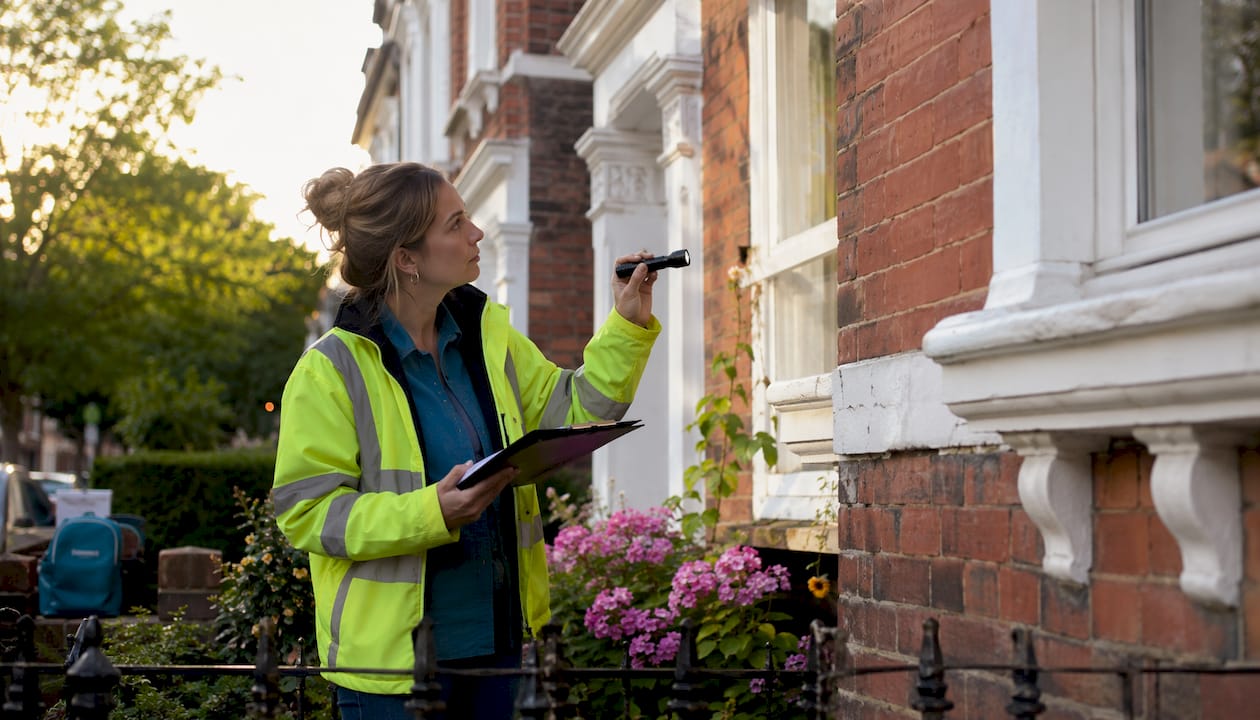
The traffic light condition rating system is the backbone of every RICS report:
| Condition rating | Meaning | Typical action |
|---|---|---|
| 1 | No repair needed now | Monitor at routine maintenance intervals |
| 2 | Defects present but not urgent | Plan repairs within a reasonable timeframe |
| 3 | Serious defects needing immediate attention | Act before committing to purchase |
| NI | Not inspected | Consider specialist access or investigation |
Areas marked “not inspected” are common where access was unsafe or physically impossible. The surveyor flags these explicitly so you know where gaps exist.
The “What to do now” section is one of the most practical parts of any report. It sets out the steps a buyer should take before exchanging contracts, such as commissioning a structural engineer or obtaining a specialist damp report. Standard surveys do not include technical testing of services such as electrics, gas, or plumbing. The surveyor observes these in normal operation but cannot formally test them, so separate specialist reports are needed for those assurances.
Survey reports are tools for negotiation, not simple pass-or-fail assessments. A cluster of Condition 2 ratings on a property’s roof and windows tells you something useful: the seller may be willing to reduce the asking price, or you can budget for those repairs before making an offer.
Practical ways buyers use survey findings:
One point buyers frequently misunderstand: most reports do not include itemised repair costs. The surveyor’s job is to identify and rate defects, not to price them. A Level 3 report may include cost estimates, but only if you agree this with the surveyor in writing before the inspection takes place; for maintaining CDM safety standards during surveys, see the Construction & CDM Compliance guidance.
Pro Tip: For any Condition 3 item, get a contractor’s quote before you exchange. The surveyor can tell you what is wrong; a specialist can tell you what it will cost to fix.
Getting the most from a survey report starts before the surveyor visits the property. These are the questions worth raising at the outset:
On that last point: RICS reports are legally limited to the client who commissioned them. The surveyor cannot accept liability if the report is used by anyone else. This matters if you are considering sharing a report with a co-purchaser or a lender who was not party to the original instruction.
Clients can also agree in writing before inspection to add extra services outside the standard report scope, including repair costings, schedules of works, or detailed defect investigations. These require separate terms of engagement with the surveyor.
The property type shapes which report is appropriate and what the surveyor focuses on. For a purpose-built flat, the surveyor will note that structural elements such as the roof and foundations are shared with other owners, and the report will flag issues that fall under the freeholder’s or management company’s responsibility rather than yours. Defects in communal areas may appear in the report but sit outside your direct control to remedy.
For a Victorian terraced house, a Level 3 report is almost always the better choice. These properties commonly present with original timber floors, older roof structures, and drainage systems that predate modern standards. A Level 2 report on such a property may not go deep enough to catch issues that a more thorough inspection would surface. Unusual or converted properties, such as barns or former commercial buildings, present their own challenges around construction methods and materials, which a Level 3 report is specifically designed to address. Surveyors can tailor the inspection scope to the property’s characteristics, so discussing the building’s history before commissioning is worthwhile.
A survey report is one document in a wider set, and reading it in isolation misses part of the picture. The mortgage lender’s valuation, for instance, tells the lender whether the property is adequate security for the loan. It does not assess the property’s condition in any meaningful way for you as the buyer.
Local authority searches reveal planning history, road adoption status, and environmental risks such as flood zones or contaminated land. These sit alongside the survey rather than overlapping with it. A survey might flag damp in a ground-floor room; a search might reveal the property sits in a flood risk area. Together, those two findings change the picture considerably.
The insurance reinstatement figure included in a Level 2 survey and valuation report feeds directly into your buildings insurance calculation. Using the market value figure for insurance purposes is a common and costly mistake. In Scotland, the process differs: sellers must provide a Home Report before marketing, which includes a Level 2 survey and valuation, an energy report, and a property questionnaire covering council tax banding and other details.
RICS Home Survey Levels 1, 2, and 3 give UK property buyers a structured, standardised way to assess condition, with the traffic light rating system making defect severity immediately readable.
| Point | Details |
|---|---|
| Three RICS survey levels | Level 1 suits newer homes; Level 2 covers most conventional properties; Level 3 is for older, larger, or altered buildings. |
| Valuation is optional at Level 2 | The survey-and-valuation version adds a market value opinion and reinstatement figure; the survey-only version does not. |
| Traffic light ratings | Condition 1 needs no action, Condition 2 requires planned repairs, and Condition 3 signals urgent defects. |
| Repair costs rarely included | Most reports identify defects without pricing them; Level 3 may include estimates only if agreed in writing beforehand. |
| Legal limitations apply | Reports are client-specific; the surveyor’s liability does not extend to third parties who rely on the document. |
The gap between what buyers expect from a survey and what the document actually delivers is where most post-purchase regrets originate. Buyers often treat a survey as a box-ticking exercise, something the mortgage process nudges them towards, rather than as the primary tool for understanding what they are actually buying.
A well-commissioned Level 3 report on an older property does not just list defects. It explains construction methods, identifies where hidden problems are likely to exist, and outlines the consequences of not acting. That kind of report changes negotiating positions, sometimes significantly. A Condition 3 rating on a chimney breast or a flagged risk of Japanese knotweed gives a buyer real leverage, or a reason to walk away entirely.
Impartiality is what makes these reports genuinely useful. The surveyor works for you, not the seller or the estate agent. Choosing a surveyor through a platform that prioritises independence and qualification, rather than the cheapest quote, protects that impartiality. Surveymerchant connects buyers with qualified, vetted surveyors across the UK, matching the right expertise to the property type and the buyer’s specific concerns. For older or complex properties, Level 3 building surveys commissioned through Surveymerchant give buyers the depth of analysis that genuinely protects their position.
Explore Surveymerchant’s full range of building surveying services to find the right survey for your property.
Survey Merchant provides vetted RICS surveyors across 100+ UK locations at fixed fees:
→ Level 2 Home Survey (HomeBuyer Report)
→ Level 3 Building Survey (full structural survey)
→ RICS Red Book property valuations
→ Party wall surveyors — notices, awards & schedules of condition
→ Expert witness surveyors — CPR Part 35 reports for property disputes