Building Surveying
Aug 9, 2026
Tree Removal Cost Calculator UK: Get Accurate 2026 Prices
Use our 2026 guide to find your tree removal cost calculator uk. Understand prices, TPOs & hidden fees for accurate estimates. Don't overpay!

In the UK, tree removal typically costs from about £200 for a small, straightforward job to over £4,800 for a very large tree, with £500 a useful 2026 average. The final figure depends on size, access, labour time, and whether legal checks or protected-zone approvals apply.
If you're looking up a tree removal cost calculator in the UK, you're probably trying to answer a very practical question: can this be dealt with for a few hundred pounds, or are you about to step into a much bigger job? That's the right question, but most online calculators only answer part of it.
A simple tool can help you set a rough budget. It won't tell you whether your tree sits in a conservation area, whether an approval fee applies, or whether you need a formal inspection before anyone touches a saw. That's where people get caught. The cheapest-looking quote on screen can become the most expensive decision once delays, compliance issues, or neighbour disputes start.
A homeowner usually starts with the visible problem. The tree is too close to the house, leaning awkwardly, blocking light, lifting paving, or worrying a buyer before exchange. The instinct is to find a calculator, enter the height, and expect a working number.
That's useful, but only as a starting point. A tree removal quote is not just a price for cutting timber. It is a price for managing risk, access, time, and sometimes legal permission.
What works is using a calculator to set a rough expectation, then checking whether your site is simple or not. A simple site is one where the tree is small, easy to reach, and not close to structures or regulated land. A complex site is anything else.
A tree removal cost calculator UK tool usually performs reasonably well when the job is ordinary. It becomes less reliable when the property is constrained, the tree is large, or the planning position is unclear.
Three questions sort that quickly:
Practical rule: If the tree can't be felled in one straightforward operation, a basic online price is only a sketch, not a budget.
The most common mistake isn't using a calculator. It's trusting it too far.
A cheap online estimate often assumes normal access, no survey requirement, no specialist equipment, and no formal approvals. Real sites rarely behave that neatly. Once a contractor has to dismantle the tree in sections, protect surrounding structures, manage debris through a narrow route, or pause for permissions, the cost profile changes.
From a surveying point of view, the right way to think about tree removal is this: the visible tree is only one part of the job. The other part is the property context around it. That context is what determines whether your estimate holds up or falls apart.
Two trees can stand the same height and produce very different quotes. One drops cleanly into open ground. The other overhangs a conservatory, sits inside a tight rear garden, and has to be dismantled piece by piece with rigging, extra labour, and stricter site control.
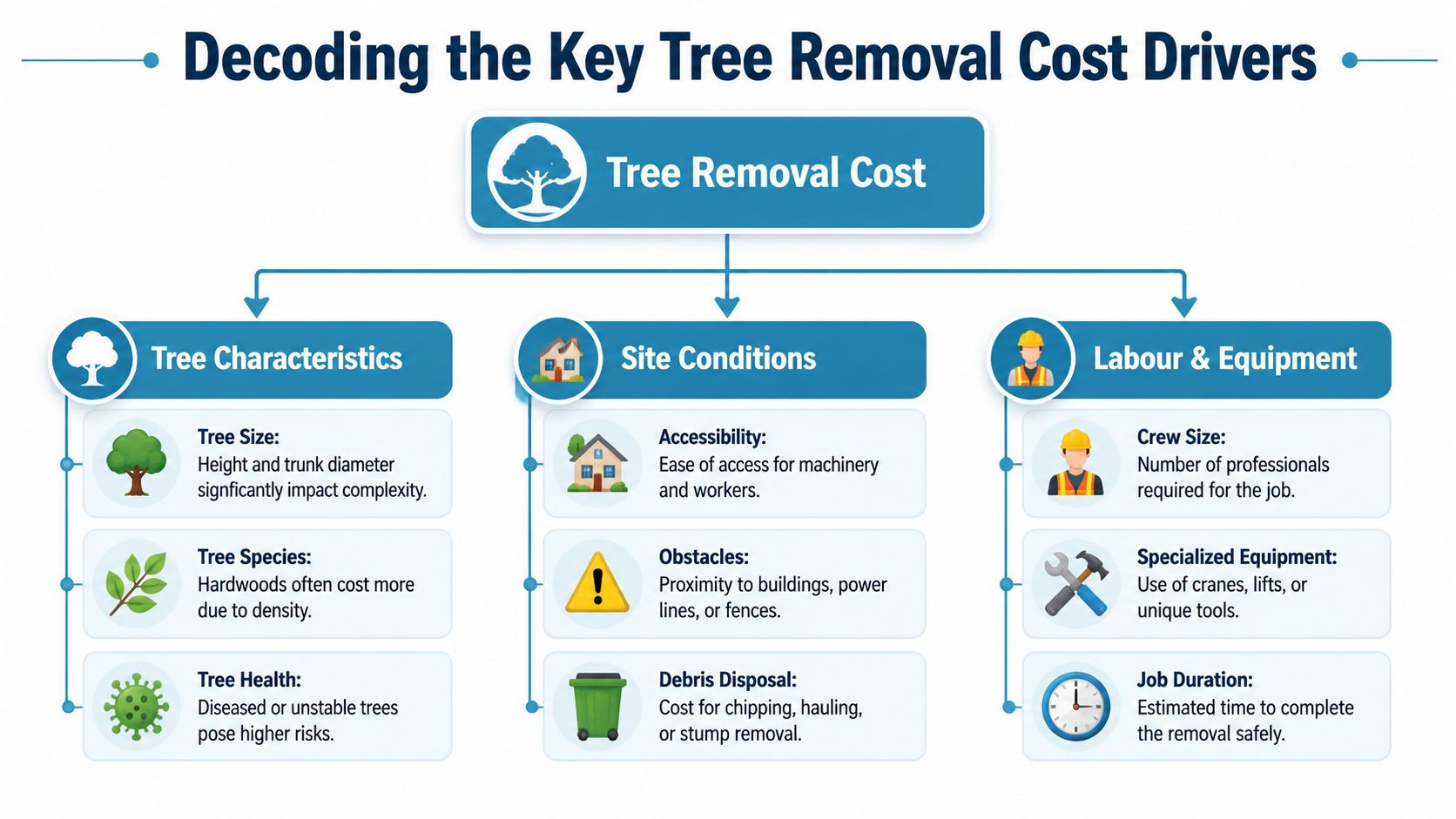
Size matters because it affects time on site, cutting method, crew numbers, and the amount of arisings to remove. But height alone does not price the job properly. In practice, the contractor is pricing how the tree must come apart and what sits beneath it.
| Tree Size | Height | Typical Pricing Pattern | Typical Time |
|---|---|---|---|
| Small | Under 25 ft | Usually the lowest-cost category if access is open and waste is limited | Around half a day |
| Medium | 25 to 50 ft | Costs rise where climbing, rigging, or heavier waste handling is needed | About 1 day |
| Large | 50 to 75 ft | Sectional dismantling is often required near buildings or boundaries | 1 to 2 days |
| Extra-large | Over 75 ft | Specialist equipment, traffic management, or multi-day crews may be needed | 2 days or more |
A small ornamental tree in a front garden is often straightforward. A mature beech close to a retaining wall is not. The second job carries more exposure if something goes wrong, so the quote has to reflect that.
Species influences the work because crown form, timber weight, brittleness, and regrowth habit change the method. Dense conifers can be awkward to handle and expensive to clear in volume. Broadleaf trees with long lateral limbs can create more rigging and drop-zone problems than a taller but cleaner specimen.
Condition matters too. Dead, storm-damaged, split, or heavily leaning trees reduce the margin for error. A contractor may need a MEWP instead of climbing, or may insist on a larger crew to control the dismantling safely. That pushes the cost above what a simple calculator expects.
Access often decides whether a quote stays sensible or becomes expensive. If the team can get a chipper near the tree, work moves faster. If every branch has to be dragged through a side passage, over steps, or around extensions, labour time increases quickly.
A proper quote covers a chain of tasks:
This pricing logic is no different from other skilled trades. A contractor who prices properly builds in overhead, risk, and site difficulty, which is the same principle explained in this guide to a profit-driven plumbing pricing system.
From a surveying perspective, tree removal pricing behaves like many property costs. The visible item is only part of the expense. The surrounding constraints drive the actual cost. That is why broad online estimates can fall apart on listed buildings, tight urban plots, shared drives, or sites with retaining structures and drainage nearby. The same issue comes up across housing decisions, which is why a realistic budget often benefits from a wider guide to property survey costs for homebuyers.
One further point is often missed. Regulatory exposure can start here, not later. If the tree sits within a conservation area, is subject to a Tree Preservation Order, or forms part of a planning condition, the cost risk is no longer just operational. You may be looking at application work, arboricultural input, delays, and possible Arboricultural Approval Fees before any saw starts. Online calculators rarely price that layer at all.
A sensible quote should state the assumptions clearly. Ask these questions:
That is where bad budgeting usually starts. Not with the tree itself, but with the missing scope around it.
A homeowner gets an online figure in five minutes, agrees a budget, then finds the tree is over a conservatory, the only access is through a side passage, and the local authority may need to be involved before any work starts. That is how cheap estimates turn into expensive jobs.
A calculator still has value. Use it as a first filter for ordinary, low-risk work. Do not use it as approval to proceed, and do not treat it as a proper scope of works.
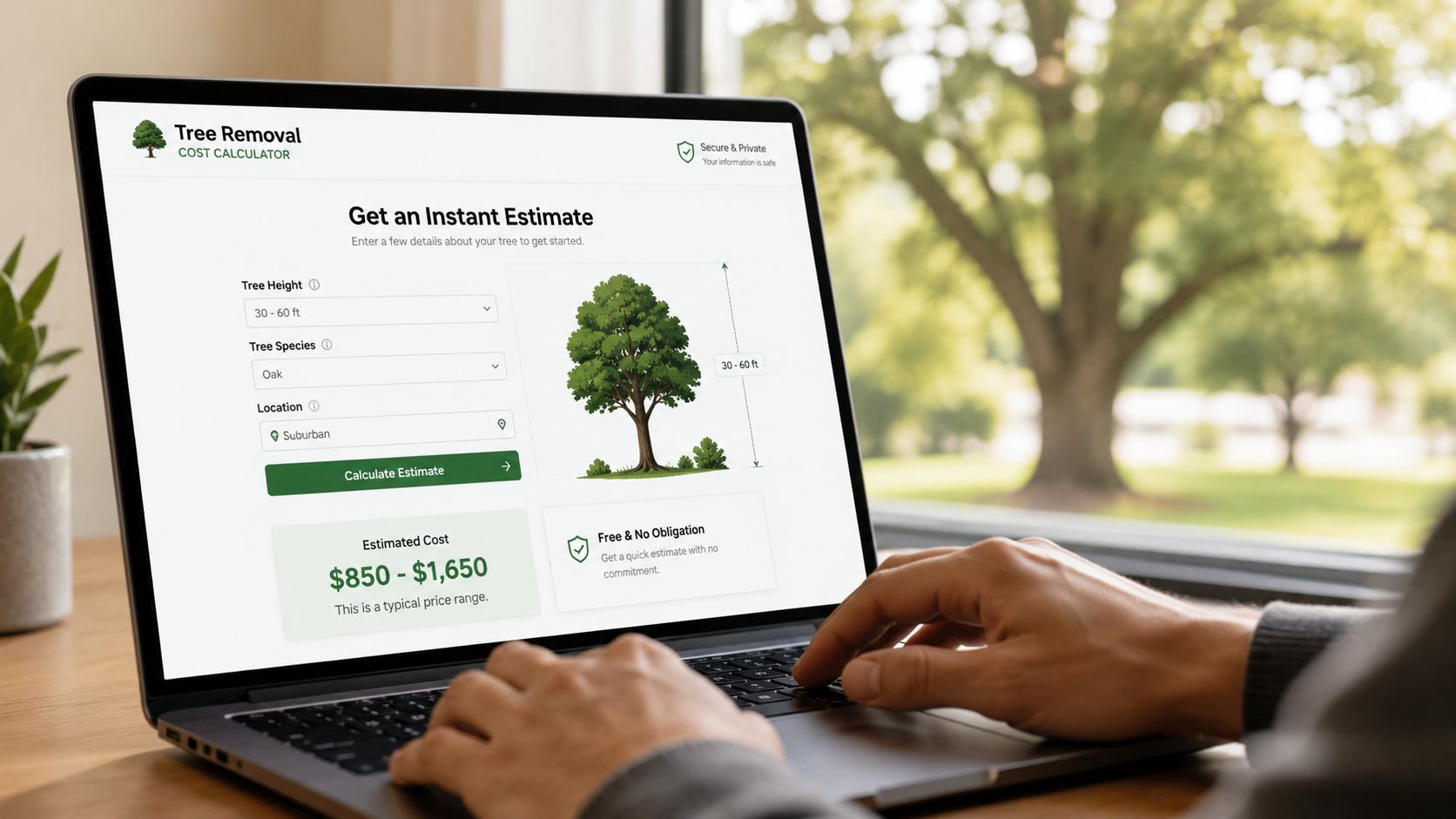
The result is only as good as the assumptions. In practice, that is where online tools go wrong. Owners often underestimate height, measure the trunk at the wrong point, or select “good access” because the tree is visible from the road, even though every branch section will need to be carried out by hand.
Use the tool with a contractor's mindset:
If you are assessing risk during a purchase, not arranging immediate work, the wider inspection budget matters as well. This guide to property survey costs for homebuyers helps put early professional advice in context before a tree issue becomes a claims or negotiation problem.
Most calculators are built for a standard removal. They work reasonably well for a single tree in open space with straightforward access and no legal complication.
That is a narrow slice of real jobs.
They struggle with sectional dismantling over buildings, crane or MEWP access, neighbour protection, restricted drop zones, decay that changes the cutting method, and sites where arisings cannot be chipped or loaded nearby. They also do a poor job of pricing delay risk. If a crew turns up expecting a simple fell and finds rigging, hand-carrying, and traffic management, the online figure has no practical value.
The bigger limitation is that calculators price operations, not exposure. They may give you a working estimate for labour, waste removal, and stump grinding options. They do not establish whether the job can lawfully proceed, whether extra reporting is needed, or whether a lender, buyer, insurer, or neighbour may later question the decision.
I see this regularly in property work. A tree cost is treated as a maintenance item, when in fact it is a risk item.
If the tool only asks about size, species, and access, it is estimating the cutting work. It is not assessing the legal, financial, or evidential risk around the job.
Use a calculator for a rough starting point. For protected sites, disputed boundaries, development plots, or pre-purchase decisions, get a professional assessment. The survey cost is often small compared with the cost of delay, failed applications, damage claims, or removal work that should never have been instructed on the original assumptions.
Most under-budgeting frequently stems from the initial assessment. People assume the online figure is the main figure, then discover the legal and administrative layer afterwards.
For protected locations, that assumption can be costly. The Tree Man's article on tree removal costs states that current UK tree removal calculators often miss the £50 to £150 per-tree Arboricultural Approval Fee and the £250 to £600 Earlytimber Inspection cost for trees in protected zones, leading some homeowners to underestimate total project cost by 15 to 25%. It also notes that these compliance costs apply to 30% of UK residential tree removals in London and regional hubs.
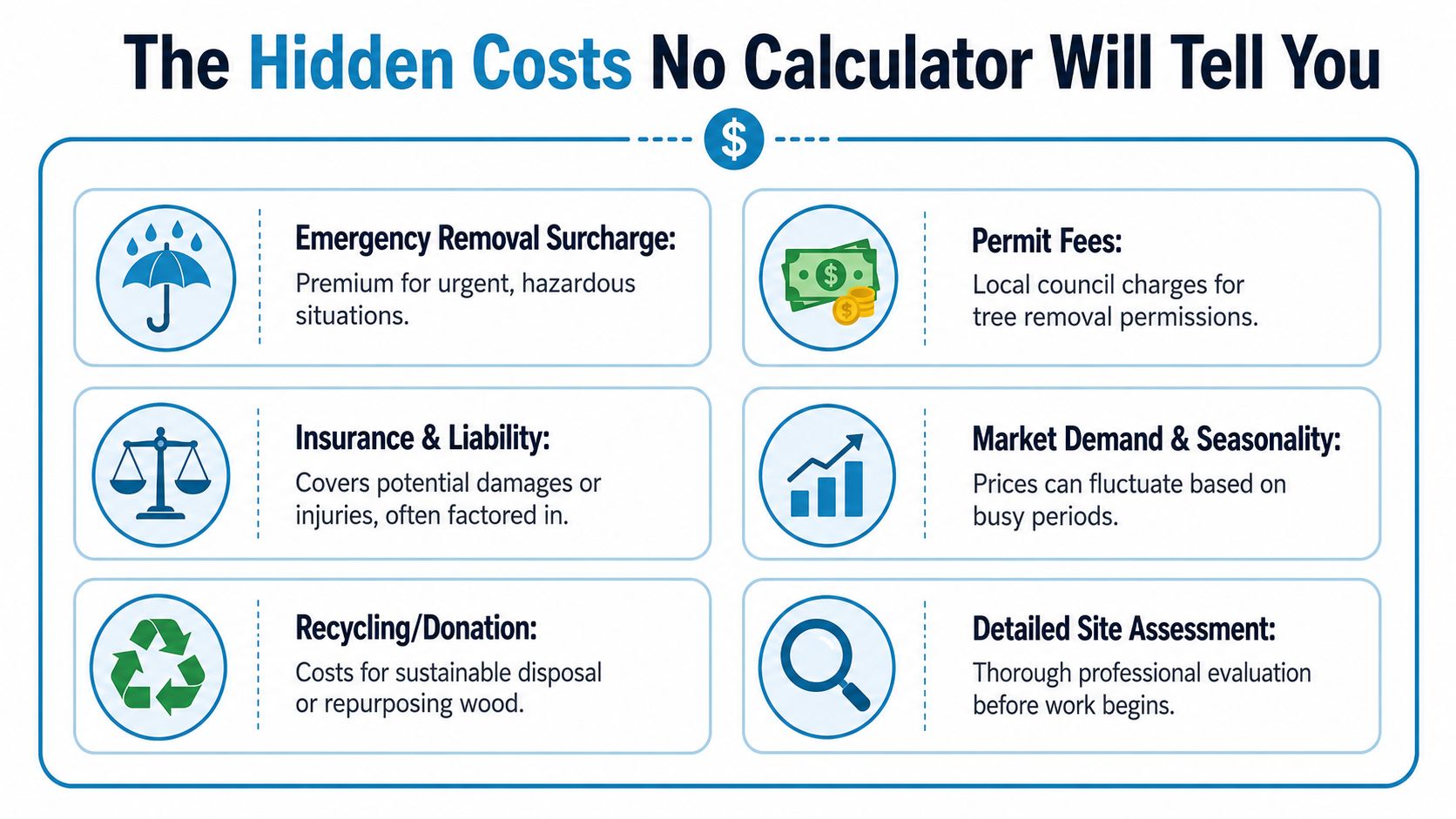
If a tree sits in a protected zone, you're no longer just arranging a contractor. You're dealing with compliance. That changes the sequence, the paperwork, and the budget.
The missing costs are usually not obvious in online tools because they don't ask the questions that trigger them. They ask about height, species, and access. They don't usually ask whether formal approval is needed or whether an inspection must happen first.
That creates a false sense of certainty. A homeowner sees a plausible operational estimate and assumes the rest is detail. In practice, the rest may control whether the work can proceed at all.
The financial issue is only one part of the problem. The bigger risk is making decisions in the wrong order.
A typical pattern looks like this:
That's frustrating on a routine maintenance job. It's more serious on a sale, extension, party wall matter, or insurance-related problem, where timing affects other professional appointments.
For boundary-sensitive situations, this UK guide to party wall agreement costs gives a useful parallel. The lesson is the same. The visible works cost is only part of the exposure. The procedural side can carry its own timetable, fees, and dispute risk.
Hidden costs aren't “extras” in the casual sense. They're part of the real project cost if the tree sits in the wrong legal setting.
From a practitioner's perspective, this is why an early professional assessment often saves trouble even when it adds an upfront fee. It doesn't just produce a better number. It tells you whether the number is even usable.
A low online estimate can look convincing until the job reaches the point where someone asks for evidence, consent, or a defensible opinion. At that stage, the cheapest number on the screen stops mattering. The useful figure is the one tied to the actual site, the legal position, and the consequences if the advice is wrong.
A tree surgeon and a chartered surveyor do different jobs. A tree surgeon prices the physical operation: dismantling, rigging, clearance, traffic management, stump treatment, and labour on the day. A chartered surveyor looks at the property risk around the tree: ownership, boundary position, likely effect on structures, sale or purchase implications, and whether the matter needs formal reporting. On regulated or disputed sites, that distinction affects cost far more than many owners expect.
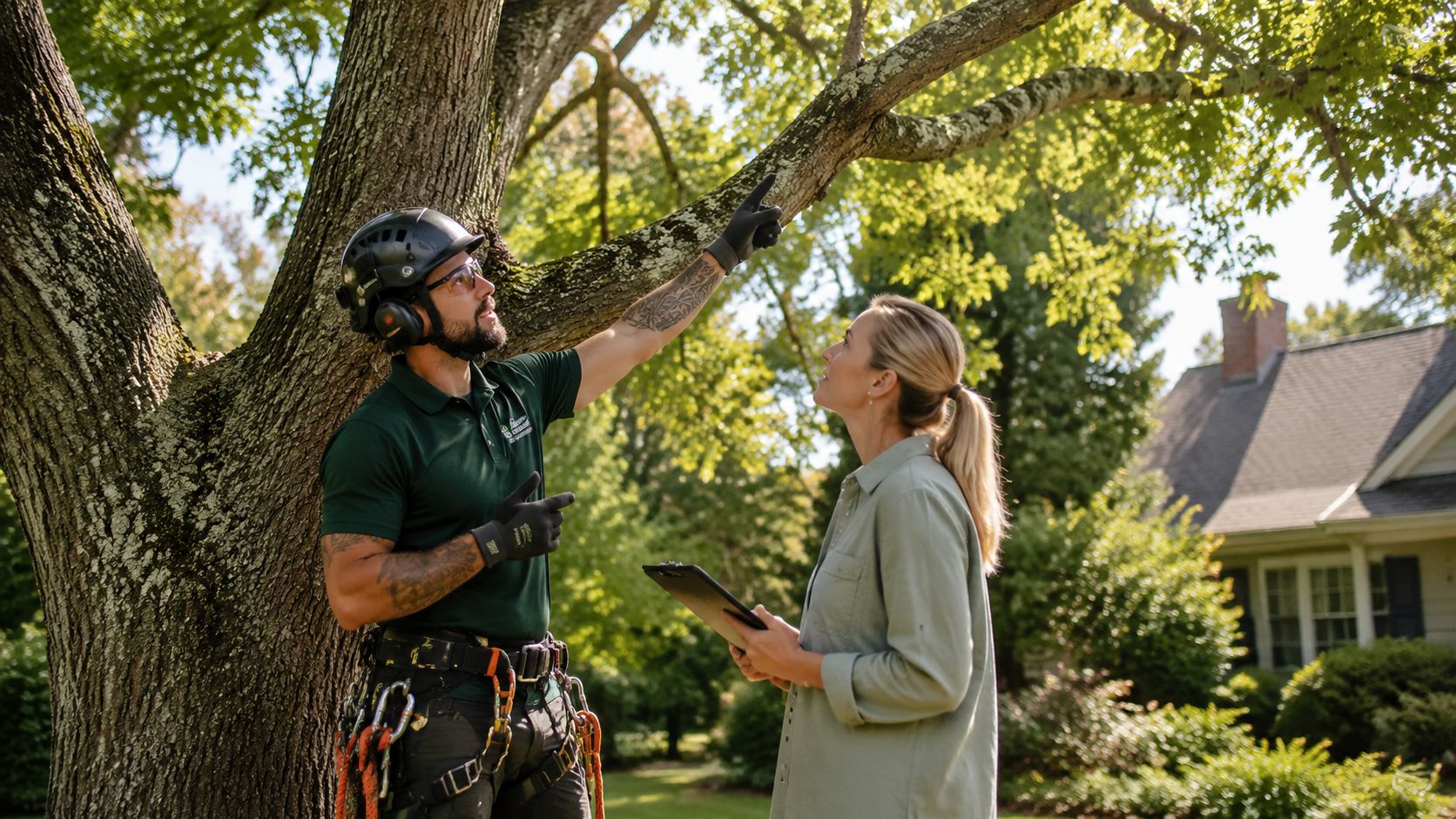
Use a tree surgeon where the job is operational and the permissions are already clear. Use a surveyor where the uncertainty sits around the property, the paperwork, or the risk of later challenge.
In practice, that usually means:
I see owners spend heavily on urgent contractor attendance, then discover the actual exposure was never the cutting cost. It was the delay, the revised scope, the neighbour dispute, or the fee for formal advice and approvals that should have been considered first.
If you need to locate RICS registered surveyors, use a service that checks credentials and insurance, not just a generic search result.
Start with scope, not headline price. A cheap quote can still become the expensive option if it leaves out access assumptions, waste handling, permissions, or responsibility for dealing with objections and paperwork.
Check these points before you appoint:
A reliable opinion is often cheaper than a low quote that rests on the wrong assumptions.
For a straightforward tree in an open garden, a contractor's visit may be enough. For anything tied to legal restrictions, property damage, ownership uncertainty, or a transaction, professional assessment is a form of risk control. It gives you a figure you can budget against, and a basis for acting without creating a larger problem later.
Contractors often price stump grinding as a separate item. Check the quote for the exact finish: stump left in place, cut near ground level, or mechanically removed.
Payment follows ownership, and boundary trees are rarely straightforward. If the trunk straddles the line or ownership is disputed, sort that out before any contractor is booked. A cheap removal can turn into a neighbour dispute, or a claim, if the wrong person authorises the work.
Insurance may pay after sudden damage or an insured event. It usually takes a harder line on routine maintenance, gradual decline, or a risk that was obvious but ignored. Check both the policy wording and whether the insurer wants evidence before work starts.
No. A simple garden tree with clear access and no apparent restrictions may only need a site visit from a competent contractor.
The position changes if the tree is protected, near a structure, linked to a boundary issue, or part of a purchase. In those cases, the survey cost is usually small compared with the cost of getting consent wrong, missing a subsidence issue, or instructing work that should not have gone ahead.
Use it as an early budget check only. It will not price the awkward parts properly, and it will not warn you about Arboricultural Approval Fees, supporting reports, traffic management, or local authority conditions that can add materially to the bill.
Match the scope line by line. One quote may include waste removal, site protection and permissions checks, while another only covers cutting the tree down. If two prices are far apart, the cheaper figure is often built on assumptions that will cost more later.
If your tree issue affects a purchase, boundary, protected site, or wider property risk, it's worth getting impartial advice before you commit to removal. Survey Merchant connects homeowners and buyers with qualified surveyors across the UK who can assess the property context, flag legal and structural risks, and help you make a decision that stands up in practice.
Survey Merchant provides vetted RICS surveyors across 100+ UK locations at fixed fees:
→ Level 2 Home Survey (HomeBuyer Report)
→ Level 3 Building Survey (full structural survey)
→ RICS Red Book property valuations
→ Party wall surveyors — notices, awards & schedules of condition
→ Expert witness surveyors — CPR Part 35 reports for property disputes