We use cookies to improve your experience on our site, analyze site traffic, and assist in our marketing efforts. By clicking "Accept all," you agree to the storing of cookies on your device. You can choose to "Reject all" non-essential cookies. For more information, please read our Cookie Policy.
Conservation Area Rules 2026: What Homeowners Can Do
A 2026 guide to conservation area rules: what you can build without permission, what needs an application, Article 4 directions, the six-week tree notice, demolition offences, the new NPPF heritage policy and how an accredited surveyor helps.
Conservation area rules catch out thousands of UK homeowners every year. Around 10,000 conservation areas exist in England alone, covering everything from Georgian squares to Victorian terraces and inter-war garden suburbs. If your home sits inside one, the ordinary permitted development rights that let your neighbours add a side extension or replace their windows without a planning application may not apply to you. This guide explains what conservation area rules mean in practice in 2026, what you can and cannot do without permission, how Article 4 directions work, and how a suitably qualified, accredited surveyor helps you avoid an expensive mistake.
Key takeaways
A conservation area is designated by the local planning authority to protect the special architectural or historic interest of a whole area, not just individual buildings.
Permitted development rights are reduced in conservation areas: side extensions, cladding, roof extensions and most changes visible from the street usually need planning permission.
Many councils add an Article 4 direction that removes further rights, so even a new front door, window or satellite dish can require an application.
You must give the council six weeks’ notice before pruning or felling most trees, and demolishing a building without permission is a criminal offence.
The new National Planning Policy Framework published in August 2026 rewrites heritage policy and tightens the information you must supply with an application.
A pre-purchase survey or pre-application review by an accredited surveyor identifies unauthorised alterations and planning constraints before they become your problem.
What are conservation area rules?
Conservation area rules are the extra planning controls that apply to any property inside an area designated for its special architectural or historic interest under the Planning (Listed Buildings and Conservation Areas) Act 1990. They restrict permitted development, control demolition, protect trees and, where an Article 4 direction applies, require planning permission for minor external changes such as windows, doors and roofing.
The purpose is to protect the character and appearance of the area as a whole. Section 72 of the 1990 Act requires councils to pay “special attention to the desirability of preserving or enhancing the character or appearance” of a conservation area when deciding any planning application that affects it, and GOV.UK planning practice guidance confirms this statutory duty sits alongside local plan policy and the National Planning Policy Framework.
Importantly, conservation area status is not the same as listing. A listed building is protected inside and out and needs listed building consent for most works. An unlisted house in a conservation area is normally only controlled externally, although the rules on what counts as “external” are broader than most owners expect. If your home is both listed and in a conservation area, both regimes apply; our Grade 2 listed building guide covers the listing side in detail.
How do I find out if my house is in a conservation area?
Check your local planning authority’s online map or conservation area list. Every council in England has at least one conservation area and most publish boundary maps, a designation date and a conservation area appraisal describing what makes the area special. Historic England’s homeowner guidance recommends contacting the council directly if you are unsure, because designations are changed and extended from time to time.
If you are buying, your conveyancer’s local authority search (the CON29 form) will reveal conservation area status and any Article 4 direction. Do not wait until exchange to find out: the constraints can change what you are able to do with the property, and a survey commissioned early will flag unauthorised alterations that may need regularising.
What can you do in a conservation area without planning permission?
You can still carry out a great deal of work under permitted development. The Town and Country Planning (General Permitted Development) (England) Order 2015 treats conservation areas as “Article 2(3) land”, which removes or limits certain classes of householder development but leaves others intact. In a typical conservation area with no Article 4 direction, the following usually remain permitted (subject to the standard size limits and conditions):
Single-storey rear extensions within the standard depth and height limits (the larger “prior approval” extension allowance does not apply on Article 2(3) land).
Internal alterations to an unlisted house, including new kitchens, bathrooms and layout changes.
Like-for-like repairs and maintenance, including re-roofing in matching materials and repainting in existing colours.
Porches within the standard limits.
Solar panels on a roof slope that does not face a highway.
Fences, walls and gates up to the normal height limits.
Outbuildings and garden rooms at the rear, provided they are not between a side wall of the house and the boundary.
Remember that flats and maisonettes have no householder permitted development rights anywhere, and houses created by a change of use often lose them too. If you are unsure whether a project qualifies, apply for a lawful development certificate; it provides formal proof that permission was not needed and is valuable evidence when you sell. Our permitted development rights guide sets out the current size limits in full.
What needs planning permission in a conservation area?
The following works normally require a planning application in a conservation area even where they would be permitted development elsewhere:
Side extensions of any size.
Two-storey rear extensions.
Roof extensions and dormers, including loft conversions that alter the roof shape.
Cladding the exterior with stone, artificial stone, pebbledash, render, timber, plastic or tiles.
Any extension or outbuilding to the side of the house, or in front of the principal elevation.
Satellite dishes and antennas on a chimney, wall or roof slope facing a highway.
Demolition of a building over 115 cubic metres, or of a wall, gate or fence over one metre high next to a highway (or two metres elsewhere).
Most changes of use, including converting a shop or agricultural building to a home.
Planning applications in conservation areas are judged against the section 72 duty and, from August 2026, against the new heritage chapter of the National Planning Policy Framework. Well-designed proposals that use appropriate materials and respect the scale and rhythm of the street are approved every day; poorly considered ones are refused. A pre-application enquiry, discussed in our guide to pre-application versus full planning permission, is often money well spent.
Conservation area rules at a glance
Type of work
Outside a conservation area
In a conservation area (no Article 4)
With an Article 4 direction
Single-storey rear extension (within limits)
Permitted development
Permitted development (no larger “prior approval” option)
The table summarises the general position in England for an unlisted house. Always confirm with your local planning authority because conditions on previous permissions, and local Article 4 directions, change the picture.
What is an Article 4 direction and how does it affect me?
An Article 4 direction is a legal notice made by the council under the General Permitted Development Order that withdraws specific permitted development rights in a defined area. As the Planning Portal explains, directions are made where the character of an area of acknowledged importance would be threatened, and they are most common in conservation areas.
A direction does not ban the work. It simply means you must apply for planning permission first. Typical rights withdrawn by conservation area directions include:
Replacing or altering windows and doors on elevations facing a highway or public space.
Changing roof coverings, chimneys, gutters and downpipes.
Painting previously unpainted brickwork or changing the colour of a facade.
Removing or altering front boundary walls, railings and gates.
Paving over front gardens or creating hardstanding.
Installing rooflights, solar panels or satellite dishes visible from the street.
There is normally no planning fee for an application that is only required because of an Article 4 direction. However, an application still takes around eight weeks and needs drawings, so factor this into your programme. Councils continue to make new directions each year, so check the current position with your local planning authority rather than relying on what applied when you bought.
An accredited surveyor will identify past alterations that may have needed permission under conservation area rules.
Windows, doors and roofs: the most common conservation area disputes
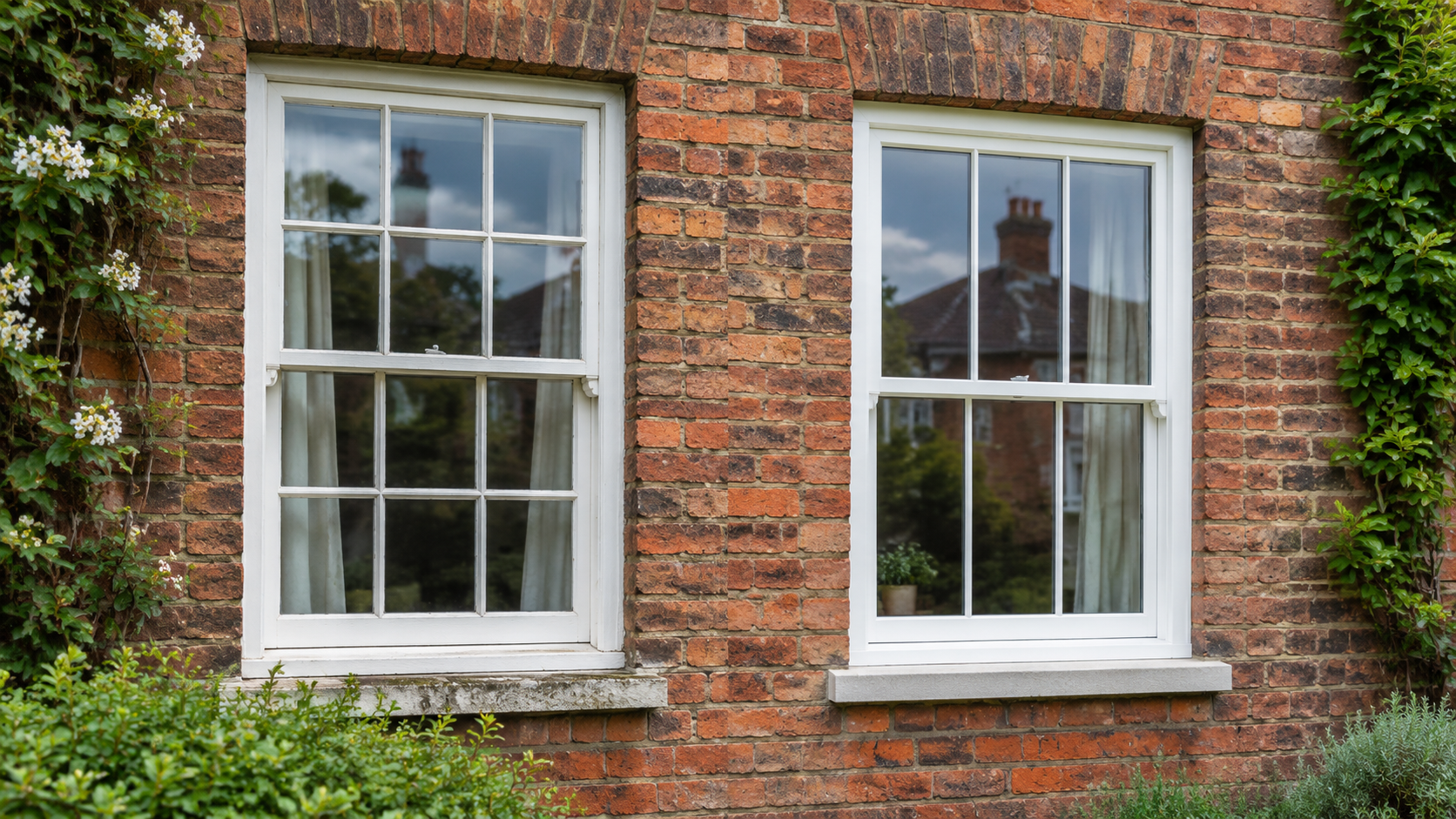
Replacement windows generate more enforcement complaints in conservation areas than any other type of work. In an unlisted house without an Article 4 direction, swapping single-glazed timber sashes for double-glazed units is not development requiring planning permission. Where a direction applies, the council will usually expect timber frames, matching glazing-bar patterns and slim double-glazed or vacuum-glazed units; standard uPVC casements are routinely refused.
Roofs are the second flashpoint. Re-covering in matching natural slate or clay tile is maintenance, but switching to concrete tiles, adding a dormer or inserting large rooflights on a street-facing slope all need consent in a conservation area. Chimneys, historic ridge tiles and cast-iron rainwater goods are frequently protected by Article 4 directions too.
Front doors, porches and boundary treatments complete the list. Removing original railings, replacing a panelled timber door with a composite door, or paving a front garden may each require permission depending on the local direction. When in doubt, ask the council’s conservation officer before you buy materials, and keep photographs and receipts as evidence of what was there before.
Like-for-like timber sash windows with slim double glazing are the safest replacement option in a conservation area.
Trees in conservation areas: the six-week notice rule
All trees in a conservation area with a trunk diameter over 75mm (measured 1.5 metres above ground) are protected by a notification requirement. Before you fell, top, lop or uproot one you must give the council six weeks’ written notice under section 211 of the Town and Country Planning Act 1990. The council uses that period to decide whether to make a Tree Preservation Order. Carrying out the work without notice is a criminal offence that can lead to a fine and a duty to plant a replacement tree. GOV.UK guidance on trees in conservation areas sets out the exemptions, which include dead or dangerous trees and work required under a planning permission.
Demolition in a conservation area
Demolishing an unlisted building of more than 115 cubic metres in a conservation area, or a boundary wall, gate or fence above the height thresholds, requires planning permission for “relevant demolition”. Doing so without permission is an offence under section 196D of the Town and Country Planning Act 1990, punishable by an unlimited fine and, on indictment, up to two years’ imprisonment. There is no application fee for relevant demolition, but the council will expect a justification and, in most cases, approved plans for what replaces the building. Partial demolition to form an extension is usually treated as part of the extension application.
What has changed in 2026?
Two developments this year matter to anyone planning work in a conservation area.
First, the Government published the revised National Planning Policy Framework in August 2026, following consultation from December 2025. Planning consultancy Turley’s analysis of 21 August 2026 notes that the new heritage chapter removes the long-standing “less than substantial harm” test, replacing it with categories of harm, substantial harm and total loss, and requires applicants to assess and state the effect of a proposal on the significance of heritage assets, including conservation areas. It also confirms the Government will extend statutory “special regard” duties to other designated heritage assets. Expect councils to ask for a short heritage statement with more conservation area applications as a result.
Second, the retrofit debate has intensified. On 5 February 2026 Grosvenor published Retrofit or Ruin, reporting that councils spend around 4,000 working days a year processing consents for low-risk energy-efficiency works to England’s three million listed buildings and conservation area homes, and calling for a national model Local Development Order to streamline permission for measures such as secondary glazing, insulation and heat pumps in conservation areas. Historic England’s advice on retrofit and energy efficiency in historic buildings remains the key reference for owners weighing up upgrades, and our guide on how to improve your EPC rating covers the practical options for older homes.
Does living in a conservation area affect property value?
Usually positively. Research by the London School of Economics for Historic England found that properties in conservation areas command a price premium and tend to appreciate faster than comparable homes outside them, even after adjusting for location and property type. The premium reflects the protected streetscape and the confidence that neighbours cannot make unsympathetic changes. The trade-off is higher repair and alteration costs, particularly for timber windows, natural roofing materials and traditional joinery, which a RICS Red Book valuation will take into account.
How a surveyor helps with conservation area rules
Whether you are buying, extending or regularising past work, use a suitably qualified, accredited surveyor. Survey Merchant’s panel includes surveyors regulated or accredited by bodies such as RICS, CIOB and RPSA, matched to the type of property and job in hand. On a conservation area property, a surveyor will typically:
Carry out a Level 3 building survey on an older house, checking traditional construction, damp, timber decay and the condition of original features that would be costly to replace to conservation standards.
Identify alterations that may have breached conservation area rules or an Article 4 direction, such as uPVC windows, rooflights, removed chimneys or paved front gardens, and advise on lawful development certificates, retrospective permission or indemnity insurance.
Advise on the feasibility of an extension or loft conversion before you commission drawings, and coordinate with an architect and the council’s conservation officer.
Prepare a schedule of condition and handle party wall matters where works affect a shared wall in a terrace, which is the norm in conservation areas.
Why choose Survey Merchant for your conservation area property?
Survey Merchant makes it simple to instruct the right surveyor for a period home in a protected area:
Accredited panel matched to the job: surveyors regulated or accredited by RICS, CIOB, RPSA and other recognised bodies, selected for experience with older and traditionally built homes.
Nationwide coverage with local knowledge: surveyors who understand the appraisals and Article 4 directions used by your local planning authority.
Transparent fixed fees: competitive quotes agreed before you instruct, with no hidden extras.
Fast turnaround: inspections booked quickly and reports delivered promptly, so conveyancing or planning does not stall.
Impartial advice: independent surveyors with no interest in the sale, the builder or the planning outcome.
End-to-end support: from pre-purchase surveys and valuations to party wall awards and expert advice on regularising unauthorised work.
Do I need planning permission to replace windows in a conservation area?
Not usually for an unlisted house, provided there is no Article 4 direction. Where a direction covers windows, you must apply for planning permission and the council will normally expect timber frames and a matching glazing pattern. Listed buildings always need listed building consent.
Can I build an extension in a conservation area?
Yes. A single-storey rear extension within the standard permitted development limits is usually allowed, but side extensions, two-storey rear extensions, roof extensions and cladding all need planning permission in a conservation area.
What is an Article 4 direction?
An Article 4 direction is a council order that removes specific permitted development rights in a defined area, most often a conservation area. It does not ban the work; it means you need planning permission first. There is normally no fee for applications required only because of a direction.
Can I cut down a tree in my garden in a conservation area?
Only after giving the council six weeks' written notice for any tree with a trunk over 75mm in diameter. The council may respond with a Tree Preservation Order. Working without notice is a criminal offence, although dead or dangerous trees are exempt.
What happens if I do work without permission in a conservation area?
The council can serve an enforcement notice requiring you to reverse the work, and unauthorised demolition is a criminal offence under section 196D of the Town and Country Planning Act 1990. Unauthorised alterations also cause problems when you sell, so a survey should identify them early.
Is a house in a conservation area worth more?
Research by the London School of Economics for Historic England found that homes in conservation areas generally sell at a premium and appreciate faster than comparable homes elsewhere, although repairs and alterations to conservation standards can cost more.