Leasehold
Oct 5, 2026
Commonhold Explained: 2026 Guide for UK Flat Owners
Commonhold explained for 2026: how it works, how it compares with leasehold and share of freehold, and where the Commonhold and Leasehold Reform Bill stands.

Commonhold is back on the agenda. After more than two decades as a legal curiosity, commonhold is set to become the default way of owning a flat in England and Wales, and the draft Commonhold and Leasehold Reform Bill published in January 2026 shows how the government intends to get there. If you own a leasehold flat, are thinking of buying one, or are weighing up share of freehold, understanding commonhold in 2026 matters. This guide explains what commonhold is, how it works day to day, how it compares with leasehold and share of freehold, where the reforms currently stand and what a suitably qualified, accredited surveyor can do to help you prepare.
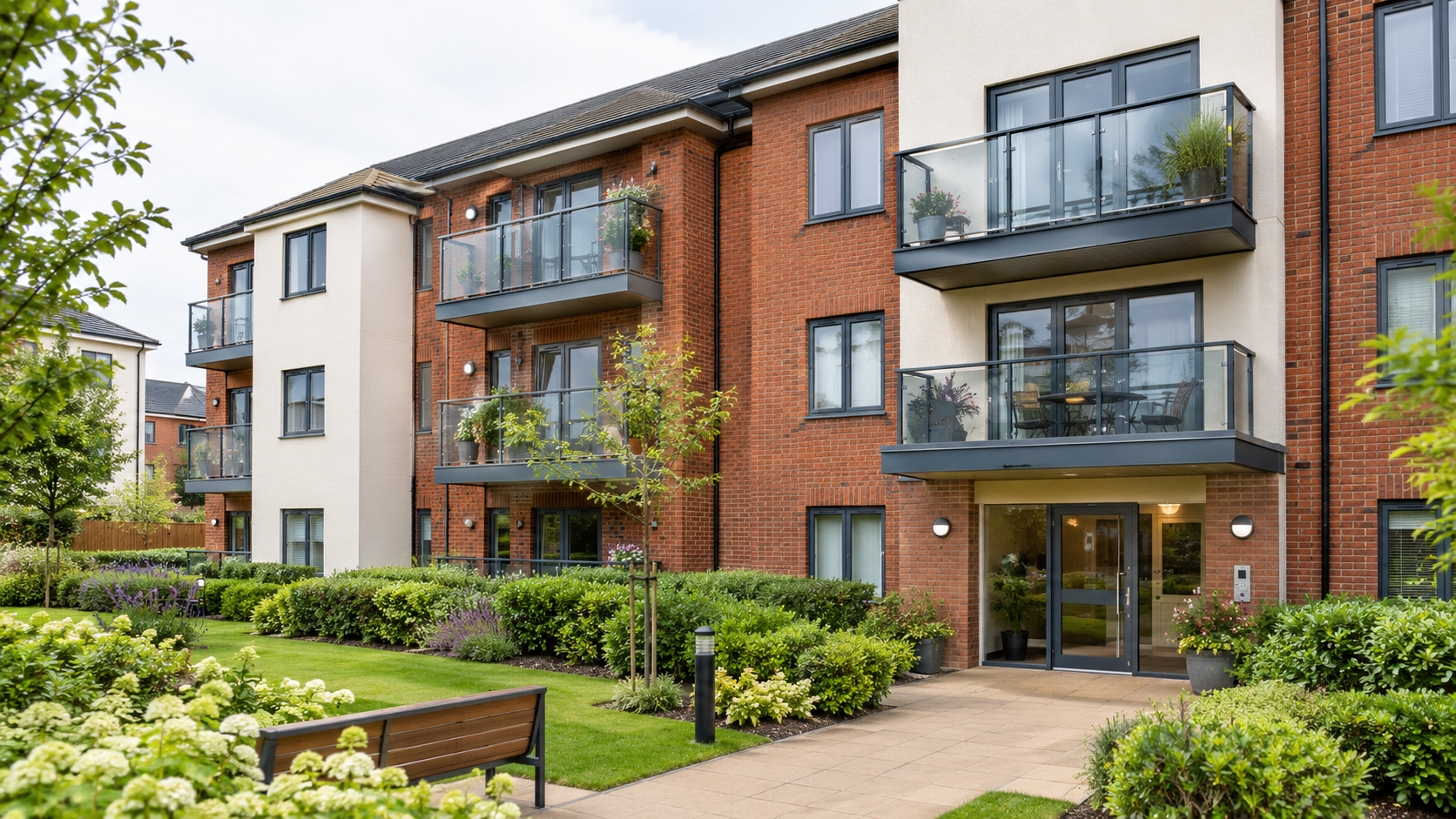
Commonhold is a form of freehold ownership for flats. Each owner holds the freehold of their own unit permanently, while the shared parts of the building are owned and managed jointly through a commonhold association made up of the unit owners. There is no landlord, no ground rent and no lease that expires.
The framework was created by the Commonhold and Leasehold Reform Act 2002 and switched on in 2004. In practice it never took off: by the time the Law Commission reviewed it, fewer than 20 commonhold developments had been established across England and Wales, against roughly 5 million leasehold homes. The reasons were a combination of lender reluctance, developers’ preference for the income a freehold generates, and a legal structure that was too inflexible for mixed-use or phased schemes. The reforms now moving through Westminster are designed to fix every one of those problems.
Three building blocks hold a commonhold together, and once you understand them the rest follows.
This is a company limited by guarantee registered at Companies House. Every unit owner is automatically a member, with the right to vote on budgets, appoint directors and approve major works. The directors can be unit owners themselves or a professional managing agent appointed by the members. Because the owners are the company, there is no third-party freeholder taking decisions in their own interest.
The CCS is the rulebook for the building. It is a standardised document that sets out what each owner must contribute, how the common parts are maintained, how disputes are handled and any local rules, such as restrictions on short lets or pets. Because it is standardised and registered at HM Land Registry, every flat in the building is subject to the same terms, which removes the lease-by-lease inconsistencies that plague older leasehold blocks.
Instead of a service charge demanded by a landlord, owners pay commonhold contributions to a budget they vote on each year. The reformed model, set out in the government’s Commonhold White Paper (3 March 2025), makes reserve funds mandatory so that major items such as roof renewal or lift replacement are saved for over time rather than landing as one-off bills. A professional reserve-fund study, normally carried out by a building surveyor, is the tool associations use to work out how much to set aside.
Buyers often ask whether commonhold is simply share of freehold under another name. It is not. With share of freehold you still hold a lease; you just also co-own the freehold company. Commonhold removes the lease altogether. The table below sets out the main differences.
| Feature | Leasehold | Share of freehold | Commonhold |
|---|---|---|---|
| What you own | A lease for a fixed term (e.g. 99 or 125 years) | A lease plus a share in the freehold company | The freehold of your unit, permanently |
| Ground rent | Often payable (to be capped at £250 under the draft Bill) | Usually a peppercorn, but depends on the lease | None |
| Who controls the building | The freeholder or their managing agent | The co-owners, via the freehold company | All unit owners, via the commonhold association |
| Lease extension needed? | Yes, as the term runs down | Yes, although usually granted at low cost | Never |
| Risk of forfeiture | Yes (to be abolished under the draft Bill) | Yes, in principle | No |
| Rules for the building | Individual leases, which can differ | Individual leases | One standard commonhold community statement |
| Reserve fund | At the landlord’s discretion | At the company’s discretion | Mandatory |
| Mortgage availability (2026) | Universal | Widely available | Limited today; expected to widen after the reforms |
For a deeper look at the middle column, read our share of freehold guide, and for the fundamentals of the first column see leasehold vs freehold explained.
The government published the draft Commonhold and Leasehold Reform Bill on 27 January 2026 for pre-legislative scrutiny. Its headline measures are:
The Housing, Communities and Local Government Committee published its scrutiny report on 27 May 2026. It called the draft a significant step but said the government must go further and faster: it recommended that the final Bill be introduced in autumn 2026, that the ground rent cap take effect two months after Royal Assent rather than at a later discretionary date, that the 40-year transition to peppercorn be justified or shortened, and that commonhold become the default outcome of collective enfranchisement. It also backed an independent regulator for managing agents.

The King’s Speech on 13 May 2026 confirmed the Bill as part of the government’s programme. As of the first week of October 2026, however, the final Bill has not yet been introduced to Parliament; the HomeOwners Alliance reports (update of 1 October 2026) that ministers have committed to bringing it forward during the current parliamentary session. The Leasehold Advisory Service (LEASE) currently expects the ground rent cap to arrive around 2028 and the new commonhold model to be available from around 2029, although the committee has pressed for both to come sooner.
Separately, the Leasehold and Freehold Reform Act 2024 is still being switched on in stages. The two-year ownership rule for lease extensions and freehold purchases was removed in early 2025, and right-to-manage claims became cheaper and open to more buildings from 3 March 2025. The biggest valuation changes, including the abolition of marriage value, are on the statute book but not yet in force. The government’s consultation on the deferment and capitalisation rates used in those calculations opened on 15 July 2026 and closes at 11:59pm on 21 October 2026; the options range from keeping the long-standing 4.75% (houses) and 5% (flats) deferment rates to updating them to somewhere between 5.05% and 6.3%. Our note on the valuation rates consultation explains why the outcome matters to anyone extending a lease.
| Milestone | Date | Status (October 2026) |
|---|---|---|
| Commonhold and Leasehold Reform Act 2002 creates commonhold | 2002 (in force 2004) | Fewer than 20 commonholds created |
| Law Commission report recommending a reinvigorated commonhold | July 2020 | Largely adopted by government |
| Leasehold and Freehold Reform Act 2024 receives Royal Assent | 24 May 2024 | Being commenced in stages |
| Commonhold White Paper | 3 March 2025 | Published |
| Draft Commonhold and Leasehold Reform Bill | 27 January 2026 | Scrutinised by committee |
| King’s Speech confirms the Bill | 13 May 2026 | Confirmed |
| Committee scrutiny report | 27 May 2026 | Recommends autumn 2026 introduction |
| Enfranchisement valuation rates consultation closes | 21 October 2026 | Open |
| Ground rent cap in force | Expected 2027–2028 | Subject to Royal Assent |
| New commonhold model available / ban on new leasehold flats | Expected from 2029 | Subject to Royal Assent |
For most owner-occupiers the answer is yes, with caveats. The advantages are clear: permanent ownership with no wasting asset, no ground rent, no landlord, a say in every spending decision, and a mandatory reserve fund that smooths out big bills. The CCS also gives buyers certainty, because every unit is on the same terms.
The caveats are practical rather than legal. First, a commonhold is only as well run as its members: if nobody wants to be a director, the association will need to pay a managing agent, just as a share-of-freehold company does. Second, mortgage availability is still catching up. The HomeOwners Alliance reports that only around a third of lenders currently offer commonhold mortgages, though about half have said they will lend once the reforms pass. Third, conversion of an existing block is a project: the leaseholders must buy out the freeholder, which means an enfranchisement valuation and, usually, a condition survey of the building they are about to take on.
Under the current law, conversion requires the consent of every leaseholder and the freeholder, which is why it almost never happens. The draft Bill lowers the threshold to 50% of leaseholders, broadly aligning it with collective enfranchisement. The expected route, once the legislation is in force, looks like this:
If your building is not ready for a full conversion, right to manage remains a quicker way to take control of day-to-day management without buying the freehold.

Commonhold will not arrive overnight, and the sensible course depends on your lease. If your lease is approaching or below 80 years, do not wait for the reforms: the marriage value abolition is not yet in force, and the valuation rates consultation could move premiums in either direction. Get an up-to-date lease extension valuation so you can decide whether to serve notice now or hold. If you are buying a flat, ask the seller’s solicitor whether the building has any history of right-to-manage or enfranchisement activity, check the service charge accounts for a reserve fund, and commission an appropriate level of building survey; the condition of the common parts will matter even more once owners are collectively responsible for them. And if you are in a share-of-freehold block, keep an eye on the final Bill, because the committee’s recommendation that commonhold become the default outcome of enfranchisement could give you a streamlined path to convert.
Whatever tenure you end up with, the surveying work is the same discipline applied at different moments. Suitably qualified, accredited surveyors regulated by bodies such as RICS, CIOB and RPSA provide: enfranchisement and lease extension valuations under the statutory formulae; Red Book valuations for lending on commonhold or share-of-freehold units; planned maintenance and reserve-fund assessments for associations; reinstatement cost assessments for the building’s insurance; and Level 2 or Level 3 surveys for buyers. Using an accredited professional also matters at tribunal: if the freeholder disputes a conversion price, an expert valuation report is what the First-tier Tribunal will weigh.
Survey Merchant connects you with a panel of suitably qualified, accredited surveyors, regulated by bodies including RICS, CIOB and RPSA, matched to the specific job rather than a one-size-fits-all appointment. For commonhold and leasehold matters that means valuers who handle Section 42 and collective enfranchisement work every week, and building surveyors who understand the common-parts issues that drive reserve-fund budgets. We cover the whole of the UK, with local surveyors who know the block types and price levels in your area. Fees are fixed and quoted up front, turnaround is fast, and the advice is impartial because our surveyors act for you, not for a freeholder or developer. From the first valuation to tribunal representation, you get end-to-end support from one point of contact.
Ready to take the next step? Explore our lease extension and enfranchisement valuation service, see what a professional valuation involves, or contact Survey Merchant today for a fixed-fee quote.
Survey Merchant provides vetted RICS surveyors across 100+ UK locations at fixed fees:
→ Level 2 Home Survey (HomeBuyer Report)
→ Level 3 Building Survey (full structural survey)
→ RICS Red Book property valuations
→ Party wall surveyors — notices, awards & schedules of condition
→ Expert witness surveyors — CPR Part 35 reports for property disputes