Leasehold
Jul 16, 2026
Surveyor's Role in HomeBuyer Reports vs Building Surveys
RICS Level 2 records visible defects; Level 3 diagnoses causes, risks and likely repairs—choose Level 3 for older or altered homes.

If I want the short answer: a Level 2 survey tells me what the surveyor can see, while a Level 3 goes further and explains what the defects may mean, what may have caused them, and what work may follow.
Before exchange of contracts, that difference matters. In the UK, many buyers only find trouble after the survey flags issues such as damp, cracking, roof wear, or old services. Both survey types are based on a visual check of accessible areas only, and neither includes opening up the building or testing services. But the surveyor’s job changes a lot between the two.
Here’s the simple breakdown:
The main point: if I’m buying a plain, modern home, Level 2 is often enough. If I’m buying a Victorian terrace, a listed building, a home with cracks or damp, or a place I want to refurbish, Level 3 usually makes more sense.
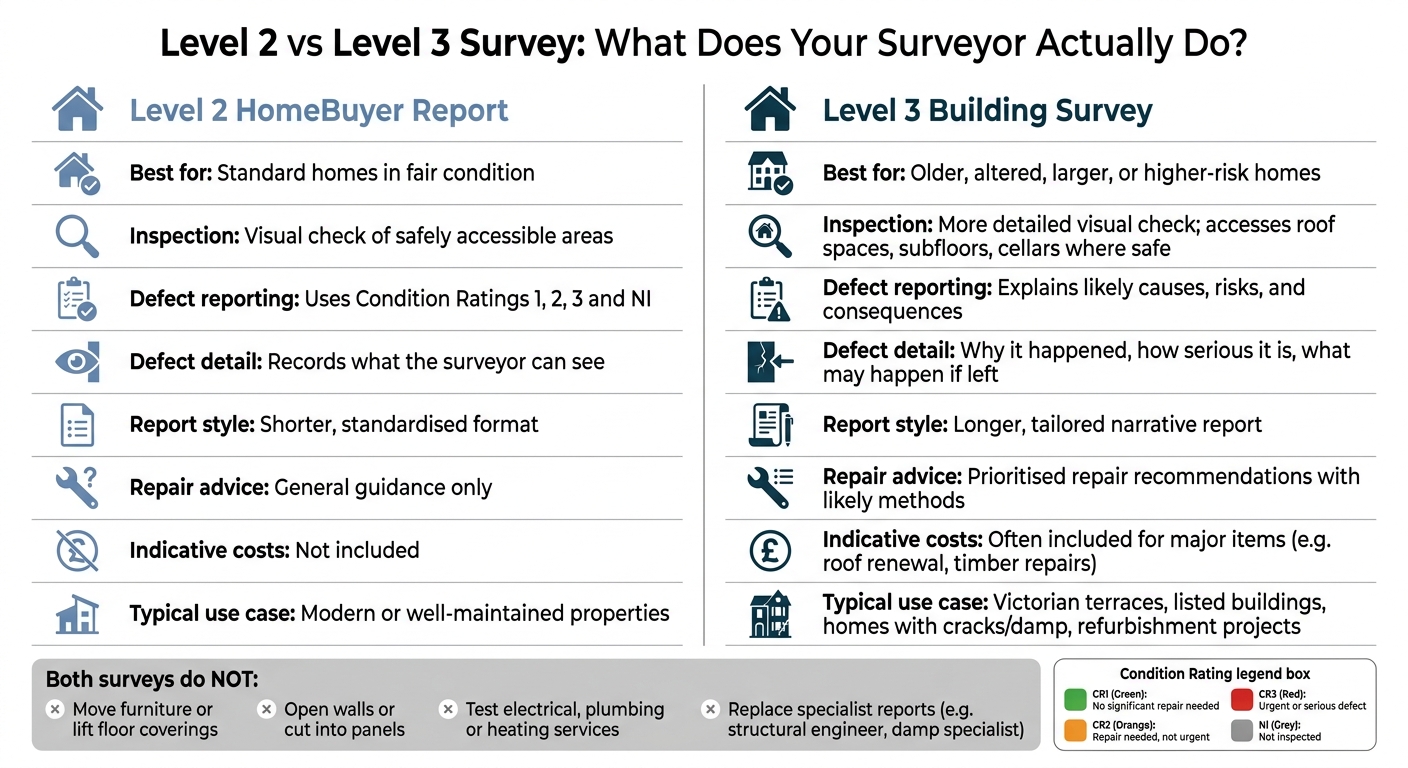
Level 2 vs Level 3 Survey: What Does Your Surveyor Actually Do?

| Check point | Level 2 | Level 3 |
|---|---|---|
| Best for | Standard homes | Older, altered, or higher-risk homes |
| Inspection | Visual check of accessible parts | More detailed visual check of accessible parts |
| Report style | Shorter and set format | Longer and tailored to the property |
| Defect detail | What the surveyor saw | What was seen, likely cause, risk, and repair path |
| Repair advice | General | More detailed, often with repair order |
| Costs | Usually lower | Usually higher |
| Hidden parts opened up? | No | No |
So when I compare the surveyor’s role in each report, the issue is not access alone. It is how much the surveyor explains, how far the advice goes, and how much help the report gives me before I commit.
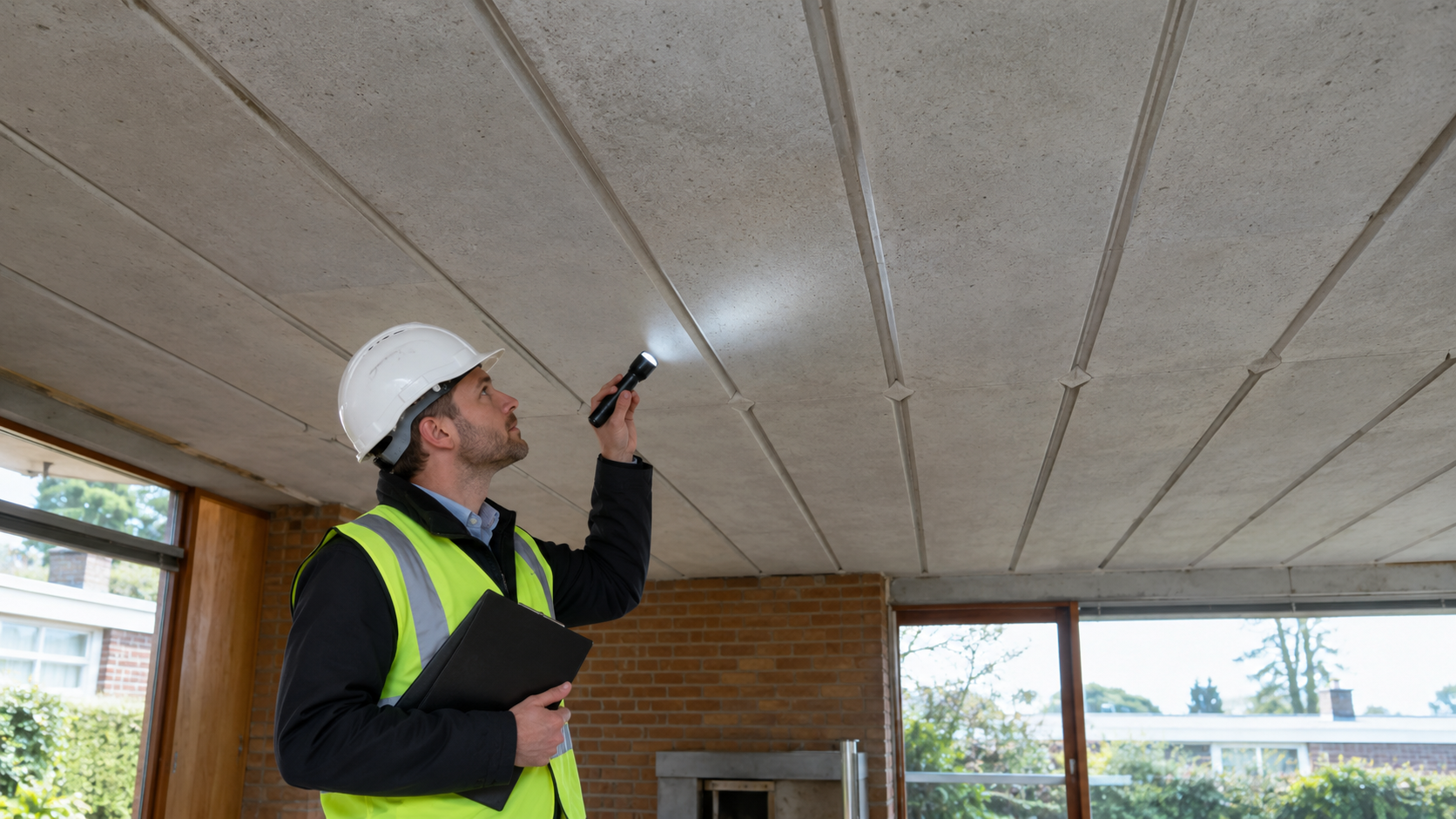
The surveyor carries out a visual inspection of all parts of the property that are safely accessible, without opening anything up.
This usually covers the external walls, chimneys, windows, doors and rainwater goods. Inside, the surveyor looks at rooms, ceilings, floors, walls and joinery. They also check the roof space through the loft hatch if access is safe, along with visible parts of the heating, plumbing and electrical systems. Permanent outbuildings, such as garages, are included too.
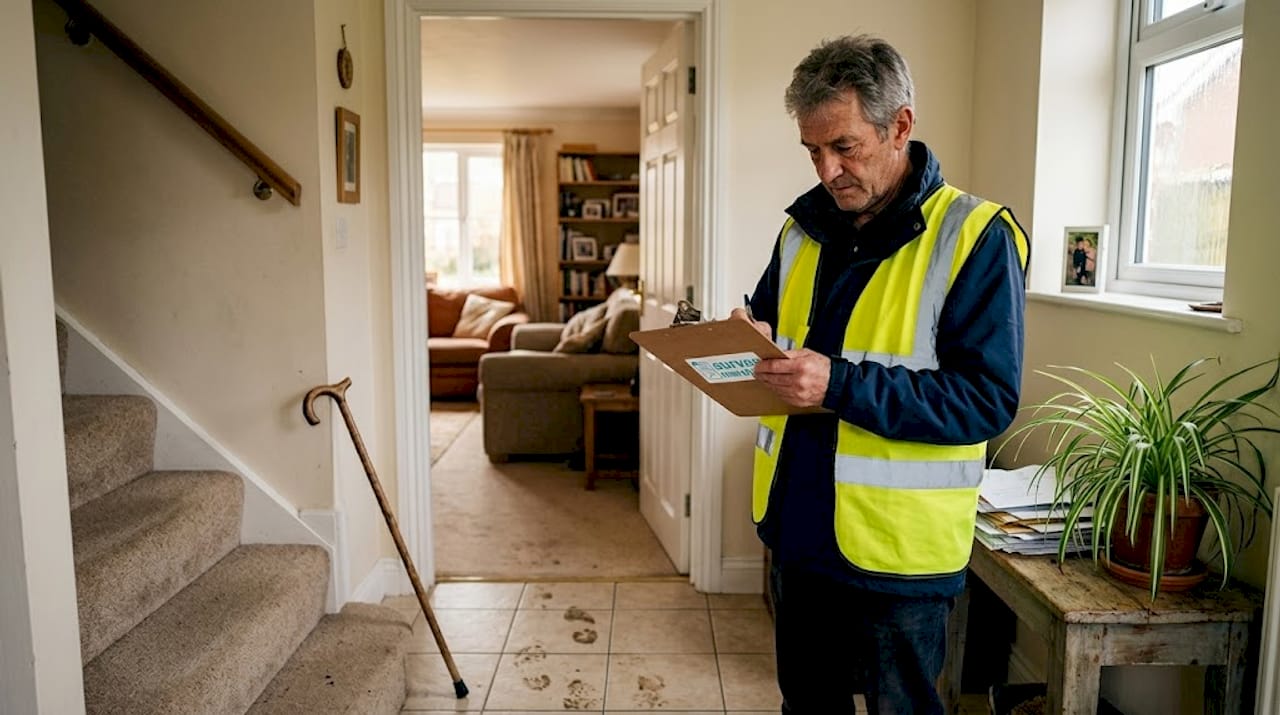
There are clear limits to what the surveyor can do. They use existing access only. That means they do not move furniture, lift floor coverings, cut into panels or go into areas that are unsafe. Roofs are normally viewed from ground level, with binoculars if needed. If the loft is safely boarded, the surveyor may look at roof timbers and insulation from the hatch. If not, that part is marked as not inspected.
The surveyor also does not test services. They record visible condition only and may suggest specialist testing if something looks off.
The report turns what the surveyor sees into clear action points using the RICS condition rating system:
| Rating | Meaning |
|---|---|
| Condition Rating 1 | No significant repair needed; routine maintenance only. |
| Condition Rating 2 | Defects need repair or replacement, but not urgently. |
| Condition Rating 3 | Serious or urgent defects needing immediate action or further investigation. |
| NI | Not inspected. |
NI does not mean an area has no problems. It only means the surveyor could not get access, so hidden defects may still be there.
For each Condition Rating 2 or Condition Rating 3 item, the surveyor sets out what they saw and why it matters. Common issues include damp, cracking, timber decay, roof wear and signs of structural movement. The report deals with visible signs and what they are likely to mean. It is not a full structural diagnosis.
A Level 2 report gives you a concise health check of the property's condition. It helps sort urgent repairs from routine maintenance and can also flag missing planning, building control or guarantee paperwork.
What it does not give you is a detailed repair specification, structural calculations or exact costings. That said, it can still help with price negotiations, repair requests or deciding whether to walk away.
If defects seem deeper than a standard report can explain, the surveyor may suggest a specialist investigation. That more technical role is where Level 3 starts to differ.
Where Level 2 records visible defects, Level 3 looks at how and why those defects have developed. The surveyor inspects the accessible structure and building fabric in much more detail, spending more time working out how the property was built and how its different parts work together.[2][8][3]
That means checking the visible construction type - whether solid wall, cavity wall, timber frame or stone construction - and looking for movement, settlement, and defects where original parts meet later additions. Where it is safe, the surveyor will also try to access roof spaces, cellars, and under-floor voids. They check timbers for rot or woodworm and look for signs of long-term deterioration that a shorter inspection could miss.[6][2][1] The survey is still non-intrusive, but it goes much further than Level 2.[2][15]
That extra access matters. Level 3 is not just about spotting more issues. It is about explaining what those issues mean in practice.
At Level 3, the surveyor is expected to explain why a defect has happened, how serious it is, and what may happen if it is left alone.[6][7][8][9]
A damp patch is not simply recorded. The surveyor considers whether it points to penetrating damp from a failed detail, rising damp, or condensation, and what sort of remedial work each problem is likely to need. Cracking is also assessed carefully, so the report can separate historic, settled movement from movement that may still be active.[6][7][8][9] The report then sets out repair priorities and likely repair methods, usually starting with urgent safety work, then medium-term repairs, followed by routine maintenance.[6][8][9]
Many Level 3 reports also include indicative cost ranges for major items such as roof renewal, timber repairs, or structural work.[6][8][9][12] These are not formal quotes, but they do give buyers a solid basis for budgeting, negotiating the purchase price, or planning works in stages. If the surveyor finds something outside their scope - such as asbestos, the need for a structural engineer, or invasive damp testing - they should say so plainly and explain why a specialist is needed.[7][1][3]
That fuller diagnosis is what makes Level 3 so useful for older, altered, or higher-risk homes.
A Level 3 survey is usually the right fit when the property, or the purchase itself, brings more technical risk. Common examples include older or listed properties, non-standard construction, visibly run-down homes, and properties with major extensions or alterations.[13][14][4][16]
It is also a strong choice if the buyer is planning major refurbishment or structural changes, because the surveyor can give a more detailed diagnosis and clearer cost guidance.[7][1][11][3][12] In practice, that gives buyers the detail they need to judge pricing, plan repairs, and decide whether they need more specialist advice before exchange.
That is where Level 3 stands apart from Level 2: it is built for properties where a simple condition snapshot no longer does the job.
At Level 2, the surveyor records visible defects. At Level 3, the surveyor goes further and explains the cause, the risk, and what may happen if the issue is left alone.
| Feature | Level 2 (HomeBuyer Report) | Level 3 (Building Survey) |
|---|---|---|
| Inspection scope | Basic accessible inspection | Broader inspection of accessible areas, especially roof spaces and subfloors |
| Structural commentary | Limited to visible surface condition | In-depth analysis of construction type, materials, and building behaviour |
| Defect detail | Flags visible defects using condition ratings (1, 2, 3, NI) | Explains likely causes, risks and consequences |
| Reporting format | Standardised condition ratings; concise | Detailed narrative; tailored to the specific property |
| Repair advice | General guidance | Prioritised repair recommendations; may include indicative costs for significant repairs |
In plain terms, a Level 2 tells you what can be seen. A Level 3 spends more time on why it matters. That gap becomes far more important when you're dealing with an older home, signs of wear, or anything that looks like it could turn into a costly job.
Both survey types can help a buyer decide whether to renegotiate the purchase price or ask for more checks from a specialist. But Level 3 often gives you a stronger footing when defects are harder to assess or may cost a lot to put right. The report does not just note that a problem exists. It sets out the thinking behind the concern.
That can make a big difference where a roof structure, retaining wall, or long-standing moisture issue may need major work. In those cases, a Level 3 surveyor's comments give buyers - and their conveyancers - a much clearer basis for discussion.
Neither survey includes intrusive opening-up works or specialist services testing. So the key difference is not physical access. It is the depth of analysis.
That is the practical test when choosing between Level 2 and Level 3.
Use the surveyor's role, not the headline price, to decide which level fits the purchase. Level 2 is usually the right fit for standard homes in reasonable condition. Level 3 is the better choice for older, altered, or higher-risk properties.
Choose Level 3 for older, altered or visibly defective properties.[10][2][5][6] Choose Level 3 if you're planning major renovation work, because a diagnostic survey can show the likely scope of work and the level of risk before you commit.[7][1][11][3][12]
Survey Merchant connects buyers with qualified surveyors for Level 2 and Level 3 reports, matched to the property and location.
The simplest way to choose is to look at what the surveyor is there to do. Level 2 gives you a structured snapshot of the property's condition. Level 3 goes further, with a deeper diagnosis of causes, risks and likely repairs. Choose before exchange so the survey matches the property and the risk you're taking on.
For an older home, a Level 3 Building Survey is usually the best fit. A Level 2 HomeBuyer Report tends to suit newer, more standard properties.
A Level 3 survey makes more sense for homes built before 1900 or during the pre-war period. It’s also a good pick for properties with non-standard construction, homes that have been heavily altered, or places showing signs of movement, damp, or cracking.
No. In both a Level 2 HomeBuyer Report and a Level 3 Building Survey, the surveyor only makes a visual check of the electrical and plumbing systems.
They won’t test them, open them up, or dig into how they work. So if anything looks off, or can’t be judged properly from a visual check alone, those services may get a Condition Rating 3. That means you should get a specialist to carry out a formal assessment before you go ahead.
Yes. A Level 3 Building Survey can help you negotiate the purchase price because it gives you detailed evidence about the property's condition, what’s causing any defects, and what repairs are likely to cost.
That puts you in a stronger position if you want to ask for a price reduction or request that the seller sorts out specific problems before contracts are exchanged. It can be especially helpful with older, altered, or more complex homes.
Survey Merchant provides vetted RICS surveyors across 100+ UK locations at fixed fees:
→ Level 2 Home Survey (HomeBuyer Report)
→ Level 3 Building Survey (full structural survey)
→ RICS Red Book property valuations
→ Party wall surveyors — notices, awards & schedules of condition
→ Expert witness surveyors — CPR Part 35 reports for property disputes