Under CPR 35.6, questions to experts are the formal mechanism that lets a party put written questions to the other side's expert, or to a single joint expert, after the report has been served. The questions must be put once only, within 28 days of service of the report, and only for the purpose of clarifying it, unless the court gives permission or the other party agrees. The expert's answers then form part of the report itself. This guide explains how the procedure works in property and construction disputes, what a chartered surveyor acting as expert witness does when questions arrive, and how solicitors can use the rule to test the evidence without wasting costs.
What does CPR 35.6 actually allow?
Rule 35.6 of the Civil Procedure Rules permits a party to put written questions about an expert's report to an expert instructed by another party, or to a single joint expert appointed under rule 35.7. Three limits apply by default:
- Once only. A party gets a single round of questions unless the court permits more or the other side agrees.
- Within 28 days. The clock runs from service of the expert's report, not from the date the report was signed.
- Clarification only. Questions must be aimed at understanding what the report says, not at cross-examining the expert on paper or introducing new issues.
Practice Direction 35, paragraph 6.1, adds a safeguard: when questions are sent direct to the expert, a copy must go to the other party (or parties) at the same time. Nothing about the process is private, which fits the expert's overriding duty under rule 35.3 to the court rather than to whoever instructed them.
For the report itself, the guide to what a CPR Part 35 expert witness report contains sets out the mandatory PD35 elements.
Why do written questions matter in property disputes?
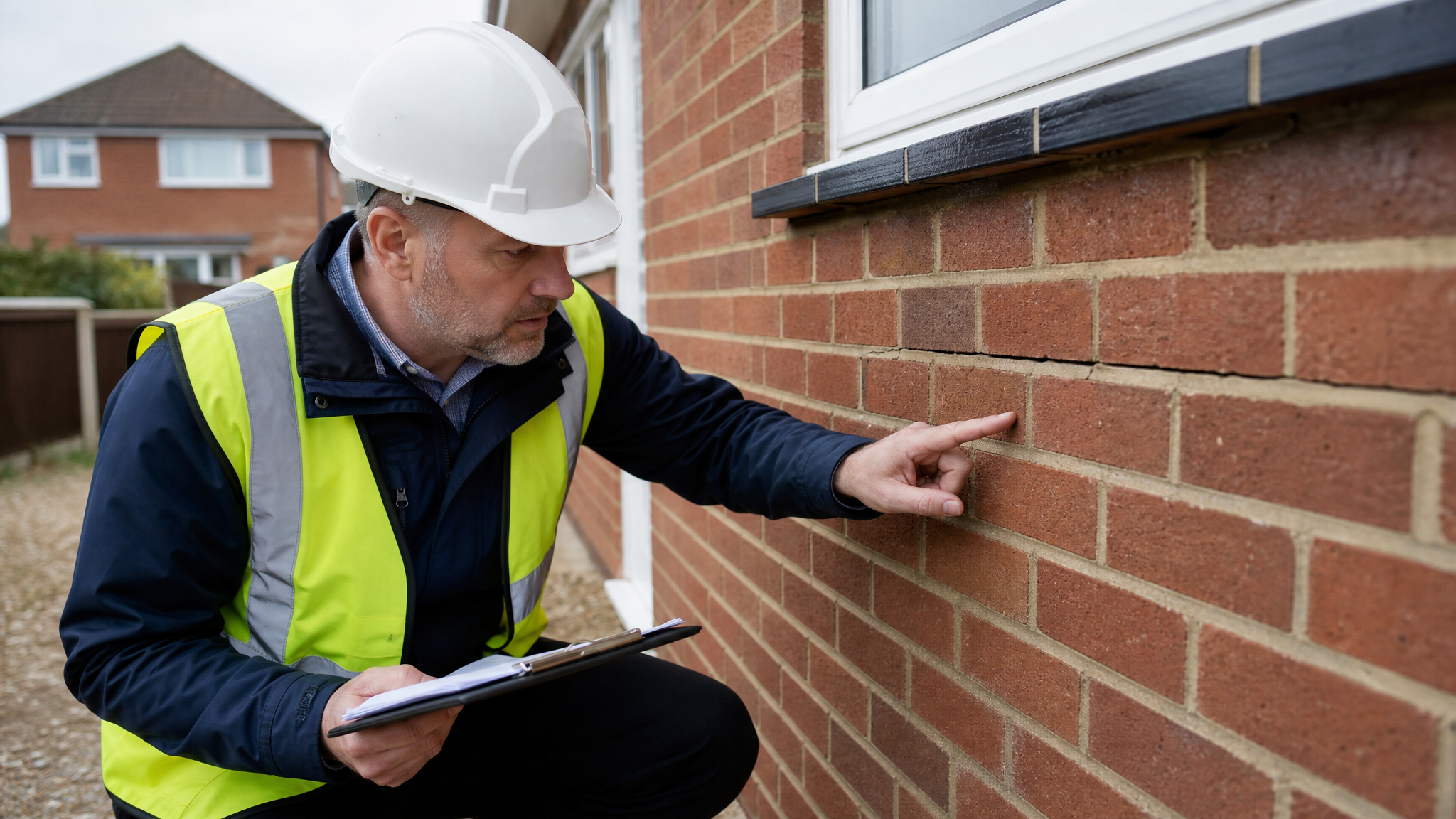
Most property and construction cases turn on the expert evidence: whether cracking is subsidence or thermal movement, whether a valuation fell outside the acceptable margin, where a boundary sits, or what remedial works a defect requires. Written questions are the cheapest way to narrow those issues before trial. A well-aimed question can expose an assumption made without inspecting a particular area, or confirm the date and extent of an inspection.
Because the answers become part of the report under rule 35.6(3), they carry the same statement of truth and the same weight as the original document. An expert who answers carefully strengthens the evidence; an expert who dodges, or reveals a gap in method, weakens the case that relies on them. That makes the 28-day window one of the most valuable moments in the litigation timetable.
The answers also feed into later stages of the Part 35 process. Where each side has its own expert, they usually shape the agenda for the experts' discussion and joint statement under rule 35.12; where a single joint expert has been appointed, questions are often the only way either party can probe the report at all.
What counts as a clarification question, and what doesn't?
The distinction matters because a question that goes beyond clarification can be refused, or answered with a polite note that it falls outside the rule. Legitimate clarification questions typically ask the expert to:
- Confirm the source of a figure, measurement or assumption stated in the report.
- Identify which documents, photographs or site visits underpin a specific conclusion.
- State whether a particular area or element was inspected, and if not, why.
- Set out the range of opinion where the report gives a single view without explaining alternatives.
Questions that stray outside the rule include asking the expert to comment on evidence they were not instructed on, raising new allegations, or putting hypothetical scenarios that amount to cross-examination. Solicitors who need answers of that kind should seek the court's permission under rule 35.6(2) or raise the point through the experts' joint statement. The solicitor's checklist for instructing an expert witness surveyor covers how to build these stages into the letter of instruction from the outset.
How should a surveyor expert witness answer Part 35 questions?
An RICS surveyor acting under the RICS practice statement Surveyors acting as expert witnesses is expected to treat questions with the same independence as the original report. The panel's experts generally follow a consistent approach:
- Check the question is within the rule. If it is not clarification, the expert says so and explains why, rather than ignoring it.
- Answer each question in turn, in writing. Answers are numbered to match the questions, signed, and carry a statement of truth in the same form as the report.
- Stay within expertise. A building surveyor asked a structural engineering question will say the point is outside their discipline and, where appropriate, suggest that a construction expert witness or engineer is asked instead.
- Copy everyone. Answers go to the instructing party and to the questioning party at the same time, mirroring PD35 paragraph 6.1.
- Correct the report if needed. If a question reveals a genuine error, the expert says so plainly. Under the overriding duty, an expert who changes their view must tell all parties and the court, not just their own side.
The rule itself sets no deadline for answering. Case management directions usually fix one; where they do not, a reasonable period is expected, and delaying answers until shortly before trial invites criticism and costs arguments.
What happens if an expert refuses to answer?
Rule 35.6(4) gives the court two sanctions where a proper written question is put to an expert instructed by another party and the expert does not answer. The court may order that the instructing party cannot rely on that expert's evidence, and that it cannot recover the expert's fees and expenses from any other party. Either outcome can be fatal to a case built on a single technical report, which is why refusals are rare and usually confined to questions that plainly exceed the rule.
There is a costs point on the other side too. PD35 paragraph 6.2 provides that the party who instructed the expert must pay any fees the expert charges for answering questions, without prejudice to the court's final decision on who bears the expert's costs overall. Answering a modest set of clarification questions is typically charged at the expert's hourly rate, commonly £150 to £300 per hour for chartered surveyors, so a focused list is far cheaper than a scattergun one. The panel's guide to expert witness costs in the UK sets out the wider fee picture, including report fees and court attendance. The same principles apply whether the expert is dealing with a valuation dispute, a boundary dispute or a defects claim.
Practical tips for solicitors drafting questions
- Diarise the 28 days from service. Late questions need permission or consent, and neither is guaranteed.
- Keep the list short and specific. Ten precise questions, each tied to a paragraph of the report, will achieve more than forty that read like a cross-examination.
- Ask about what was not done. Whether the roof void, sub-floor or neighbouring land was inspected is often more revealing than anything in the body of the report.
- Serve on all parties simultaneously. Failing to copy the other side breaches PD35 paragraph 6.1.
Need a surveyor who understands the Part 35 process?
Survey Merchant provides RICS chartered surveyors, engineers and valuers as expert witnesses across England and Wales, experienced in preparing CPR Part 35-compliant reports and answering written questions within the rules. Reports for straightforward matters are typically quoted at fixed fees of £5,000 to £15,000, with hourly rates applied to questions, joint statements and court attendance. Whether you need a construction, valuation, boundary, party wall or negligence expert, the panel matches the discipline to the dispute. See the full range on the expert witness services page, or contact Survey Merchant on 0204 579 8270 to discuss your case and receive a fixed fee quote.